“Why did this face come back? To say goodbye?”
(SPOILER WARNING!)
Now that was more like it.
Don’t get me wrong, I know showrunners are all a matter of taste, and some people really loved Chris Chibnall’s run on Doctor Who. Even I had episodes that I really loved, and moments that stirred my feelings. But generally, for me, it was often clumsy, and incoherent (☹) and too satisfied with cramming in spectacle when character-driven stories would have worked better. And Steven Moffat (who I did enjoy while others didn’t) had his failings too – chiefly that his delight in timey-wimey puzzles often overshadowed his characters, and sometimes drowned the emotional beats of stories.

But Russell T Davies? Well, I’ve certainly had my criticisms of him, but that man knows how to write a Doctor Who story. He has the strengths of the other two (and occasionally their failings), but he never forgets that, since its 2005 return, the strength of this outlandish show has been believable, sympathetic characters to ground the viewers amidst all that weirdness, and give them someone to care about so they care how the story ends.
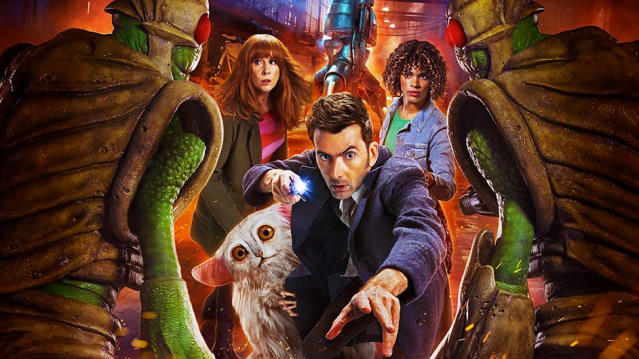
And there was plenty of that on display here, as the return of the much-loved David Tennant was accompanied by the return of his (in my view) best ever companion – Catherine Tate’s Donna Noble. It’s been fifteen years since we last saw them together, but both stepped into the roles like they’d never been away – while also acknowledging that, from both their perspectives, a lot of time had passed.
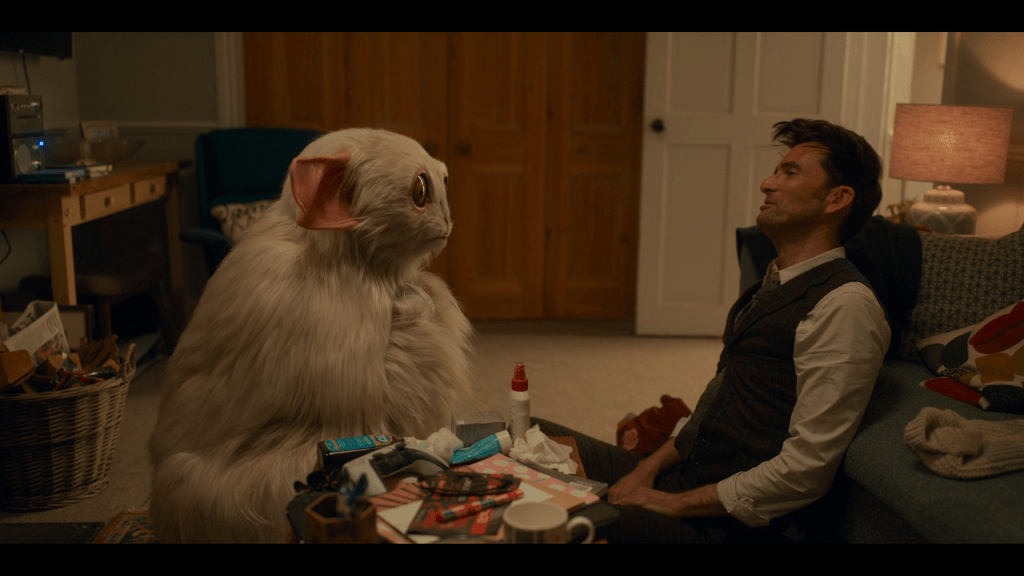
Given that this is a Big Anniversary Year, you might have been expecting something a bit more fan-pleasing – a multi-Doctor story at the very least, with the obligatory appearance of the Daleks in some capacity. But in fact, The Star Beast (based on a classic Doctor Who Magazine comic strip by comics legends Pat Mills and Dave Gibbons) has a pretty slim, lightweight plot. Don’t get me wrong, it’s a good one, and well-remembered for good reason – the lesson that, especially in sci-fi, you should never judge by appearances. In this case, Mills and Gibbons’ original comic took that to extremes, with the unforgettably cute Beep the Meep, whose adorable appearance belied the fact that he (The?) was actually an interplanetary criminal of legendary cruelty, while the apparently threatening Wrarth Warriors were actually the good guys.
Both aliens were faithfully recreated here exactly as shown in the original strip. In the case of the Wrarth, that wasn’t perhaps the best idea, as their rubbery features, on live action TV, looked like just that – rubber. But the Meep was a thing of majesty, an amazing combination of puppetry, animatronics and CG that blended perfectly with the real elements of each scene. And voiced with obvious relish by the inimitable Miriam Margolyes, joining the ranks of big stars doing voice-only performances such as Ian McKellen (the Great Intelligence) and Michael Sheen (House).

Their story was wound through a properly emotional return for Donna and her family, somehow unable to escape the orbit of the Doctor (of which I imagine more will come later). It was great to see the return of Karl Collins as Donna’s likeable husband Shaun, and especially Jacqueline King as a much-mellowed Sylvia Noble. It was a measure of the attention Russell gives to his characters that Sylvia had obviously taken the Doctor’s sharp advice about how she treated Donna to heart, and she’s now fiercely protective of a daughter she obviously appreciates far more than she used to. Even to the extent of (like Jackie Tyler and Francine Jones before her) giving the Doctor a good old slap. “Here we go again,” groaned Tennant in an amusing in-joke for those with good memories.
But it’s been fifteen years, and Shaun and Donna now have a daughter – the not-coincidentally named Rose, played by Heartstopper’s excellent Yasmin Finney. Probably the best feature of Chris Chibnall’s run on the show was his determination to increase the show’s diversity, and Russell is obviously going to continue with that, giving us a trans character played by a trans actor, and not ignoring their problems while still making them a vital part of the plot.
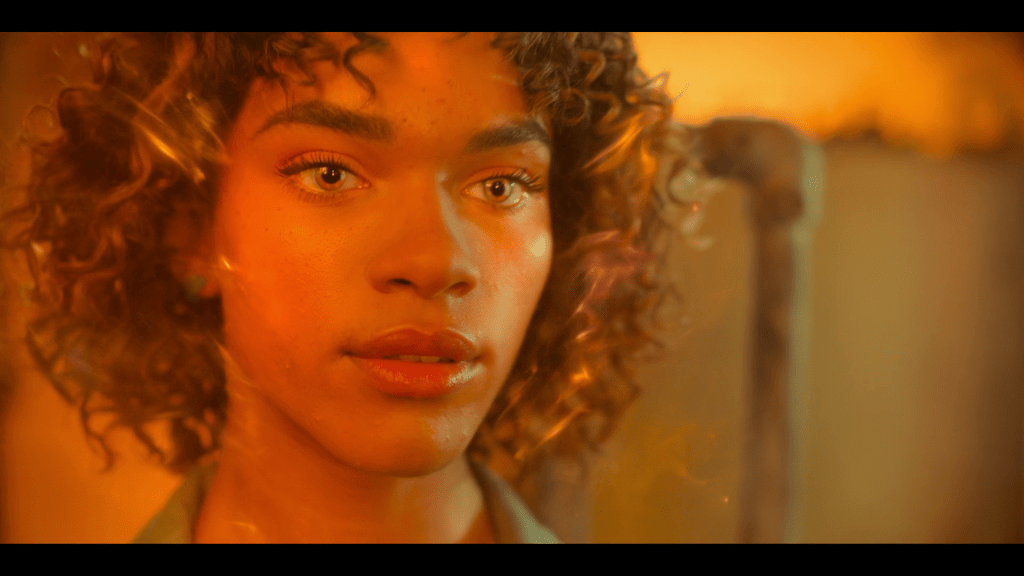
In companion making-of show Doctor Who Unleashed, Russell spoke of the importance of representation – how boys like those bullies on the bikes were probably watching Doctor Who in reality, and how seeing a trans character as just another person could help. And he’s absolutely right. I’ve written about it before, but that very same Russell T Davies was instrumental in normalising how British people saw gay men with Queer as Folk, and way before Chibnall, made the spectrum of sexuality a part of the rebooted Doctor Who. I’m glad to see that continue.
And whatever my views on the questionable ‘abling’ of Davros, it was good to also see a disabled character onscreen, played by a disabled actor. Ruth Madeley was an absolute hoot as Shirley Bingham, “UNIT Scientific Advisor #56”, with her Q-Branch wheelchair brimming with weaponry (“You have weapons in your wheelchair?” “We all do!”). Shirley’s disability was more than mere tokenism, though, it was vital to the plot. Her inability to climb the ladders to the Meep ship was why she was unaffected by the “psychedelic sun”, and was then able to rescue our heroes later. She’s a great character, and I’m hoping she’s going to be a recurring part of the new ‘UNIT family’.

Old hand Rachel Talalay was on directing duties, and as ever was good with both the quiet emotional moments and the explosive spectacle. And there was certainly plenty of the latter on display in the pitched street battle between two factions of UNIT troops and the Wrarth warriors. Car after car went up in flames, or was flipped on top of another car; only those too versed in the grammar of TV production would have predicted their destruction from the fact that they were all old enough to be cheap but not old enough to be classics.
That said, budgets have presumably been increased by the much-heralded partnership with Disney in producing the show from hereon in. This has been signalled by the introduction of the obviously MCU-inspired “Whoniverse” bumper at the beginning of all related shows, and the rather baffling decision to describe Doctor Who as a ‘new’ series from 2023, with Ncuti Gatwa’s forthcoming debut to be labelled as “Season 1”. Fans face a new era of confusion in episode numbering, as they scratch their heads in puzzlement at whether it’s the William Hartnell Season 1, or the Christopher Eccleston one, or the Ncuti Gatwa one.

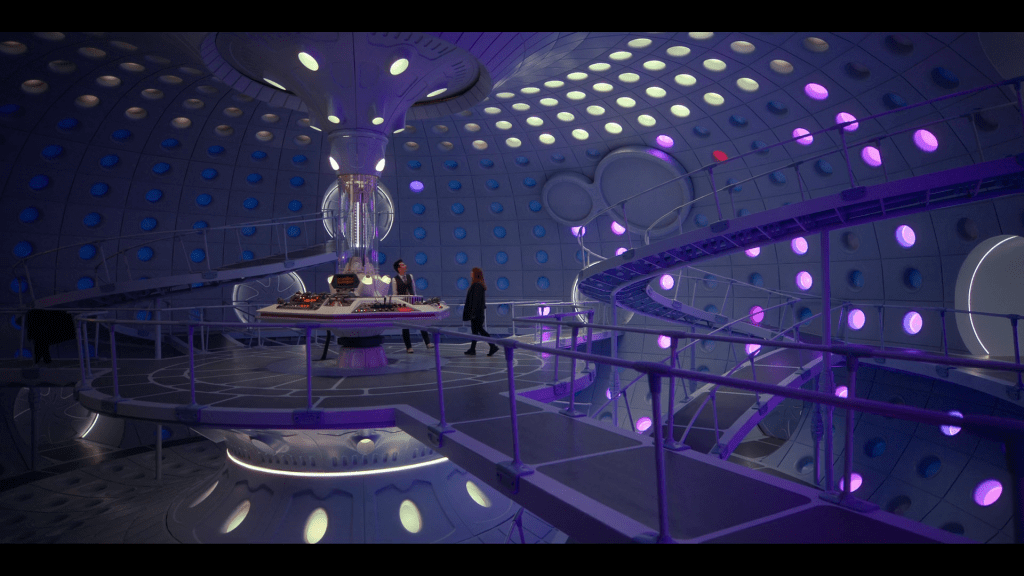
But nowhere was that new partnership, and that increased budget, more evident than in the latest new TARDIS console room. It is GIGANTIC. It also features a fan-pleasing return to white walls and roundels, but now on a massive scale – it’s as if someone inflated the classic show’s console room like a balloon, to gargantuan proportions.
And I’m not sure I like it. Sure, the changing colours of the roundel illuminations mean that it won’t always be as 80s-style overlit as it was at first glimpse; but console aside, it seems sparse, cold, antiseptic, with none of the idiosyncratic warmth or humanity that were so integral to previous console rooms. No ormolu clocks, no chair with a panda on it, not so much as a hatstand to break up that endless, sterile white. I do hope Doctor Fifteen does a bit of decorating, as I don’t find size alone impressive without personality (a fact I’ve remarked on in… other circumstances too).
Carping aside though, the heart of the ep was the reunion of the Doctor and Donna, and this did not disappoint. Tate and Tennant were as marvellous as ever, slipping effortlessly from comedy to poignancy as Russell strove to overcome his self-imposed stricture on their meeting again. Fair play, Donna’s original heartbreaking departure depended on an invented contrivance, so I have no problem with a similar contrivance to escape from it here. It’s actually quite inspired – that the “metacrisis” could be dissipated by having a child, thereby spreading the load, and that the child would therefore have half memories of all the experiences Donna had forgotten, tear-jerkingly expressed in the designs of all her toys. That did make me well up a bit.
It was also, for something so abstract, quite clearly communicated by the writing and by what we saw onscreen, something Chris Chibnall always seemed to have a problem with. And it brought Rose’s trans nature to the fore as a plot resolution, neatly recalling Donna’s seemingly nonsensical babble of “binary, binary, binary” in Journey’s End. The problem could only be overcome by not being binary – a very nice touch.

I very much enjoyed this, despite it not being a multi-Doctor celebration bringing back dozens of monsters or leaning heavily into 60 years of continuity. It didn’t need to; it was enough that this was an honest-to-goodness Russell T Davies Doctor Who story, feeling almost like a return to 2009. Sure, it was a bit lightweight, but I get the impression that these three Specials will be interlinked into a larger whole; we already have hints of that from the Meep’s sinister mutterings about the rarity of two-hearted beings, and “letting the boss know”. Said boss is the subject of much speculation – but let’s face it, we know the Toymaker’s back. It’s going to be him, isn’t it? And when these three specials all come together, I think we’ll see something rather more substantial than what we got here – not that this was bad at all. Welcome back, Russell, David and Catherine!
 Simon’s Incoherent Blog