

“You’ll be someone else. It doesn’t matter who. Cause every single one of you is fantastic.”
(SPOILER WARNING!)
These specials have been an interesting side trip into the world of Doctor Who, giving us the second shortest-lived (onscreen) incarnation of the Doctor, reinvigorating the show while acknowledging everything that went before. It’s easy to imagine, after these, that we’ll still be watching Doctor Who in several years’ time. But the new question is – just how many?
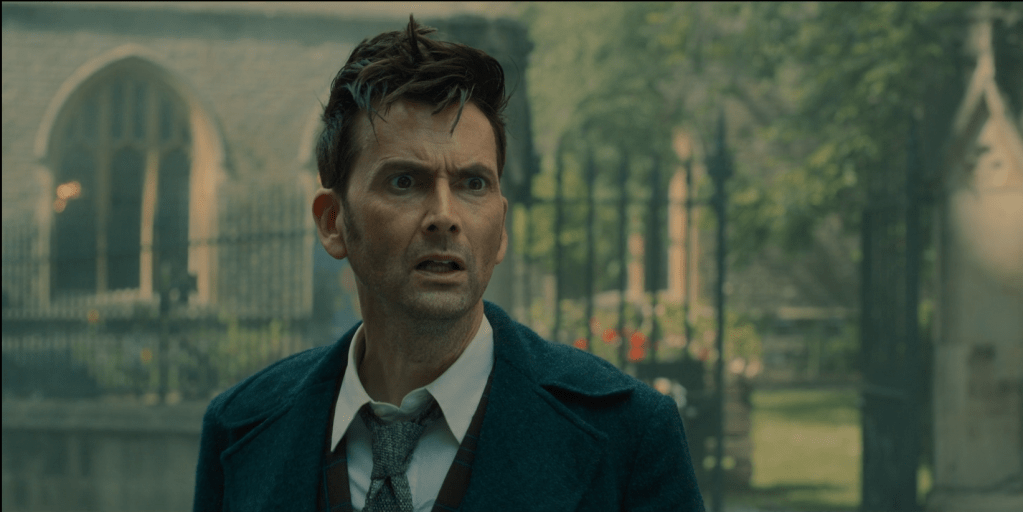
The Giggle had a lot to do, concluding this brief run for returning Doctor David Tennant, answering the questions raised, and introducing his successor, Ncuti Gatwa. Along the way, it also had to tell a good story of its own, something that would grip viewers both old and new, as this triptych of stories has functioned as a bridge between the old show and a sort of ‘soft relaunch’ leading into ‘season 1’.
In this, it mostly succeeded. I have reservations (I always have reservations), but this was certainly an enjoyable hour of TV with an exciting story, a great villain, and a few moral lessons along the way. It also, I think, signalled that, however ‘trad’ The Star Beast seemed, this is a new, different Russell T Davies era than the one that went before. An era that may, perhaps, lean more heavily into the ‘fantasy’ element of the ‘science fantasy’ the show’s always been.

Certainly the Celestial Toymaker is very much a being of fantasy rather than hard science fiction. And if that worries you, too bad – it’s not like we’re talking about some modern innovation here. The Toymaker, and his fantasy realm, date all the way back to the First Doctor and the 1966 season 3. It’s a demonstration that the show has always had a surreal, fantastic side to go along with its rocket ships and alien invasions – for more proof, see 1968’s The Mind Robber, set in the ‘Land of Fiction’ where all fictional creations are real.
For fans, the Toymaker is a well-remembered creation, thanks in no small part to a sinister performance by horror stalwart Michael Gough. But for casual viewers, might it not have been somewhat confusing to bring back a one-off villain from the mid-60s?
Well, no. Russell T Davies has form at reintroducing classic series baddies, in a way that acknowledges their past but provides all the necessary information for viewers not versed in every story of the show’s 60 year history. So, in an economical few lines, we got the Doctor explaining that he’d fought the Toymaker before, that he’d defeated him, and that the Toymaker is bound by his own rules. Simple, really – and all you need to know to understand this story. The Doctor’s always referenced offscreen adventures that the viewer never sees anyway – if you find this objectionable, presumably you’re still fuming that we haven’t yet seen the Terrible Zodin.
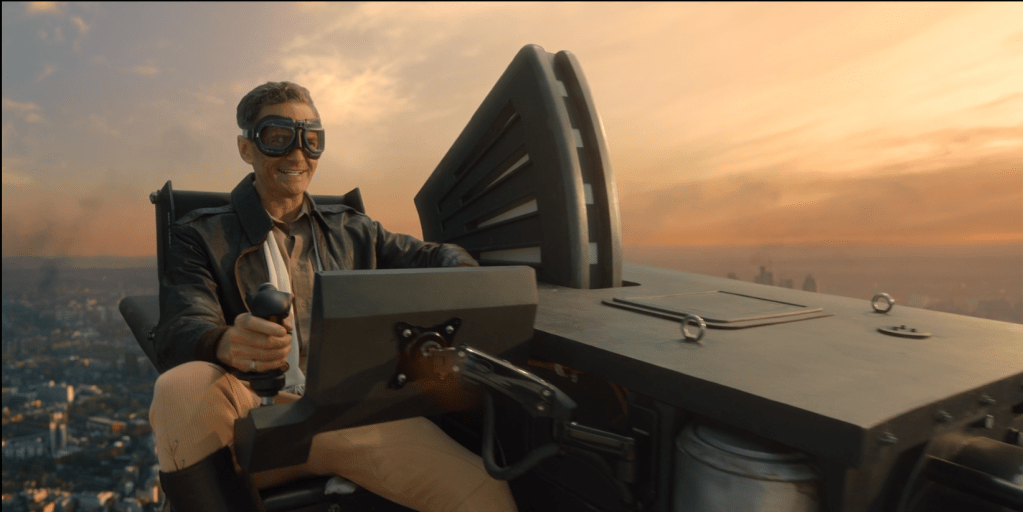
In quite the casting coup, this time round the Toymaker was played by Big Hollywood Star Neil Patrick Harris, who made the most of an excellently written part by stealing almost every scene he was in. Harris, who’s already worked with RTD on the instant classic It’s a Sin, made the most of a part written far larger than life than in the character’s original appearance. Hamming it up with a deliberately far-fetched German accent at first, he progressed through an honest-to-goodness dance number to holding our heroes at gunpoint – said gun being a gigantic laser beam. Subtle it wasn’t – but it was tremendous fun.
But why the Toymaker? Russell actually explained the process behind the story on making-of show Doctor Who Unleashed. Having heard about John Logie Baird’s first experiments with television using a rather creepy ventriloquist’s dummy called ‘Stooky Bill’ (which is all true), he immediately thought the doll would make a great Who baddie. And if you have a puppet, there has to be a puppeteer – who better than an extradimensional being we know to be obsessed with toys?
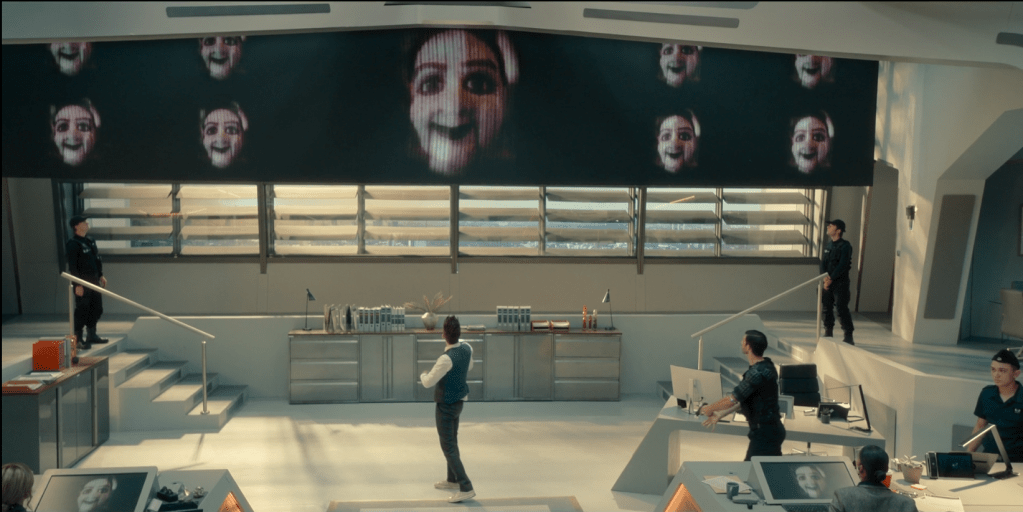
All this was very well-played, but I did feel something of a sense of familiarity. A villain who’s embedded in television broadcasts? That’ll be The Wire, from 2007’s The Idiot’s Lantern. A being who’s existed in a visual medium since its very birth? That’ll be ‘the Shape’, the sinister faceless man from Adventure Four of Sapphire and Steel, who’s in every photograph ever taken. A satellite network to brainwash humanity worldwide? That’ll be the Arkangel network, set up by the Master in The Sound of Drums ( a fact even acknowledged here in dialogue at UNIT HQ). A dastardly baddie doing a merry dance to a camp pop song? The Master again, in Last of the Time Lords.
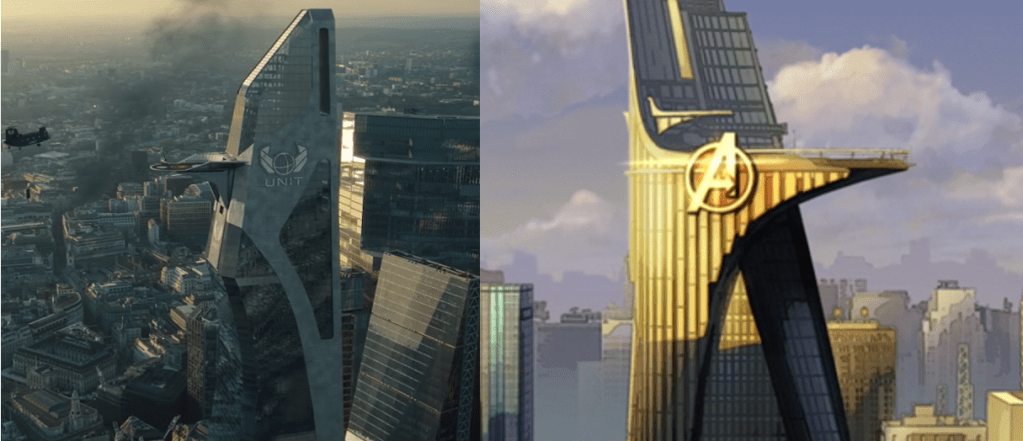
Again, though, Who has never been shy about homaging/ripping off other stories – its own included. Done well, as it was here, it’s hard to object to. We got more evidence of the show’s noticeably bigger budget, particularly with the perhaps less-than-secret new UNIT HQ – can it have been a coincidence that it so closely resembled the Avengers Tower from Disney stablemate the Marvel Cinematic Universe?
That budget also extended to some spectacular onstreet carnage, well-realised by director Chanya Button. It was here that the story’s (again, not subtle) moral lesson was demonstrated. The Toymaker’s signal, the eponymous ‘Giggle’ made everyone on Earth stridently sure their strongly held opinions were not only right, but worth actually starting fights over. It seemed an obvious, but amusing, extrapolation of how we all interact on the internet – what if we were like that in real life too?
It’s interesting to note, given RTD’s determined commitment to diversity of late, that the Giggle, being an audio-based signal, wouldn’t have worked on the deaf – a fact the script didn’t even acknowledge, to the annoyance of a deaf friend of mine. Perhaps a couple of deaf characters could have been included as some kind of ‘resistance’? It’s not difficult, even The Walking Dead managed a couple of deaf regular characters.
The awareness of diversity was very present elsewhere though – how could it not have been, in an episode showing us the very first non-white Doctor? The Toymaker was marked as a wrong ‘un from the outset, due to his racist comment to Baird’s assistant – “You must be used to… sunnier climes?” “I was born in Cheltenham.”

Again, Russell explained his reasoning here on Unleashed. In his original appearance, the Toymaker is dressed in the costume of a Chinese mandarin, which Russell took to be “cultural appropriation” and from that extrapolated a need to display the character as a racist. I think he’s being oversensitive here – Michael Gough might have been wearing a Chinese outfit, but appearance wise, was depicted very much as a white man. Who certainly has a terrible history of ‘yellowing up’ a la John Bennett in Talons of Weng-Chiang, but I don’t think that was the intention with the Toymaker. Plus, why would an extradimensional being, who presumably doesn’t even resemble a human in his/its natural form, give a fig about the skin colour of people?
It does, I suppose, establish him from the outset as a cruel character, able to play on people’s insecurities. We got more of that with him needling the Doctor about the unfortunate ends suffered by some of those who’ve travelled with him since Donna last saw him, cleverly done as a puppet show with the Toymaker snipping the strings. The Doctor was defensive, pointing out that, actually, they hadn’t ‘died’ as such – “well, that’s all right then!” – but the Toymaker knew about his guilt and exploited it.

If nothing else, this further demonstrated that the show is not airbrushing out any of its past, Chibnall/Whitaker era included. And that’s as it should be. It was also reassuring, if the show is once again rebooting, that the 60 years behind it are not forgotten. We had references to Logopolis, Adric – and most delightfully of all, the return of Mel Bush, charmingly played as ever by Bonnie Langford. Mel onscreen in the 80s never really had much depth – but as with the other old companions we’ve recently seen being recruited by UNIT, got enough depth here to more than make up for it. And how does Bonnie still look so young?
Also showing that continuity is being maintained, we had the return of Kate Lethbridge-Stewart, played as ever by the superb Jemma Redgrave. She might seem like a ‘newish’ character, but let’s remember that we first saw Kate 11 years ago (in The Power of Three) – she’s now been shown in charge of UNIT longer than her father was! Some people have been asking about the absence of Ingrid Oliver’s fan-favourite character Petronella Osgood, but I suspect her complex backstory might have been difficult to weave in – or perhaps the actor simply wasn’t available. Either way, if Kate’s staying on, I doubt we’ve seen the last of Osgood yet.

We also got the return of the brilliant Ruth Madeley as Shirley Bingham, who’s presumably going to go on as a recurring character. It was nice to see the TARDIS gaining a wheelchair ramp (though it makes you wonder how K9 ever got in and out of it), and also good to see Shirley standing at one point, a necessary reminder that not every wheelchair user is incapable of standing at all.
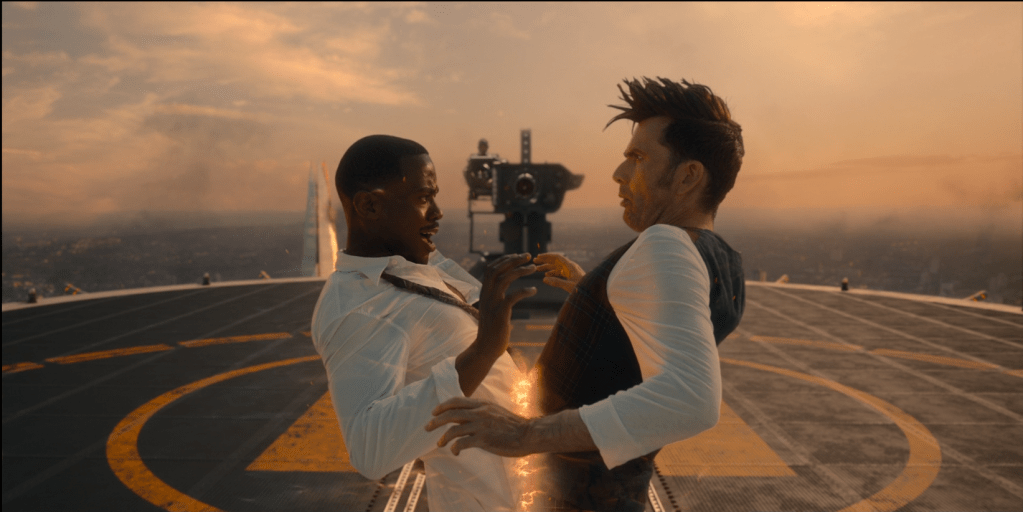
But of course the big story was the debut of new Doctor Ncuti Gatwa, in a regeneration quite unlike any we’d seen before. It made a big change to actually see more of the new Doctor than a confused couple of lines before crashing the TARDIS, and that was definitely a welcome change. In fact, Ncuti seemed focused and sorted right from the start, with none of the usual post-regenerative confusion (which, as we’ve seen, most other Time Lords have no problem with). The Fifteenth Doctor arrived fully-formed – and what a form! It takes quite something to be as commandingly Doctor-ish as that while only wearing a scarcely buttoned shirt and a pair of tight underpants, but Gatwa pulled it off. And I doubt I’m the only one who spent a lot of time gawping at his extremely nice legs 😊
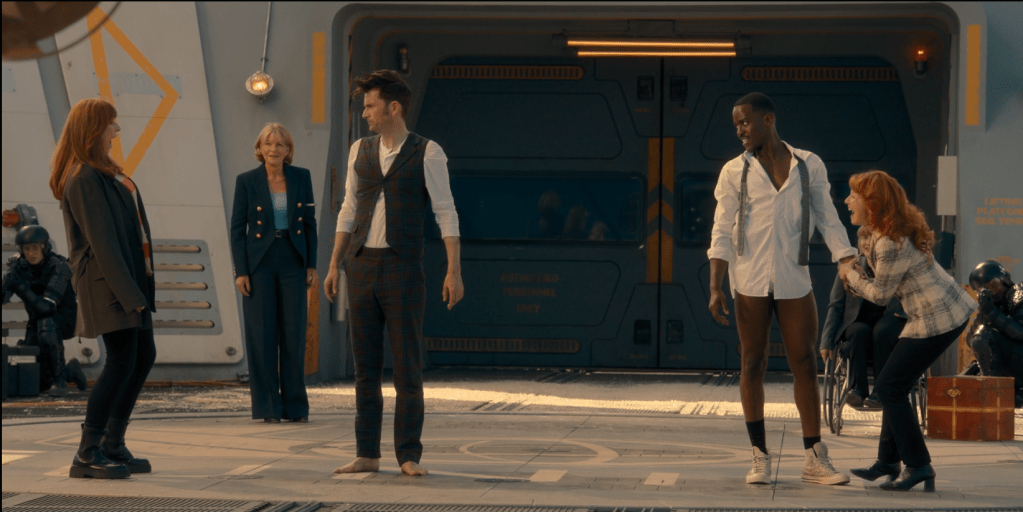
The reason for his semi-clothed state has caused some debate though – rather than David Tennant being replaced by his successor, now both exist together, thanks to the new concept of ‘bi-generation’. This explained the hanging plot point of why the Doctor went back to an old face; they need, after countless centuries of adventuring, carnage and guilt, to rest. And the Fourteenth Doctor can do just that, living a seemingly normal life as a member of Donna’s extended family.
As a story point, I like it – although, with another TARDIS, it’s hard to imagine any version of Tennant’s Doctor not somehow getting ‘involved’ with things. RTD has also said that, in his view, it could extend retroactively to other, older Doctors, meaning we could see an older looking Colin Baker or Sylvester McCoy returning to the part when they ‘died’ looking so much younger. In fact the epilogue scene of Colin’s Tales of the TARDIS implied that we might well see such a thing, as he was shown flying into the universe with the returned Peri.

However, I do have a bit of a problem with the message it sends that there are now two ‘current’ Doctors. Yes, I know, it’s a show about time travel, and there’s been nothing stopping any of them returning on that basis. And there has been talk of a spinoff show featuring Tennant, which could be fun (although it would make things complex if he didn’t then bump into Gatwa, the ‘serving Doctor’).
No, the problem I have is that it makes it seem like the show doesn’t have full confidence in its new star, and that they’re keeping a demonstrably popular old Doctor in reserve just in case. On a smaller scale, I had similar reservations about Matt Smith’s brief appearance in Peter Capaldi’s first episode. But that was a cameo from the past, while here, there’s another Doctor with whom Ncuti Gatwa has to permanently share the mantle. I thought it was unfair on Capaldi; I think it’s doubly unfair on Gatwa, and has very bad optics if the show is keeping a ‘spare Doctor’ in case the new one doesn’t work. Particularly when the new one is the first actor of colour to play the part.
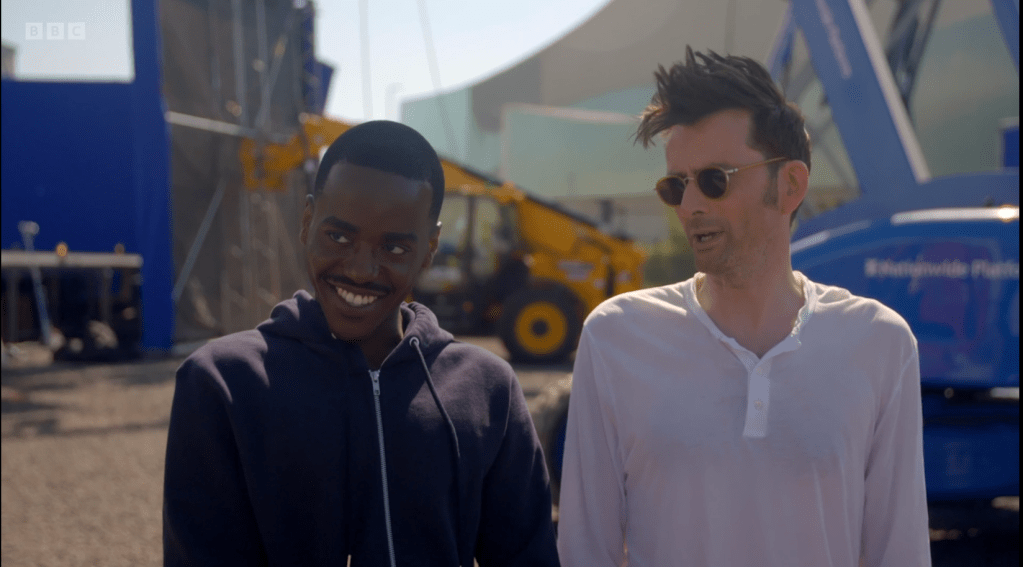
I’m sure that wasn’t Russell T Davies’ motivation or intention, but I know I’m not the only one to have got that impression. For his part, Ncuti Gatwa doesn’t seem to have a problem with it, judging by his typically enthusiastic interview on Unleashed, and I share his relish at the scene of him working with his predecessor rather than just replacing him. It still makes me a trifle uneasy, though as I said, I have no problem with it as an in-universe plot point.
Still, despite my reservations, this was an enjoyable conclusion to this arc, and set up for the next one. There’s still a few hanging plot points (is it always going to be “mavity” in the Whoniverse now?), though some at least seem to be setups for what’s to come. Who is the being that even the Toymaker ran away from? (Not the Guardians, he said he’d turned them into voodoo dolls). It’s obviously not the Master, though that female hand retrieving the tooth that imprisoned him/her (in a deliberate echo of the end of Last of the Time Lords) suggests the Master too will be back (and wasn’t that Anthony Ainley’s laugh we heard?). Could it be Fenric? The Gods of Ragnarok, also mentioned here? Or some new Ultimate Evil we haven’t seen before?

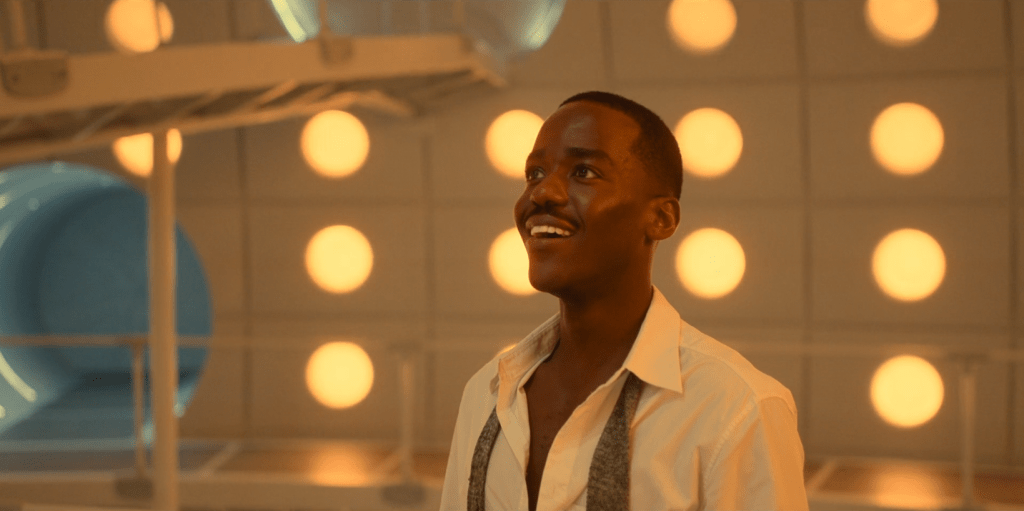
Either way, this was an enjoyable, surreal story with some outstanding performances, particularly from Neil Patrick Harris and incoming Doctor Ncuti Gatwa. Gatwa owned the part from the outset with irrepressible energy, and I’m glad he’s at least started to furnish that spartan TARDIS interior with a classic jukebox. I think he’ll be a great Doctor, and I’m looking forward to seeing him in what looks like quite a variety of costumes (though it’s a shame to cover up those legs😊). Roll on Christmas, and our first chance to see him in action in an episode all his own!
 Simon’s Incoherent Blog