
“I don’t like who you are with them. What they make you. It isn’t you.”
(SPOILER WARNING!)
Well, contrary to my expectations after last week’s Big Cliffhanger, Rick and Michonne didn’t have parachutes after all. Luckily for them, they were over water when Michonne dragged them both out of the helicopter. Even more luckily, there was a handy luxury condominium nearby, which still had power, supplies, and a nice clean bed for our heroes to, er, reconnect.
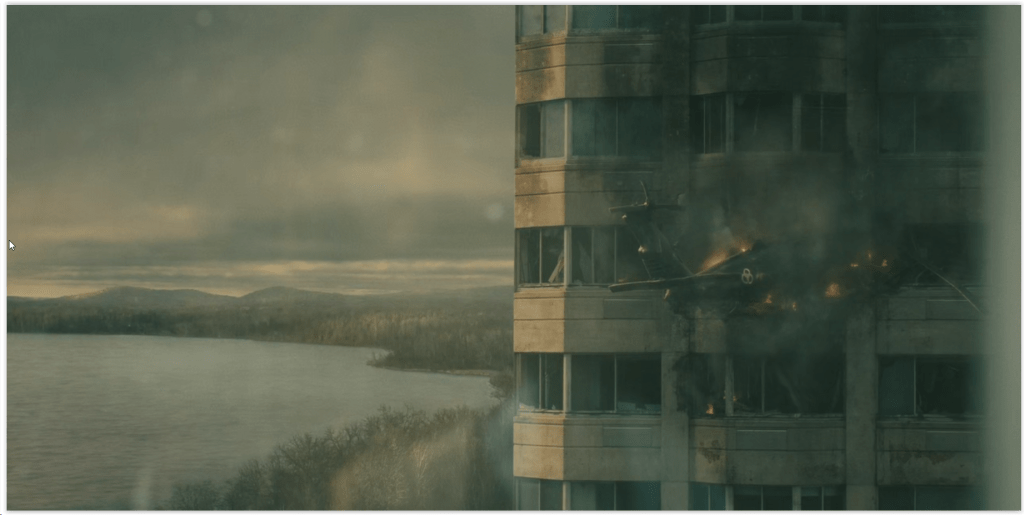
All of which is just a mite too convenient – I think I’d have preferred the previously unseen parachute. This was definitely an ep of two halves for me; on the one hand, it was a well-written two-hander focusing on (and featuring only) the two main characters. On the other hand, for it to work, you have to accept some whopping great plot contrivances which seem to portray our heroes as the luckiest people alive.
To deal with the latter first – how did Michonne know the helicopter was over water when she jumped? That storm was bad enough to force the helicopter to crash, and yet somehow in the dark, in the clouds, the wind and the squalling rain, she still managed to make out that there was a lake below them?
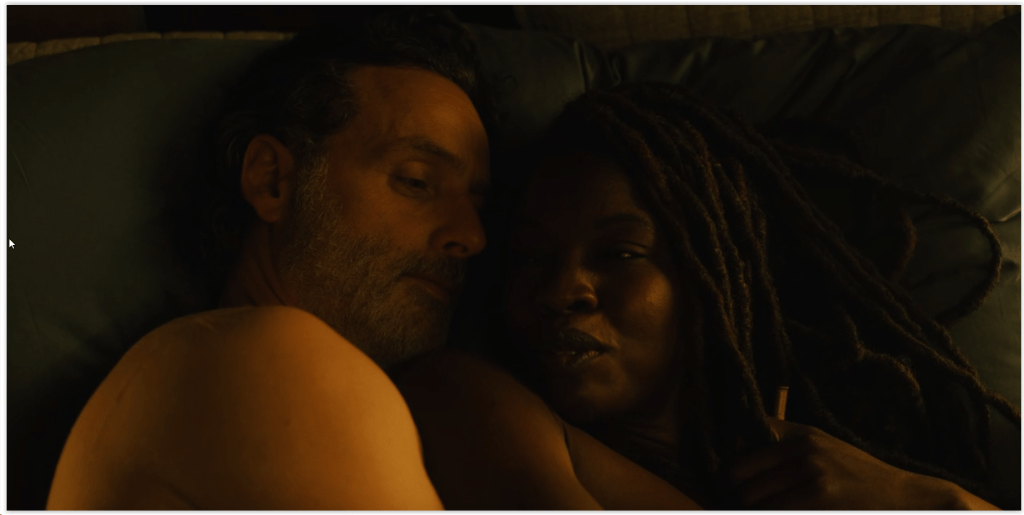
Then there was the handy self-sufficient condo they ended up in. They seemed to go straight from the banks of the lake to that well-stocked, implausibly clean room, as if they knew it was there. In fact, I kept expecting a plot revelation that Michonne had known it (and the lake) was there, and that that was her reason for leaping out of the helicopter at that point. When no such revelation came, I just found myself gawping open-mouthed at the screen.
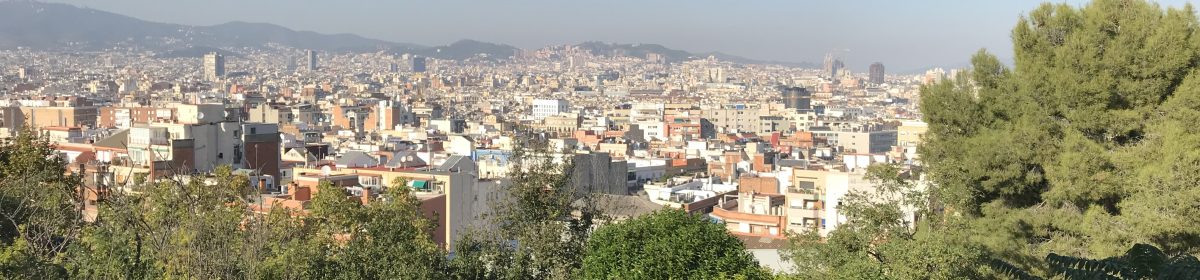
But. If (and it’s a BIG if) you could get past those mightily convenient factors, this was a tightly written and performed ep. The initially idyllic setting was necessary for our two heroes to unburden themselves to each other without having to constantly break off and deal with Walker-based distractions (though there were some later, just to remind the viewers that this was still The Walking Dead they were watching.
I’d said a few weeks ago that this whole thing would move along a lot quicker if the characters just told each other what was going on – well, it looks like the showrunners were thinking along the same lines, as that was a lot of what we got here. But we also got an exploration of how these characters had developed since the end of the original show, and the effect the traumas they’ve had to endure have had on them.
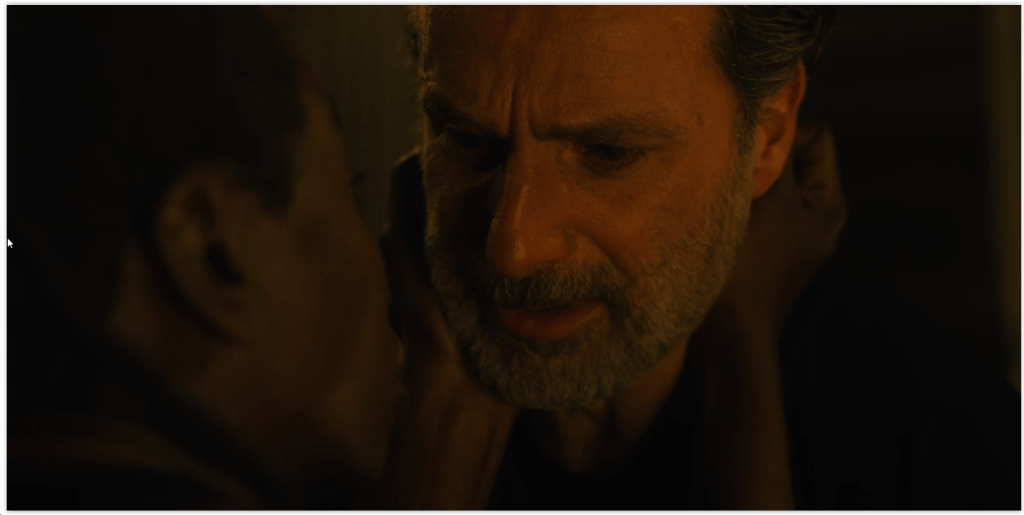
As I’d expected, Michonne was none too happy with this new, submissive Rick, and was trying desperately to reach the man she’d once known. Rick, for his part, was in deep, deep denial about his state of mind, bringing up unconvincing excuse after unconvincing excuse as to why he couldn’t escape the Civic Republic with her. He had to keep their community safe, he didn’t want to put his family in danger, he could change the CRM if he just had time enough… So deep was he down the rabbithole that he barely even reacted to the news that he has a previously unsuspected son.
This was, of course, institutionalisation. It’s the same state of mind that drives recently released convicts to reoffend, just to get sent back to prison, where they feel safe and know the territory, Rick’s been stuck in the Civic Republic for so long that he can’t even imagine life outside it.
His gradual realisation of this, and return to some semblance of the man he used to be, was sensitively played by both Andrew Lincoln and Danai Gurira, from a well-written script by… Danai Gurira. Well, that should hardly be a surprise – Gurira is an accomplished writer with many well-received plays under her belt. I’m only surprised she hasn’t written for the show before.

And of course, who would know these characters better than the actors who’ve played them for more than a decade? Gurira gave herself some cracking lines, toying with a copy of Beverly Cleary’s classic kids’ novel Ramona the Pest and telling us that she always identified with the title character (no surprise there). She even slyly slipped in a line where Michonne told Rick she once toyed with the idea of being a writer, which might have been lost on any viewers who didn’t clock the writers’ credit that appeared onscreen a few minutes previously.
The two characters’ lengthy argument was nicely directed by Michael Slovis again, particularly the intercut shots of Michonne hesitating while walking away, and Rick indecisively hovering his hand over the door handle to go out and follow her. It wasn’t just character drama though – Gurira’s script nicely interjected some actual jeopardy, as the CRM’s destruction of their crashed helicopter caused the building to start collapsing around them, letting in a horde of hungry Walkers.
Again, it’s a tribute to the writing that the subsequent action scenes played in to the development of the characters, as Rick found himself put into his old default mode of fighting alone but for his trusted friend and lover. Having said that, while the scene involving Michonne temporarily trapped under a collapsed chandelier had some tension, it wasn’t much – let’s face it, were any of us expecting her to die with two more episodes to go?
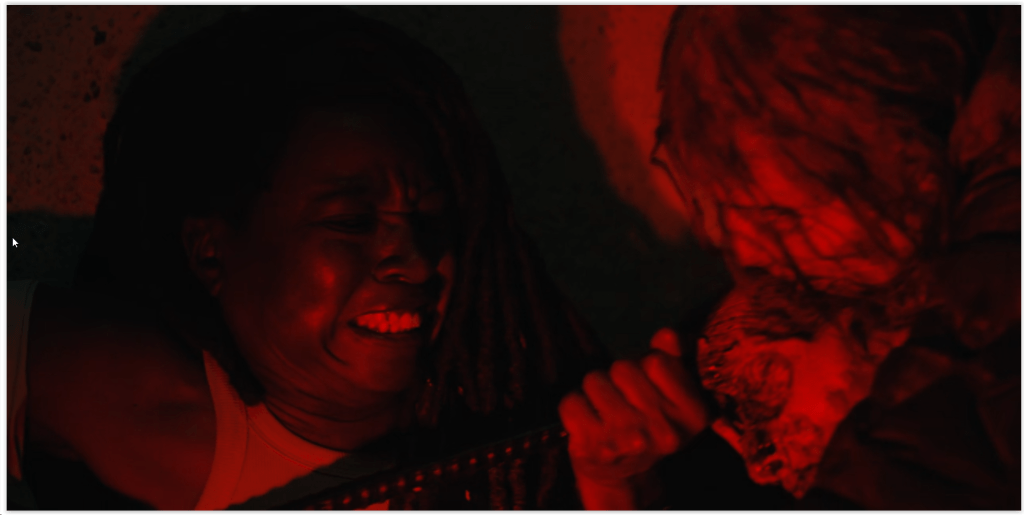
Their escape also allowed us a glimpse into how the self-sufficient community had come to be, and what had been its fate. I have to say, though, that these scenes just compounded the earlier implausibility of the place. From the look of its’ former leader’s corpse, it had been abandoned for some time, and yet that room was perfectly clean, every surface of it – Roombas can’t do that, unless they’ve learned to fly.
Speaking of the Roomba though (which was nicely portrayed as a kind of melancholy guardian of a long-dead way of life) reminds me that, in the Walking Dead universe, civilisation ended in 2010 (when the show began). Every variant of the show has been subtly consistent about that; it’s one reason why, after about season 3, they couldn’t have sponsored cars featured. In the show, there’s been no new cars since 2010, so that surprisingly clean Hyundai Tucson Shane picked up in season 2 would have been one of the last new cars that world had ever seen. It’s also why Michonne talked of the Roomba as something that had been an innovation just before the end of the world, when they’ve been around for more than a decade now.
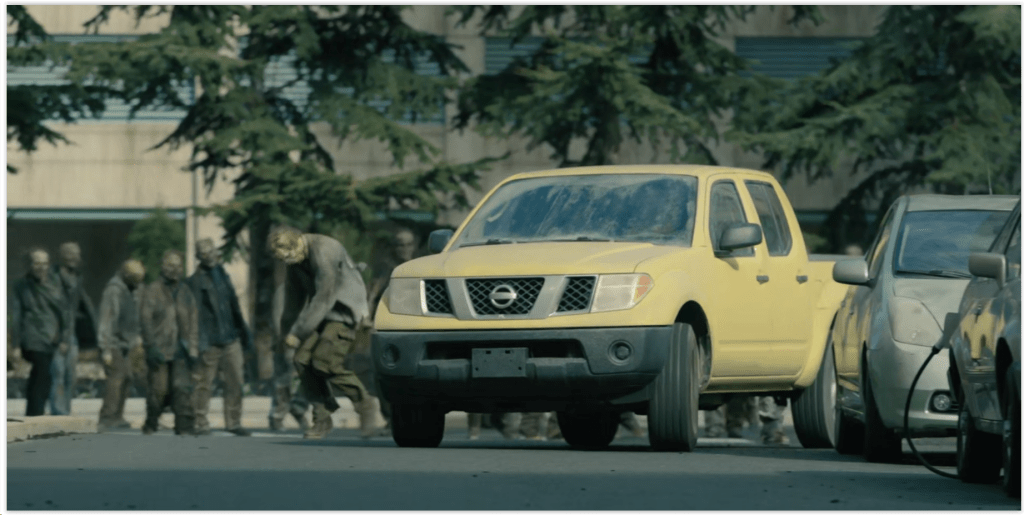
That also fits with the etched iPhones which were so prominent in the plot; they’re iPhone 3Gs, the third generation of a smartphone that’s now on its fifteenth, but will get no further in The Walking Dead. And it’s why Rick and Michonne are currently fleeing the CRM in a makeshift electric Nissan pickup with a trailbed full of batteries and an ethanol hybrid conversion. This is a world where mass-produced electric cars never came to be. That end-of-the-world dating is going to get less and less subtle the more the real world changes from how it was in 2010, fourteen years ago now.
Still, Rick and Michonne are on the run now, which makes me think I might have been wrong about this show’s overall plot. Toppling the Civic Republic Military would be a tall order in two episodes; even more so if the main characters are going to spend at least one of those episodes trying to dodge their erstwhile captors. I’m beginning to wonder if, having invested so much time over three separate shows to build it up, franchise honcho Scott Gimple wants to keep the Civic Republic around for a while. If so, that’s a shame; it didn’t come across as a particularly original idea in the first place, especially after the parent show had done basically the same plot with the Commonwealth.
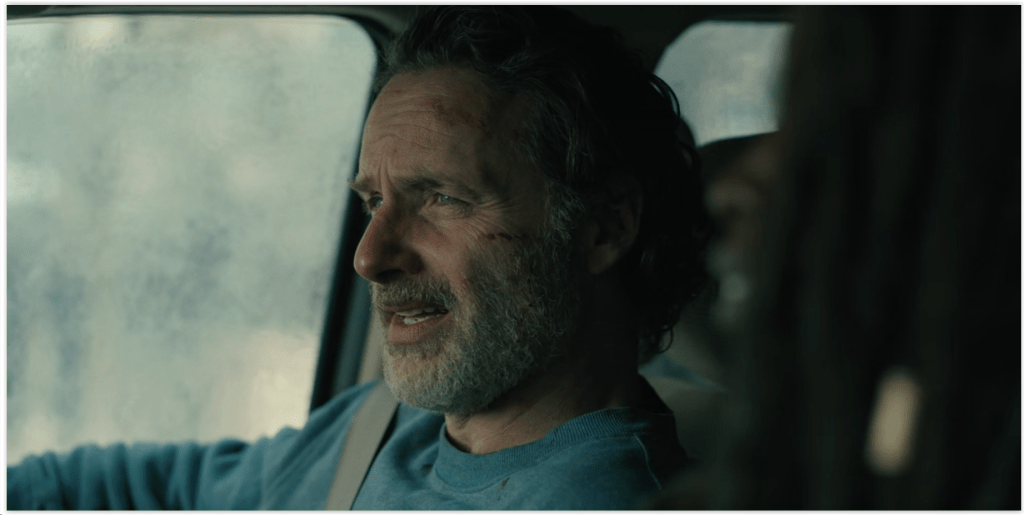
Another two eps, and we’ll know which way the story’s going. This one, though, was a perceptive, well-written character piece, undermined by the sheer implausibility of its setting, and the brushed-over resolution to the previous ep’s cliffhanger. While I enjoyed the writing, and the earnest performances of the stars, I found myself never quite being able to get past that.
 Simon’s Incoherent Blog