

“War is business. And business is booming.”
(SPOILER WARNING!)
Old school Who fans who were (perhaps understandably) concerned that last week’s brightly coloured deluge of space babies, farting space stations and musical numbers signalled a show more in the style of CBeebies will have been reassured by the massive tonal shift in the show this week, courtesy of returning alumnus Steven Moffat.
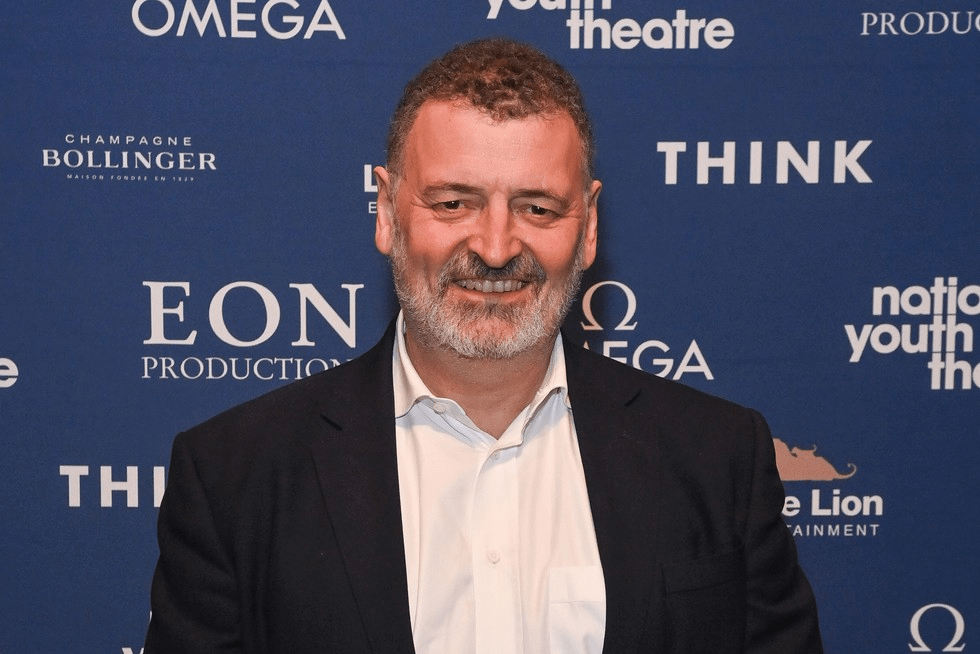
Moffat, is, I think, the first former showrunner to pen an ep for one of his successors (well, unless you think of Terrance Dicks, Robert Holmes and Christopher H Bidmead as ‘showrunners’). His own tenure as showrunner was every bit as divisive as Chris Chibnall’s, dogged by accusations of misogyny and excessively convoluted time paradox-driven plots that baffled the casual viewer. But his own standalone episodes, particularly when previously writing for Russell T Davies, were often highly acclaimed.
Naturally then, expectations were pretty high for his first Who episode since his departure as showrunner. And while this may not have been his best work (and indeed repeated a lot of tropes from his earlier eps), Boom was certainly a reassuring demonstration that the show hasn’t changed beyond all recognition – despite what the previous two episodes might have made fans think.

It was a high-concept ep – largely one setting, and one immediate, life-threatening problem. But Moffat’s script cleverly extrapolated from that to give us a threat to half the planet, along with a ruthless corporate conspiracy to profit from war. This was clever stuff without being so convoluted as to confuse viewers – an entirely self-contained episode with a single, claustrophobic setting, which reminded me of RTD’s similarly high-concept Midnight.
The mood was established well right from the outset in a long cold open, as we were plunged into an obvious war setting, with one soldier leading another who’d been blinded through a burning battlefield. In a reassuring callback to the ‘old’ show, these were immediately identifiable by their dog collars as the Anglican Marines Moffat himself introduced way back in the Matt Smith era (fish fingers and custard were also, amusingly, referenced). And in classic war movie style, you just knew that the soldier making a call to promise his daughter he’d be home soon was never going to make it.
The prologue also economically established the threats the Doctor was going to be facing – the none-too-compassionate ‘Ambulances’, and the show’s main problem, a hi-tech landmine that looked uncannily like a Roomba. Or perhaps a Roomba looks like a landmine – it never really occurred to me before!

Both were products of the story’s real villain, who never made an appearance except by proxy – the Villengard weapons corporation, who we later discovered had been orchestrating the entire war purely for profit, with no actual ‘enemy’ present at all. It was another excoriating condemnation of capitalist profiteering after the similarly anti-corporation Space Babies, which made me wonder yet again whether (large, profiteering corporation) Disney really know what their money is going towards.
Stepping onto the landmine almost as soon as he left the TARDIS (a problem he solved rather more quickly in Genesis of the Daleks) the Doctor was, in essence, immobilised throughout. This gave Ncuti Gatwa the chance to deliver a very impressive performance without his oft-used (and also impressive) physicality. He had to convey everything through voice and facial expression, in the sort of challenge often given to university drama students. And he certainly passed. Going from babbling, to serious, to wry, to righteously angry, without moving a muscle, Gatwa was every inch the Doctor we’ve always known.
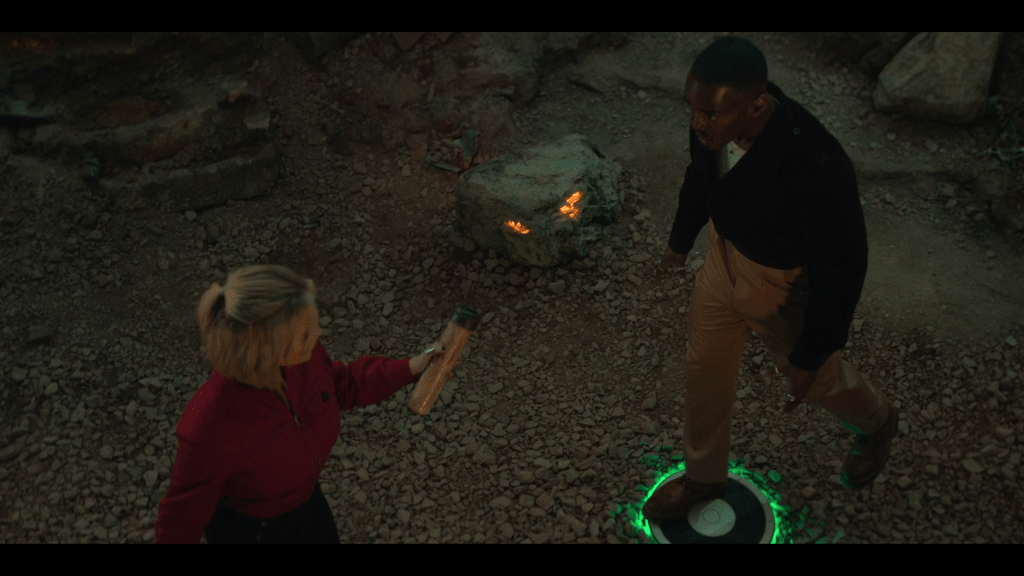
Despite being effectively sidelined by unconsciousness from about halfway through, Ruby showed herself to be as smart and brave as previous companions too. I don’t really get the criticisms levelled against Millie Gibson – she does perfectly well with what she’s given, which, I still think, is a bit ‘by-the-numbers Who companion’. The ep also dropped yet more ominous hints about her mysterious origins, as the Ambulance glitched while trying to identify her next of kin, and snow again began to fall around her. But I must say, while it’s not Steven Moffat’s idea this time, I can’t help being reminded of his approach of treating companions as plot puzzle pieces first and characters second.
For this story, though, Moffat did come up with some well-fleshed out guest characters, which was vital in such a seemingly small-scale story. So, joining the Doctor and Ruby in the shell hole were two more Anglican Marines, with their own subplot of (apparently) unrequited love, the AI ‘ghost’ of the soldier killed in the opening, and said soldier’s little daughter, unwisely venturing onto a battlefield in search of her dad.

Of these four, it was Varada Sethu as Mundy Flynn and Joe Anderson as the late John Francis Vater who made the most impact. Mundy was very much the no-nonsense professional soldier, while Vater was, first and foremost, a dad. It’s very much in keeping with Steven Moffat’s style that it was this family bond that saved the day, and also reminded us (yet again, after mentions of Susan in The Devil’s Chord) that the Doctor has been a dad himself. I’m wondering whether this will be followed up somehow later, after having been mentioned two episodes in a row…
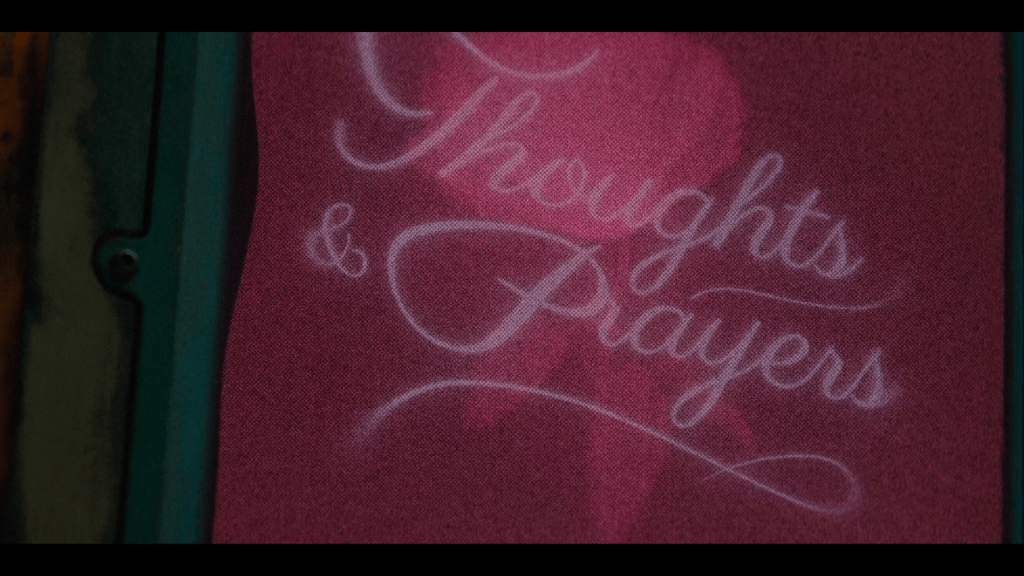
Also in keeping with Moffat’s style was an inventive ‘monster’ with a catchphrase. The Ambulances, with their deceptively friendly matronly ‘faces’ were particularly reminiscent of the Handbots from Tom MacRae’s 2011 ep The Girl Who Waited – compare “sharp scratch!” with “you will feel a slight tingle followed by death”. The one I found particularly blackly amusing, though, was their co-opting of one of the meaningless, bland platitudes so beloved of Americans on social media. Who would have thought it would be so menacing to be surrounded by killer robots all offering their “thoughts and prayers”? 😊
On the subject of prayers, along with the Anglican Marines, this ep showed us a Doctor who’s surprisingly scathing about faith. Faith, he declared, was what was stopping the Marines from thinking for themselves and discovering the truth about the war on Kastarion 3. It was ambiguous as to whether he meant faith in their superiors, the corporations, or their religion, but the use of the word was provocative, particularly aimed at the often strongly Christian American audience. Small wonder then that the Doctor ultimately conceded, to little Splice, that he might not like faith, but he does need it. Given Ncuti Gatwa’s much-publicised faith in astrology, I wondered how much input he had on that.

Boom may not have been up there with Moffat’s acknowledged classics like The Empty Child, The Girl in the Fireplace or Blink, but it was nonetheless a good Doctor Who episode very much in the mould of the show as it was in 2005. It was a clever high-concept story, tautly directed by Julie Anne Robinson, that had plenty of substance behind its imaginative ideas, and showcased Ncuti Gatwa’s versatility as an actor. It’s good to see that the show isn’t aways going to be the exercise in high camp that it was last week (though there’ll always be a place for that for me). I suspect RTD, shrewd man that he is, placed it here in the running order precisely for that reason – partly to reassure old-school fans, but mostly to demonstrate that this is an unpredictable show that can be completely different from week to week. And it always has been – something to keep in mind for both new fans and old.
 Simon’s Incoherent Blog
I so agree the characters needed to be ones we cared about here for a no-frills story set within such a small footprint. It did remind me of classic Doctor Who, and it was a welcome “relief” of sorts considering the high-wire acts the first two episodes were. Indeed, a reassurance to long-time fans the “roots” of the character were not abandoned, and ironically by “rooting” the Doctor in place.🙂
LikeLiked by 1 person