
“Bubble down, Dot off.”
(SPOILER WARNING!)
We’ve all seen them. Perhaps you even are one. Those people walking along the street, headphones on, heads down, immersed in their smartphones, utterly oblivious to what’s happening around them – in both a literal and a wider sense. Where I live, in central Barcelona, I often find myself having to dodge them as I walk along, as otherwise they would just walk right into me before they noticed I was there.
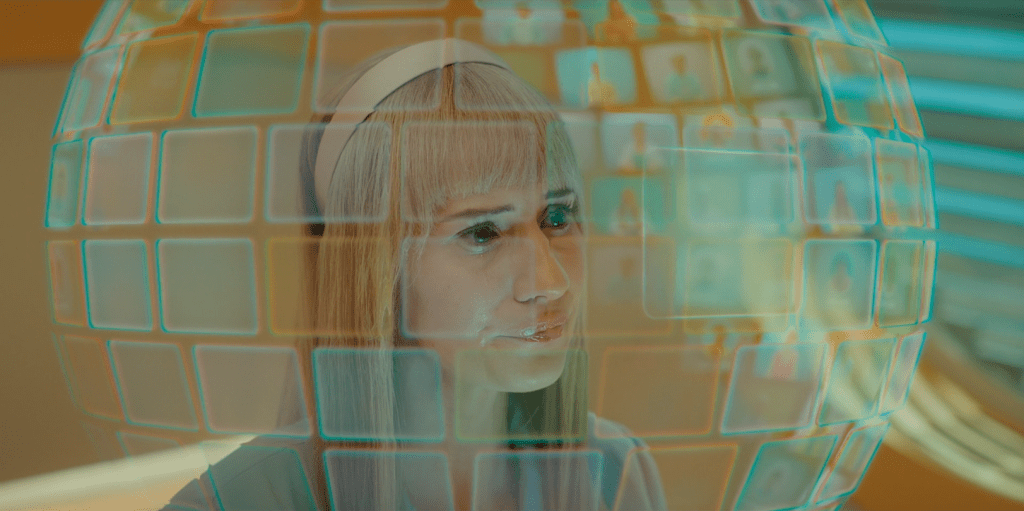
Russell T Davies obviously has noticed them, and judging by this episode, he’s none too fond of them. Dot and Bubble presented us with a world where attractive young people, akin to Instagram influencers, made up the whole population, and lived permanently in a totally immersive social media experience in the form of a ‘bubble’ of holographic profiles surrounding their head in a 360 degree sphere, and which formed their only social interaction. Even when sitting in the same room as the person they’re interacting with.
Fiercely resistant to the idea of turning off their Bubbles for even a moment, the population had become so totally incapable of functioning in the real world that, deprived of their onscreen instructions, they couldn’t even walk down the street without bumping into a lamppost. The trouble was that, outside their Bubbles, they were being eaten alive one by one by giant slugs, and weren’t even aware it was happening.
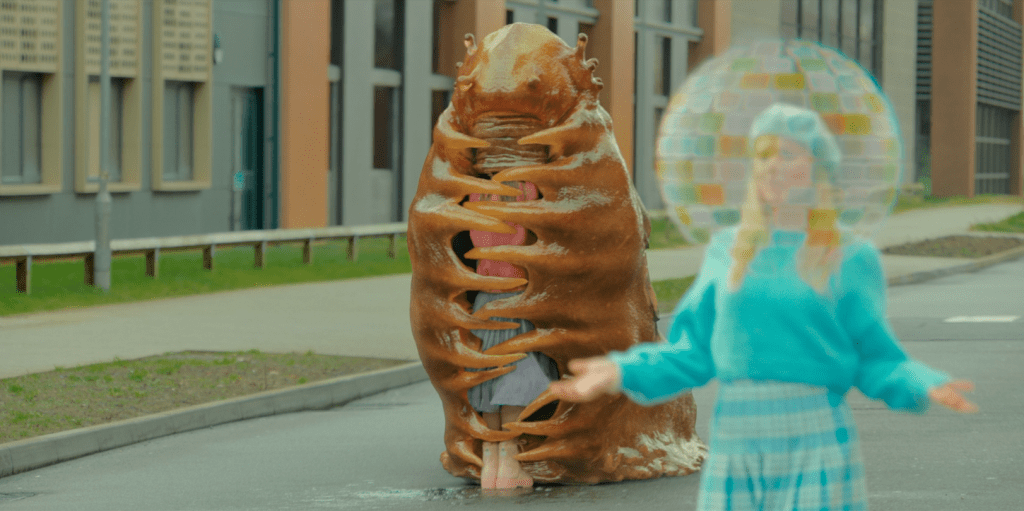
This was not a subtle episode. Facebook, Insta, TikTok and their ilk are fairly easy targets, and RTD zoomed in on all the obvious criticisms – the utterly superficial, vapid users were obsessed with nothing more significant than personal appearance, popularity and celebrity. Even the name, the Bubble, was a literal representation of the ‘bubbles’ social media addicts are often accused of living in, so self-absorbed that have no knowledge of what’s happening in the world unless it directly affects them.
Even as something of a social media critic myself, I actually thought Russell might be being a bit harsh. Yes, it certainly has a wide subculture of vacuous idiocy; but it’s also been integral of spreading awareness of the world’s social problems, and even, on occasion, doing things to stop them. But that wasn’t the aspect Russell was interested in, and I suspect this episode may be somewhat divisive along generational lines. Younger viewers, more accustomed to being immersed in social media, might baulk at such an unflattering portrayal; for me, though, as an older, more occasional social media user, this depiction of being constantly surrounded by brightly coloured, babbling idiots seemed like an effective 21st century hellscape.
After the expansive settings and wide cast of last week, this was a surprisingly economical episode, with, in essence, only two main characters outside of the Doctor and Ruby – and one of them only showed up quite late in the episode. Even the Doctor and Ruby, central though they were to the plot, weren’t in it much, spending the lion’s share of the ep being shown as talking heads inside main character Lindy’s Bubble, which can’t have taken very long to film. This worked perfectly well in context, but taken together with last week’s episode, did rather reinforce the idea that Ncuti Gatwa is so busy he can only make minimal appearances in what’s basically his show.
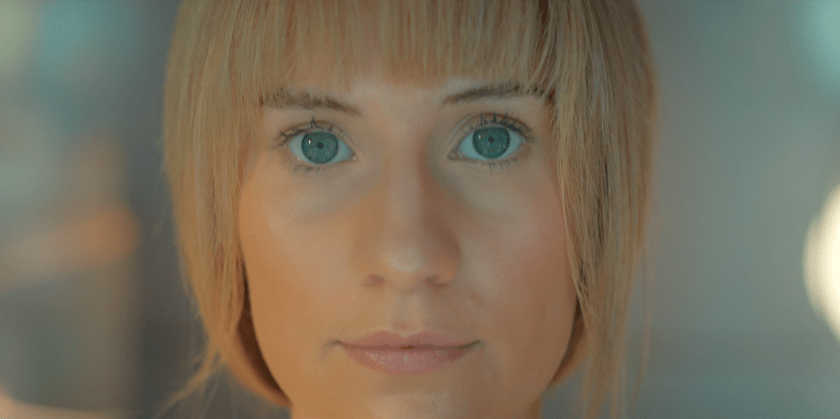
The plot was pretty basic and straightforward too, though no less effective for that. The Doctor and Ruby spent about a third of the ep gently coaxing Lindy out of her Bubble into the real world; and when she found out what was really happening, she had to get to the underground conduit which would allow her to escape the city. Callie Cooke, carrying the show for the majority of the ep, made a believably irritating social media addict, sneeringly dismissing our heroes as “stupid” and “offensive” for not following the etiquette of her online world, and credibly not softening even as she came to realise they were right and were her only chance of escape.
She was not a likeable character, so it was a bit of a risk to centre the ep so heavily on her. But it paid off. Just as we were starting to like her, she pulled that genuinely horrible stunt of getting the homicidal computers to kill the actually likeable Ricky first, on the basis that his real name was earlier in the alphabet than hers.
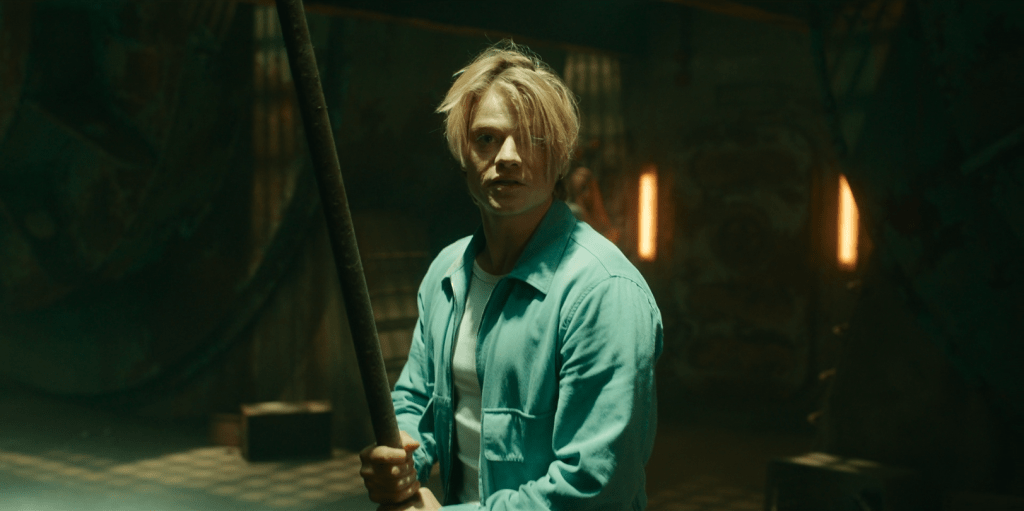
It was a clever bit of rug-pulling that instantly dissolved any sympathy the viewer might have been feeling for her. But it was as nothing (and may have been preparing the ground for) her ultimate refusal to be rescued by the Doctor because her society didn’t associate with “your kind”.
Up till that point, I’d been slightly surprised that Russell hadn’t tackled the darker side of social media, the side that brings us neo-Nazis, incels and fanatical Donald Trump supporters. But suddenly, there it was. The script didn’t come right out and use actual racist language, but the implication was very clear – and it suddenly became obvious that the entire society of Finetime was composed exclusively of attractive white people. Hitler would have loved the place.
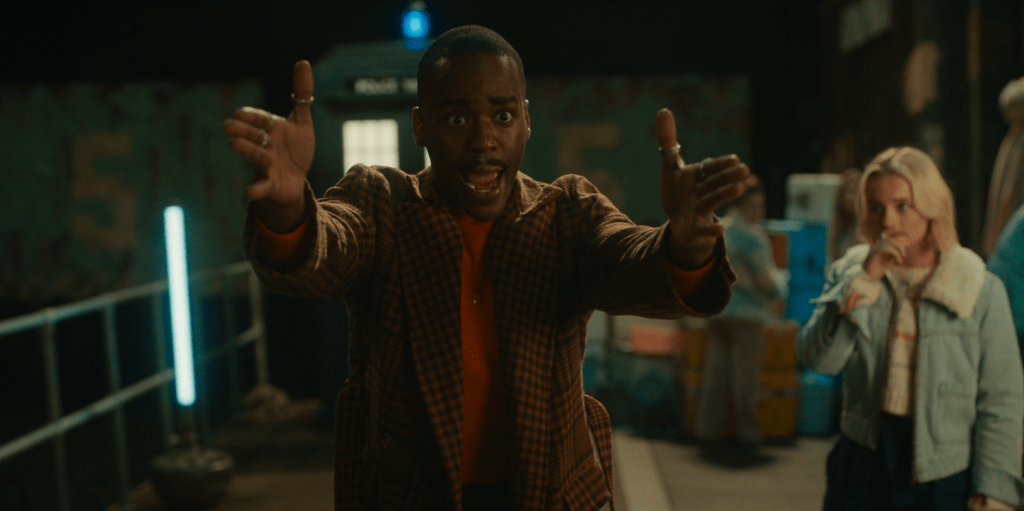
All credit to Ncuti Gatwa for pulling off the Doctor’s reaction, which was entirely in character. This is a man who, first and foremost, wants to help people, and it was perfectly in keeping when he desperately pleaded with them to let him rescue them, whatever they thought of him. Gatwa’s desperation, frustration, and ultimately, anger were physically expressed in a totally convincing way. It rather overshadowed Millie Gibson as Ruby, but if you look at her face in the background of that scene, the look of disgust and revulsion that creeps onto her face is massively telling, and very well-done.
References to the mystery of Ruby were kept to a minimum this week, but conspicuously, there was Susan Twist again, appearing here in the Bubble as Lindy’s mum. This time, even the Doctor recognised her (in this case as the ‘face’ of the Villengard Ambulances). Presumably this version of her is now dead, along with the entire population of ‘Homeworld’; but we’ve already seen her across multiple locations in time and space. On every occasion, she’s seemed no more significant than any other aspect of the episode; but taken together, her constant reappearances must have some vital role in the wider arc. Is she, perhaps, the mysterious “One Who Waits”? And if so, is she pretending to be something else, or actually unaware of it?

As is often the case with RTD scripts, this story falls apart rather when you start to think about it. If the Dots were perfectly capable of killing the population all by themselves (as happened with Ricky), why go through the elaborate scheme of engineering and releasing giant, predatory slugs to do it for them? But that would have undermined the effect of the episode, and those monsters were, as CG Who creations go, well-designed and realised. And they served to emphasise the story’s central message – that obsessively immersing yourself in social media to the exclusion of the world around you is a very bad idea. Particularly if your smartphone develops sentience, and decides that your idiotic babbling is so irritating it wants to kill you.
 Simon’s Incoherent Blog