

“Oh my Bridgerton – this is my actual dream!”
(SPOILER WARNING!)
So, this week’s Doctor Who was the much-anticipated “Bridgerton episode”. Just in case you weren’t aware of its inspiration, Ruby and the Doctor helpfully dropped the name of the show they were imitating over and over again – “it’s just like Bridgerton!” I wasn’t entirely clear, but it seemed at one point that even the villains were mentioning their love of Netflix’s hit Regency drama.
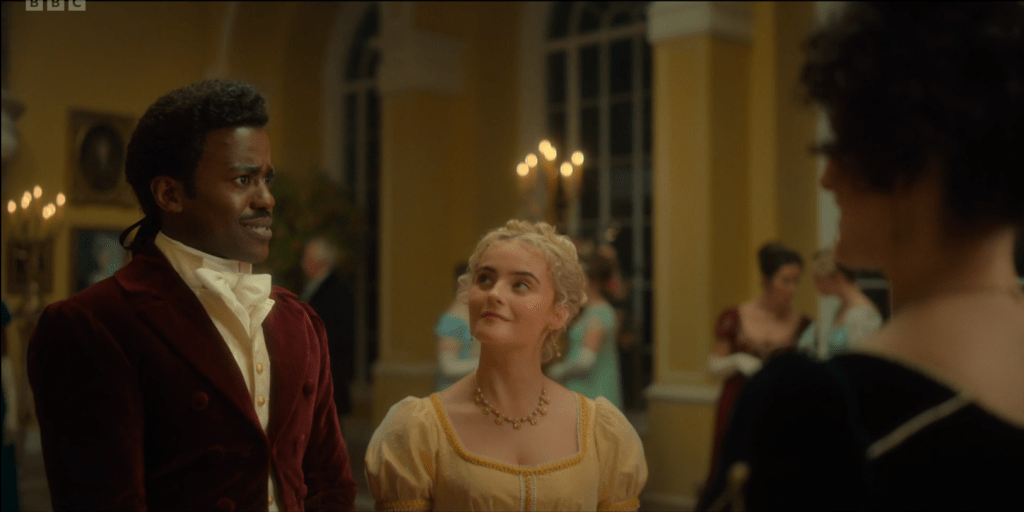
Not that there’s anything wrong with Doctor Who taking ‘inspiration’ from established stories – the show’s done it repeatedly in the past. Mind you, the onscreen characters don’t usually draw attention to it so much. Imagine if Sarah Jane Smith had spent The Brain of Morbius repeatedly telling the audience it was like Frankenstein. I think we could have figured that one out by ourselves; I did, and I was only seven when I saw it.
That’s only a minor gripe though. The trouble for me – and I fully appreciate that this is my problem, not scripters Kate Herron and Briony Redman – is that I don’t actually like Bridgerton very much. It has its roots in Jane Austen of course, and like so many Austen-imitating costume dramas, it seems to completely miss Austen’s point, eschewing her subtle class commentary for fetishising nice frocks, tight trousers, and superficial gossip about which rich person is shagging which other rich person.
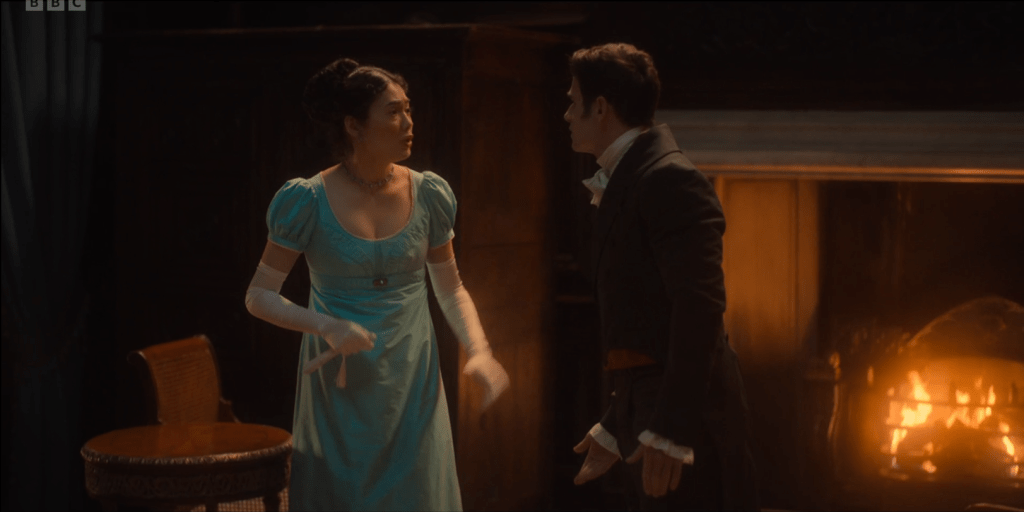
To be fair, I’m actually not a very big fan of Austen either. Don’t get me wrong, I very much respect the art of her work, and her groundbreaking popularisation of the novel as a storytelling form. But her stuff just isn’t for me. I find it hard to care about the overwhelming shame of having a slightly less nice country estate than the gentleman down the road, at a period in history when the majority of the populace was living in actual, grinding poverty. If I really want to read contemporary accounts of gender oppression or the class divide, I’ve always got Charles Dickens, Mary Wollstonecraft or Emily Bronte.
Being something of a lefty literature aficionado, then, I wasn’t predisposed to like this episode from the beginning. Again, I should stress that that’s a result of my taste, not any deficiency in the episode itself. But even outside of that, I did have criticisms. Russell T Davies has been outspoken about the show having visible diversity, in all sorts of ways. Bridgerton, with its melting pot of different races in the British aristocracy, is therefore a pretty good template, and just like that show, the Regency ball we saw here was far more racially diverse than your standard Pride and Prejudice adaptation.
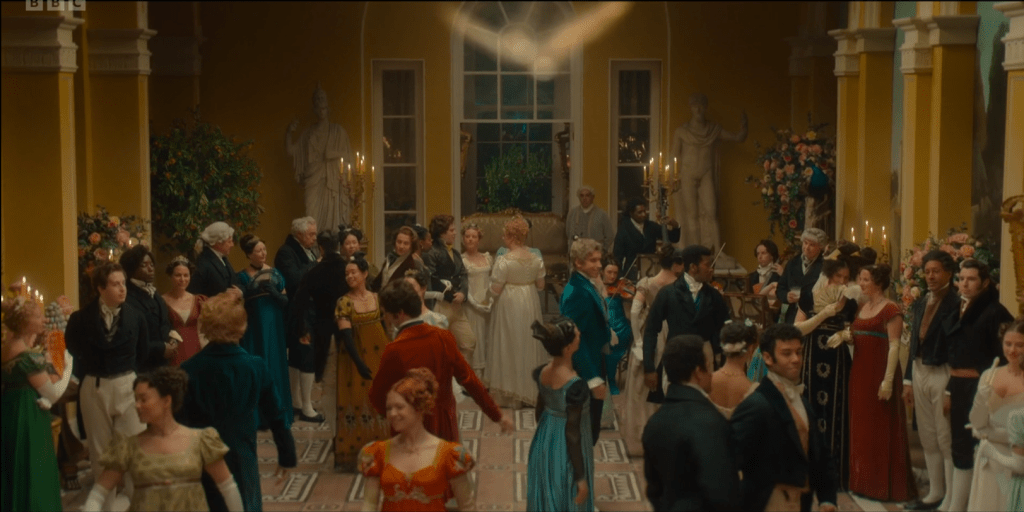
Thing is, Bridgerton can do this because it’s very explicitly set in an alternate history, in which King George III established racial equality and raised many people of African descent to the nobility due to the African heritage of his wife, Queen Charlotte. Rogue, however, is supposed to be set in the real 1813, and that was decidedly not a period of racial equality – all those non-white faces at the ball would have been a scandal in themselves. It felt weird, coming straight after an episode which showed that racial prejudice was very much alive and well in the far future, to have an episode pretending it didn’t exist in England’s past. Moreover, if you’re going to erase the period’s very real bigotry against non-white races, it feels doubly weird to have a plot point turn on retaining the era’s equally real homophobia.
For balance, though, there were definitely things I did like about this episode. Big American star Jonathan Groff was excellent as the titular Rogue, a time-travelling bounty hunter from the future, and had great chemistry with Ncuti Gatwa, with whom he was paired for most of the episode. Yes, the character is very similar to Captain Jack Harkness (though far more haunted and less flirty), but with John Barrowman persona non grata on TV these days, it’s nice to have someone equally charismatic stepping into the breach. It looks as though Rogue may well be a recurring character in future, just as Captain Jack was – and I’m quite happy about that, particularly given that he’s an even more overt love interest for the Doctor than Rose was.

Speaking of the Doctor, after two episodes in which he barely featured, it was great to have Ncuti Gatwa properly back in his own show. Another good thing about this ep was the way we got to see more facets of this new Doctor; he’s definitely more of a romantically available figure than any Doctor of the past, even David Tennant. What’s more, he knows it – this is a very flirtatious Doctor, who’s more than aware that he’s pretty hot, and confident with it.
Old-school fans who were distraught at the Doctor ceasing to be the asexual figure of the past were no doubt aghast at seeing him actively pursuing a love interest, and even kissing him – remember, all those kisses the Doctor’s had in the past were usually initiated by the other person involved (Jack Harkness excepted). For me, though, I’m very happy about it, and especially that the object of his desire is a man. One caveat – I do hope that he isn’t portrayed as just ‘gay’, and can be as omnisexual as Captain Jack was.
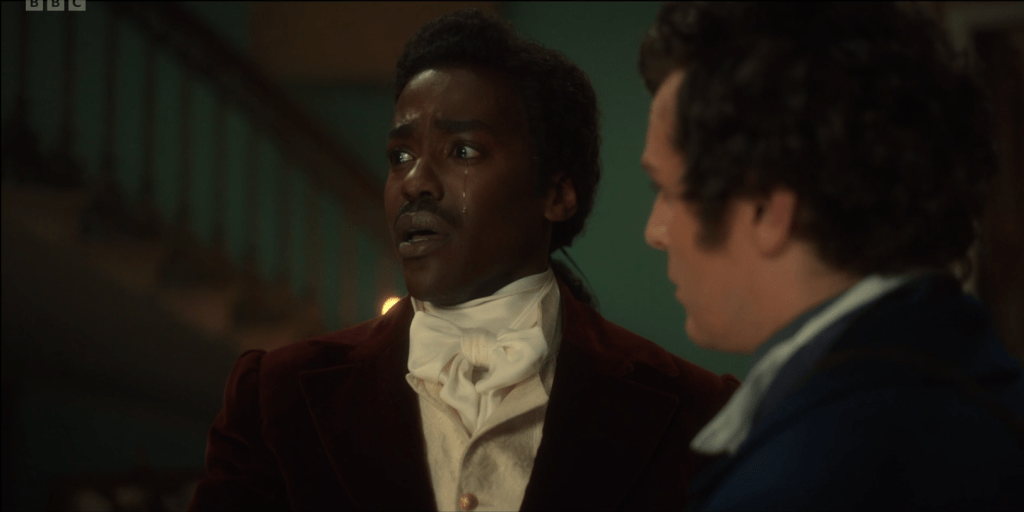
We also saw, for the first time, the darker side of this Doctor. It was very much in keeping with previous incarnations that he relished the idea of making the villainous Chuldur suffer for 600 years as revenge for what he thought they’d done to Ruby, though new fans starting here might have been shocked at this turn of the character. Those who’ve been with the show longer, though, will likely enjoy the consistency with his past actions. Despite his newfound joie de vivre, this ep didn’t shy away from acknowledging that the Doctor has had many traumas in his past that have shaped him – the dialogue with Rogue about loss was excellently done, calling to mind the tragic ends of companions past like Katarina, Adric, and even Amy Pond.
The past was also very much to the fore in the fan-pleasing sequence where he demonstrated to Rogue just who he was by means of a series of rotating holograms of previous faces. It was great to see all of the onscreen Doctors acknowledged, including John Hurt and Jo Martin; but what’s really put the cat among the pigeons is the inclusion of a mysterious face that might be unfamiliar. There he is, between William Hartnell and Tom Baker:
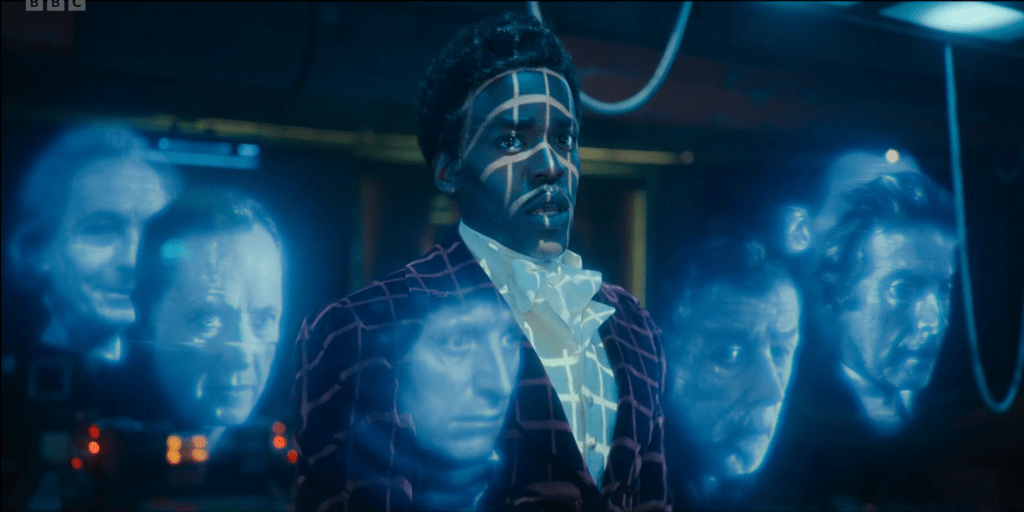
Some have suggested that it might be Michael Jayston as the Valeyard, but it seems most likely that it’s Richard E Grant, who played the Doctor in 2003’s flash animated serial Scream of the Shalka. It’s nice to see Grant acknowledged as a Doctor, but more than a little confusing given that the 2005 revival seemed to make this story non-canon – and also given that Grant has actually appeared onscreen as the villainous Dr Simeon, who later became the Great Intelligence. Still, that’s probably overthinking things, which we fans are definitely prone to do!
With the ep focusing very much on the Doctor and Rogue, Ruby was on her own for much of the time, but still got plenty to do. Millie Gibson was again good, engaging in a bit of hand to hand combat with a Chuldur to a string quartet-set version of Lady Gaga’s ‘Poker Face’, and pleading with the Doctor to sacrifice her for the greater good; an echo of many companions from the past. It’s a tribute to the performances that you almost thought he might have to do it, and a disadvantage of the show’s pre-publicity that you knew from later episode titles that he definitely wouldn’t.
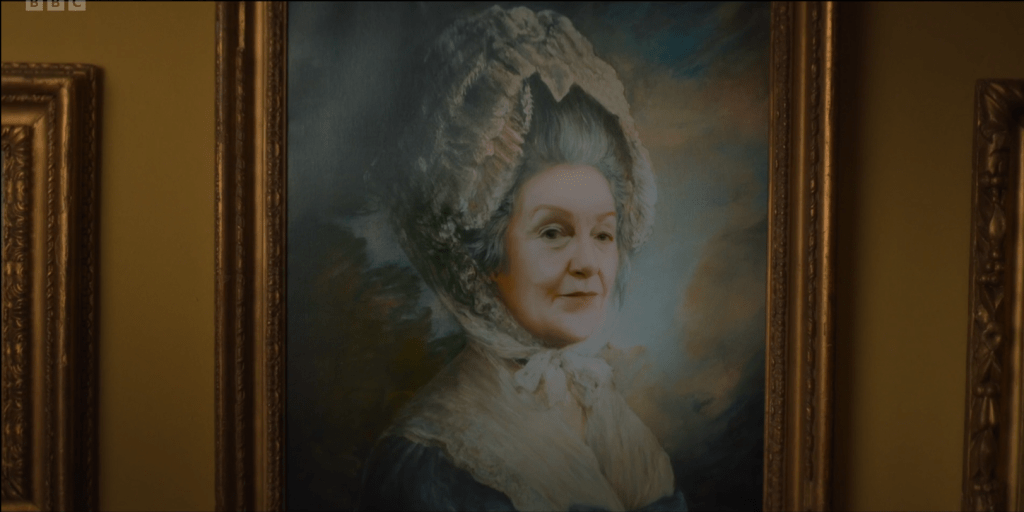
Speaking of Ruby, the enigma that is Susan Twist was present once again, though this time in a more unusual way – as a portrait of the Duchess’ deceased mother-in-law. Nonetheless, Ruby definitely recognised her again, and judging from the ‘Next Time’ at the end of the ep, it looks like we’ll be getting some answers about her next week…
The rest of the guest cast were also pretty good, and I was happy to forgive the show’s over-optimistic portrayal of Regency racial equality to see the magnificent Indira Varma as the Duchess, a character clearly based on Austen’s Lady Catherine de Bourgh. She was still great even after being taken over by a Chuldur. Mind you, I did think it felt a little strange to set cosplayers up as the villains, given the amount of them among Doctor Who fans – I wonder if any of them felt aggrieved?
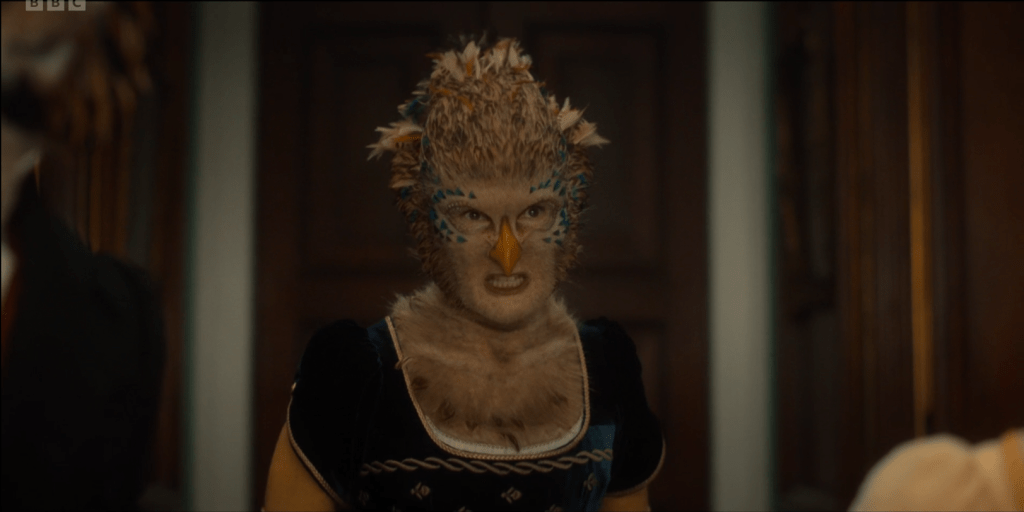
The Chuldur themselves, though beautifully realised with some great makeup, were pretty unexceptional as baddies. Since the show’s return, one of the tropes of Russell T Davies’ episodes has been the repeated visualisations of aliens as anthropomorphised versions of familiar Earth animals; we’ve had space cats, space rhinos, space dogs, and now, we got space birds. Ho hum.
For me, then, this was an episode that I enjoyed despite, not because of, its homage to/ripoff of Bridgerton. I fully admit that that’s entirely down to my own prejudices in not liking that kind of thing to start with. Not that there weren’t plenty of criticisms outside of that, but the excellent character work for the stars and the Doctor’s newly introduced love interest more than made up for it. Still, I daresay that if you do like Bridgerton, this must have been a lot of fun.
 Simon’s Incoherent Blog