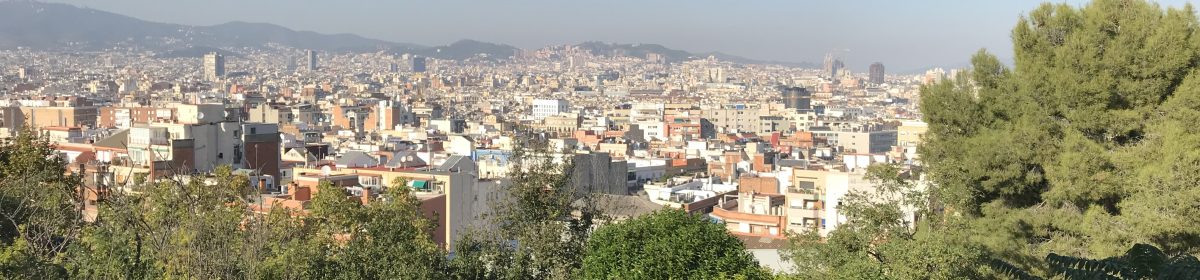

“This is where we live. And what’s that?”
“The fence!”
“And what’s inside?”
“People!”
“And what’s outside?”
“Monsters!”
(SPOILER WARNING!)
It’s a typically slow-burn start for the sophomore season of video game adaptation The Last of Us, a show whose first season I very much enjoyed despite never having played any of the games. As before, the most obvious comparison is to the seemingly never-ending The Walking Dead, and as before, The Last of Us is a far more thoughtful show. Both have very strong characterisation, but while TWD’s season openers typically included a spectacular horde of zombies, this dispensed with spectacle to build on the characters and relationships that were so strong last time.
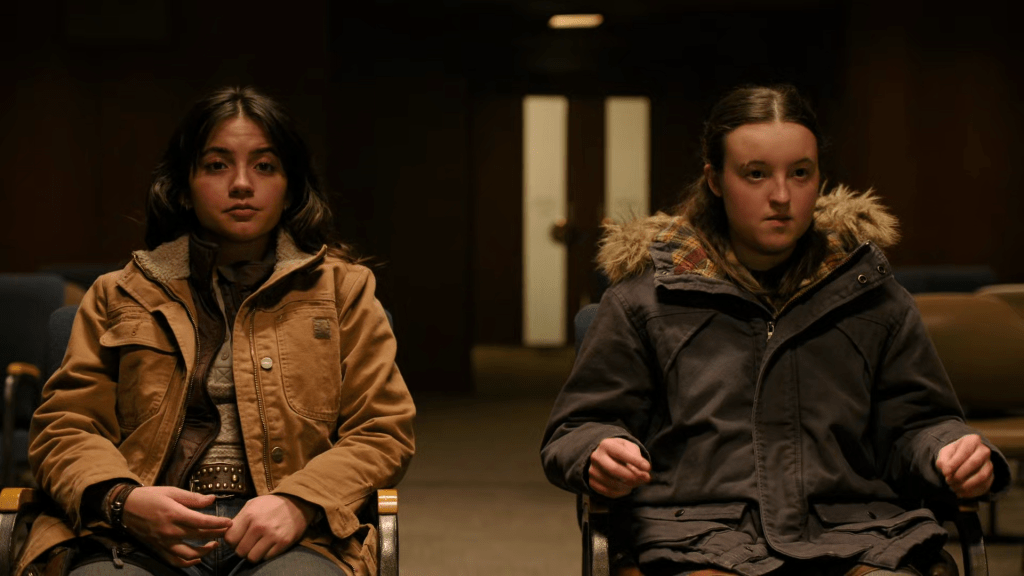
After a brief reprise of the previous season finale (and a group of Firefly survivors vowing to kill Joel slowly, which will surely be a season arc), we cut to “Five Years Later”, and Joel’s relationship with Ellie is increasingly strained. She still doesn’t know that he massacred the Fireflies to save her life, but she’s a typical teenage girl despite a fungal apocalypse, a fact that Joel’s therapist Gail (a magnificent performance from Catherine O’Hara) points out to him during a strained therapy session.
I’m not sure of the reasoning behind the five year time jump, just as I wasn’t sure in the first season why the apocalypse took place in 2003, ten years before even the first game premiered. Perhaps it was solely to give Ellie more time to change as a teenager, but honestly, she doesn’t seem that different from previously. Bella Ramsey is still superbly intense in the part, never letting us forget that beneath Ellie’s tough exterior is a sensitive young girl.
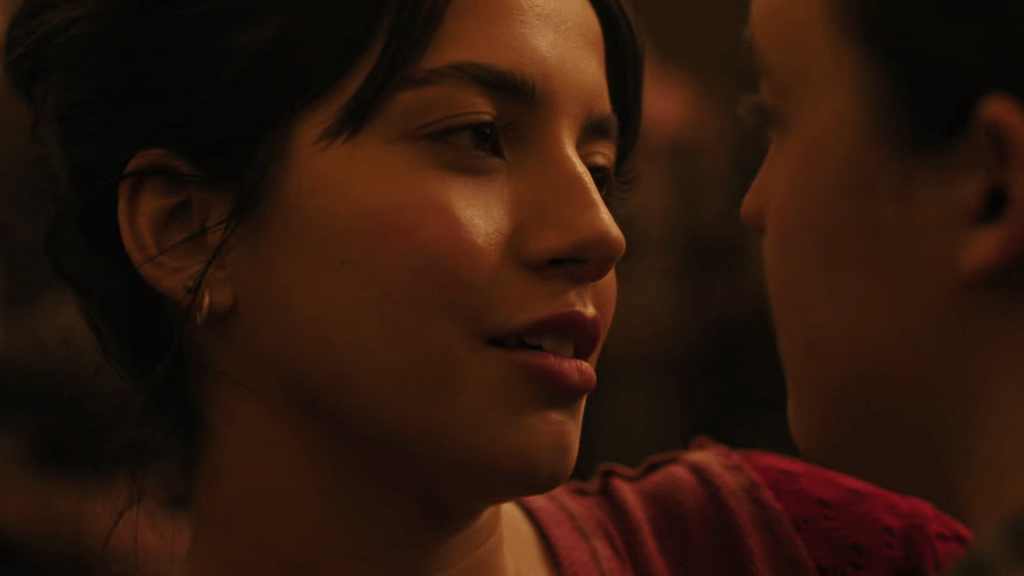
And she has a new love interest this season, in Isabella Merced’s similarly smartass Dina. One of the best things about the first season was its no-fuss approach to having LGBT characters like Frank, Bill and Ellie herself – remember the online furore at TWD’s chaste gay kiss in its sixth season? Despite the rather nasty culture wars prevailing in the US, things have changed since then.
But of course they haven’t in the narrative of the show, where civilisation’s pre-2003 attitudes are still the norm. This was nicely demonstrated by Seth’s homophobic remarks at the New Year dance, which got him a well-earned punch in the mouth from Joel. If Ellie and Dina’s relationship plays out through the season, and we get more of this, perhaps showrunner Craig Mazin has decided to make more of a deal of it this time.
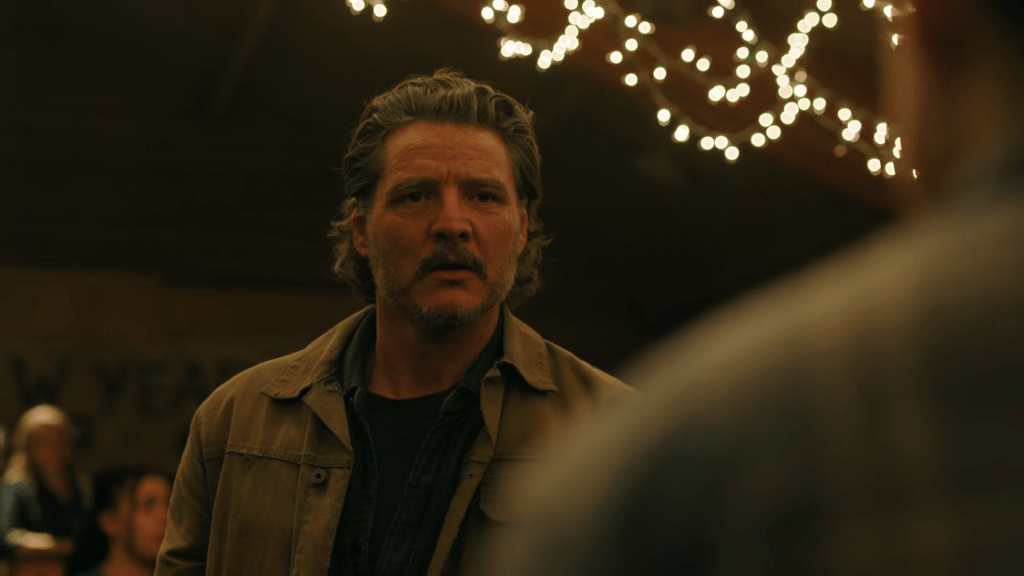
Speaking of Joel, Pedro Pascal continues to dominate every scene he’s in. It looks like the former lone wolf is settling uneasily into his new role as chief builder of the seemingly idyllic community of Jackson, Wyoming, lamenting his lack of resources while still seeming jaded with the whole thing. He’s still far from the traditional hero of such things; indeed, his argument with community leader Maria about closing the community’s doors to any more refugees was both pragmatic and unpleasant, aligning him with current right-wing beliefs the world over in a fairly transparent allegory.

But he’s as damaged as ever, and in an indicator of how pre-apocalypse Jackson still seems, he’s even going to therapy. Catherine O’Hara’s Gail, a cynical, hard-drinking psychotherapist, is about the only character in the show (other than Ellie) who can match up to him, and their scenes together were some of the best of the ep. Of course, any therapist/patient relationship would be strained if the patient had previously killed the therapist’s husband – a plot point I don’t remember from the first season, so presumably something that we’ll see explained in flashbacks.
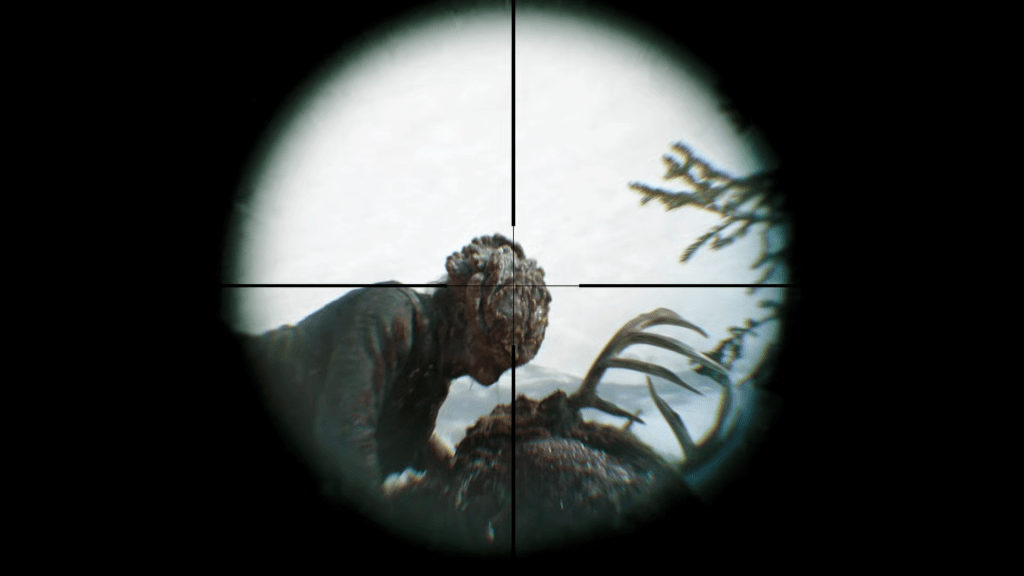
The show may be less focused on hordes of monsters than TWD, but they weren’t entirely absent here, as we saw in Ellie’s sharpshooting lesson, and her later hunting excursion. The latter was perhaps the thing most reminiscent of TWD, which featured several heart-pounding set pieces in derelict supermarkets. What distinguished it from that show was all those wide, sweeping vistas of the snowy landscape that Craig Mazin, directing as well as writing, used to give the visuals an epic feel that TWD, with its endless Georgia woods, never had.
In terms of the Infected, we didn’t see many – a hallmark of the show is that it tends to underplay its monsters – but there’s plainly an arc here too. Rather than just the mindless hunters of the previous season, the one Ellie encounters in the supermarket (pointedly, a young girl not dissimilar to herself) is capable of forethought and tactical planning. Are the Infected evolving to become a greater threat than before? It’s not a new idea – George Romero’s zombies evolved, as did, latterly, those of TWD – but it’s always interesting.

Not that they really need to evolve to threaten the clearly doomed community, with some nasty fungal growths emerging through the pipework that were stupidly overlooked by a maintenance worker early on. Really, given the situation of the world, wouldn’t a pipe clogged with plant growth have caused at least some alarm? Not to mention those vengeful Fireflies, still hot on Joel’s trail. Well, hot-ish – it’s taken them five years to find him, after all.
This was a solid season opener, if not spectacular. The show continues to focus primarily on character relationships, but plots are clearly being set up for the coming season. I know even less about the second game (which this is apparently based on) than I did about the first, and I’m deliberately avoiding looking it up to avoid spoilers. There’s some interesting new characters, particularly Dina, Gail, and Ellie’s hunky combat trainer Jesse (Young Mazino, previously seen as Steven Yeun’s sexy but dumb brother in Beef). But the heart of the show remains the father/daughter relationship between Joel and Ellie, and it’s good to see that developing.
 Simon’s Incoherent Blog
So cool Simon. Keep it up!!
LikeLike
Thanks Marc 🙂
LikeLike