
“I don’t accept your reality.”
(SPOILER WARNING!)
Ah, the “Doctor-light” episode is here. These first started in 2007 (surely no coincidence that we saw the TARDIS landing there in the prologue) with the ever-divisive Love and Monsters (personal disclosure – I actually really like that one). I wonder whether LINDA clocked that TARDIS arrival?
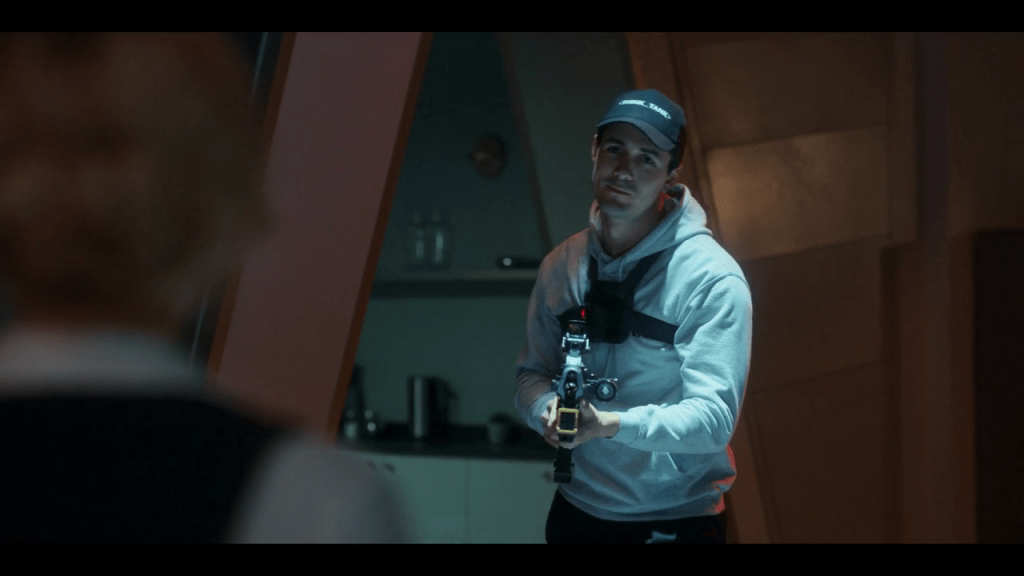
“Doctor-light” episodes made sense in the hectic production schedule of a thirteen episode season, when the main stars were being taxed to the max with work. They made less sense in last year’s eight episode season, but we had to have two for the show to fit in around Ncuti Gatwa’s existing filming commitments, resulting in the show’s incoming star being mostly absent for fully a quarter of the time. This year, though, I’d hoped that with Ncuti’s schedule clear, we wouldn’t need one, and he’d get a better chance to fully appear in his own show. It seems I was wrong, and I fervently hope this will be the only one of the season.
With all that said, this was another excellent episode, with a very bleak message about some people’s current denial of reality in favour of made up internet memes. Having looked briefly at social media, I’ve seen a number of such people already being outraged at what they saw as a very negative portrayal of them. So it was, and so it should be. I’d like to think that the fact they’re so upset means they have some sense of self-awareness about their idiocy, deep down; but I suspect, like the surprise antagonist of this story, they’re simply angry at being shown to be wrong.
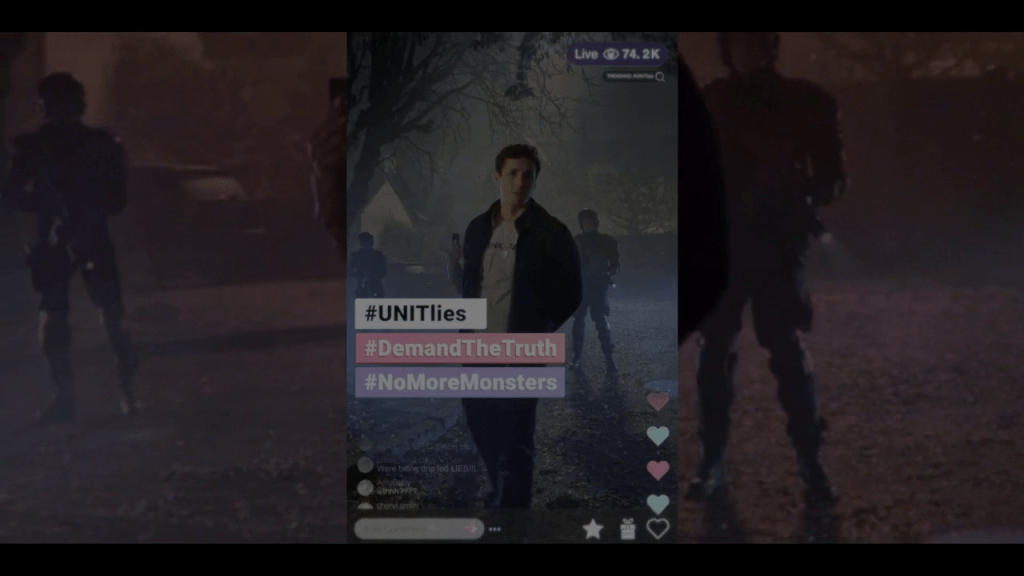
Not that they’re likely to accept it. The message here wasn’t subtle, but it was effective, in writer Pete McTighe’s clever script that wrongfooted us halfway through, by showing us that Ruby’s apparently nice new boyfriend was in fact nothing like what he seemed – and therefore, neither was the story. In this respect, Lucky Day was far superior to McTighe’s previous contribution to the show, Kerblam!, which was justly derided for casting its sympathies with the mega corporation that definitely wasn’t Amazon, while casting an anti-capitalist protestor as the mentally disturbed baddie.
Perhaps as a result of Russell T Davies’ oversight, this ep was much more in line with the show’s philosophy (and as unsubtle as RTD’s own political messages usually are). With the Doctor and Belinda largely absent, the Doctor’s role was taken here by returning companion Ruby Sunday, with her relationship with UNIT being more than a little reminiscent of the early 70s era.

Since its return in 2005, the show’s dealt several times with how former companions of the Doctor might go about their lives; Sarah Jane, Mel, Ace and Tegan have all had their moments in the sun. While missing the Doctor, they were all shown to be inspired by him to become crusaders against injustice and alien threats. And so was Ruby. But this was the first time that we saw another (very likely) result of having experienced so much danger and death during your travels in the TARDIS – PTSD.
So it was that Ruby seemed, initially, to be jumping at shadows, even confiding to new boyfriend Conrad that for her, every day was fight or flight. Jonah Hauer-King, as Conrad, did an excellent job of convincing us, for the ep’s first half, that he was another in the long line of people (like Clive in Rose, or Elton in Love and Monsters) whose brief experience with the Doctor had led to a lifetime of trying to find out more. For that first half, we truly believed that his budding relationship with Ruby was genuine, and heartfelt.
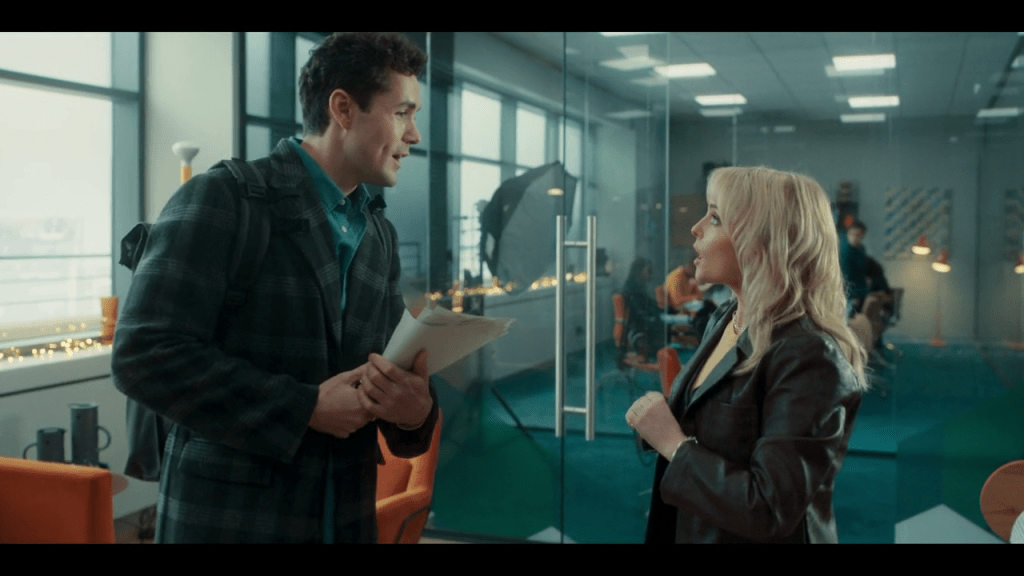
Which made it all the more shocking when McTighe’s script cleverly pulled the rug out from under us about halfway through, revealing Conrad to be the kind of reality-denying conspiracy theorist that, dispiritingly, have so many followers on the internet prepared to believe anything they say. It was a particularly clever reveal, because up until that point, Lucky Day had seemed a very trad Doctor Who episode, with its village setting, monster on the loose, and UNIT turning up to save the day.
It’s always good to see Jemma Redgrave turning up as Kate Lethbridge-Stewart, a redoubtable figure who has now been shown to be leading UNIT for 12 years, far longer than her father ever did. Also returning were the modern ‘UNIT Family’, with Alexander Devrient’s Colonel Ibrahim and the mysterious robotic Vlinx also putting in appearances. Good too to see Ruth Madeley returning as wheelchair-using scientific advisor Shirley, whose appearance led to one of Conrad’s most self-damning statements – “this one’s collecting benefits, stealing our taxes while she lies to us”. No wonder the Daily Mail– reading crowd were so upset about the ep.

Mind you, the mention of taxes, and Conrad’s typically right-wing statement that UNIT was “stealing taxpayers’ money”, did raise a few questions about the status of UNIT in the current show. Originally, it was a United Nations organisation; but when it returned in the new show, the UN weren’t keen on being associated with it, so the acronym came to mean “UNified Intelligence Taskforce”. But it’s still portrayed as an international organisation, so it was less than clear how British government interference could have such authority over it.
It has to be said, too, that UNIT used to be a top secret organisation, and that people were generally (somehow) unaware of the massive alien invasions (mostly of South East England) that it was repeatedly saving them from. Now, however, it has a giant tower in Central London with its name emblazoned on the top, and people are so aware of all the invasion attempts that the likes of Conrad, claiming them to be lies and conspiracies, would have a much easier time of it.

Still, although this is the first tine the Whoniverse has explicitly acknowledged that the alien incursions are common knowledge, UNIT has been far from secret for a long time, leaving it wide open to the kind of nutjob conspiracy theories espoused by Conrad and his ‘Think-Tank’ buddies. You have to wonder how anyone could think something as seemingly bonkers as, say, a Cyberman invasion was actually a cover for something even more extreme; but as we’ve seen in reality, plenty of people are prepared to believe the ‘alternative facts’ spewed out by the likes of the Donald Trump administration. If anything, national governments’ seeming endorsement of such denial of reality has legitimised these formerly fringe, tinfoil hat wearer beliefs.
This script took the clever approach of showing us that, even if reality were as bizarre as many claim, there would still be people prepared to believe that something even more bizarre was the actual truth. Conrad’s motivations were never entirely made clear; he was obviously an egotist begging for attention, and embittered that his own attempt to join UNIT hadn’t been accepted. But we also heard that he was making a tidy amount of money from his followers’ subscriptions, that he owned multiple houses, and paid little to no tax. It was a damning indictment of the likes of Alex Jones, whose internet lies made him a fortune that he ultimately lost as a result of legal action.
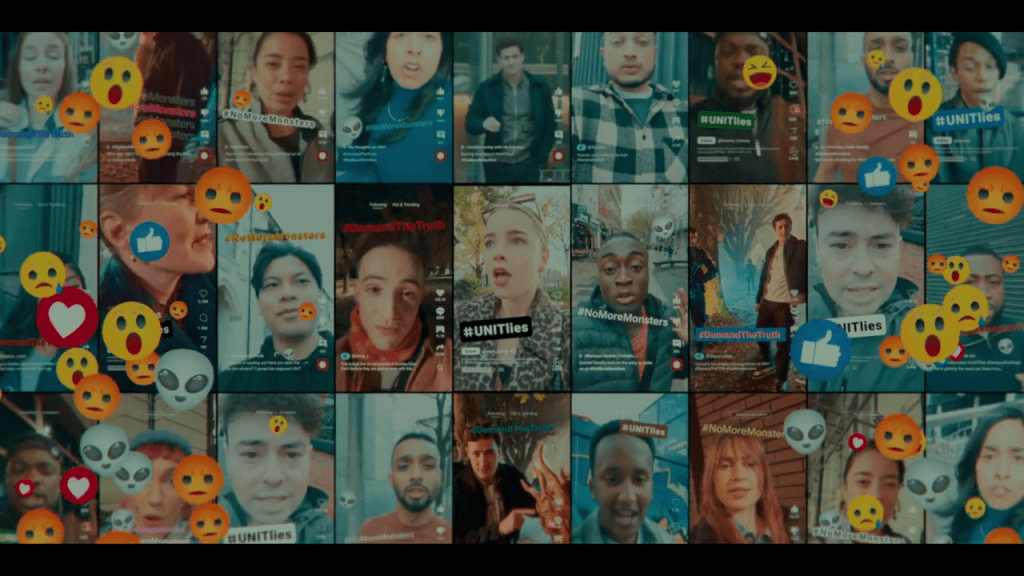
True to form, Jones is still fighting those court judgements, continuing to affirm his lies along the way. And just like him, Conrad remained unrepentant to the end. It would have been easy, and convenient, for him to have seen the light after actually being attacked by a genuine alien in UNIT HQ and being transported to the undeniably huge interior of the TARDIS. But McTighe’s script didn’t take the easy way out, and Conrad remained irredeemable in his dogged certainty that his was the only true view.
The line, “I don’t accept your reality” was the one that summed up him and those like him in the real world. No matter how much they are confronted with the actual fact that what they’re saying isn’t true, they continue to say it. Whether they actually believe it is a harder question, and one the script didn’t address; though perhaps it should have.
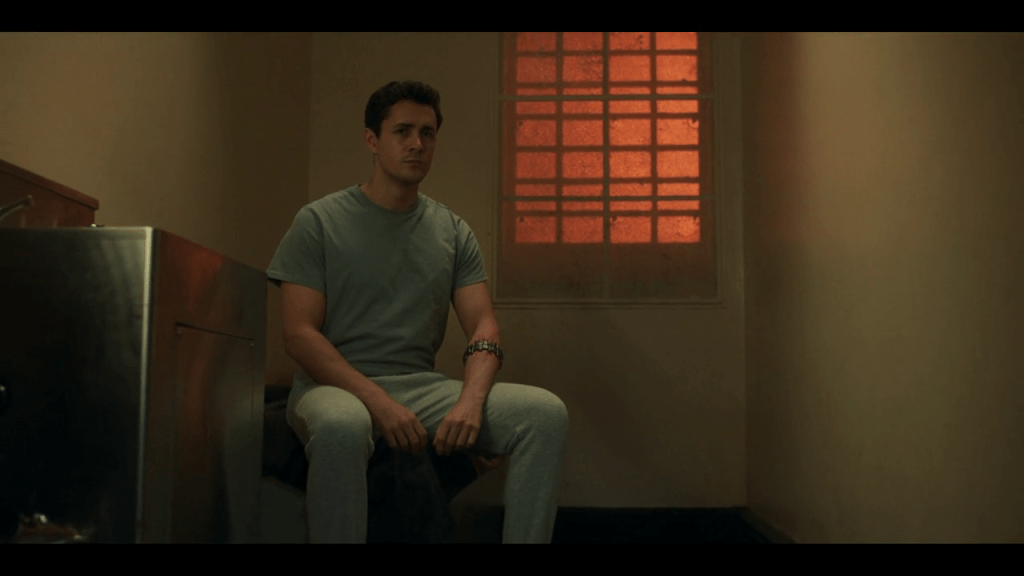
That line was also a nice reference to the classic show, albeit with its meaning inverted. There, it was the Doctor himself, trapped in the hallucinatory dimension inside the Matrix in The Deadly Assassin, who defiantly cried, “I deny this reality!”. And it wasn’t the only classic line to be used in the opposite way to the original. The Brigadier’s defiant, “get off my world!” also made an appearance; but here, it was directed by Conrad towards the Doctor.
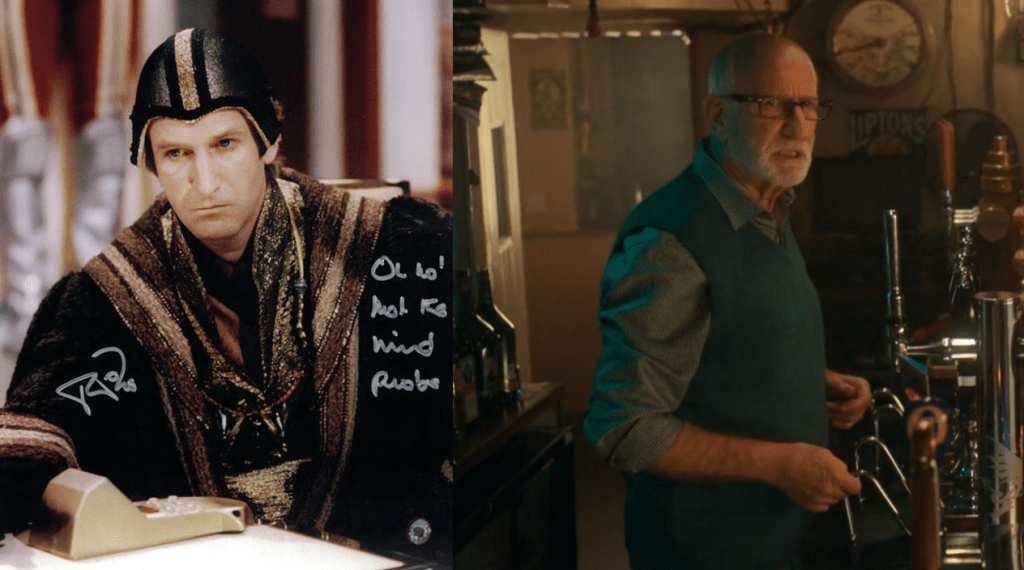
In less clever stuff, we also saw the return (in a different role, of course) of actor Paul Jerricho, who memorably played the Gallifreyan Castellan in two 80s stories. Here amiably incarnating pub landlord Alfie, he was sadly denied the opportunity to repeat his well-remembered line, “no, not the Mind Probe!”. Not even Pete McTighe was clever enough to work that one into the script believably.
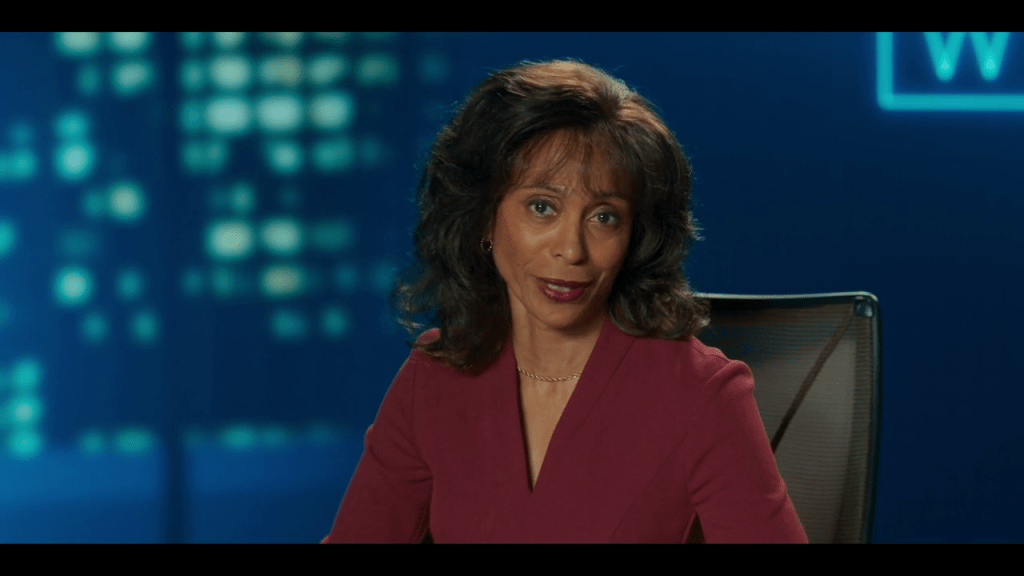
Also making a surprise and welcome return was Lachele Carl as RTD’s favoured fictional news anchor Trinity Wells, with news network AMNN. She was part of the montage of otherwise real-life personages commenting on the unfolding hysteria over UNIT, incuding much-trumpeted cameos by Rylan Clark and Jonathan Ross. In truth, their fleeting contributions didn’t amount to much, but it felt like another callback to the show’s past – specifically, the similar montage at the beginning of 2007’s Army of Ghosts.
This may have been a Doctor-light episode, but it was a clever, meaty story with plenty of thought-provoking stuff along the way. Returning as Ruby, Millie Gibson put in a good performance as a pseudo-Doctor, even while attempting to rebuild a normal life; while Jemma Redgrave’s Kate Lethbridge-Stewart was shown to be just as pragmatically ruthless as ever. A fact even she acknowledged as she released the Shreek to target Conrad, saying that, “actually, I’m glad he’s not here, because he would have stopped me”.
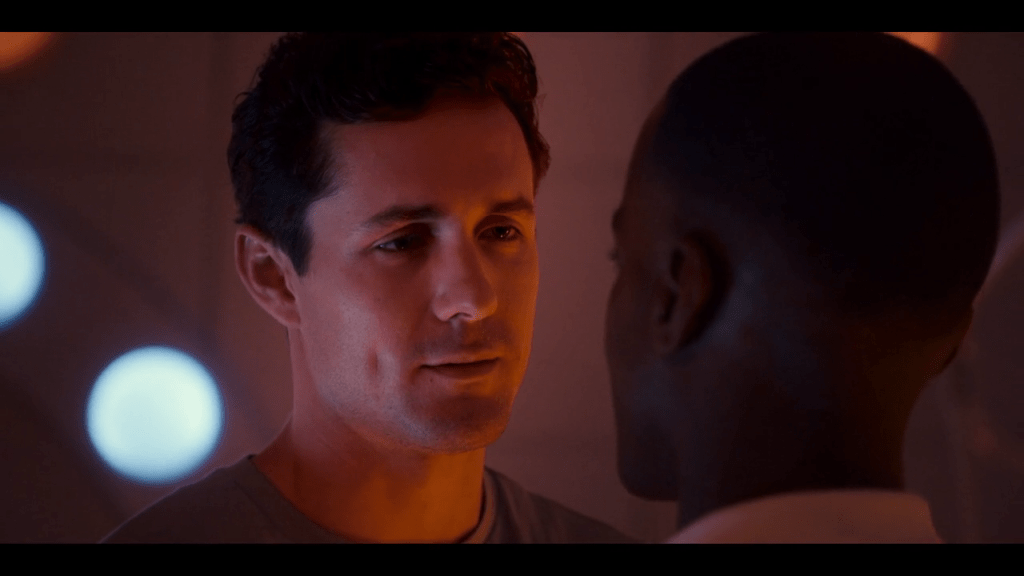
And when the Doctor did show up, for a brief scene at the end, Ncuti Gatwa’s masterfully contemptuous dismissal of Conrad as a little man who wouldn’t even be a footnote in history was exceedingly well-played. No wonder the conspiracy-spewing ‘fans’ who he bore so much intentional resemblance to were so incensed; though in a staggering lack of self-awareness, some are completely missing the point by saying the episode should have focused more on the alien monsters.
Despite the Doctor’s curt dismissal, I do wonder whether we’ve seen the last of Conrad. It looks like he may be too important to the overall story not to appear again. For a start, it’s clear that he was the one to first mention Belinda Chandra to the Doctor. And then there was the now-expected appearance of Mrs Flood, this time in the guise of the prison governor, ominously waving a set of keys that could release Conrad back into the world. It’s also a nice paradox that the Doctor we saw at the beginning, who gave Conrad the 50p, was a later one than we saw at the end. So presumably he already knew who Conrad was, and in a sense, was responsible for starting the whole chain of events himself. I really wouldn’t be surprised if he turns out to play some major part in the season’s resolution.

This was an excellent episode with a lot of substance along with a gripping story, the third in a row after the rather lacklustre Robot Revolution. It was a defiant “screw you” to the internet conspiracy theorists, and by extension to all those who “deny reality” for their own reasons. 100 days into a Trump Presidency, with the similarly reality-denying Nigel Farage’s Reform Party making significant gains in the British local elections, it was a timely tale and very well-told. But I do hope it will be the only Doctor-light story for the year.
 Simon’s Incoherent Blog