“Look, that’s a hundred thousand people, frozen and suspended in space. To reach them, and catch them, and revive every single one of them – you’d need to be some sort of insane genius.”
(SPOILER WARNING!)
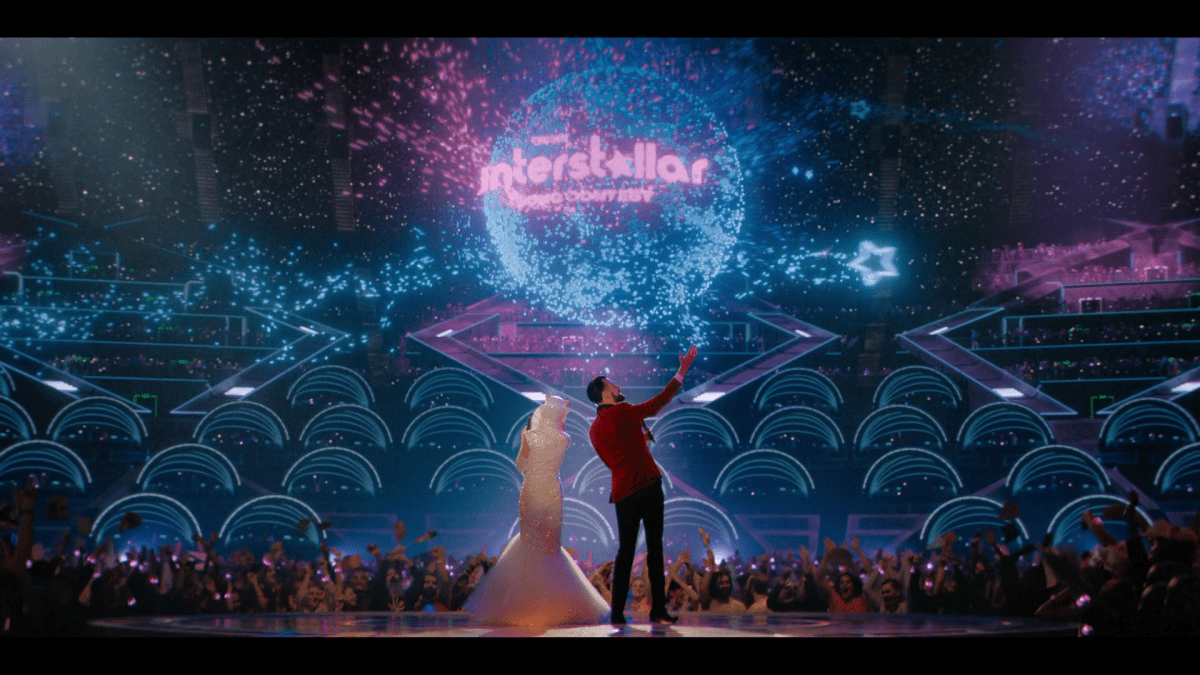
It has been noted many times that one of the most significant groups among Doctor Who fans is gay men. It has also been noted many times that one of the most significant groups among Eurovision Song Contest fans is gay men. It was perhaps almost inevitable that at some point, we’d see a crossover between the two things – especially with renowned gay writer Russell T Davies, creator of Queer as Folk and lover of all things pop culture, running the show.

In fact, the only real surprise was that The Interstellar Song Contest wasn’t actually written by RTD himself. Instead, a script by Juno Dawson, the show’s first trans writer, set out to capture everything that is cheesy and fun about the much-loved icon of musical camp that is Eurovision. But it was surely Russell T who saw to it that this episode would be broadcast on the same night as the actual 2025 Eurovision final, giving fans of both a smorgasbord of an evening.
Obviously though, this wasn’t going to be for everyone. The high camp of Eurovision is very much a love-it-or-hate-it phenomenon, so a number of the usual suspects were already loudly decrying their hatred of the episode before anyone had even seen it. Presumably anticipating this, Dawson’s script included a sweet gay couple who encapsulated both viewpoints – Gary (Charlie Condou) was very much a traditional Eurovision superfan, while his husband Mike (Kadiff Kirwan) was the Eurovision sceptic, unable to understand what the fuss was about but going along to keep Gary happy.

The ep was littered with Eurovision easter eggs – so many that I doubt I caught them all. We had the second appearance this season for Rylan Clark, who is apparently kept in cryogenic suspension and only ever awakened to host the song contest. That’s actually a pretty horrific concept if you stop to think about it, but this wasn’t that kind of episode. It was too fast-moving to dwell on much, which perhaps worked to its detriment as a story.
Elsewhere, there was a hologram of Eurovision legend Graham Norton, finally appearing in the show proper after some well-remembered… “unscheduled interruptions” in its early years. And the montage of the rescued fans being revived at the end was soundtracked by none other than Bucks Fizz’s classic 1982 Eurovision winner, ‘Making Your Mind Up’.

Of course, if you’re going to do a pastiche of the Eurovision Song Contest, there do have to be some actual Eurovision-style songs. Longtime composer Murray Gold has form in this area, going way back to ‘Song for Ten’ in 2006’s The Christmas Invasion, which could easily be a Eurovision entry itself. Obviously though, the action couldn’t come to a halt for us to hear a complete song, so we got some entertaining snippets that encapsulated the Eurovision style, from the heartfelt ‘I Love You But My Heart Says No’ to the gibberish of ‘Dugga Doo’. The real Eurovision has history there, having produced entries with titles like ‘A Ba Ni Bi’, ‘La La La’, and Lulu’s UK winner ‘Boom Bang-a-Bang’.
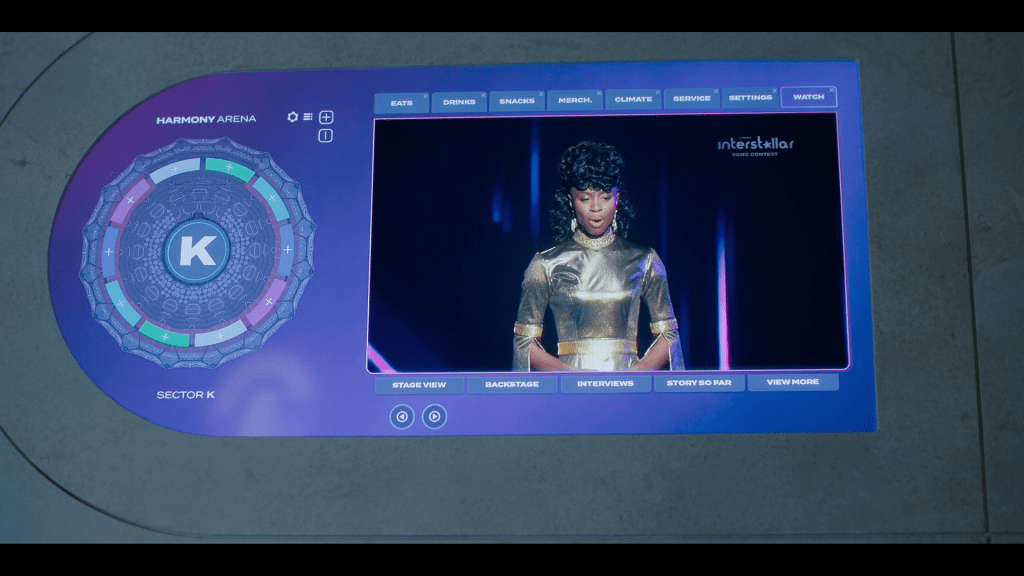
But plainly in a story about a song contest, we were going to have to have at least one complete song that would play a crucial part in the resolution of the story. Sadly, I have to say I found Cora St Bavier’s apparently unnamed song celebrating the lost beauty of Hellia to be rather less moving than the characters onscreen. Yes, it was a perfectly good tribute to this style of poignant Eurovision entry from beleaguered countries; but for me, it was one of Murray Gold’s less hummable songs, after the poignancy of the Ood Song, or the Katherine Jenkins-sung Abigail’s song in A Christmas Carol. Nul points from this jury.
Still, the song did produce a satisfactory resolution to the story, as an alternative to the revenge-themed terrorist activities of Hellian rebel Kid (Freddie Fox, looking sexier than ever with horns). Well, there did have to be some kind of story – at least then, if you don’t actually like Eurovision, you have some investment in the episode.
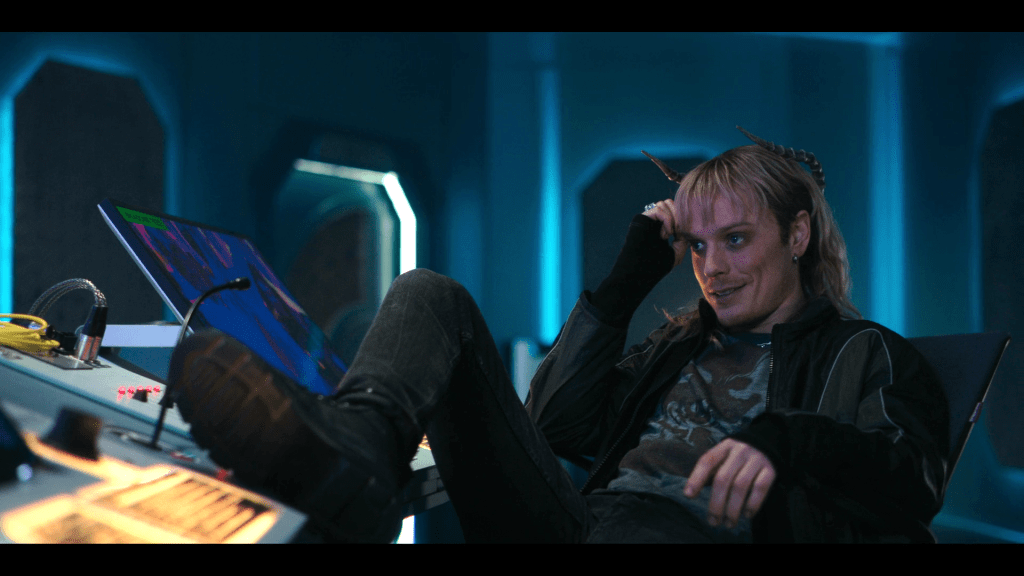
Trouble was, while the story raised a lot of Important Issues, it didn’t stop moving long enough for them to be seriously examined. So, we learned that the Hellians were unjustly discriminated against by, basically, the entire galaxy, with Kid making the point that he was only acting in the way people expect from his race, while Cora (a dignified performance from Miriam Teak-Lee) hid her secret shame of being a Hellian herself by cutting off her horns. Clearly, there were points being made about blind prejudice, and about people feeling the need to hide who they were. But they were pretty broadbrush, and rushed past a little fast to make much impact.
However, there may have been a slightly more subtle message in the main plot of the unnamed “Corporation” that ravaged Hellia’s surface just to produce honey, which also served to sponsor the Song Contest. Eurovision is always political in reality, and for the last two years, there has been a lot of controversy about allowing Israel to participate. Whatever your thoughts on that, it is worth noting that the Israeli entry got through to the final on both occasions. And that the Contest has been sponsored for some years by Israeli cosmetics company Moroccanoil…
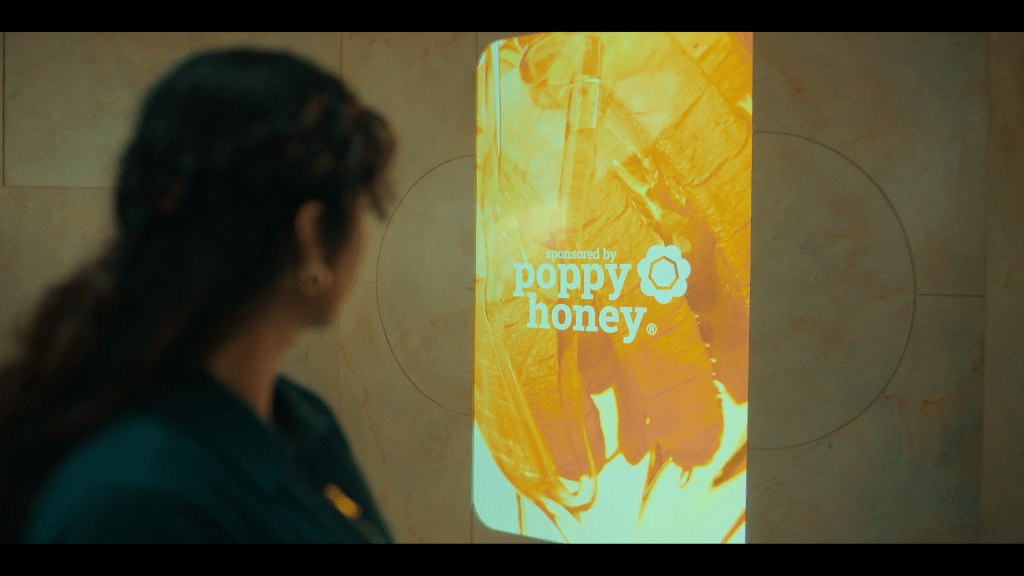
Whether or not this parallel was intended, there was undoubtedly some righteous (if nebulously expressed) anger in this story. Nowhere was this made clearer than with the Doctor himself. A number of fans have been critical of the Doctor’s seemingly cruel treatment of Conrad at the conclusion of Lucky Day, but that was as nothing compared to his actual torture of Kid here, which continued well after the actual threat had been neutralised.
I don’t have a problem with either of those actions, as clearly a plotline is being shaped up that this mainly joyful, exuberant incarnation of the Doctor has a dark side too. Ncuti Gatwa got to show some range as he explained himself (with some shame) as having been ‘triggered’ by the memory of his own people being wiped out “in a second”. While we still don’t know exactly how the Master accomplished this (thanks for the lack of detail, Mr Chibnall), it’s clear that the show is continuing to acknowledge its past and how it might have affected its main character.

And that past was very much on display this week. Despite Russell T Davies’ public statements that he wouldn’t be bringing back the likes of the Daleks so as to not lean too heavily on the show’s history, that was exactly what was happening here. So I was more than a little open-mouthed at the unexpected return of the show’s very first companion, the Doctor’s granddaughter Susan, in a series of repeated visions in the Doctor’s mind.
It was great to see Carole Ann Ford say “Grandfather!” again after so many years, but I hope she has a more substantial part to play in the next couple of episodes than just being the Doctor’s conscience. Mind you, if she’s still around, he can hardly be “the last of the Time Lords”, can he?
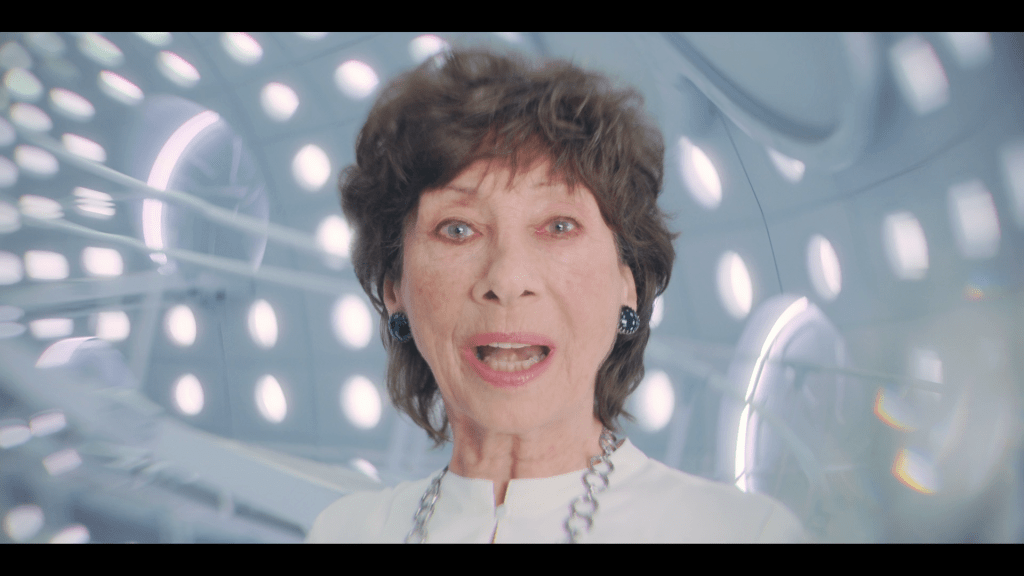
And of course he isn’t, as we discovered in a mid-credits scene that finally, after two years, explained just who Mrs Flood is. There have, as ever, been plenty of fan theories, which have included the possibility that she is some future incarnation of Susan herself. She’s been given such significance that she obviously had to be some important figure from the show’s past; and after the Master has made so many ‘surprise’ returns in recent years, that couldn’t have been it. So, in a slightly anticlimactic revelation, it turns out that, just as many fans had thought, she’s actually the Rani.
I have no problem with that. Kate O’Mara as the Rani made such an impression in the 80s that it’s easy to forget she only actually appeared in two stories (the second of which is widely regarded as one of the worst ever). But how much of that impression was given by the actor herself, rather than the conception of the character, a rogue ‘Time Lady’ who wasn’t so much a villain as an amoral scientist without a conscience? O’Mara dominated the screen whenever she was on, and even managed to be memorable in her second story when the rest of it is best forgotten.
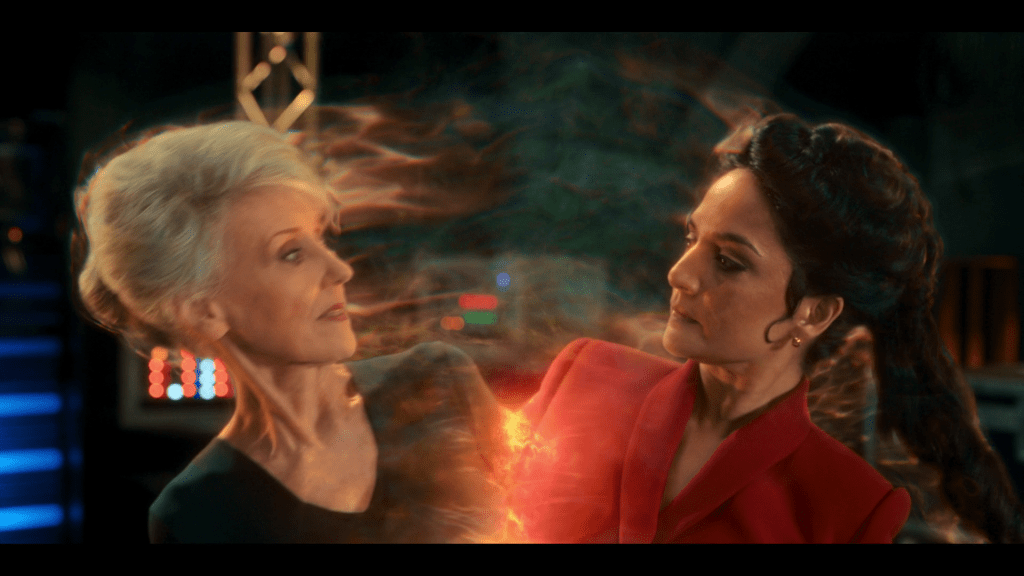
So there’s a lot of pressure on Archie Panjabi, as the ‘new’ Rani – let’s see if she’s up to it. But in a display of having your cake and eating it, she couldn’t just regenerate. Oh no, we got to keep Anita Dobson as Mrs Flood courtesy of the second ‘bi-generation’ in recent years. I was a little dubious about this concept when it debuted, and I remain unconvinced that it’s a good idea for every Time Lord to be actually duplicated every time they regenerate. It is definitely nice to keep Anita Dobson around (though why has she suddenly become a subservient sidekick to her new incarnation?), but I hope we don’t have to have the Doctor ‘bi-generating’ every time an actor leaves now. There’s enough copies of them littering the Universe as it is.
A less serious part of the show’s past made another (for me) unwelcome return here, with the repeated reference to gravity as “mavity”, in a story littered with necessary references to it. As a one-off gag in The Wild Blue Yonder, I was ok with this, but its constant repetition as (presumably) an in-joke is increasingly running the risk of making the show and its hero look scientifically illiterate to casual viewers not in on the joke.
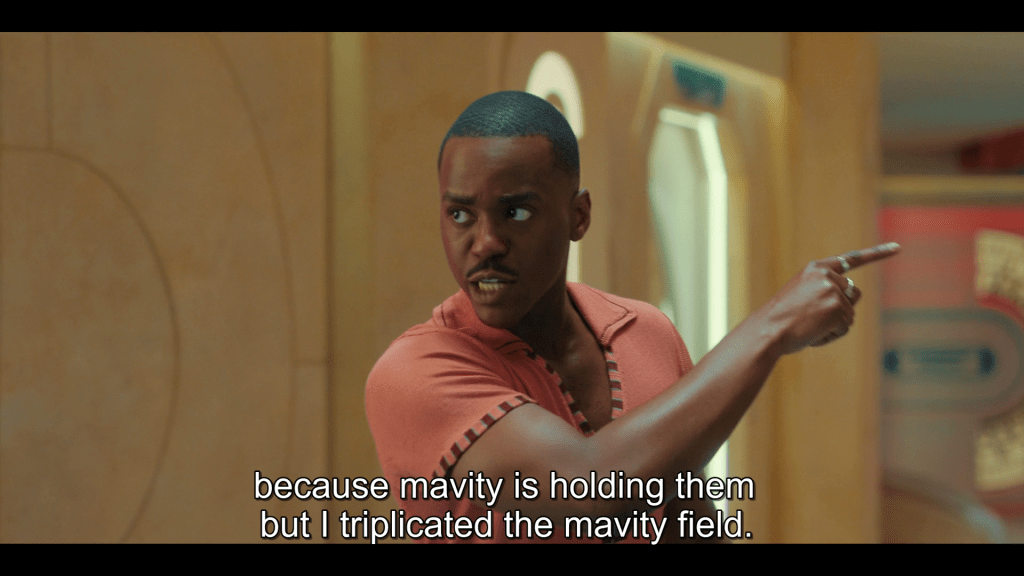
It has been suggested that this change to established history means that every story since The Wild Blue Yonder is technically taking place in an alternate timeline; I’d rather the writers did something with that than running a mildly amusing gag totally into the ground. I’m actually presuming they will, at least, do something more explicit with it than just repeating it ad infinitum – why else keep so conspicuously using it?
All these Big Revelations unfortunately overshadowed the, let’s face it, rather slight main story here. Yes, it worked… ok as a tribute to the Eurovision Song Contest, but its attempts at profundity were slapdash at best. As an earnest critique of corporate greed, this was nowhere near the level of Jamie Mathieson’s excellent Oxygen from way back in 2017. That ep also involved a far more realistic (and gruesome) depiction of the real effects of being stuck in space without a pressure suit (spoiler – it doesn’t just freeze you). Mind you, this is the self-same Doctor who once ventured into space with only a helmet and a cricket ball to propel himself to safety, so it’s probably a bit churlish to complain about using a confetti cannon to do the same here (“Camp.”).

This was an enjoyable bit of fluff, especially for those of us who are Eurovision fans, but ultimately a pretty unmemorable episode. It’s by no means bad, but I’d be surprised if anyone looking back in years to come thinks of it as a classic. It was only lifted into the territory of being notable by all those Big Revelations, which felt somewhat grafted on to lead into the season’s big two-part conclusion, but unfortunately that made for a somewhat unbalanced story. Still, we’ve been spoiled by some very good episodes this year, so a more average story is hardly a bad thing.
 Simon’s Incoherent Blog