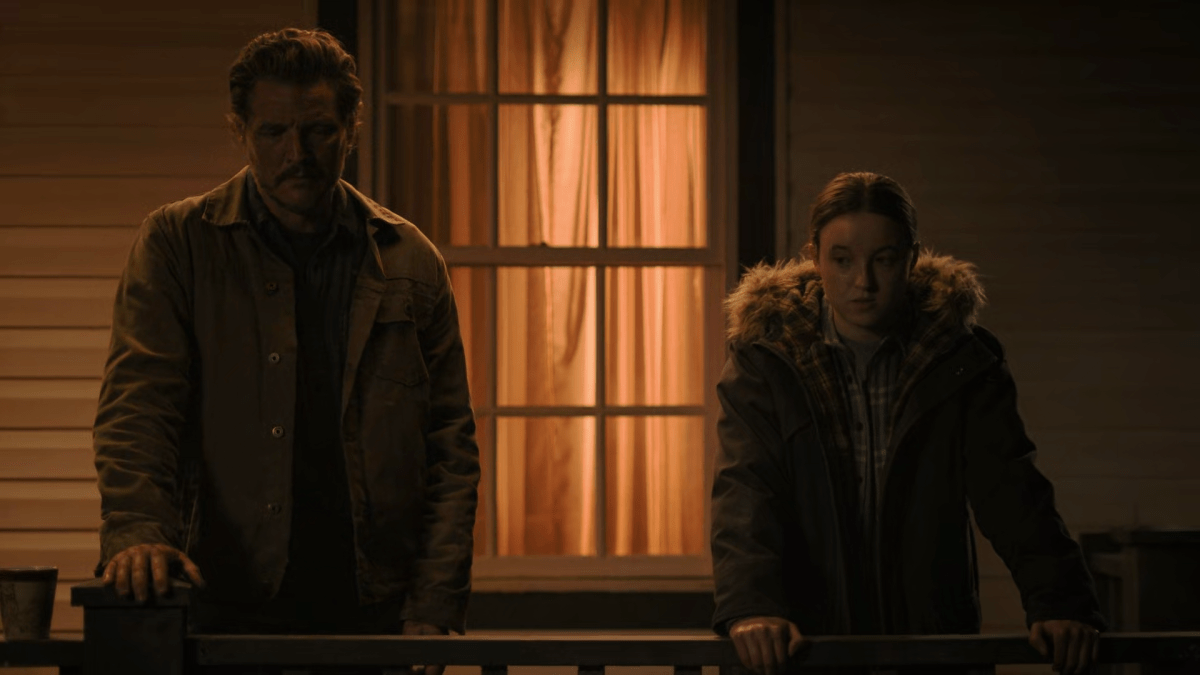
“If you love someone, you can always see their face.”
(SPOILER WARNING!)
This week’s The Last of Us was one of the show’s occasional flashback episodes, filling us in on some vital backstory that, until now, has only been alluded to. I’ve said from the beginning of the season that we were bound to get one of these, as so much was made of Joel’s killing of Gail’s husband Eugene, a character we hadn’t even seen. I must admit, I was also too curious to avoid the spoiler that cult character actor Joe Pantoliano had been cast as Eugene, so it was just a question of time until he made his appearance.
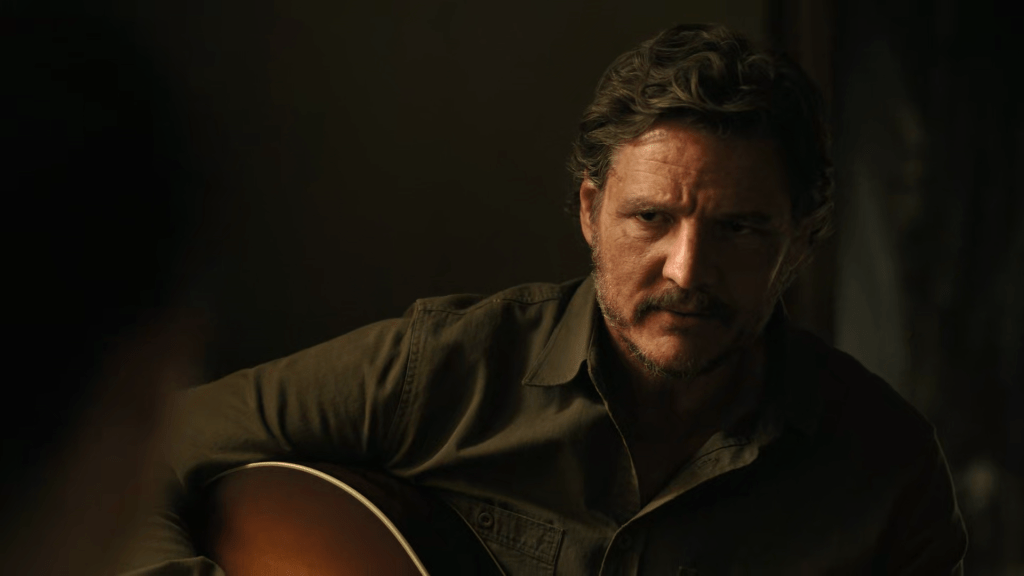
And this week was that time. But if you were missing him, that also meant the return of the show’s nominal leading man, with Pedro Pascal now returned to the opening credits for the first time since episode 2 (he wasn’t included last week, presumably to preserve the surprise of his appearance in the ep’s last minute). Much like last season’s acclaimed Frank and Bill episode, this one took the approach of time skipping through the five year gap between seasons to show us the reasons for Joel’s worsening relationship with Ellie.
That necessarily also needed to include an explanation for last week’s surprise revelation that Ellie was well aware of Joel’s massacre of the Fireflies in Salt Lake City – there were a lot of loose ends to be tied up here. First, though, Neil Druckmann’s co-written script had to re-establish the idyllic father-daughter relationship we were left with at the end of the first season, to show where it all went wrong. Well, apart from the obvious fact that Ellie is a teenager, and even after the destruction of civilisation, they’re clearly still difficult to deal with.

Initially, then, we skipped from birthday to birthday for Ellie, as Joel treated her as a loving father would – obviously, she was still filling the void of his own, long-dead daughter. This involved recreating several set pieces that I gather come from the original (second) game, including Joel teaching Ellie to play Pearl Jam’s ‘Future Days’ on a lovingly restored guitar.
As a music geek myself, I’m loving seeing this aspect of Ellie’s character being brought to the fore (though there’s still no explanation forthcoming as to how a world that ended in 2003 could be aware of a 2013 song). I gather it’s a crucial aspect of Ellie and Joel’s relationship in the game, faithfully recreated here. Others, though, have not been so happy with the show’s recent tendency to pause the action for the occasional music number. Plainly, such people have no soul.
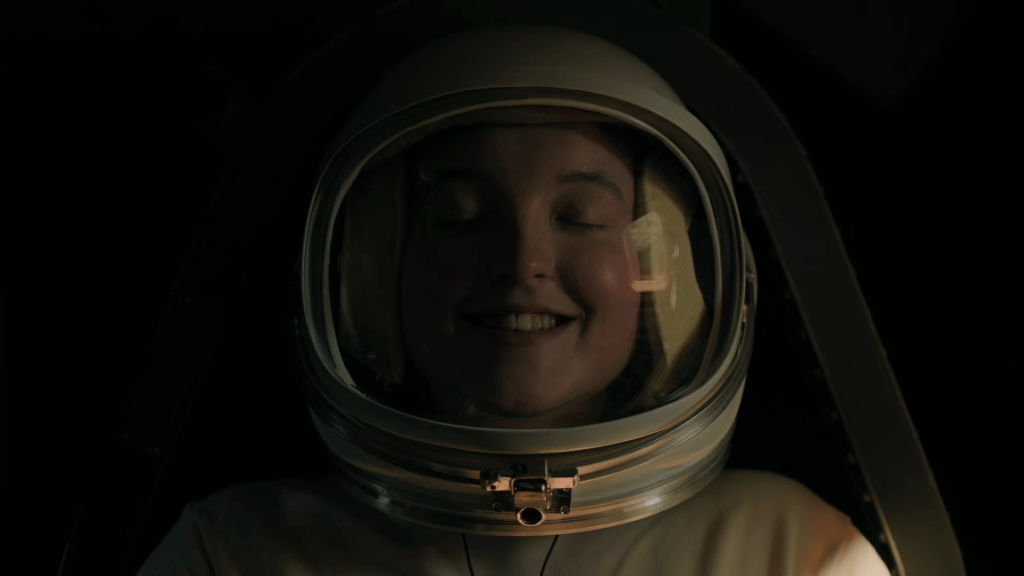
It has to be said, though, that if you came in looking for more high octane action sequences, you were shit out of luck here. The ep stuck primarily to character moments, foregrounding some affecting performances from Pedro Pascal and Bella Ramsey. Ramsey’s expression of pure pleasure as she imagined herself on the Apollo 15 Moon mission was beautiful, showing us that, however cynical and grungy they may get, some teenagers still have the capacity for childlike wonder. It was enough to make me forget the fact that the Apollo 15 capsule is actually exhibited in Dayton, Ohio, some 1400 miles from Wyoming. Oh well, maybe it was out on loan when the world ended…
That scene, sensitively directed by Neil Druckmann himself, is apparently another straight lift from the game. There, as here, it serves to build our liking further for these characters and their relationship. But for stories to happen, there needs to be conflict, and the root of the conflict was Joel himself. This was established right from the ep’s cold open, a rare flashback to pre-apocalypse days showing a teenage Joel trying to take the rap for little Tommy with their violent, abusive father. This was a strong scene, demonstrating again the show’s “shades of grey” approach to its characters. Expecting Daddy Miller to start violently setting about his son, I was interested to see instead that he popped open a couple of beers (Joel was clearly too young to legally drink), and sat down to talk to his son like a man.

Their talk was revealing, not just about the characters, but yet again about the themes of the show. Javier Miller (an excellent performance from Tony Dalton) revealed that he too had been beaten by his father, far more brutally than Joel or Tommy, raising once again the theme of recurring cycles of violence. So many abusers start off as victims themselves, and this successfully engendered sympathy as well as loathing for such a violent parent.
Shades of grey, as I say. It also served to give Joel a motive to try to break the cycle; to not be like his father and his grandfather before him. With his own daughter gone, Ellie must have felt like a second chance to achieve that. But of course for drama to happen, that couldn’t be smooth sailing, as demonstrated by the third birthday sequence when Joel encountered Ellie fooling about with another girl for the first time.

I must admit, I had actually thought Joel was aware of Ellie’s sexual preferences; but thinking back on it, the first season only showed them in flashback, and there was no reason to assume that Ellie had told Joel about her first love. Speaking as somebody who also had… not the easiest time when my father found out I was gay, the scenes held a lot of familiarity. Fortunately for me, I was in my twenties and living in a different country when it happened. Ellie had no such luck.
That set the seeds of discontent in their relationship, with Ellie moving out of the house to the garage. But we had to be reminded that this is a post-apocalyptic drama, not My So-Called Life, and the conflict between teenagers and adults can have far darker roots here. Hence, we got the long-awaited (by me, at least) appearance of Joe Pantoliano as Eugene, bitten and therefore doomed by the only Infected we saw this week, and Joel and Ellie’s conflict over whether he should be allowed to return to Jackson to say goodbye to his wife, or be put out of his misery then and there.
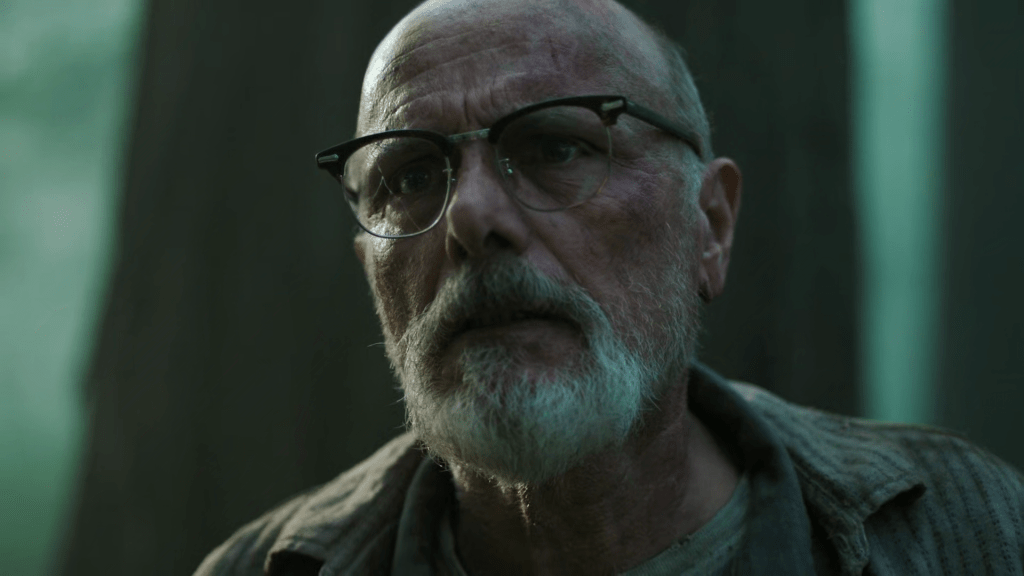
Pantoliano, a veteran of both sympathetic and unsympathetic roles in stories as varied as The Matrix and The Sopranos, was as good as I was expecting. I loved the dawning realisation in his eyes as Joel took him to that beautiful lakeside that was obviously to be his last sight in life. It’s a testament to the quality of the writing that even a character who basically only exists as a trigger for conflict between other characters was given so much depth.
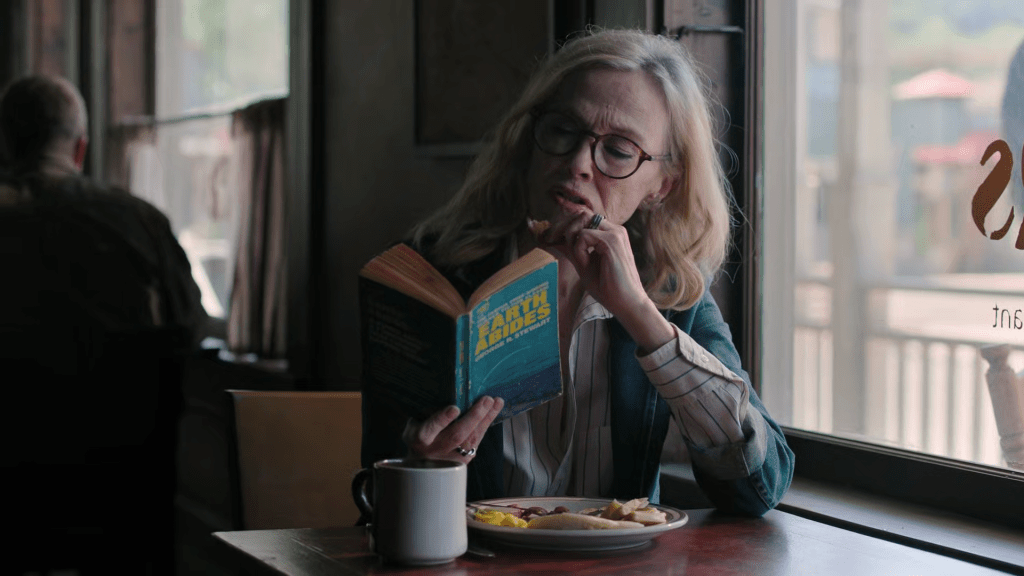
The obvious conflict, of course, was the already-established prickly relationship Joel has with Eugene’s wife Gail (here to be seen, amusingly, reading George R Stewart’s 1949 post-apocalypse classic Earth Abides). Far more consequential, though, was the rift it created between Joel and Ellie, who straight out blurted the truth to the already grieving Gail. That was expanded on by the depiction of events after the eventful New Year party seen in ep1, where it became clear that Ellie had always known Joel was lying about what happened with the Fireflies, and basically browbeat the truth out of him.
Despite the eagerly awaited return of Pedro Pascal, this was Bella Ramsey’s scene through and through, as Ellie let out a heartfelt rant that Joel had robbed her of her only chance to achieve something meaningful with her life. Even if it meant she would have to die. She argued, quite rightly in my opinion, that the choice should have been hers, and he took it from her. “I’m trying to forgive you,” she cried, “but I don’t know if I can.” Unlike many teenage wails to their parents, it felt like this one had a real point.
This was a good, character-driven episode of a show that basically overcomes its rather cliched premise by focusing hard on actual drama. It wasn’t quite up there with the rightly lauded Long, Long Time, but it was necessary to explain the characters’ actions up to this point.

BUT. This is a much shorter season than last time (7 episodes rather than 9), and placing this ep here in the run seems more than a little mad, when it should be ramping up to a season finale that will keep viewers hooked for next time. Despite a lot of scene setting, it feels like the overall plot of the season has barely got started, and already it’s nearly over, with, presumably, a break of well over a year until the next. I liked this episode, but it felt like it totally ground the season’s overall pacing to a halt, and could (and should) easily have been placed much earlier in the run.
 Simon’s Incoherent Blog