“Doubt is such a beautiful thing. If you question hard enough, then doubt can crack open the world!”
(SPOILER WARNING!)
“Is any of this making sense?”
Well… if I’m honest, not much, no. To be fair to Russell T Davies, this is the first half of a two-part story, so perhaps everything will click into place next week. For now, though, what we had here seemed like a bit of a jumble; there were some brilliant ideas, and some striking images, but it didn’t seem to cohere into any kind of logical story. Not yet, anyway.

It’s beginning to seem that RTD had a sort of “two year plan” for these seasons, presumably to encompass the two years of funding that Disney+ committed to. So, after her Doctor-lite episode a few weeks ago, Millie Gibson’s Ruby Sunday was again crucial to the plot here. As was Poppy from season 1 opener Space Babies, making her second reappearance after Belinda’s brief glimpse of her in The Story and the Engine. Heck, even Susan Twist was back, serving tea to the transformed personnel of UNIT, here reinvented as the “Unified National Insurance Team”.
I quite enjoyed the transformed world we were presented with here, a sort of off-kilter vision of the suburban 1950s writ large, occasionally reminiscent of Terry Gilliam’s Brazil. The real modern world didn’t intrude on a vista of tidy red brick suburban houses with landline phones, and bowler-hatted gents commuting to work in the City. A world where women’s only functions were as wives and mothers, and the idea of a man finding another man attractive was abhorrent.
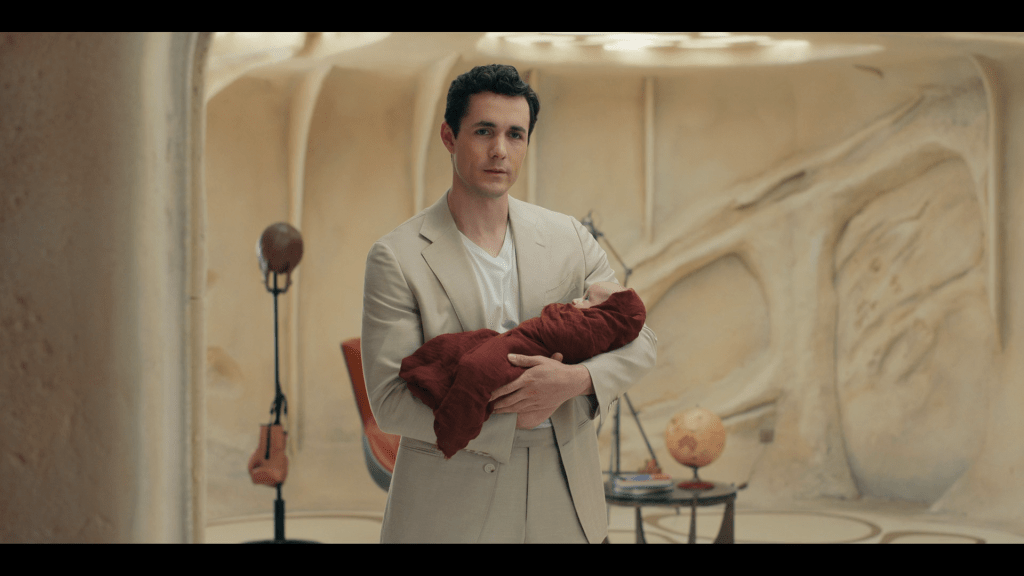
It was obvious from fairly early on that the world was this way because that’s how the returning Conrad Clark (Jonah Hauer-King) wanted it. I said at the time that his role in the story seemed likely to continue, and so it has. ‘Wish World’ was presented as the ultimate realisation of what he (and, by extension, similar right-wing internet trolls) wanted it to be. You could imagine Nigel Farage and Reform UK nodding in approval.
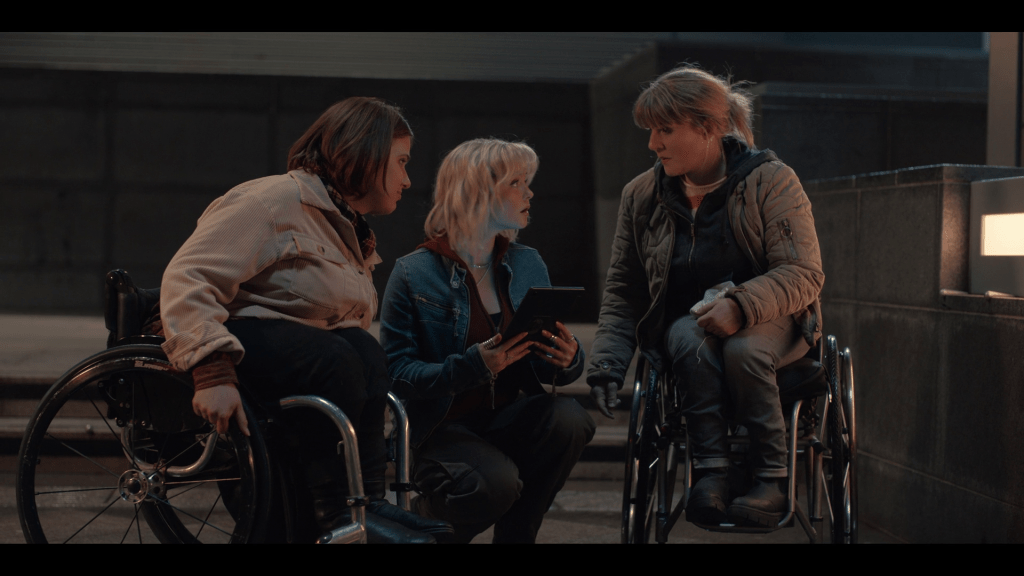
It was particularly revealing of this mindset that the disabled were relegated to living in tent cities, going unnoticed by the population at large. Not because Conrad had any particular malice towards them – but because he simply didn’t think of them at all. They weren’t part of his imagined Golden Age. This gave Ruth Madeley’s Shirley Bingham some meaty drama to work with, as she and her disabled compadres had far closer connections to the hidden ‘real world’ than anyone else.

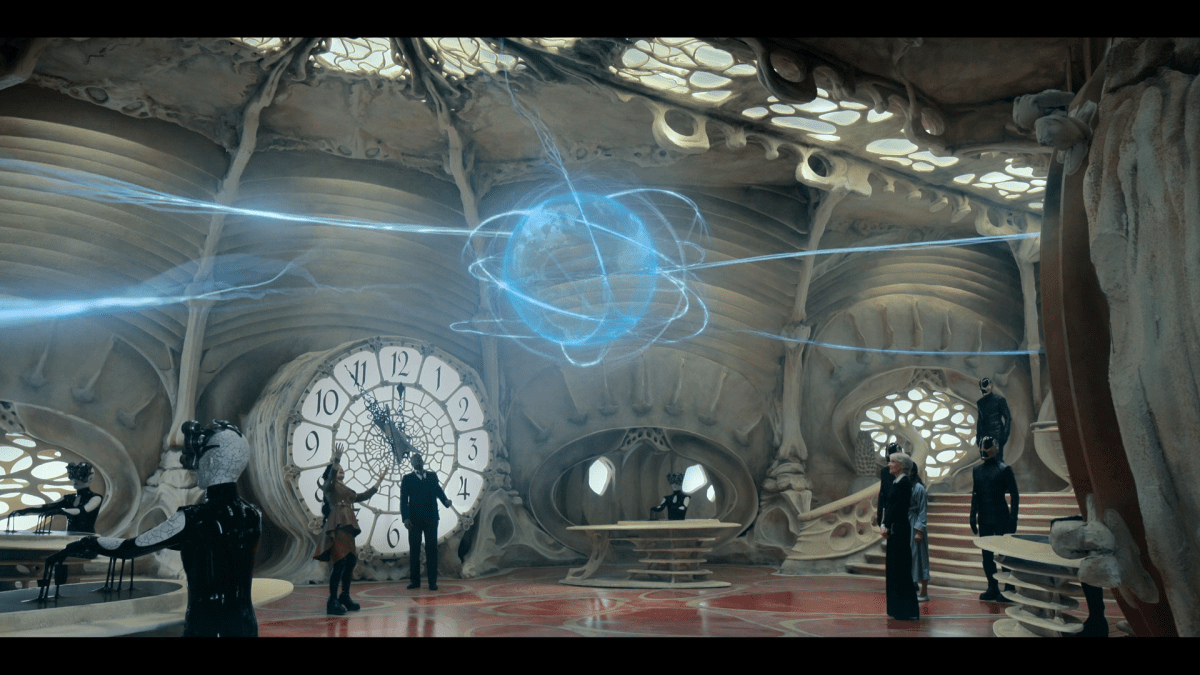
All of this was very nicely realised, as were the beautifully designed Bone Palace dominating the London skyline, and the striking giant skeletal creatures stalking the city for no clearly defined purpose. It didn’t make any sense as a whole, of course – particularly because it was a very British kind of right-wing dystopia that was somehow supposed to affect the whole planet.
But the script had a handy get-out clause for that. It wasn’t supposed to make sense. The whole thing had been designed to foster doubts about reality from the populace, represented by mugs of tea smashing to the floor as the tables holding them lost their substance. It did seem weird that nothing else fell through the tables, but again, the script could just point to this as, to coin a phrase, “a glitch in the Matrix”.

This was where I started to have problems with the story, unfortunately. Intentionally writing something that doesn’t make sense, then saying that was the whole point of it, strikes me as a writer trying to have his cake and eat it. Acknowledging the plot point from all the way back in The Wild Blue Yonder, the Rani told the Doctor that this was all his fault for awakening the Pantheon of gods in the first place. But surely, as we established in The Story and the Engine two weeks ago, it’s belief that gods thrive on, not doubt?
All of this descended into even less sense as the Rani explained her plan with the maximum amount of technobabble and the minimum amount of logic. So, the Doctor’s ‘Vindicator’ (what does it vindicate, exactly?) had drawn the power of “a billion supernovas” to Earth, which somehow enabled a baby from 1865 Bavaria who was also an all-powerful wish god to remake the whole world, but badly, which would generate enough doubt from its population to shatter a gate to “the Underverse”, and release the real villain of the situation – Omega, the legendary first Time Lord last seen actually dying in 1983’s Arc of Infinity. Got that?
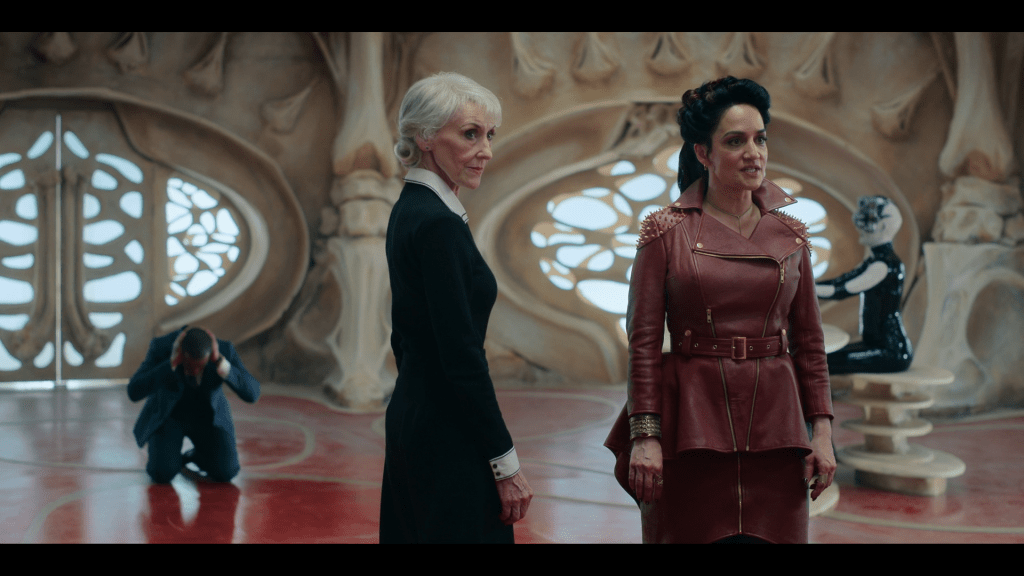
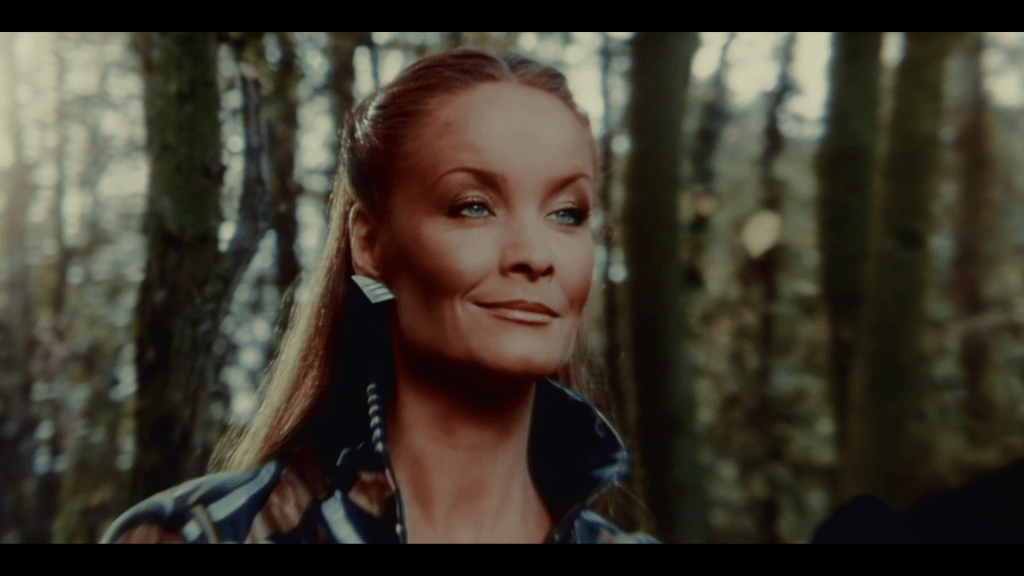
Again, it felt like RTD was trying to have his cake and eat it by giving us this laborious exposition, then having the Rani metaphorically wink at the audience and say, “this isn’t just exposition”. To be fair, Archie Panjabi as the Rani was one of the better aspects of the story. I don’t know whether she’d actually watched the original portrayal by Kate O’Mara, but there were definitely shades of it here; she effortlessly dominated the screen with charisma, while giving us a renegade Time Lady who was far more cool and collected than the revived show’s various incarnations of the batshit Master.
That’s in keeping with her original portrayal, where she wasn’t so much a power-hungry villain as an amoral scientist constantly frustrated by the Doctor’s ethical objections to her unprincipled research. Introduced almost as a counterpoint to the Master, she spent much of her first story scoffing at his ridiculously elaborate plans. Which was why it felt out of character for her to have come up with an even more nonsensical elaborate plan of her own here, no matter how much more rational than the Master she seemed.
And we’d been here before courtesy of that very same Master, in an alternate transformed Earth in 2007’s Last of the Time Lords. Just like that story, the Doctor himself was somewhat sidelined throughout, with the action driven by his companion. But not the current companion – Varada Sethu’s Belinda spent the episode befuddled by the new reality throughout, leaving the spotlight on last season’s companion Ruby. Again, maybe that will be redressed next week, but it felt like doing Belinda a bit of a disservice by shoving her into the background of a season that’s been nominally about her.
The Doctor was onscreen more, but it’s fair to say that this wasn’t the Doctor as we knew him. This plotline worked slightly better, as we’ve seen him transformed into the amnesiac ‘John Smith’ before, in 2007’s Human Nature. Here, as there, we saw his growing realisation that all was not as it seemed, helped along by a vision of sometime lover Rogue (Jonathan Groff) popping up from his current residence in a “Hell dimension” (Russell’s clearly been watching Buffy again).

Ncuti Gatwa at least got to display his comic acting chops along with the dramatic ones in his scenes as the slightly non-conformist bowler-hatted office worker; but I hope he has more to do in next week’s resolution of the story than David Tennant did in Last of the Time Lords.
And so the ultimate villain of the season (and presumably the whole of Ncuti’s tenure so far) turns out to be Omega, in a not particularly well-kept secret that fans have been speculating on for weeks now. We haven’t seen the embittered stellar engineer yet, though presumably he’ll rear his non-existent head next week.

Along with the story’s lack of logic, though, this was where I had probably my biggest misgiving. RTD has recently said that he didn’t want to bring the Daleks back again, because he didn’t want the show to lean too heavily on its past. And yet, that’s exactly what he’s been doing in the last two seasons, this one even more than the previous one, in a way he skilfully avoided back in 2005.
And he’s been doing it in a far more egregious way than just bringing back the Daleks, who, let’s face it, are pretty entrenched in viewers’ memories anyway after their ubiquity. No, following last season’s role for one-off classic baddie Sutekh from 1976, this time we have the Rani from 1985 trying to bring back Omega, last seen in 1983. Just for good measure, there was another brief appearance from Carole Ann Ford as Susan, also last seen in 1983. Oh, and Mel Bush, who has at least been in the show more recently than 40 years ago. Never mind baffling the casual, non Who fan viewer – all these returns from the 1963-1989 series might quite easily have baffled younger actual fans who’ve been focused on the series from 2005 to now.
As I’ve said before, it always seems to me that the show hearks excessively back to its past when it’s in rather a state of decline, hoping to return to some kind of ‘Golden Age’ when it was more popular. In the 1980s, John Nathan-Turner’s increasing reliance on the show’s convoluted (and often contradictory) history led to such continuity-heavy stories as 1985’s Attack of the Cybermen, which still failed to delight fans even while confusing casual viewers with its plot’s reliance on knowledge of every Cyberman story since 1966. It started to feel like the show was unwatchable without extensive knowledge of its past. And, increasingly, it’s starting to feel like that again now.
To be fair, as I’ve said, there was a lot of good stuff in this story; imaginative ideas, striking images, and good performances. The trouble was that none of it cohered into any kind of logical whole, and burdening it with all that continuity probably didn’t help. Yes, it may come good with next week’s conclusion to make sense of it all. But it’s fair to say that RTD doesn’t have a good track record of writing conclusions to two-parters. That’s often forgiven if the first half is a strong episode in its own right; but unlike last year, this didn’t feel like it was.
 Simon’s Incoherent Blog