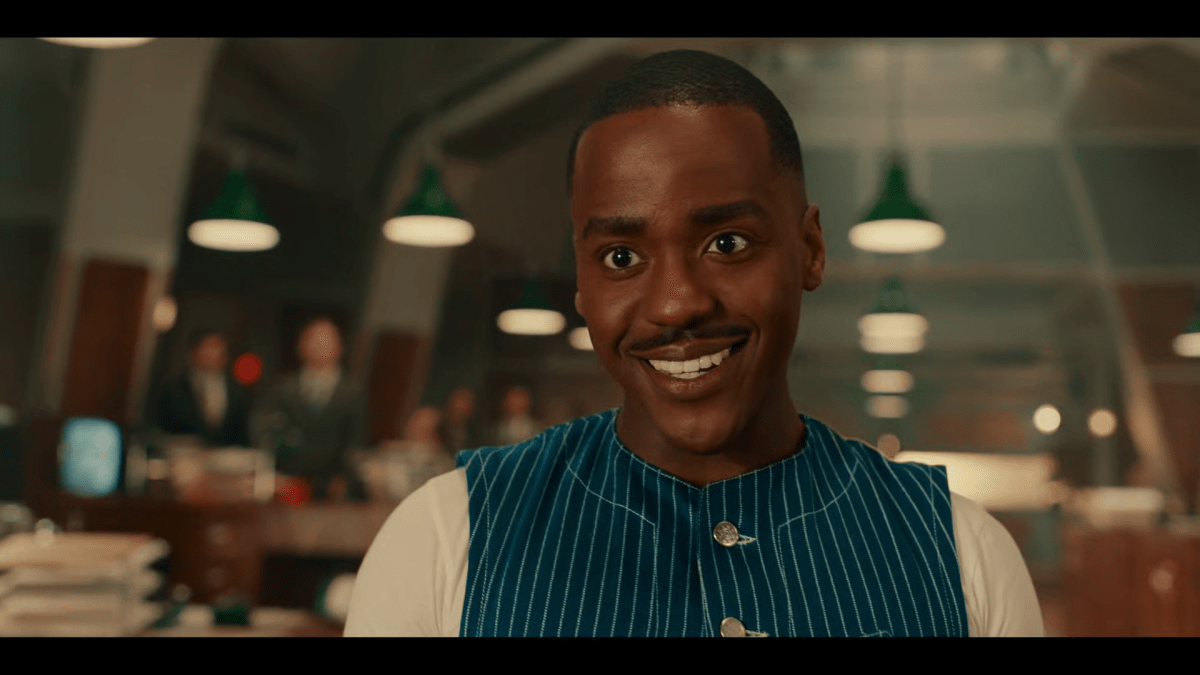
“Mr Smith is gone. I am the Doctor!”
(SPOILER WARNING!)
Well, that’s it for another season – and, it’s looking like, another era of Doctor Who. If you’re one of those unhappy at what has become known as the RTD2 era, there was really no need to be. In many ways, what we got here was a typical Russell T Davies season finale, with all the strengths and weaknesses he’s shown in writing the show since 2005 – great characterisation and dialogue, with plenty of spectacle, undermined by gaping plot holes that were seemingly papered over by fast-paced set pieces.
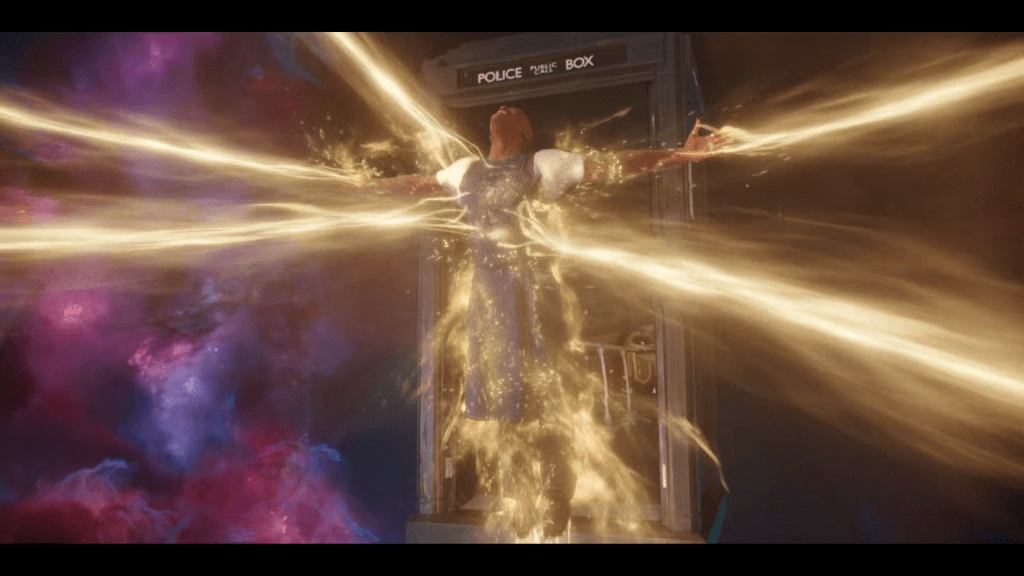
To deal with the Big Controversial bit first – I’d been thinking for a while that Russell might be trying to pull off something he tried and failed to do all the way back in 2005, to spring a surprise regeneration on the audience, a fait accompli without any prior knowledge of who the forthcoming Doctor would be. After all, even with these much shorter seasons, Ncuti Gatwa is currently very hot property, and it’s already been difficult for the show to fit in around his busy schedule elsewhere, hence his absence for fully a quarter of the last season. With rumours flying around in the press reinforced by his commitments elsewhere, this didn’t come as too much of a surprise.
So I have to applaud RTD for bringing off something the show has never, in its 62 year history, managed to achieve before. Those of us with some behind the scenes knowledge might have suspected what was coming, but I’m sure that for a lot of viewers, it was a genuine surprise.
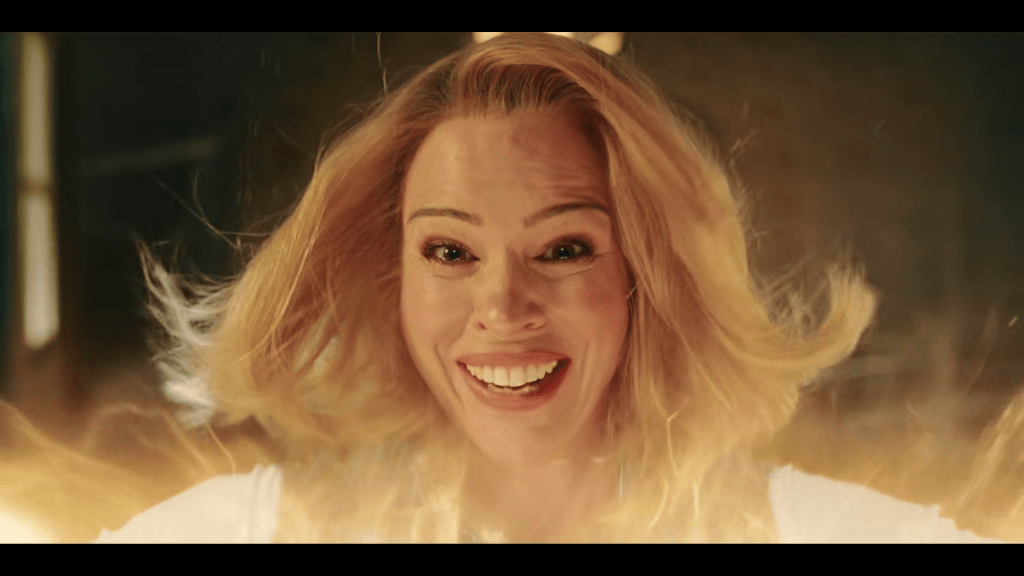
Why then are so many fans not happy? The main reason seems to be the casting of this apparent new Doctor – none other than Billie Piper, who was actually the very first person seen onscreen when the show returned in 2005. I have a lot of respect for Billie Piper, who was excellent as Rose Tyler, and undoubtedly crucial to the success of the show in its early years. She’s a good actor, and certainly has the ability to pull off being the Doctor after her long association with the show.
And there’s certainly precedent for Time Lords copying the faces of others when they regenerate, going all the way back to Romana becoming the double of Princess Astra back in 1979. Later, Peter Davison rather oddly changed into a double of the hammy Chancellery Guard commander who’d shot him a couple of years previously; and of course, Peter Capaldi had a perfectly good in-universe reason to resemble the Roman one of his previous selves rescued from Pompeii.
So that’s not a problem for me. There’s no reason why the Doctor shouldn’t regenerate into a double of one of his previous companions, and Piper is a talented actor who can certainly do the job. No, what bothers me is that it’s just the latest in an increasingly prolific hearkening back to the show’s past, at an era when it was more unquestionably popular.

As I’ve mentioned before, the last time that was so endemic was in the slump years of the mid-80s, when the show’s reliance on its past often made it incomprehensible to non-fans. Done well – and sparingly – this kind of reference can be dramatic and powerful. But making the show entirely revolve around its own past screams to me that it’s run out of ideas, and is trying to recapture some kind of ‘Golden Age’, with no confidence in its own future.
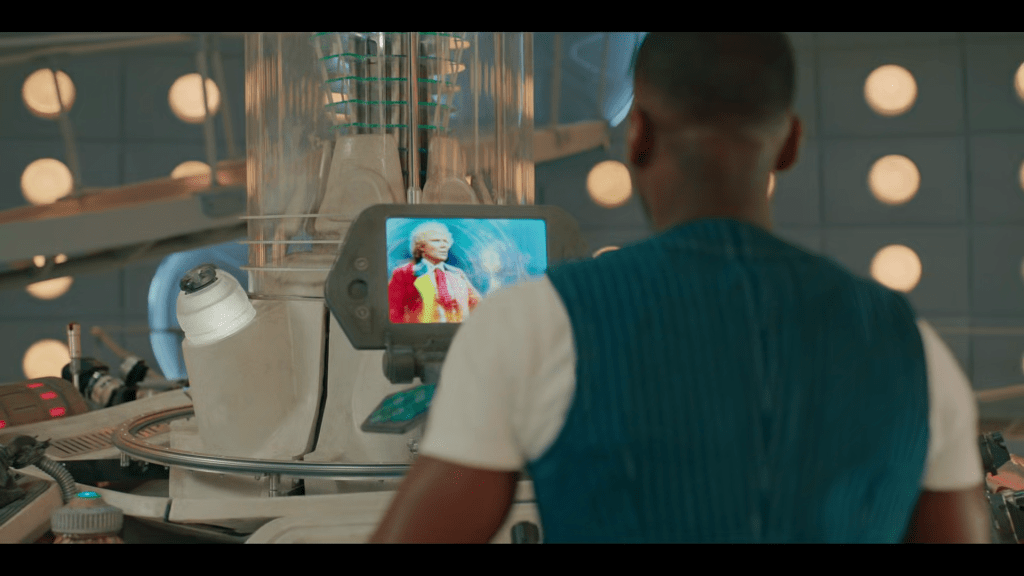
It has been said to me that, for the show’s younger viewers, this isn’t a problem. They may not know anything about the Rani or Omega, but the dialogue economically established who they were without requiring indepth knowledge of the show’s continuity. That’s a fair point. I likened it to a bored Eng Lit teacher doing Of Mice and Men for the twentieth time; he may be utterly inured to its charm, but for each year of students, it’s fresh and new. But that wouldn’t have been an excuse for John Steinbeck to have kept rewriting it in various iterations for the rest of his career. That’s just lazy.
What will these new fans do when inspired to try stories from the show’s past, only to find that they’re exactly the same as what they’ve already seen? And if they don’t have or need a knowledge of the show’s past, how would the reappearance of Billie Piper be the hyper-dramatic moment RTD so plainly wanted it to be? To them, she would just be another actor.

Still, some of this was pretty rewarding for longtime fans. It was absolutely brilliant to see a surprise return for Jodie Whittaker’s Thirteenth Doctor, in a scene that neatly tied up some of the loose ends her character left with. I always liked Whittaker’s Doctor (despite many of her stories being pretty dire), and she was just as fun and eccentric as ever. Her conversation with Gatwa’s more emotionally open Fifteenth Doctor was spot on, particularly her realisation that she should have told Yaz she loved her – one of the most egregious omissions from her own finale.
With all that said, while it was great to see her, there was no particular need for that scene to be there. Still, she was better served than some. Why have the fan-pleasing return of Carole Ann Ford as the very first companion Susan, then forget about her completely for the finale? Perhaps she’s due to return later, to address the very conspicuous contradiction that she’s supposed to be the Doctor’s granddaughter despite the firm assertion here that Time Lords are sterile, and can’t reproduce like humans. All well and good, but constantly promising to “explain later” is a particularly risky strategy when you’re dealing with an actor in her mid-80s.

It was also interesting to see the conspicuous absence of a character who, logically, should have returned. Where was David Tennant’s Fourteenth Doctor, supposedly still living a quiet life on the very same contemporary Earth? With so much emphasis given to the concept of bi-generation, plus the Rani’s insistence that she and the Doctor were “the last of the Time Lords”, you’d think somebody might have pointed out that there’s another one living in Chiswick. If the writer was expecting us to remember characters from the 60s, 70s, and 80s, it’s a bit odd that he was seemingly hoping we’d forgotten a quite important one from three years ago.
I realise I’ve got this far without talking very much about the plot of the episode itself. Well, in fact, it actually felt like two episodes; one dealing with the inevitable defeat of the Rani’s ridiculously elaborate plan, and another showing the aftermath for the Doctor and his friends, which took up about half the runtime.
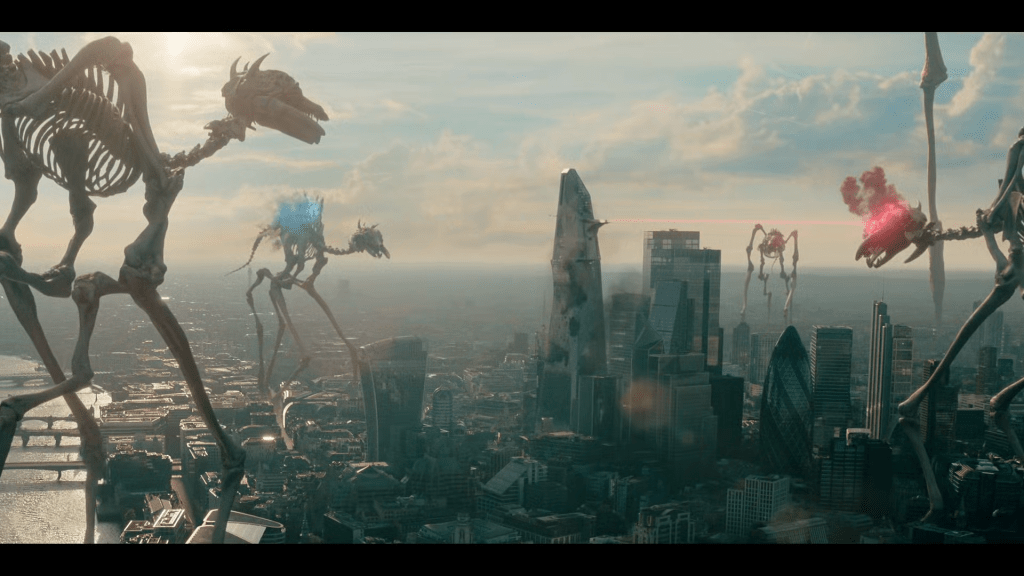
Of the former, there were plenty of thrilling moments in a plot that, if you stopped to think about it, didn’t make much sense. That’s very much in keeping with Russell’s style since 2005. While we were busy marvelling that the UNIT tower is in fact a giant rotating gun turret, hopefully we wouldn’t stop to ask why things were actually happening.
In actual fact, though, there was quite a lot of exposition to explain things. Possibly too much. It’s just that it was all rushed past so quickly that much of it didn’t have time to sink in. If, that was, you could actually hear it. As ever, the music and effects frequently overwhelmed the dialogue to such an extent that it was easy to miss vital plot points.
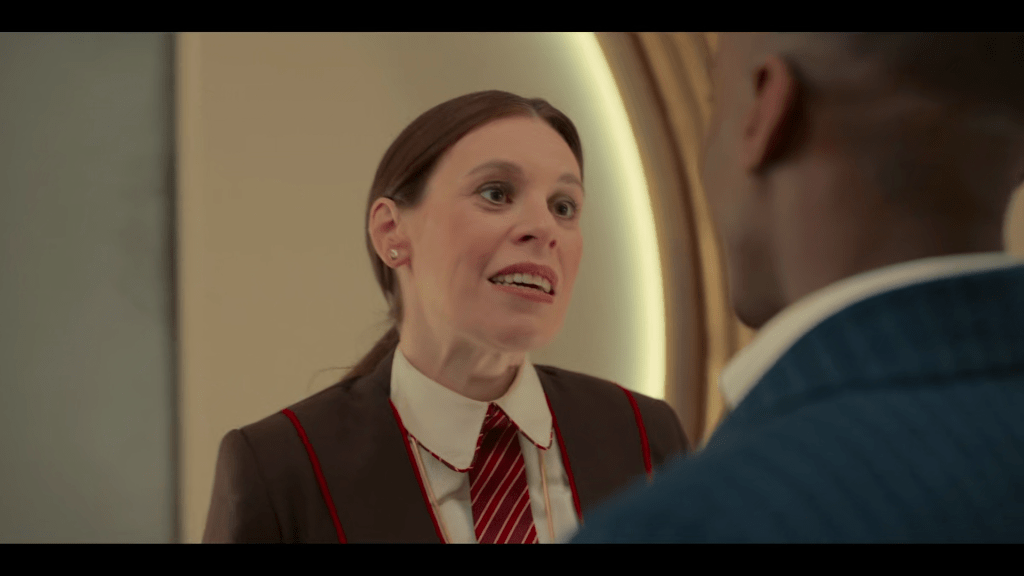
In amongst all the thrilling spectacle, though, there were some good character moments. The returning Anita was vital to the plot, with her time doors functioning as “gateways to reality”, but it was good to see that she wasn’t forgotten after having played such a vital part in the Doctor’s life for a whole year of his being stuck on Earth. And she got her own development, with the revelation that she had very obviously been actually in love with the Doctor, but after some handy fan-pleasing peeps through time doors into previous stories, realised that was going nowhere and found a partner of her own.

Conrad too got some interesting development, with his revelation that the whole of Wish World was his attempt to redeem himself by giving people what the Doctor said they wanted – peace, security, enough food to eat. It was just unfortunate that he was still the kind of person who would do that by hearking back to an imaginary Golden Age himself, where women were subjugated, homosexuals vilified, and the disabled generally ignored.
Arguably, Ruby was too kind to him with her wish that he should simply be happy; but it felt like an intentional counterpoint to the Doctor’s cold dismissal of him at the end of Lucky Day. However, calling back to the end of that story only highlighted that it’s another loose end that hasn’t been dealt with – namely the fact that said dismissal was from an earlier Doctor than the one at the beginning, meaning the Doctor we saw there set the whole chain of events in motion in full knowledge of the outcome. While I know a lot of people disliked Steven Moffat’s convoluted time paradox plots, he would at least have put in a line somewhere addressing that, rather than just leaving it hanging.

It was far from the only unresolved plot thread either. Archie Panjabi was absolutely magnificent as the Rani, however bonkers her plan may have been; a cool, collected baddie with little patience for the Doctor’s inconvenient ethics. So it seemed more than a little perfunctory to just casually have her eaten by the monster she’d summoned, with scarcely a line to acknowledge that she’d been wrong. She deserved a better exit.
At least her counterpart Mrs Flood got one, with Anita Dobson riffing on the obvious “Two Ranis” gag by popping off with, “it’s goodnight from me”. I bet that one would be lost on a lot of viewers unfamiliar with 1970s British comedy! This seemed less of an unresolved plot thread than leaving open the possibility of the Rani’s return, which could be good if it doesn’t come amid another slew of references to the show’s past.

Less successful was the return of Omega. The script artfully dodged around the fact that, last time we saw him in 1983, he wasn’t imprisoned but actually, y’know, shot dead. By the Doctor himself. Ncuti Gatwa seemed to have a different way of pronouncing his name throughout, with the stress on the second syllable (Oh-MEH-ga) rather than the show’s usual stress on the first (OH-me-ga). That wouldn’t have been so bad if he hadn’t been doing it in scenes where the other characters were pronouncing it the other way.
The pronunciation, however, was far less of an issue for me than the way the legendary “First of the Time Lords” was ultimately realised. The idea seemed an interesting one, with the potential for some dramatic scenes and dialogue; to pit the Doctor against the supposed originator of his race (which does rather ignore the Timeless Child plotline that has been cemented into continuity elsewhere by RTD).

In the event though, what we got was just another Big Scary CG Monster, that was conveniently and quickly dispatched by the Doctor’s Vindicator, here revealed in a standard Davies Ex Machina to also function as a gun. All well and good, but if all we were going to get was a feral, roaring skeleton with little to no dialogue, why bother making it Omega at all? The idea was interesting, the payoff utterly forgettable. At least Sutekh got to actually do things last season.
All this was less-than-neatly tied up just about halfway through an extra-length 76 minute episode, leaving a plot that felt as unbalanced as the last hour of farewells in the three hour Lord of the Rings: Return of the King. This echoed last season’s finale, where Sutekh was dealt with quickly enough to show us half an hour of detective work about who Ruby’s mum was.

It did, though, show us Russell’s overriding theme of these “Disney Years”, and arguably even before that – for him, Doctor Who is a story about families. That’s hardly surprising, coming from a writer who cut his teeth on soap operas. And what could be more soap than having the conclusion of this era revolve around the child of the Doctor himself?
This was varyingly successful. I loved the way Poppy’s gradual erasure from the timeline was shown, with that subtle folding of her coat into nothingness, while only the horrified Ruby realised what was happening. It did beg the question of quite how she was the only one to remember a child who’d been an imaginary product of a wish in the first place.
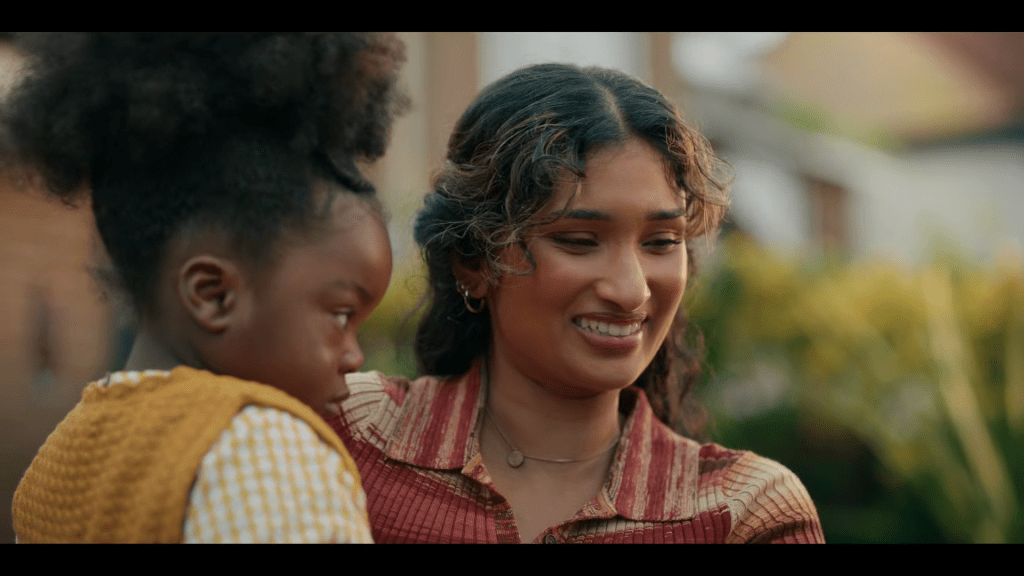
As with so much in this episode, that was left unexplained. There was at least a throwaway line about how retrieving Poppy would mean the Doctor would have to regenerate, leading to that gorgeous but unnecessary scene with Jodie Whittaker. But it felt like Varada Sethu was also ill-served as Belinda, her timeline rewritten to be a caring mum with no actual influence from her, or choice on her part. It’s felt like neither Ruby nor Belinda were particularly well-fleshed out as characters over these last two years; but at least Ruby got some agency in the conclusion, while Belinda sort of just… faded away.
To be clear – unlike a lot of fans, I didn’t hate this episode. There was undoubtedly some very good stuff here. But ultimately, it felt like a frenetic rush job that left a multitude of dangling unresolved plot threads, not just from this season but from the last two years. If, as seems likely, the Disney+ funding is now at an end, Russell T Davies will hopefully find a way for the show to continue into another season that he claims to have already plotted out.
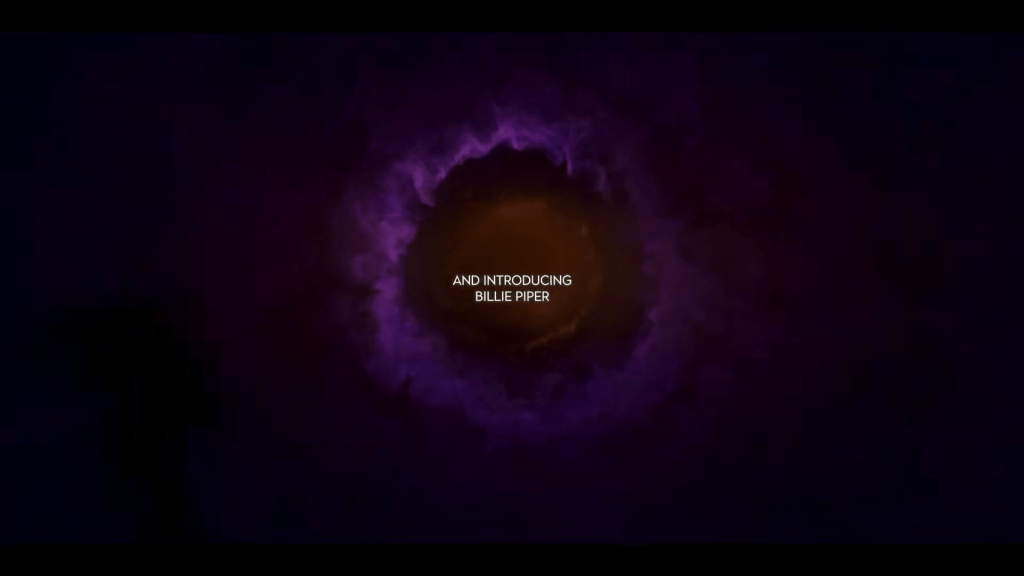
Will that mean a new, cheaper era with Billie Piper as the Doctor, for a short time like the returning Tennant, or a longer one? It was conspicuous that the credits, unlike in previous regeneration stories, didn’t actually list her as being “the Doctor”. So is there something more interesting at play? Might she, in fact, be paired once again with the still-extant David Tennant as the Fourteenth Doctor, in a desperate bid to reclaim the show’s mid-noughties popularity? I do rather hope not.
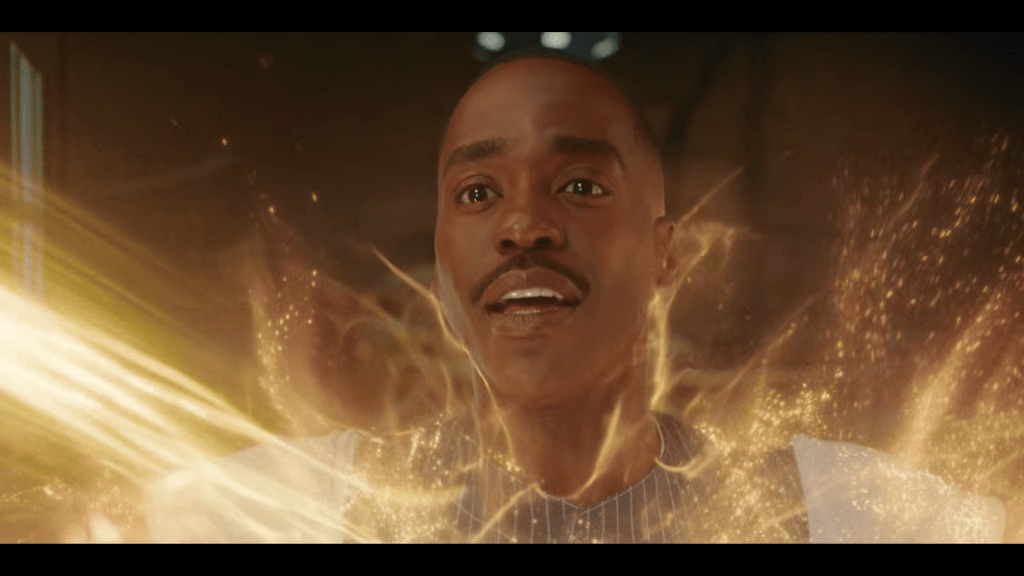
Either way, it’s probably goodbye to Disney, but definitely goodbye to Ncuti Gatwa, whose Doctor has ended up with less screen time than any except the one-off (on TV) Paul McGann. I think that’s a shame, as he was good, but it felt like we’d barely scratched the surface of his interpretation of the character. There are already some claiming that, like Colin Baker before him, he was forced out. That seems like nonsense to me; unlike every Doctor in the past, he was already a rising star who’s very much in demand, and the show was probably lucky to get him for as long as it did.
This has been a hugely variable era for the show, with some excellent episodes like Boom, 73 Yards and Lux counterpointed by lazy arc plotting where spectacle trumped logic. But I always find something to like about Doctor Who – even in the Chris Chibnall years, which I was less than fond of. To quote a good friend of mine, I love Doctor Who even when I don’t like it. No matter what the haters say, no matter if there is a hiatus like plenty we’ve had in the past, the show will go on. And I’m sure it will still manage to be both good and bad for every fan – even though we’ll never agree which episodes are which 😊
 Simon’s Incoherent Blog