
“A hooker is a woman too!”
The one where…
Doyle’s emotional involvement in the death of a former informant leads CI5 to a prostitute-based blackmail ring, and ultimately, to the KGB.

What with this show basically half-wanting to be The Sweeney, it was only a matter of time before the boys of CI5 would find themselves immersed in the seedy world of prostitution. This being The Professionals, though, we’re not talking about the kind of chainsmoking, tired looking tarts whose witness testimony Jack Regan’s superiors found it so hard to swallow. Oh no, these are high class call girls with perfect skin, who only blackmail the richest of clients and never smoke. Well, they do cocaine, but isn’t that classier than Rothmans?
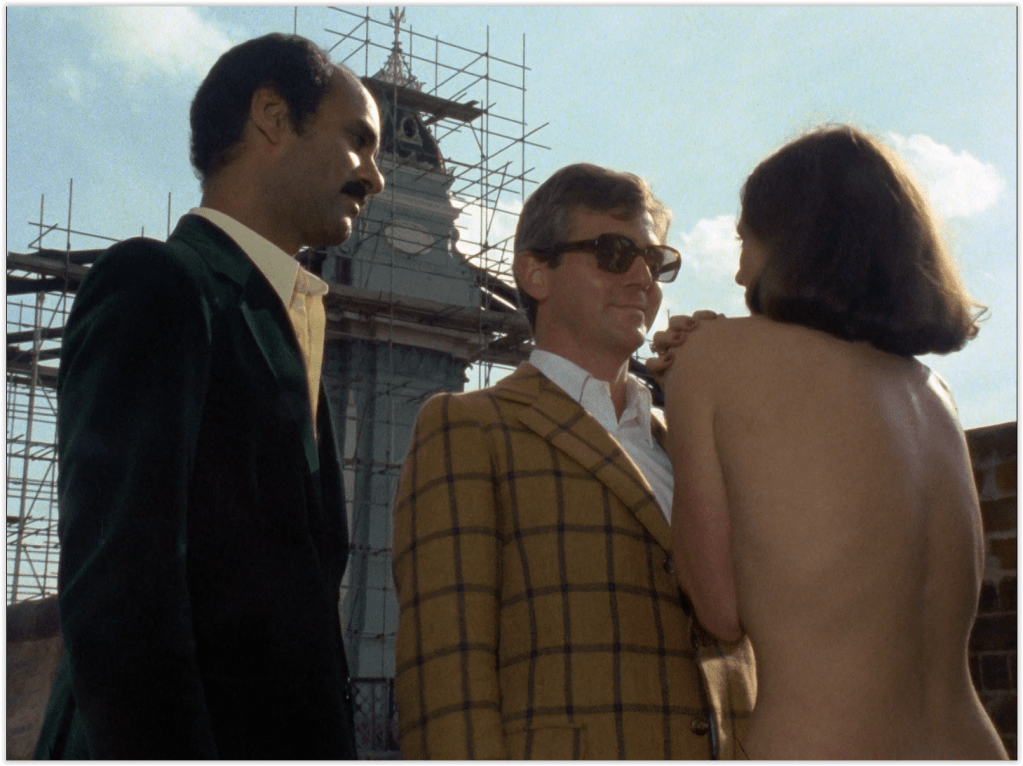
To be fair, it’s not the prostitutes themselves who are doing the blackmailing. That would be, of course, men. This show’s sexual politics being what they were, I don’t know whether that’s implying that men are more likely to be serious criminals, or that women wouldn’t have the nous to do it by themselves. The former, I hope.
The viewer is thrown into this world by a young (and she does look very young) girl throwing herself into the path of a passing MP’s car, while a shady man looks on and nods approvingly. Said MP, one Sir Charles Milvain, feels extremely guilty about this and offers to drive the fortunately uninjured girl home, where she proceeds to flirt with him by telling him he only looks about 45 years old.
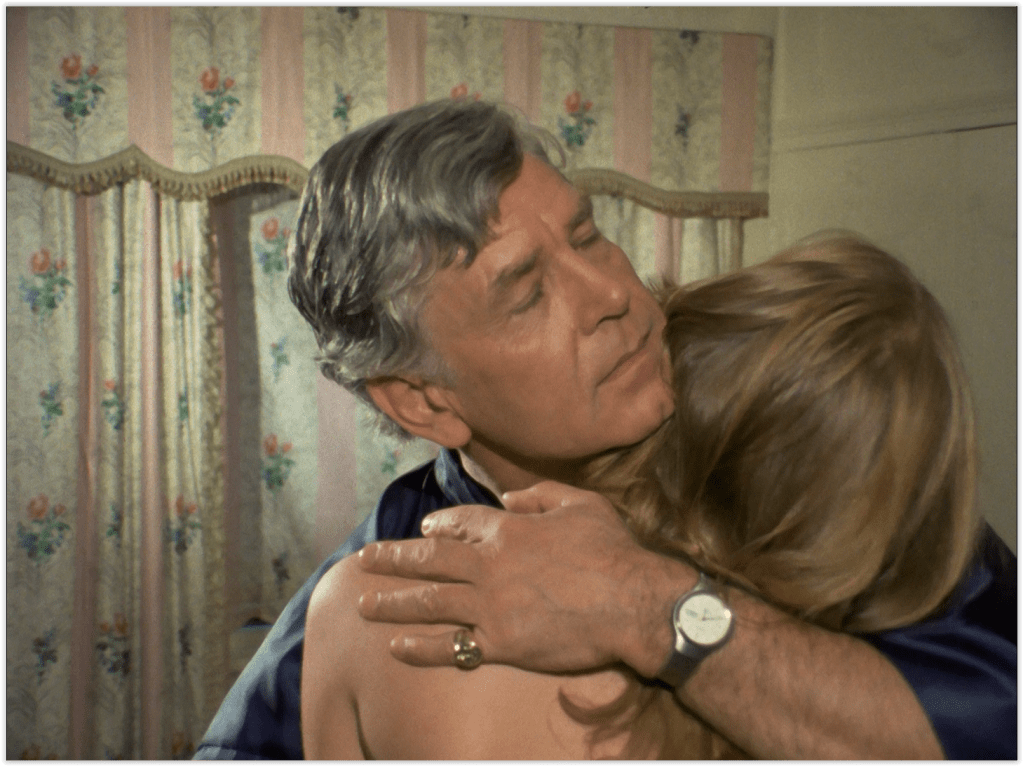
It doesn’t take a genius to figure out what’s going on, but then Sir Charles Milvain is no genius. Meanwhile, another, rather older beautiful ‘escort’ returns home to the same shady man we saw earlier, sees a photo of the girl who’s off with the MP, and proceeds to take off all her clothes except a fur coat and run like hell to Doyle’s apartment. It’s all done in the best possible taste.
Unfortunately for her, Doyle doesn’t live there any more, and by the time he’s been called by a concerned former neighbour, she’s lying in a naked, murdered heap by the Thames. Doyle, it’s fair to say, does not take this well.

This is the first ep to really foreground Doyle’s character; previously, his police experience has proven invaluable, but when it’s something personal for the gang, it’s usually personal for Bodie. Martin Shaw does a good line in idealistic fury, and this story nicely contrasts his character with that of Bodie. Even when it’s personal, Bodie doesn’t lose control; Doyle does, and it’s lucky for him that Bodie’s there to offer sage advice.
Cowley is not happy with his agents involving themselves in a simple murder that should be left to the police – until he finds the Prime Minister’s home phone number written on a scrap of paper. From then on, it’s all guns blazing as the boys visit prostitute after prostitute in an attempt to track down their pimp, and thereby the leader of the blackmail gang.

That’s not as sleazy as it sounds. Basically, the first step is to visit a rather more ‘experienced’ prostitute in the ever-popular villains’ boozer (which is clearly the same one as in the previous episode). Having obtained the identity of another (younger) prostitute who’s part of the same ‘stable’, Doyle pretends to be an abusive client until the pimp turns up to defend her, then chivalrously beats the shit out of him.
This all leads to the discovery that the girl involved in blackmailing the MP is actually the illegitimate daughter of Doyle’s former informant Ann, which was why she went ballistic on seeing the photo. But the stakes are raised even higher as the plan for Milvain is put into action, and it becomes clear that the ones behind it all are the KGB. It’s not money they want, it’s state secrets.
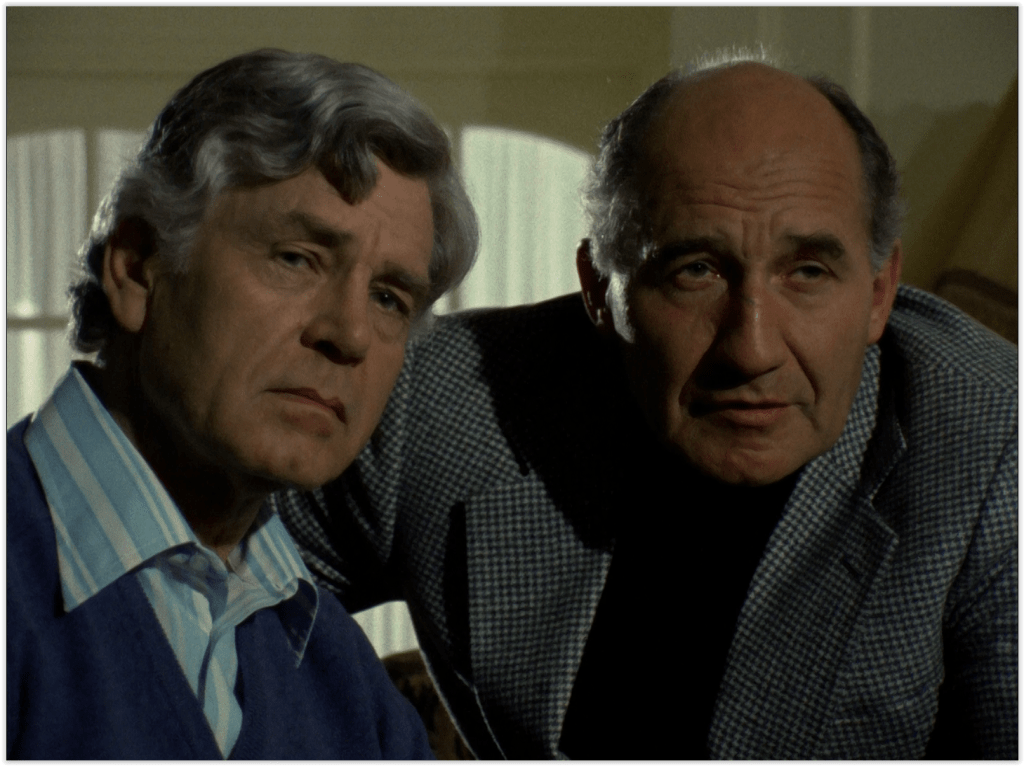
I must admit, that being the case, it’s rather odd that they choose to blackmail an opposition MP rather than one that’s actually in government, but then perhaps he was the only one stupid enough to fall for it. Unfortunately, to keep the secret, it’s now necessary to kill the girl too. More fortunately, Bodie and Doyle turn up in the nick of time, and after the requisite amount of running, shouting and shooting on rooftops and in underground car parks, all is well. Well, Doyle gets shot in the leg, but Cowley, given his own old wound, doesn’t have much sympathy for that.
How dodgy is Cowley this week?
Not as dodgy as usual – this week’s trip to CI5’s dreaded interrogation room merely results in him sanctioning an offscreen beating, courtesy of Bodie, for shady pimp Wences. Not that bad for Cowley, since that was basic police interview technique at the time. Allegedly.

Of course, he does later present Milvain with a prewritten resignation letter (“from all public life”, which is pretty sweeping), but that’s been sanctioned by the Prime Minister – who may want to avoid awkward questions himself.
The cars
Fewer classic 70s cars in this one than recent episodes.
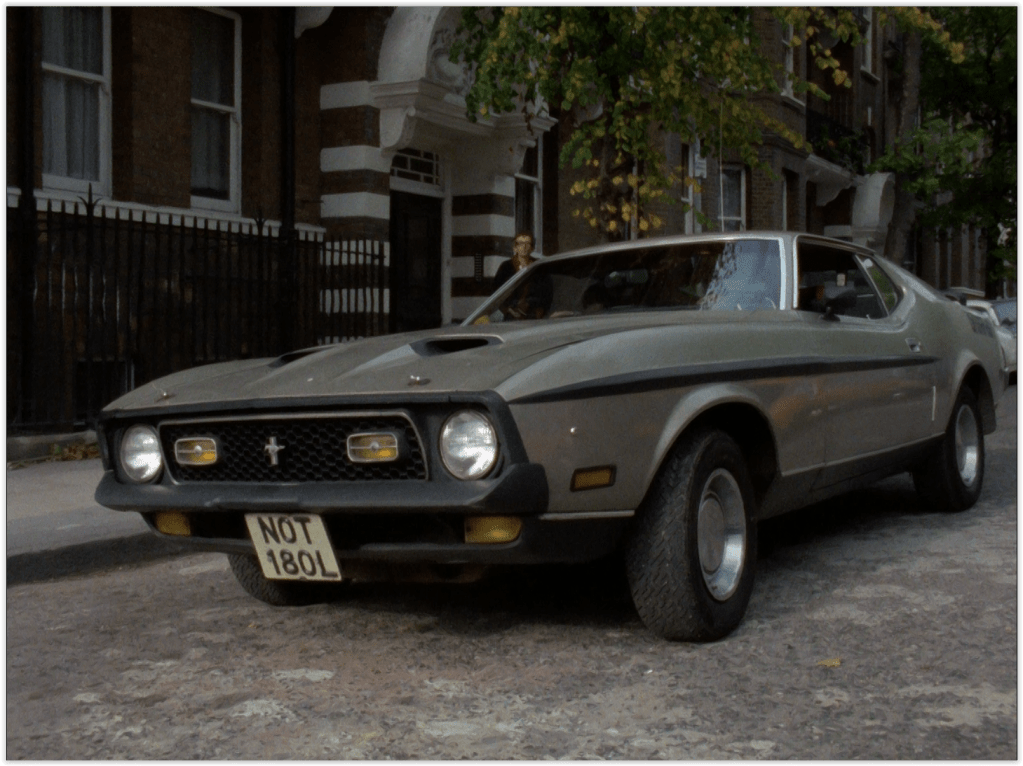
Outside of the boys’ usual rides (the Dolomite and the TR7 are on duty again), probably the most interesting vehicle is Wences’ “big, flashy American car”, which is a 1972 Ford Mustang Mach 1. By 1972, the original, rather pretty and compact Mustang had grown into a bloated monster, and the Mach 1 was an attempt to restore some of its original sporting feel by adding insanely huge engines – the largest was a 7 litre V8. Never sold in the UK, it was certainly an uncommon sight on British roads.
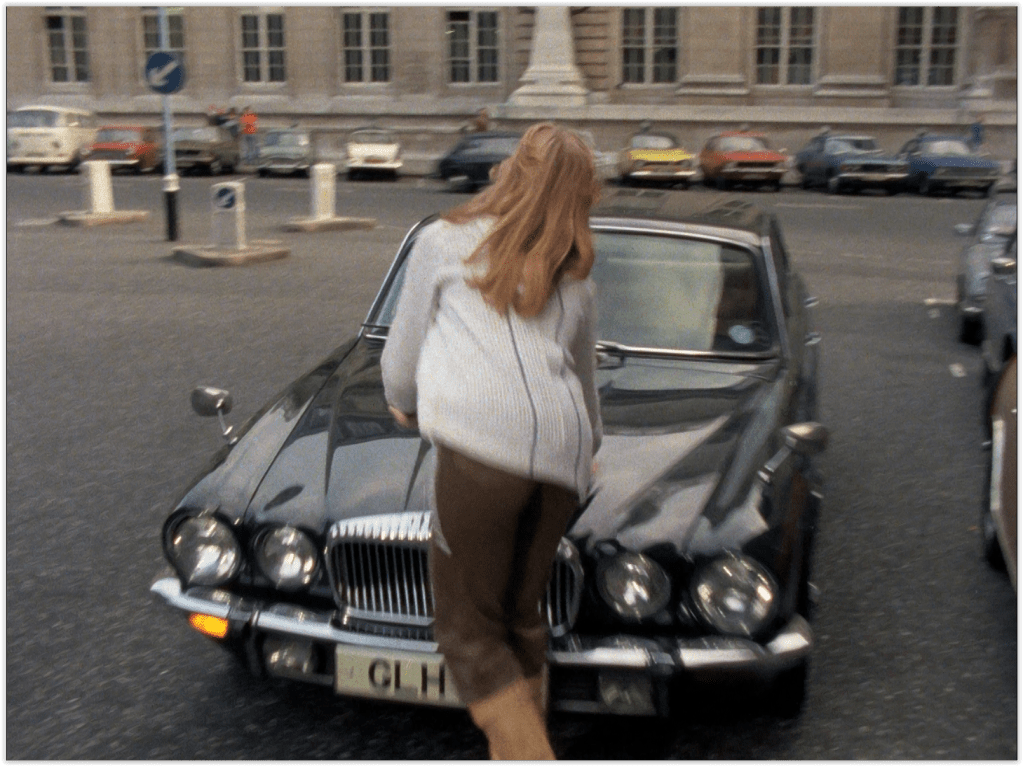
As befits a successful, respectable politician, Sir Charles Milvain drives a Daimler Sovereign – the more upmarket, badge-engineered Daimler variant of the Jaguar XJ. In most respects, they were identical – the only difference being the trademark Daimler ‘fluting’ on the top of the radiator grille.
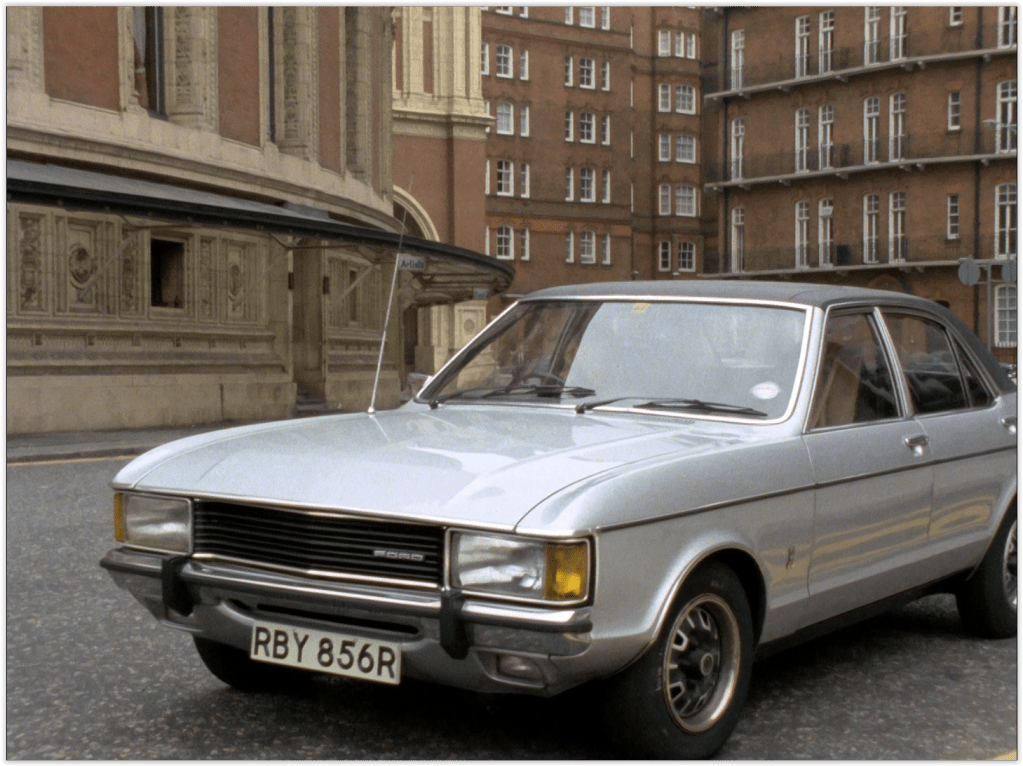
Culver drives a nice, respectable Ford Granada Mk1 3.0 – a car favoured by both villains and coppers, as Jack Regan famously drove one in The Sweeney.
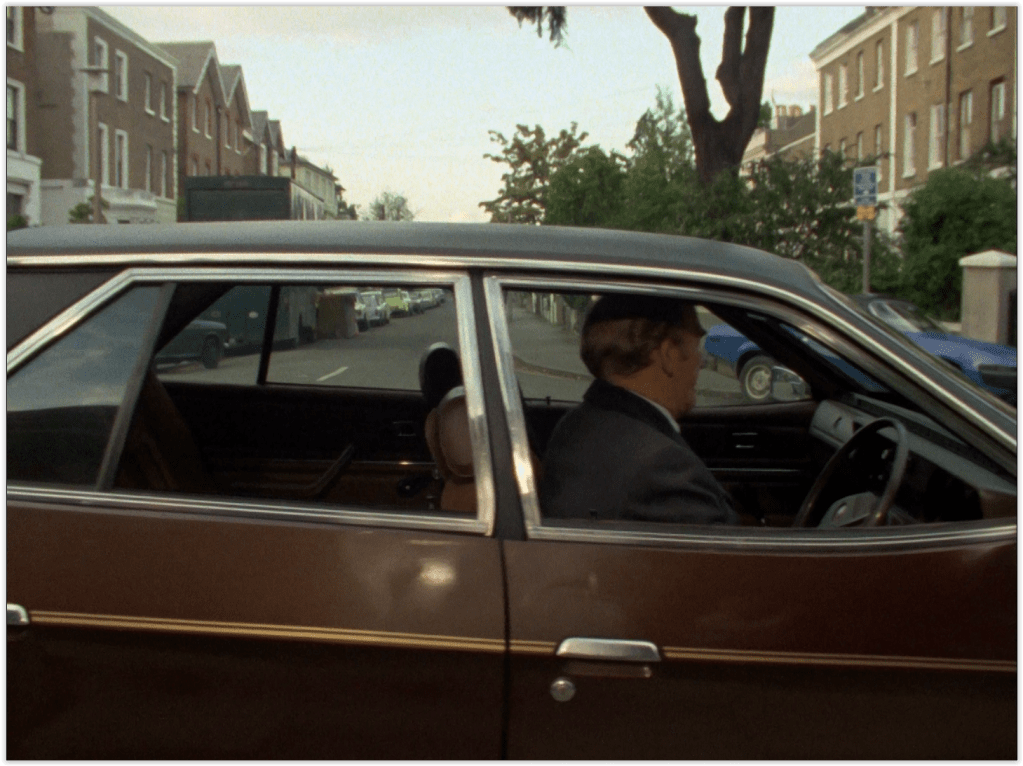
Cowley’s Rover SD1 still hasn’t returned from the shop, so this week sees him in yet another Leyland Princess (at least the third). This one is in the very 70s colour of dark brown.
1970s clothes
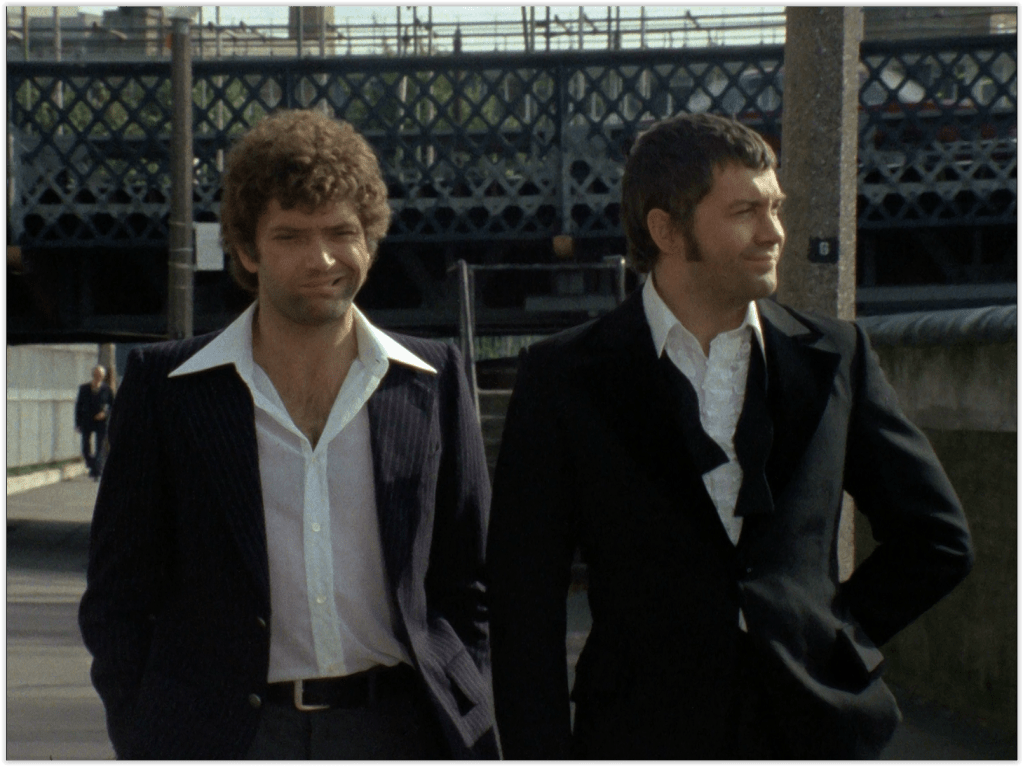
Not too much in the way of 70s fashions from Bodie and Doyle this week. They start the ep wearing somewhat dishevelled formal clothes, having been partying all night; even here, Bodie is the showier of the two, with his frilled shirt and loose bowtie. Later Bodie switches to his familiar brown leather safari jacket, while Doyle goes with a rather nondescript blue jacket/blue T-shirt combo.
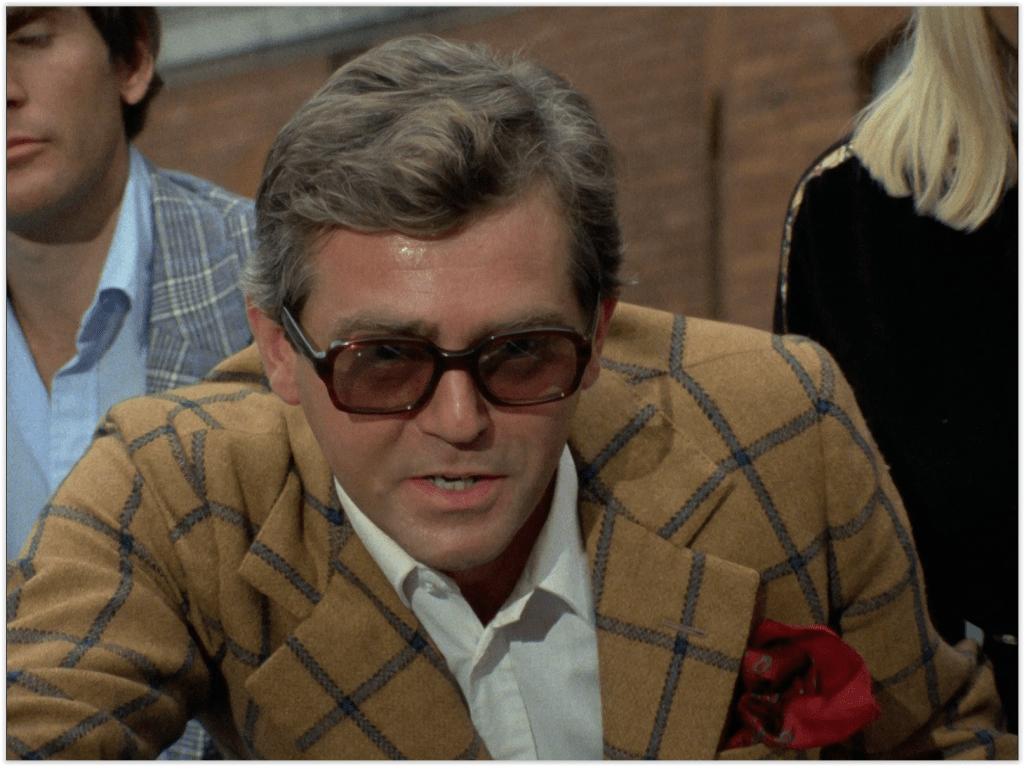
Culver has a truly hideous brown and yellow checked sport coat, along with permanent sunglasses.

And Wences, being a pimp, has a lovely dark green velvet jacket.
1970s references

In the 1970s, it was customary to contact prostitutes by landline (well, there was no other kind). And because you probably didn’t want those numbers on your phone bill, you’d usually have to call from a phone box – providing you had the right change!

The going rate at the time? “It’s fifty quid. For half an hour.” If you want a drink, it’s fifty-one. And don’t try and pay by card – even if, like Doyle, you’ve got every credit card the 70s had to offer.
Hey, it’s that guy from that thing!

Probably the most notable guest star this week is Pamela Salem as Ann. This was one of her early roles – she’s murdered in the first ten minutes – but the script requires her to make an impression, and she certainly does. Undoubtedly classy and beautiful, she would go on to much greater fame with two roles in Doctor Who, as the evil witch Belor in children’s fantasy Into the Labyrinth, and ultimately as femme fatale Joanne Francis in EastEnders.

Also in an early role here is Felicity Dean as Sara. Like Salem, Dean went on to be a prolific performer in many drama series in the 90s and 00s (you may remember her from Midsomer Murders, Peak Practice, Kavanagh QC and their ilk), but is far more renowned for her work on the stage, where she’s worked with Jonathan Miller and Trevor Nunn amongst others.

Paula, the more ‘average’ looking prostitute (she’s still very attractive) is played with a marvellous barbed wit by Maggie Wright. Wright had a shortish career in glamorous parts in the likes of The Saint, The Baron and Jason King, but unlike Salem or Dean, her career never really took off.
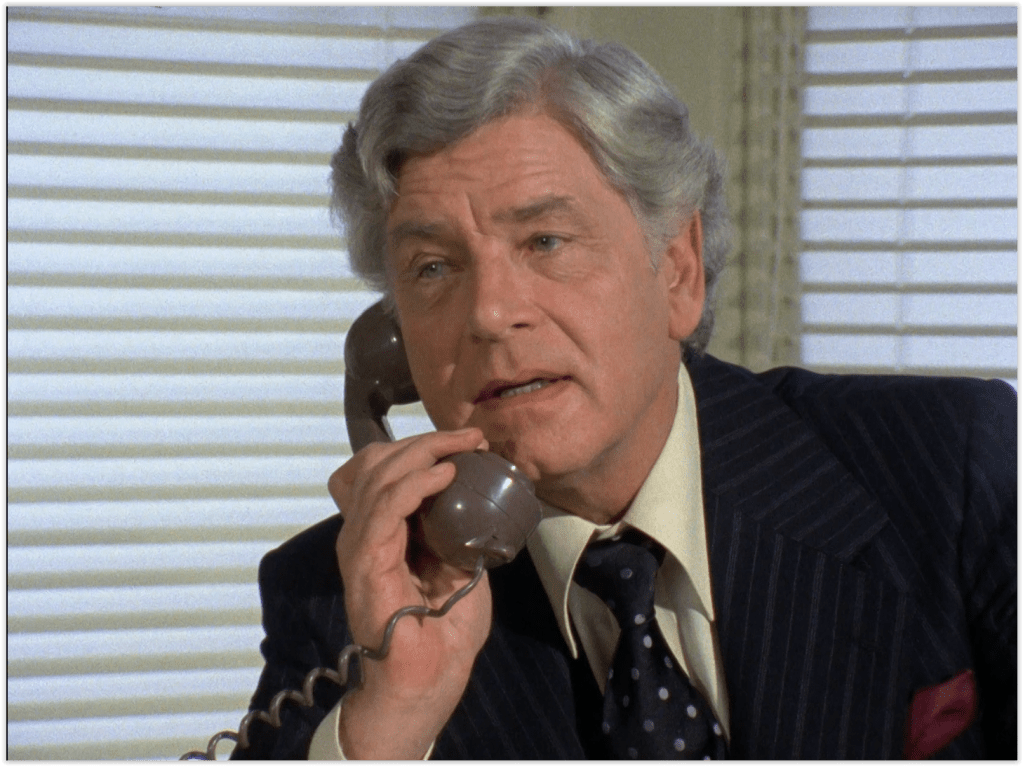
Sir Charles Milvain is played by Anthony Steel, a former matinee idol of British movies of the 50s. Despite high hopes, his career never took off in the same way as, say, Stewart Granger (who he was compared to at the time), but he was never short of work even in his later years (which it’s fair to say these were).
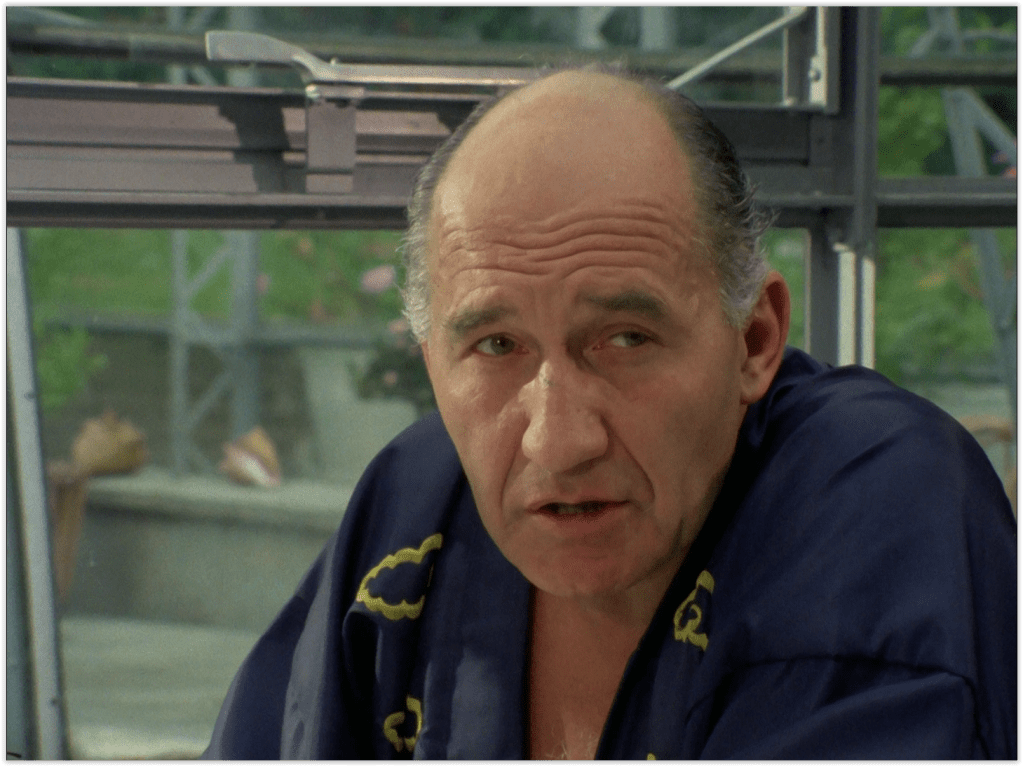
The ringleader of the blackmail gang, ‘Uncle’ Sam Baker is played by Walter Gotell. The script doesn’t make clear whether Baker is just an opportunistic criminal, or a KGB agent himself. If the latter, Gotell had plenty of experience, being at this point in the middle of a long run playing KGB chief General Anatoly Gogol in six James Bond films. His German origins saw him frequently cast as senior Nazis, not least in an episode of The X Files; the irony being that he and his family had fled Germany because they were Jewish.

Trinidadian actor Stefan Kalipha plays flamboyant pimp Henry Aloysius Wences. Kalipha, whose ancestry was variously Indian, African, Portuguese and German, tended to be cast in small roles as ‘indeterminate foreigner’ for most of his career (just like here), but is probably best remembered as hitman Hector Gonzalez in For Your Eyes Only.

That’s the familiar face of Patrick Durkin as KGB killer Terkoff. Durkin, who had a colourful career, started off in comedy as a straight man to Tommy Cooper, and was a regular in small parts in the Carry On films.
In drama, he tended to play the big, silent henchman lurking menacingly in the background, and may be best remembered for his part as Marion Ravenwood’s drinking opponent in Raiders of the Lost Ark – where he had literally no lines. Here, he has plenty – but like Roger Lloyd Pack in the earlier ep Long Shot, they’ve all been very obviously dubbed by another actor affecting a strong Russian accent. Andrew Pixley’s otherwise exhaustive Production Notes don’t reveal the identity of this actor, but I’d swear it was the same one who dubbed Pack.
Nice bit of dialogue

Doyle, looking concerned: “A woman just turned up at the place I used to live, looking for me. Very upset.”
Bodie: “And ever so slightly pregnant?”

Doyle, seeming unusually racist: “Look, a big flash car driven by a Black guy, add ‘em together and what have you got, eh?”
Bodie, being unusually reasonable: “A Black guy driving a big flash car.”

Cowley, berating the boys for getting involved: “You’re CI5, both of you! CI5 means special assignments only!”
Doyle, angrily: “With authority to investigate any and every incident, that’s in the small print, sir.”
Cowley: “Don’t you quote the small print at me! For every sentence of small print you produce, I can produce smaller!”
[Later, Cowley takes over the investigation from a protesting police detective]
Detective: “But—”
Cowley: Don’t ‘but’ me, do you want to see the small print in our authority?”

Wences, having been taken to the dreaded CI5 interrogation room: “This isn’t a regular bust! You’re not coppers!”
Cowley: “No. We’re worse. Much worse.”
Casual Sexism
You’d expect an episode of The Professionals called The Female Factor, about prostitutes, to be quite exploitive, wouldn’t you? And you’d be right.
The show might strive (sometimes) for the kind of gritty realism of The Sweeney, but that’s not the case here. Unlike the kind of average women who worked as prostitutes in that show, all the ‘call-girls’ here are uniformly classy and beautiful, and take their clothes off onscreen a lot.


This starts pretty early, as Ann, returning from a job, is so eager to get out of her dress that she takes it off and throws it behind her while still climbing the stairs. Later, knowing she’s about to try escaping from Culver, she still inexplicably takes off her bra before donning the mink coat as her only protection from the London weather.

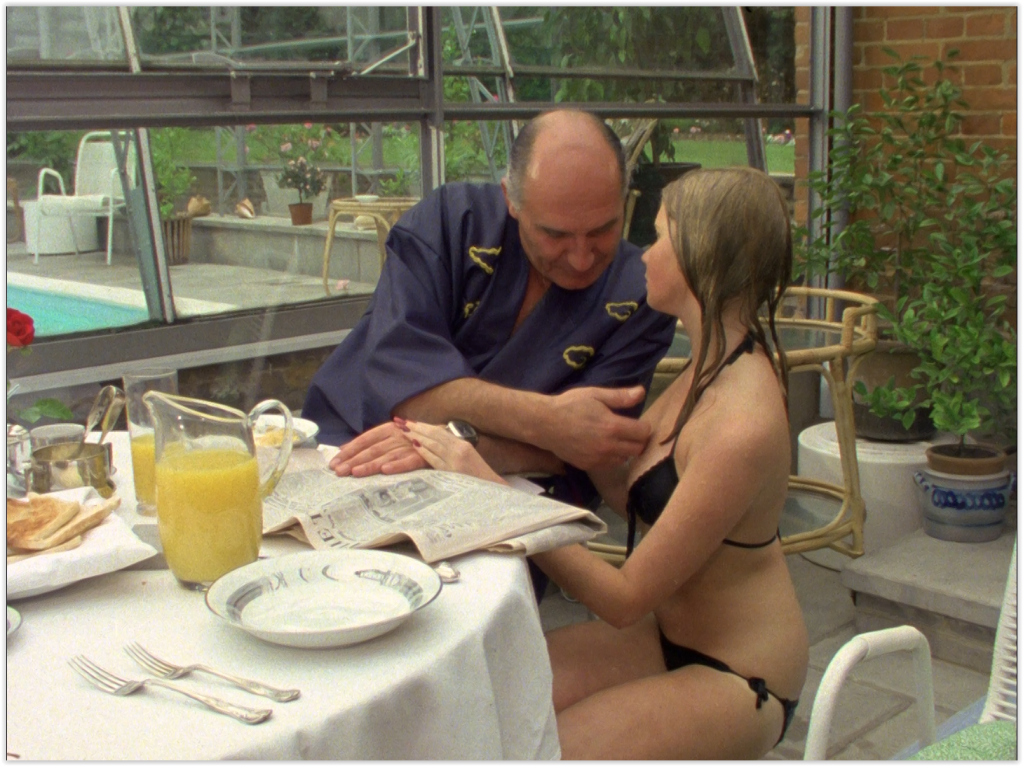
Sara, meanwhile, is frequently seen in Baker’s pool, which of course requires her to wear a very skimpy black bikini. Since actor Felicity Dean did indeed look as young as many of the characters commented, the script goes to some length to remind us several times that she’s 18. Which makes the constant titillation ok, at least in 1977.

The Female Factor is an entertaining, if slightly sleazy, thriller that puts the focus on Doyle as the main character for once. We’ve already seen how he’s a decent, even idealistic kind of guy, but this ep also shows him as being prone to undisciplined impulsiveness when angry – a fact Cowley doesn’t hesitate to draw attention to. We know a little more about his past in the police force after this ep – his most recent posting before CI5 was in the Drug Squad, which fits with his intimate knowledge of the drug-related underworld as seen in previous episodes.
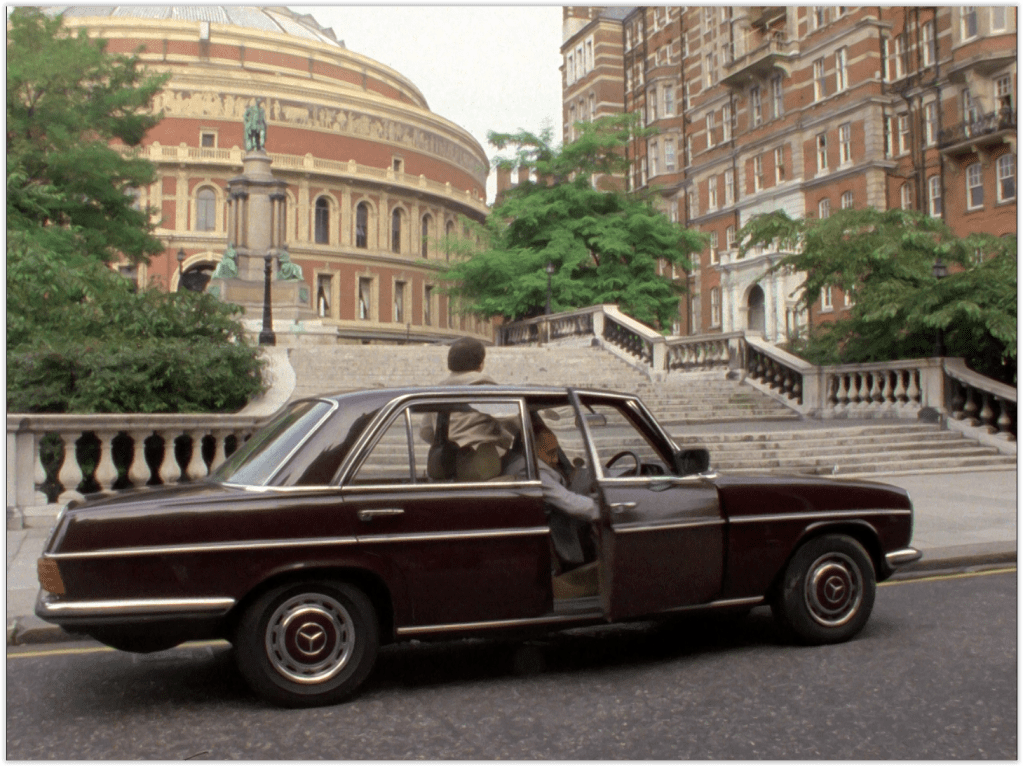
It’s the first episode to feature extensive filming in Central London – something the show was later known for, rather than these early eps which tended to be set in posh country towns like Windsor. Not so many abandoned factories there, of course.
As a story, it seems a little lopsided; the involvement of the KGB doesn’t come until close to the end, and feels rather as though it was grafted on to make the episode a little less obviously just like The Sweeney. There are also loose ends – just why did Ann Seaford have the Prime Minister’s private phone number? Given that Sir Charles Milvain (a shadow minister not even in the government) had to resign after his part in the affair, it seems a little odd that Cowley would just look the other way for the PM…
 Simon’s Incoherent Blog