
“Would you push a girl out of a window for two million?”
The one where…
The deathbed confession of a corrupt lawyer prompts the reopening of a murder case from 1953 – but 24 years later, all the witnesses are being killed.

Murder. Corrupt police. Corporate subversion of government. Flashbacks to 1953. On the face of it, Everest Was Also Conquered has all the makings of a very good Professionals episode. But in fact, it’s a surprisingly simple plot, far more linear than the usual twists and turns that lead the CI5 boys to a solution.

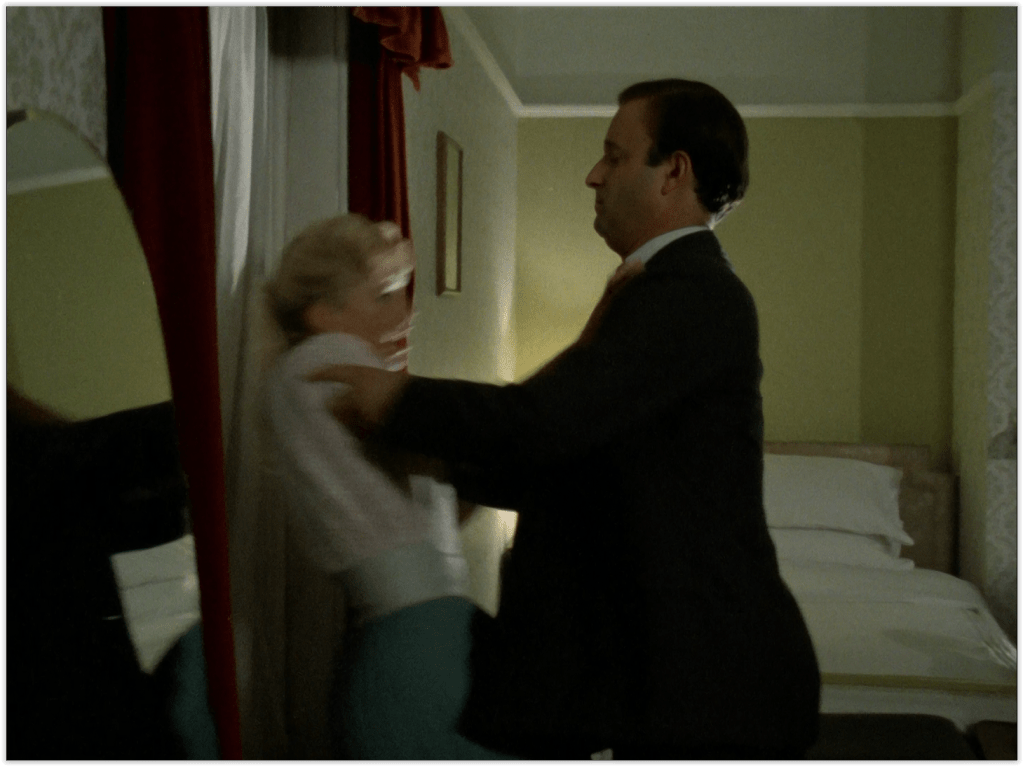
An opening flashback shows the murder of Suzy Carter, a key witness in a corporate subversion trial, as a dodgy police inspector walks past an oblivious young policewoman to shove her out of a ninth floor hotel window. Suzy’s plummet to the ground, none too convincingly achieved with some kind of travelling matte, is a recurring image throughout the ep, as said policeman, now retired Detective Superintendent Turner, is still having nightmares about it 24 years later.
The flashbacks to 1953 never entirely convince, due to the ep’s policy of using the same actors to play the characters in both time frames, with what seems like a minimum amount of makeup. The conscience-stricken Turner, in particular, doesn’t seem to have aged a day between 1953 and 1977, merely taken off his toupee.
CI5 get involved courtesy of an old friend of Cowley’s, Peter (now Lord) Derrington, who’s something important in the Home Office – it’s never made clear what exactly. Derrington’s worried that the lawyer involved in the original case expired (for some reason surrounded by men in suits while being administered the last rites by a slightly comical Irish priest) with the final words, “I killed Suzy Carter!”
This leads to a pretty straightforward plot, as Bodie and Doyle set out to find those present on the night of the murder (all three of them), only to find that when they get there, the witnesses have been shot. Clearly someone’s covering up. Can they reach the final witness in time?
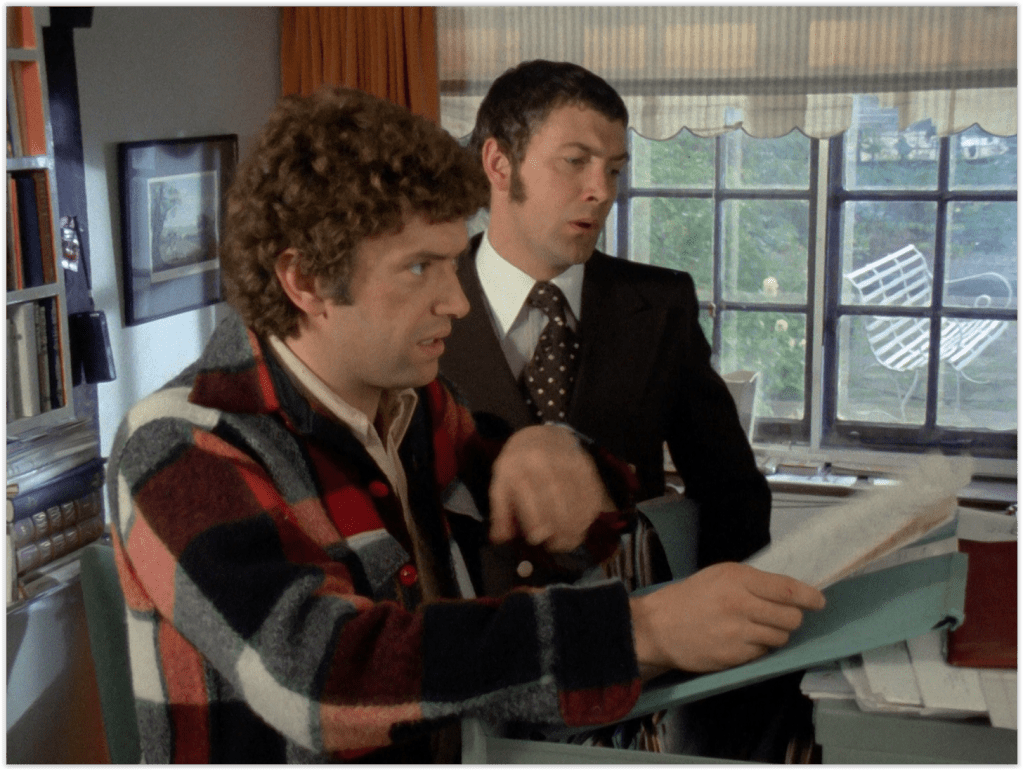
It’s not a particularly complex plot, so a great deal of time is filled out by our heroes poring over decades-old files and newspapers (provided by the ever-helpful Betty, who in a modern CI5 would probably be the organisation’s top investigator). To liven things up, and provide more of a reason for the gang to be emotionally involved in an ancient cold case, writer Brian Clemens introduces bright-eyed new rookie agent Tony Miller, whose only function is to get killed while visiting the first witness, thereby annoying Cowley, Bodie and Doyle.
When witness 1, Turner, is offed (along with the unfortunate Miller), Bodie and Doyle are surprised to find a Rolls-Royce lurking in his garage, alongside tales from his wife of suspiciously expensive foreign holidays that would be somewhat out of the price range of a retired policeman. Similar suspicious wealth is encountered when they arrive just too late to save witness 2, former policewoman Ann Berry, who left the force early with enough money to buy her own dogs’ home in the country with cash. This does not take too much arithmetic to put the case together.
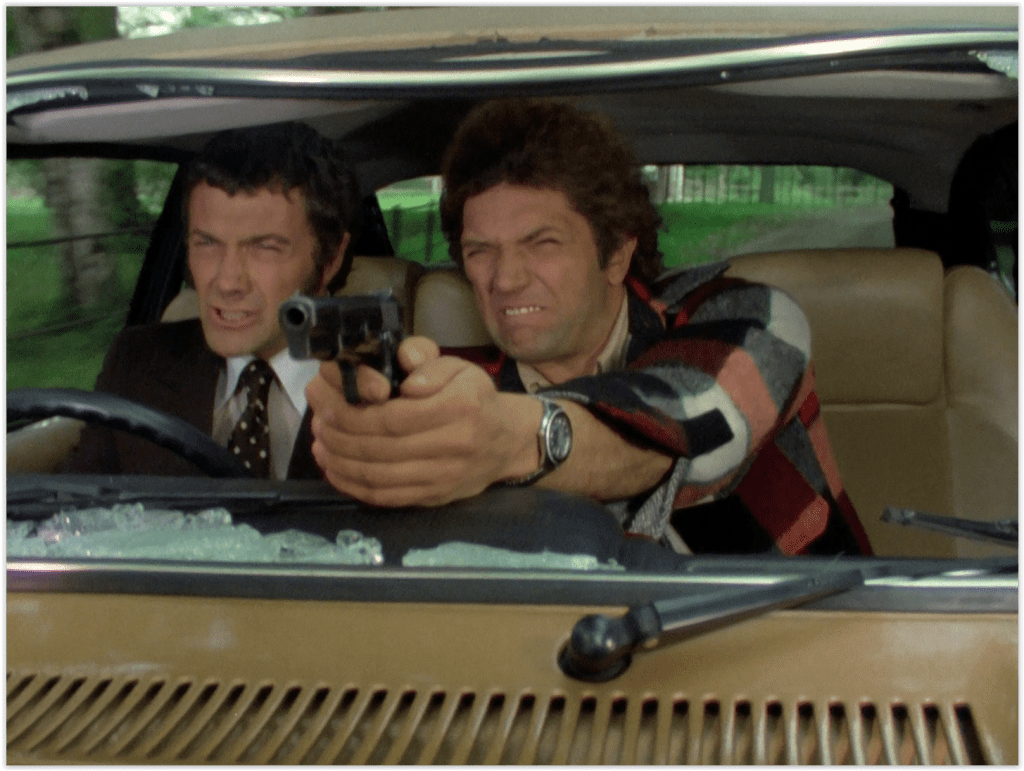
We do at least get a bit of a car chase in between all the filing, as when the boys arrive at Berry’s place in their shiny new car, the hitman is just leaving. Cue much tyre squealing through the countryside and shooting through a broken windscreen that is momentarily thrilling… but then it’s back to the files.
The files do at least lead them to supercilious corporate creep Neil Turvey, whose company benefited to the tune of millions of pounds from the collapse of the original corruption case, and who now lives in an enormous stately home in the country. Hmm, I wonder who our chief suspect could be?
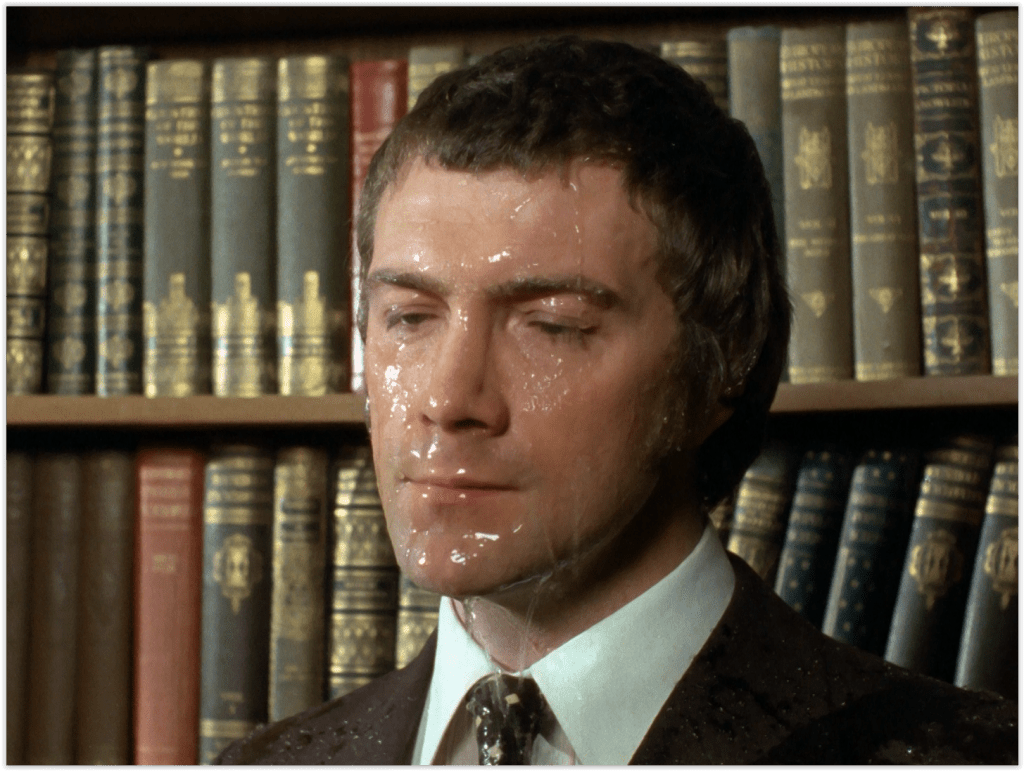
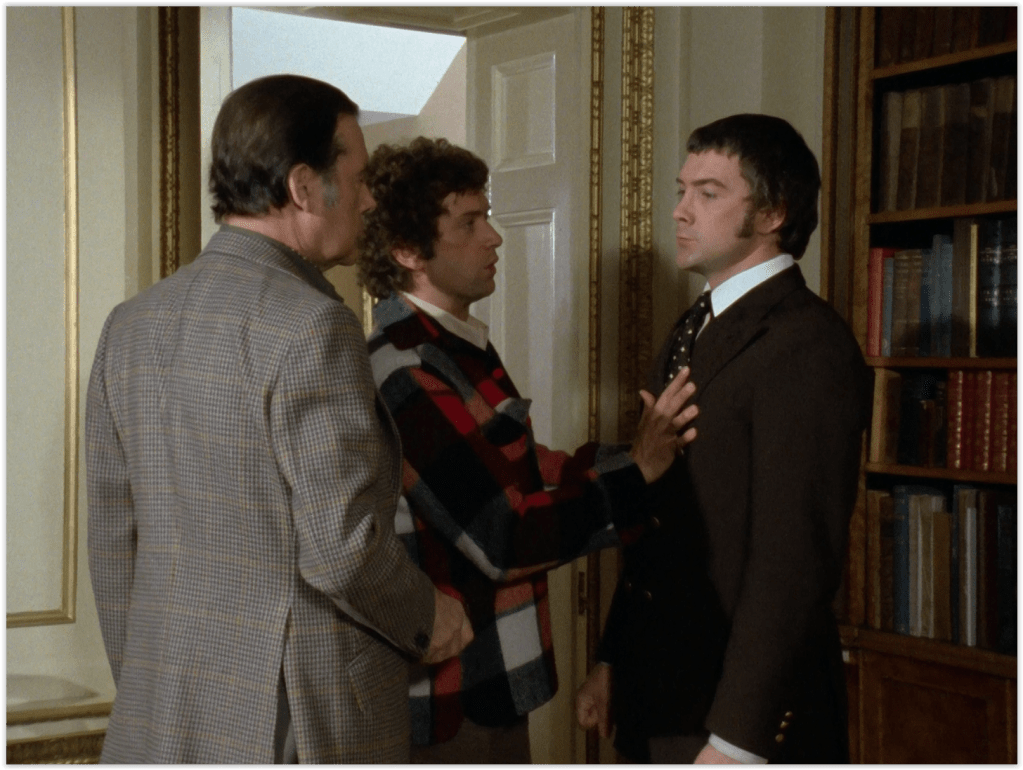
Turvey, rejecting Bodie and Doyle’s assertions, manages to royally piss off Bodie by throwing a glass of “particularly good” pure malt whisky in his face. This appears to be some kind of massive trigger for the usually controlled Bodie, as Doyle has to physically hold him back, and two scenes later, he’s still seething about it. In the past, we’ve seen Bodie maintain his usual steely control even when dealing with baddies who’d previously killed his girlfriends; but chuck some whisky at him and he’s like a rabid dog. That’s our Bodie – an enigma.
Tracking down witness 3, former Detective Sergeant Hamer, on a stag hunt in the Highlands (which appear to be somewhere in the Home Counties), Bodie and Doyle are once again too late to stop him being shot. But by an enormous stroke of luck (and plot contrivance), Hamer wasn’t shooting stags with a gun, but with a camera – and the last picture on the roll is the hitman who shot him. Who of course Doyle knows from his time on the Force, so it doesn’t take long to bring him in, find out who hired him, and go back to Turvey and arrest him with some actual evidence. Case closed.
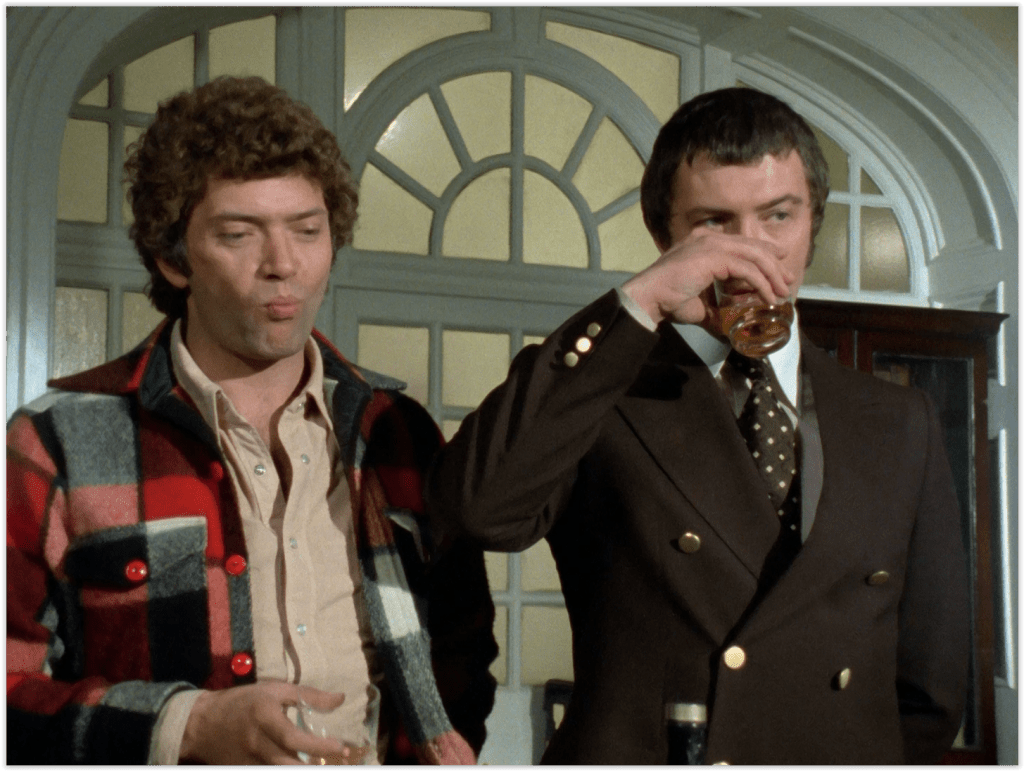
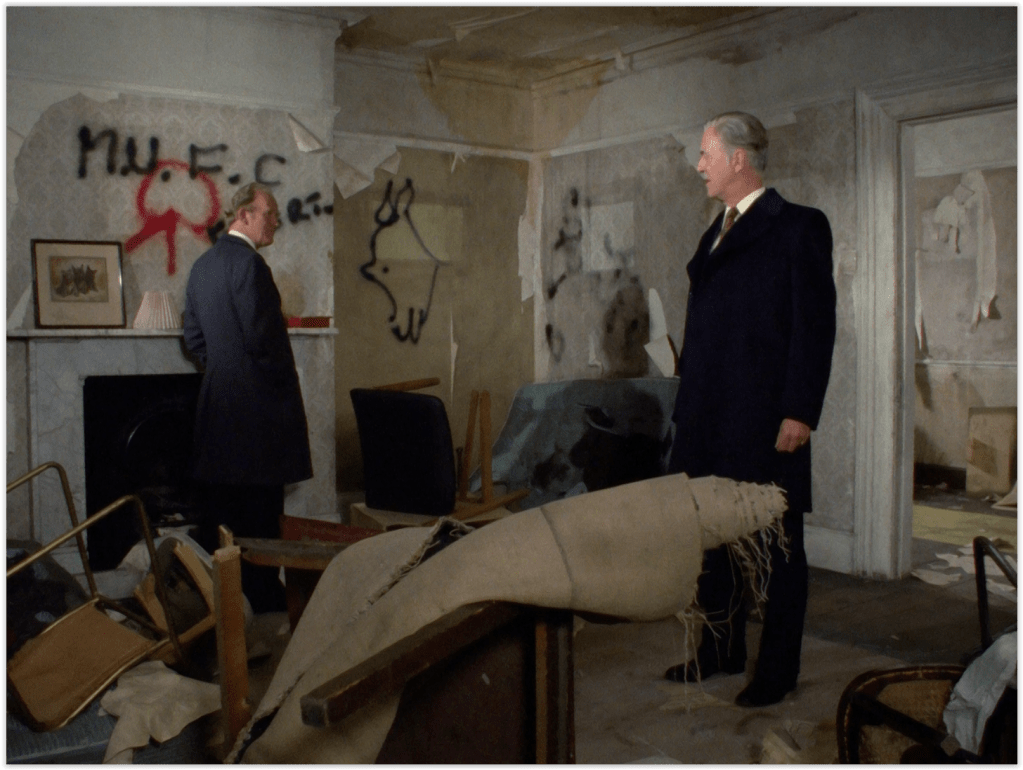
Or is it? We do get a third act twist, as Cowley realises that all of this must have been orchestrated by a senior figure in the government, covering up his own involvement in the original corruption case. Who is (of course) none other than his ‘friend’ Lord Derrington, the man who got CI5 involved in the first place.
This is a pretty unconvincing plot twist – if Derrington had just left well enough alone, none of the story would have happened, and he would have got away with it. Instead, he commissioned an investigation that led to him being caught. Either he thinks Cowley and his boys are really inefficient, or he’s incredibly stupid.
How dodgy is Cowley this week?
A little more subtle than usual – when Cowley sends Bodie and Doyle out to arrest hitman Frank Goodman, he sternly recommends that they do it “gently” – with the clear indication that he’s expecting the opposite.
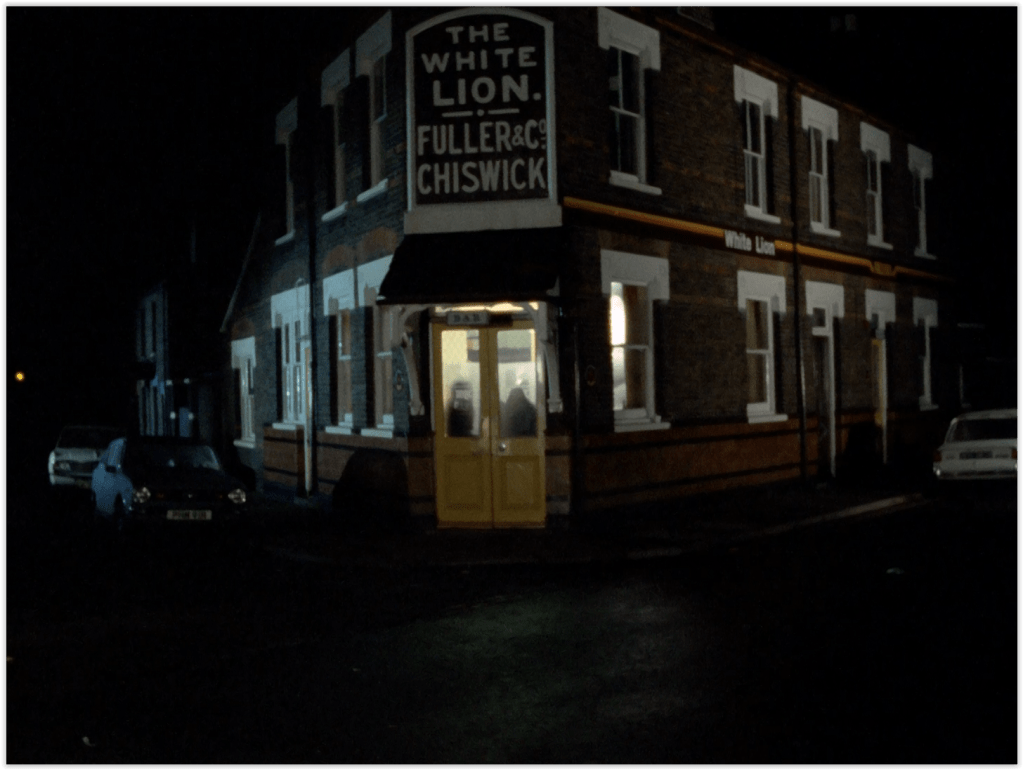
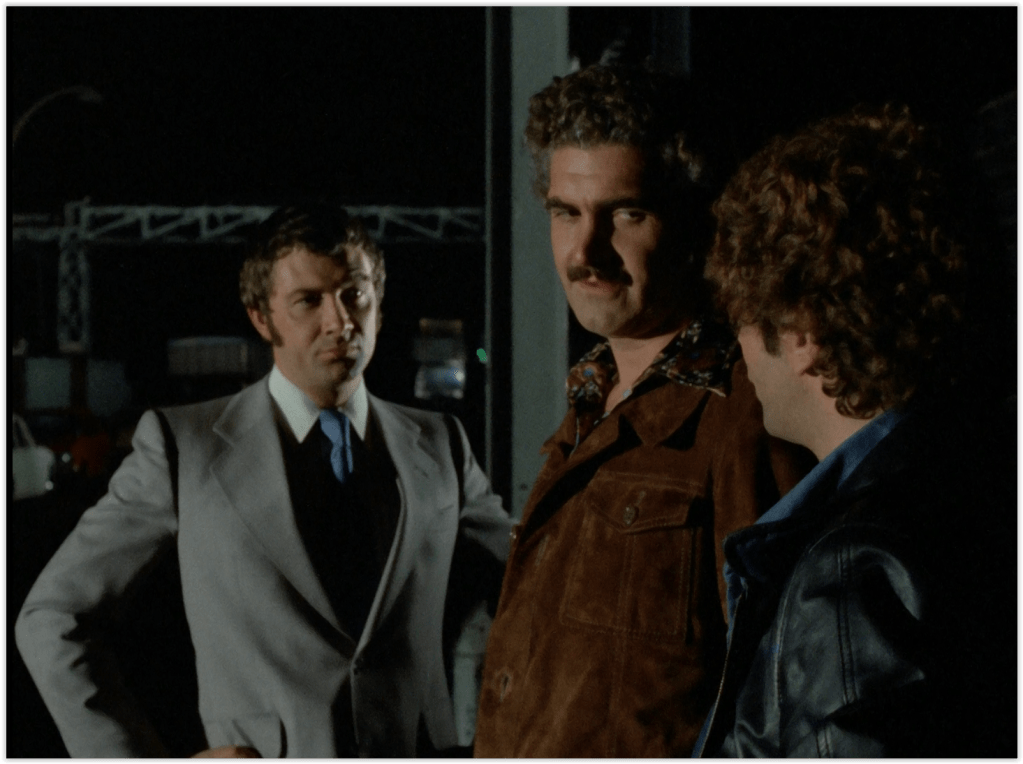
And the boys themselves are more subtle than administering the usual beating, merely chaining Goodman up outside a pub until he’s ready to talk. Since the pub contains a notoriously violent gangster whose brother Goodman had previously killed, and who is about to finish his pint, it’s no surprise that the information is forthcoming pretty quickly.
The cars
It looks like the show’s tempestuous relationship with British Leyland finally came to an end here, as none of the previous hero cars are in evidence. According to Andrew Pixley’s Production Notes, there were constant problems with the cars being unavailable for filming – either because they’d been lent to other productions, or (more likely) because they’d broken down.
So the producers turned to the much more reliable (both in terms of admin and the cars actually functioning) Ford, and a legend was born. For here was the first time Bodie and Doyle were seen to be driving that legendary 70s Ford coupe – the Capri.
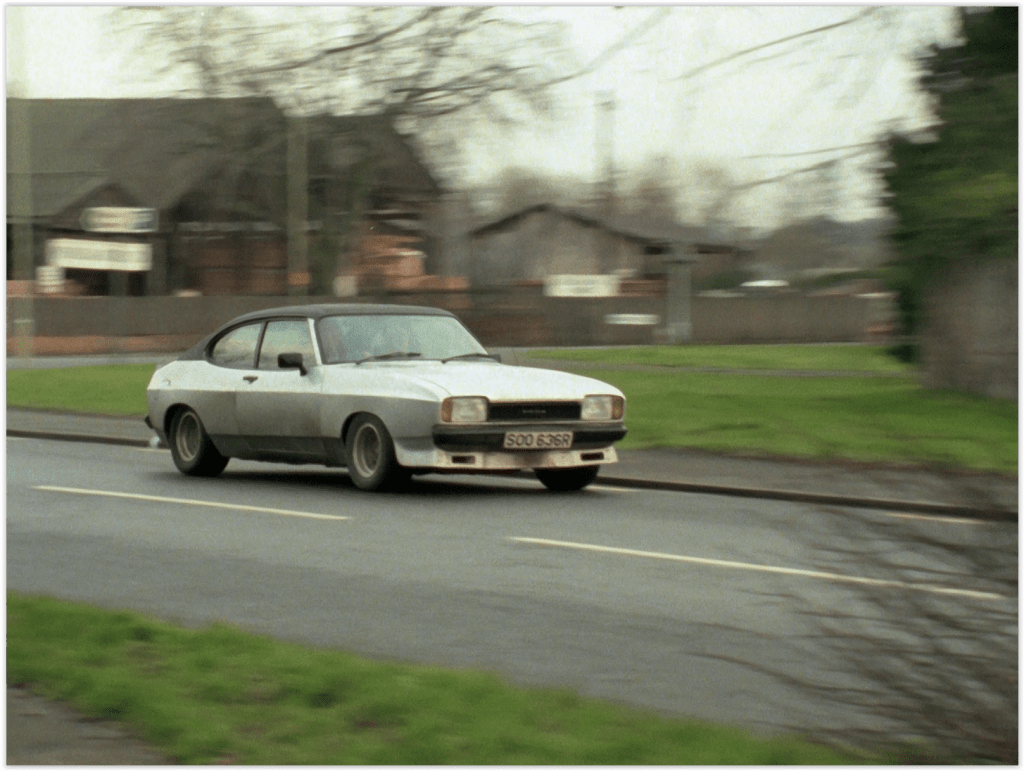
Not yet the double-headlighted MkIIIs that the show is remembered for, and in fact Bodie is seen driving two Capris in this one. The first probably wasn’t supplied by Ford themselves, as it’s a sporty looking MkII with aftermarket lowered suspension, front spoiler, and wheelarches as flared as a pair of 70s trousers.
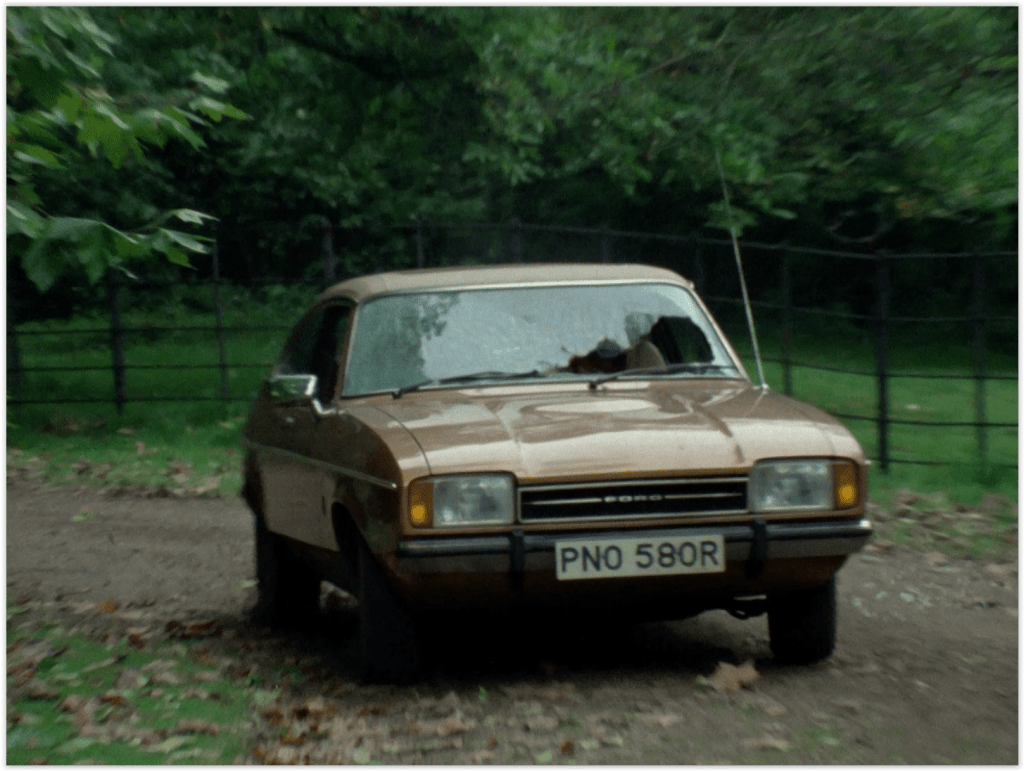
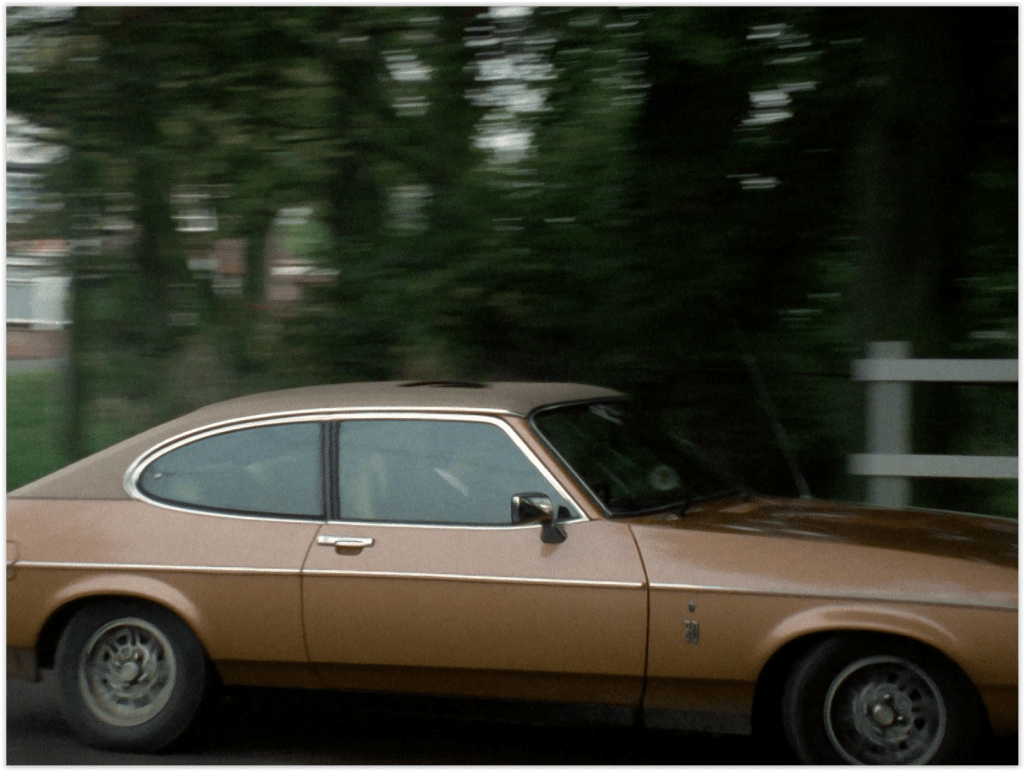
The second, a handsome-looking MkII 3.0 Ghia, was destined to be Bodie’s hero car from now on. The 3 litre V6 was the biggest engine available for the Capri, and in these days before traction control, was so overpowered for the car’s weight that any attempt to go round a corner at speed would result in the back end trying to change places with the front.
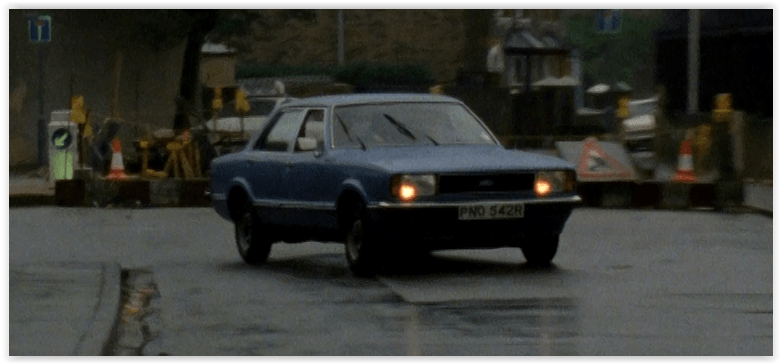
For a bit of variety, the boys are driving a blue Ford Cortina MkIV when they go to arrest Frank Goodman. This makes sense, as the low-slung, two-door Capri would be a bit of an effort to get a suspect into the back of.
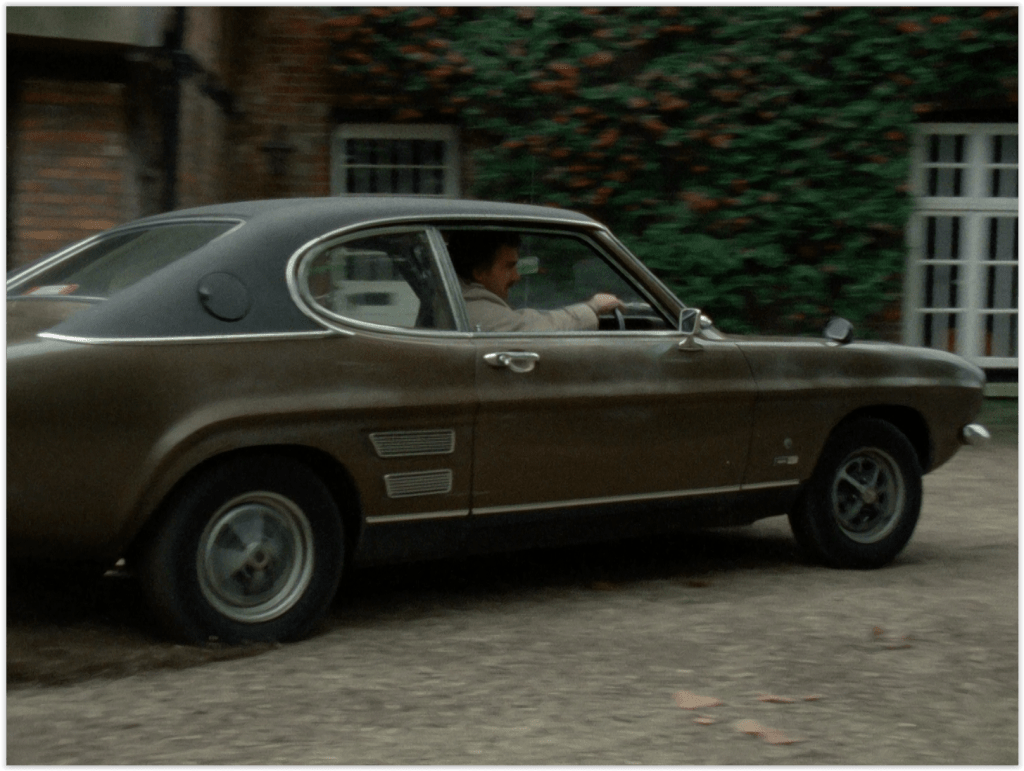
Goodman too is a Ford man, but presumably his car wasn’t supplied by the company, as he’s driving a now-obsolete brown Ford Capri MkI. Actually, for me, the smaller, prettier original design was the nicest-looking version that Ford made, but well, progress is progress. And the MkII got a hatchback, so there’s that.
1970s clothes
Nothing new this week. Bodie at least manages to steer clear of anything leather for the whole episode, and generally looks pretty smart combining several of his previously seen blazers with an actual tie.
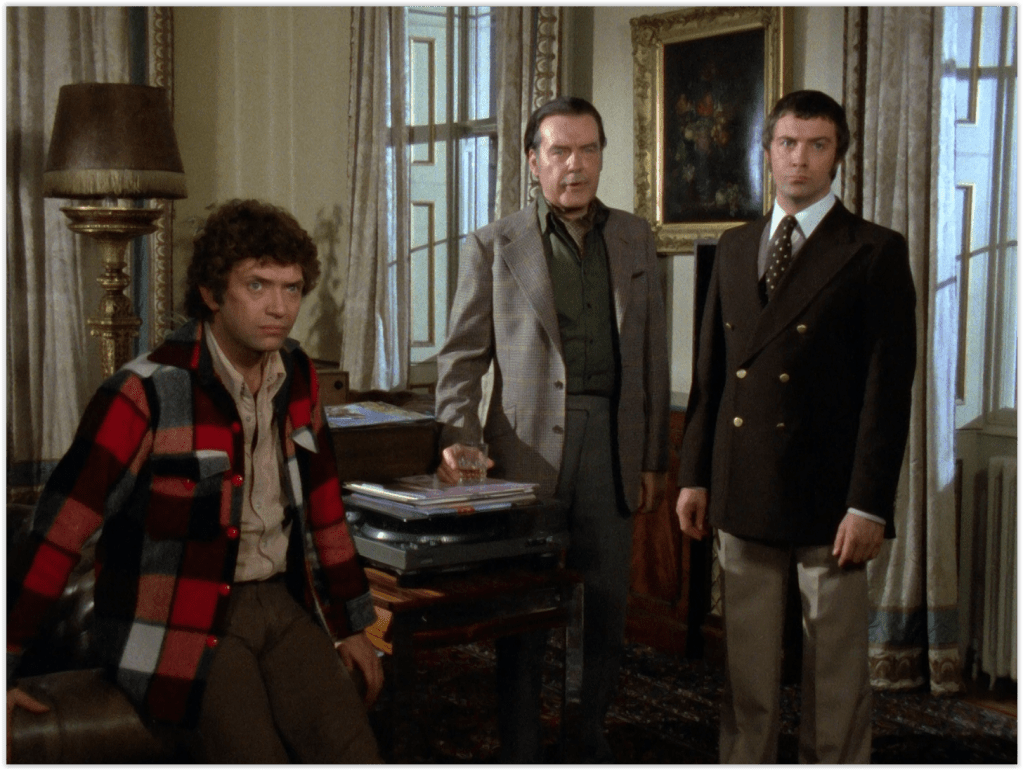
Doyle, meanwhile, spends much of the time in his beloved plaid bomber jacket, though he does later switch to the reversible blue leather/denim one we’ve also seen before.
1970s references

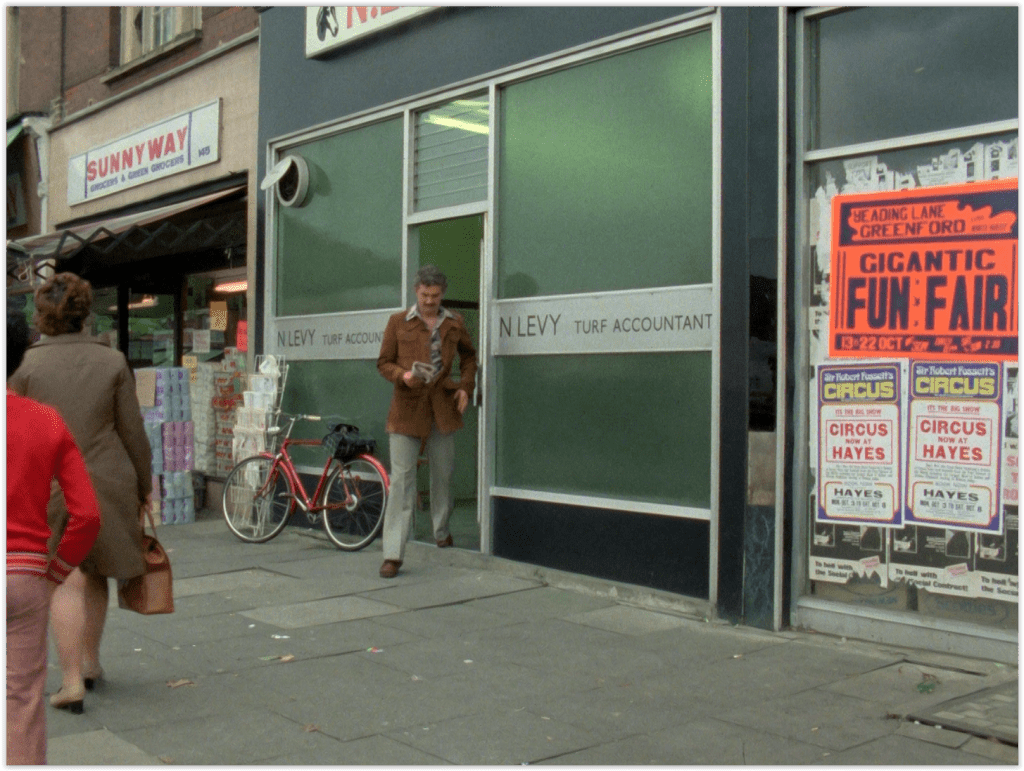
There’s some nice footage of what I think is Rickmansworth High Street as Bodie and Doyle tail Goodman. Goodman clearly likes a flutter on the horses, but the plain-windowed bookie he visits (“NH Levy – Turf Accountant”) looks a lot more respectable than the likes of Paddy Power today.
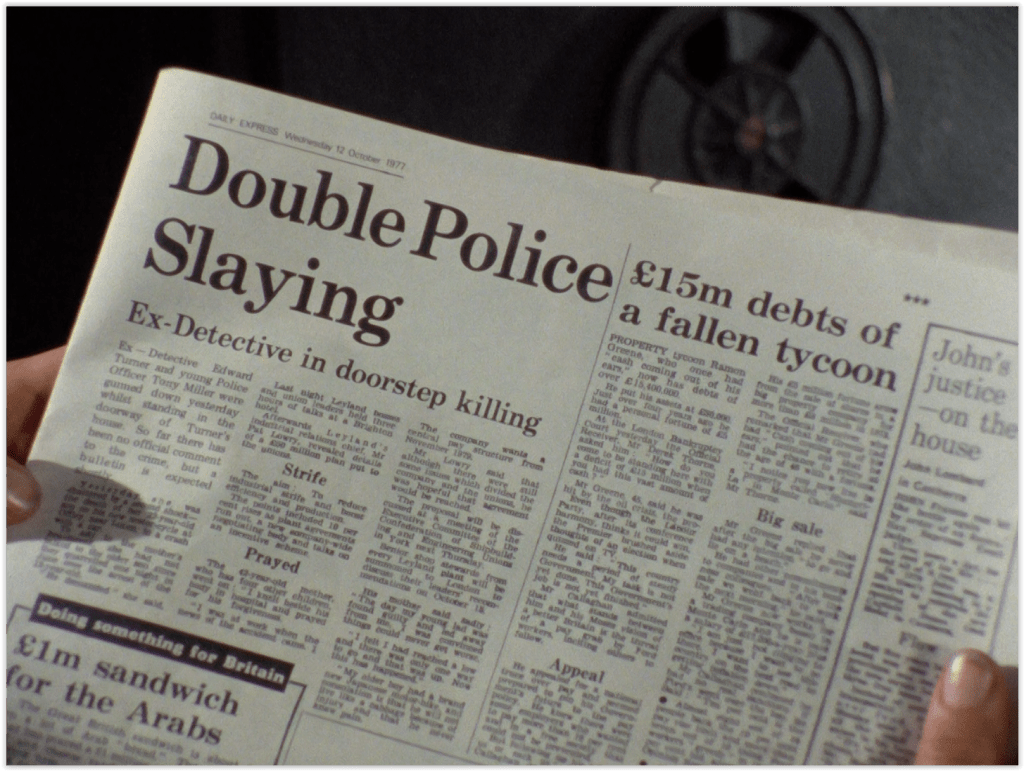
Ann Berry is seen reading another of the show’s mocked up newspapers in the aftermath of Turner’s killing – as before, the new HD transfer allows you to see what the actual text is below the plot-relevant headline. Ironically, it’s about a proposed strike at British Leyland, curiously mashed up with a story about a young man’s death in a motorcycle accident.
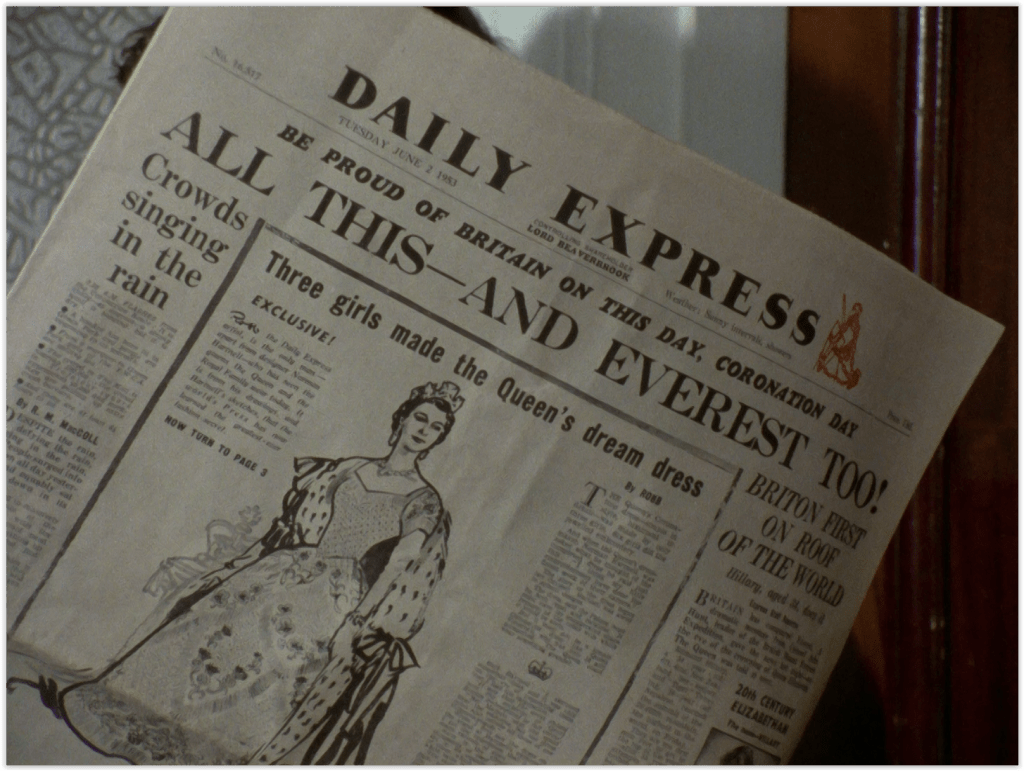
And not so much a 1970s reference as a 1950s one – that’s an authentic copy of the Daily Express from 02 June 1953 we see at various points throughout the ep.
Hey, it’s that guy from that thing!
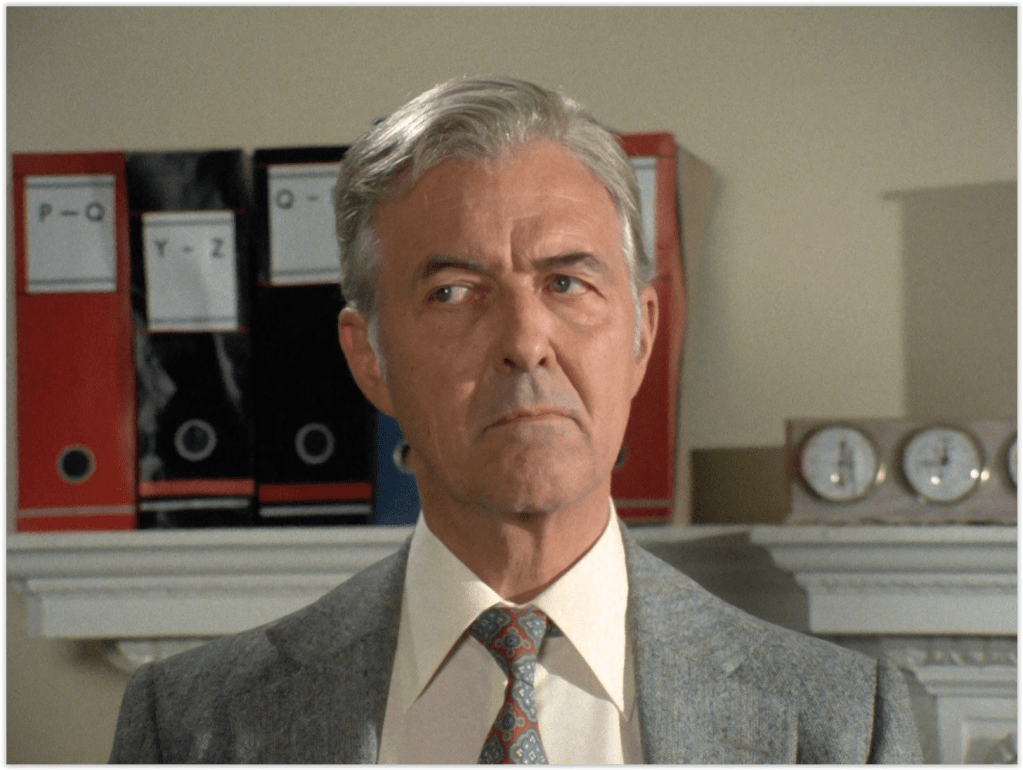
Cowley’s ‘old friend’ Lord Peter Derrington is played by Michael Denison. More of a theatre actor than a screen actor, Denison can be seen playing Algernon in Anthony Asquith’s 1952 film of The Importance of Being Earnest.
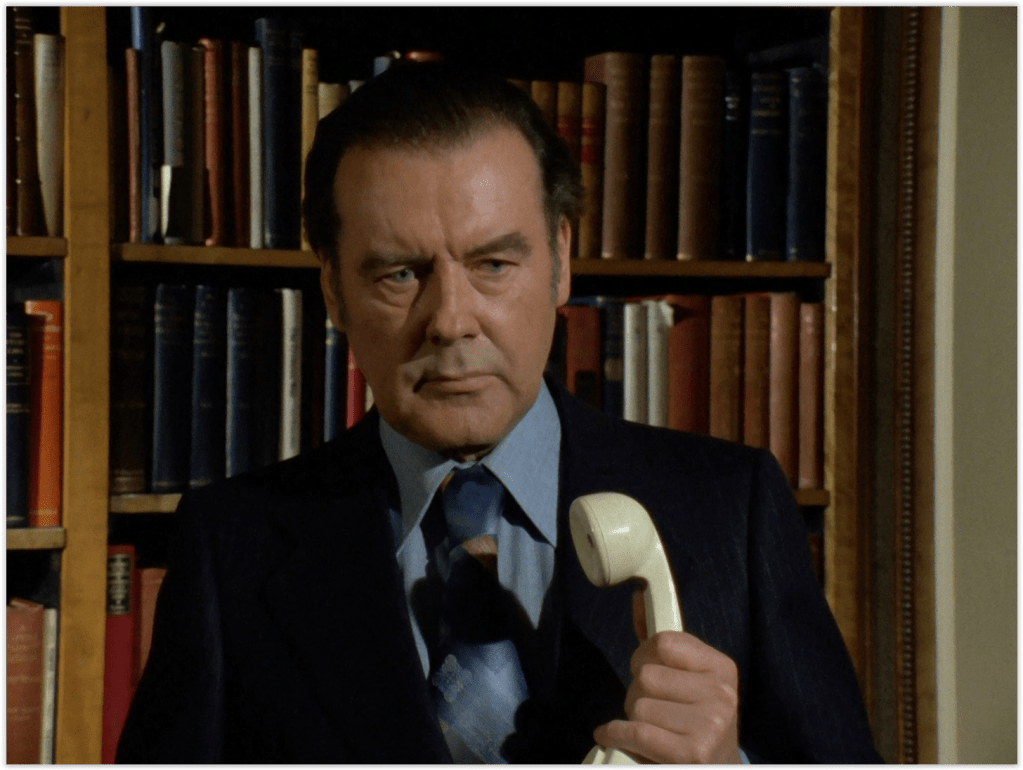
Better known to British TV viewers was Richard Greene, here playing corrupt businessman Neil Turvey. A prolific actor with many, many credits, Greene will still forever be remembered as TV’s Robin Hood, in the ITV series which ran for 143 episodes between 1955 and 1959. And had such an annoyingly catchy theme tune that even Monty Python parodied it.
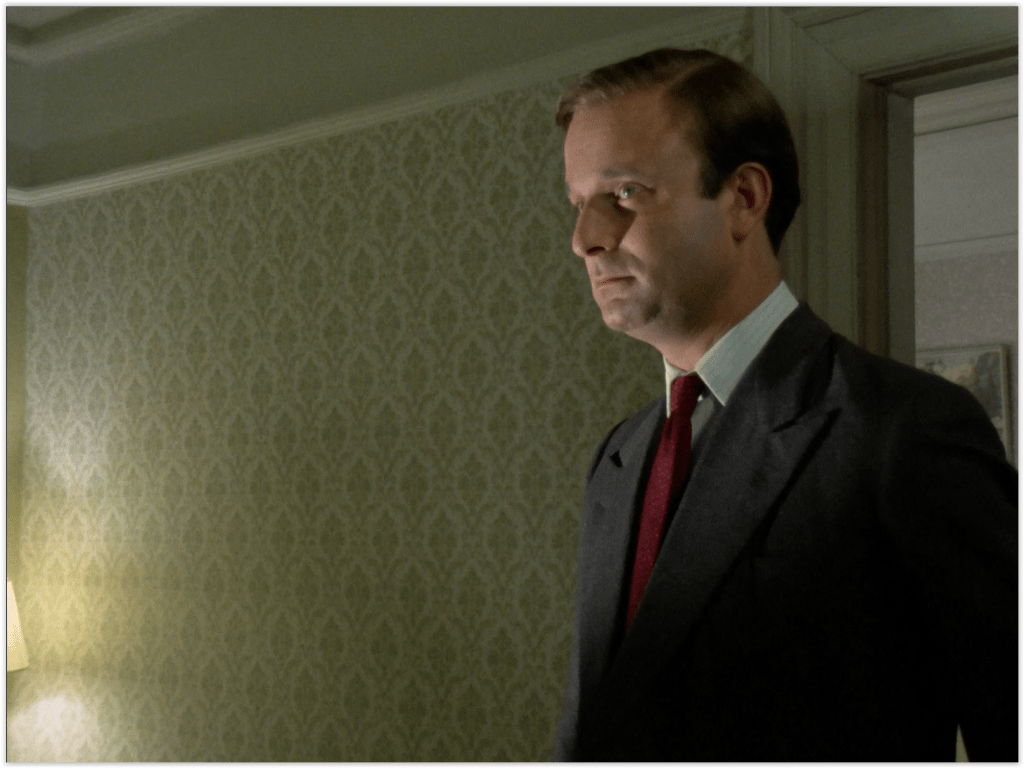
That’s the instantly recognisable face (if not hair) of Gary Waldhorn as conscience-stricken murderer DI Turner. Waldhorn was better known for comedy than drama, and is probably best remembered as David Horton in The Vicar of Dibley.
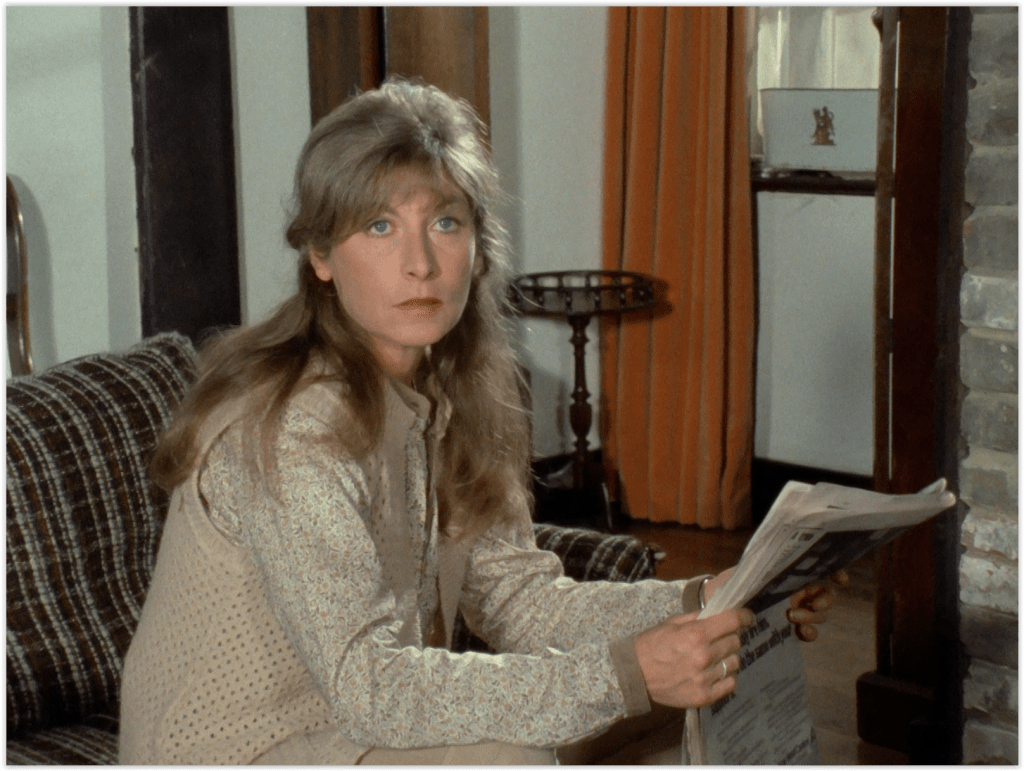
Ann Lynn, another prolific actor, plays the unobservant Ann Berry. Lynn never really had a starring role in anything, but worked solidly in character parts in many shows throughout her life, from the likes of Danger Man to Only Fools and Horses.
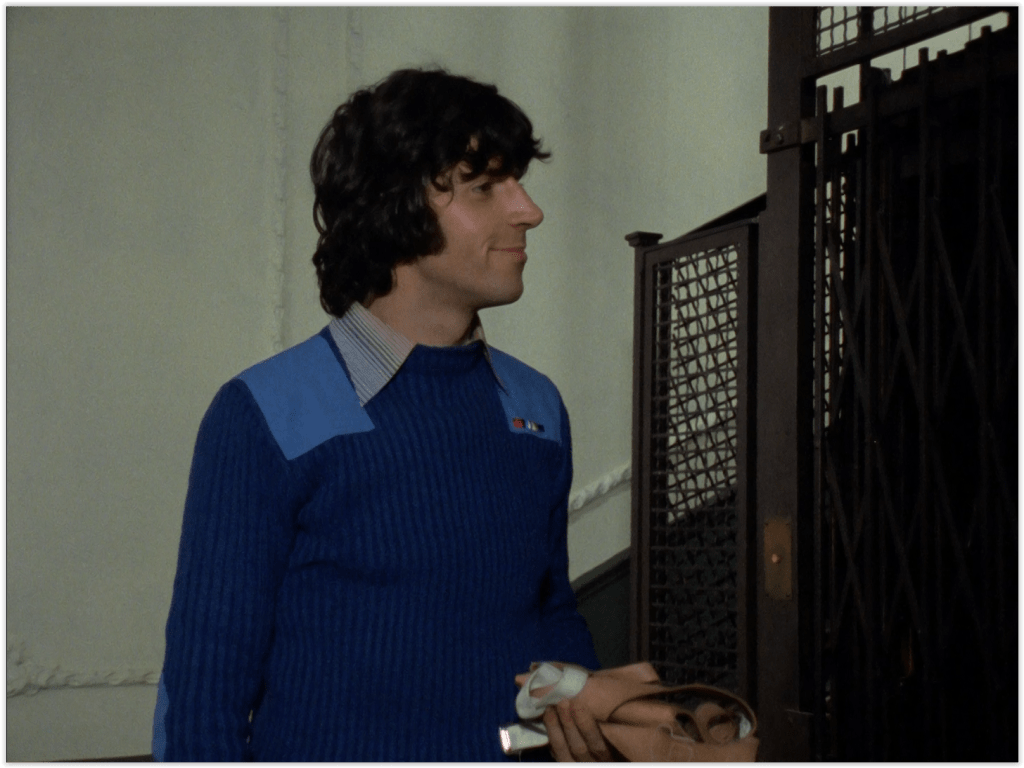
Eager young CI5 rookie Tony Miller is played by a young Peter Blake, who later became well-known as a comedy actor in sitcoms like Dear John. He also was a frequent star of The Rocky Horror Show, and played Frank-n-Furter more than 1000 times.
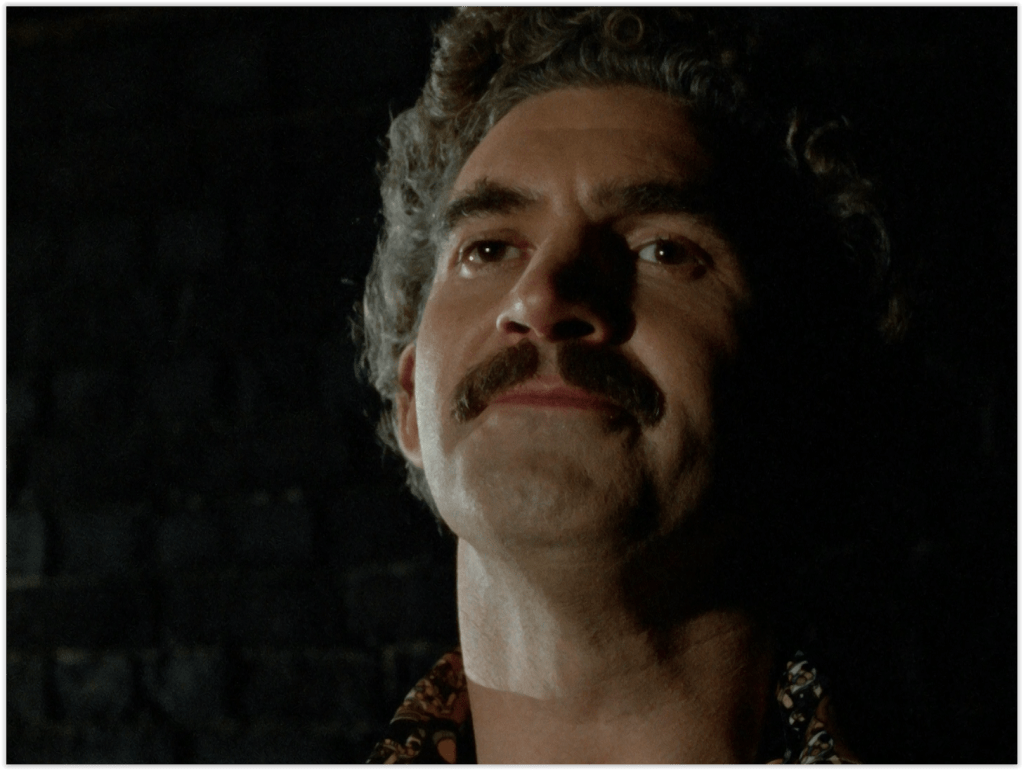
That’s Charles Keating as hitman Frank (erroneously credited as Sammy) Goodman. Keating had some success in British drama, but his career really took off when he moved to the US in the 1980s, where he played Carl Hutchins in long-running soap opera Another World from 1983-1999.
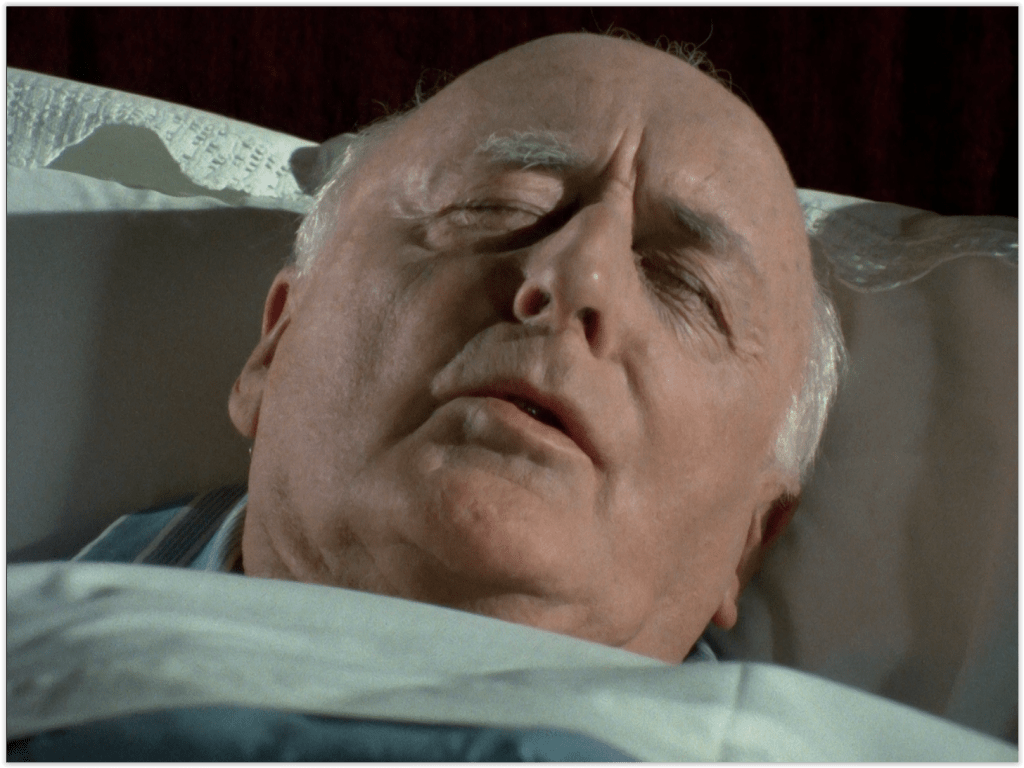
Expiring within minutes of appearing as dying lawyer Arden French is veteran Welsh actor Llewellyn Rees. Doctor Who fans may remember Rees for similarly expiring within minutes of appearing as the assassinated Time Lord President in The Deadly Assassin.
Nice bit of dialogue
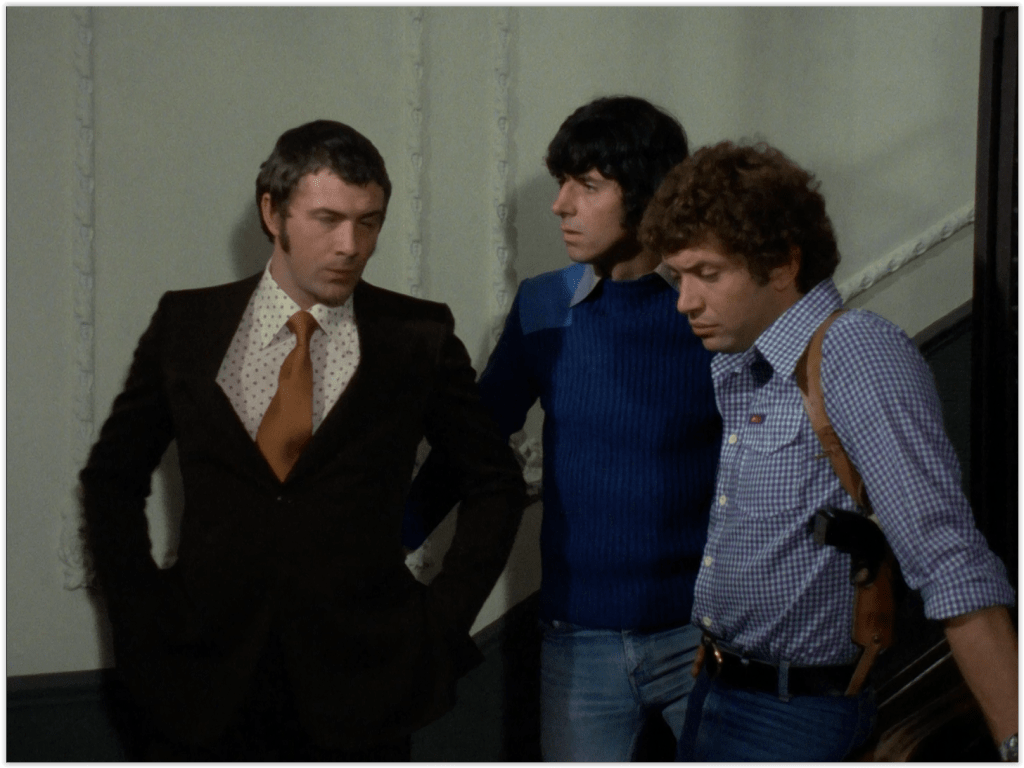
Comical CI5 banter with new boy Miller:
Bodie: “You have to spend a whole year with CI5 before you get to call Mr Cowley ‘the Cow’.”
Doyle: “And even then, not actually in the building. He’s got ears like… a hawk.”
Bodie: “Eyes.”
Doyle: “What?”
Bodie: Hawks have eyes.”
Doyle: “Well, yeah, this is true, but they also have very good ears. I mean, did you ever see a hawk wearing a deaf aid?”
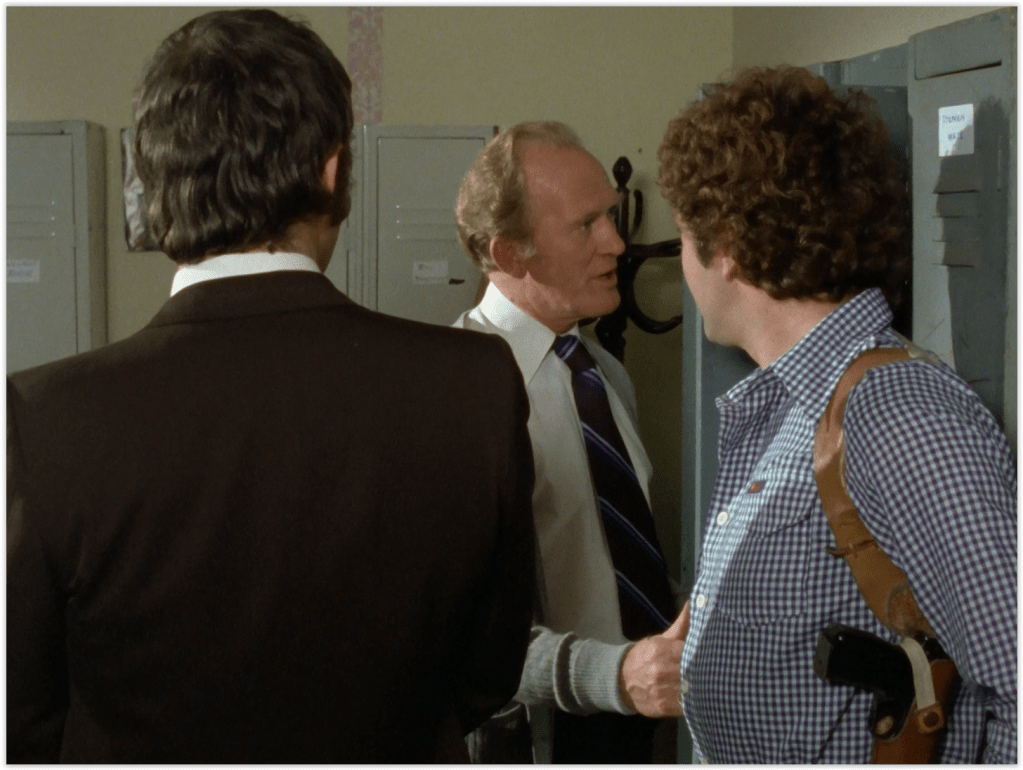
Cowley, regretting his decision to send the inexperienced Miller to his death: “Never send a boy to do a man’s job, they’ll only steal his bike. How often have you heard me say that?”
[Never, actually]
There’s a lot of this kind of thing throughout the ep, to make up for the plot not really filling the runtime.
Casual Sexism
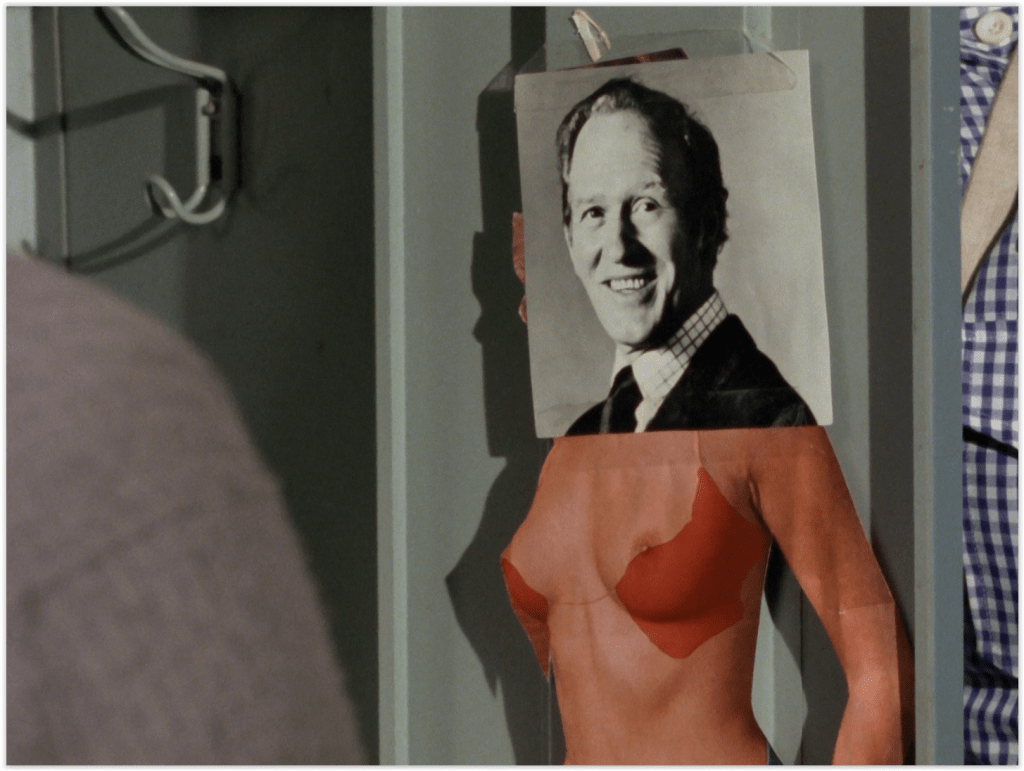
Surprisingly, not much this week – in fact, it’s only really demonstrated with that (actually fairly tasteful) girlie pic that Bodie and Doyle tape to the inside of Miller’s locker. And since it has Cowley’s face on it, even that doesn’t come off as too sexist.
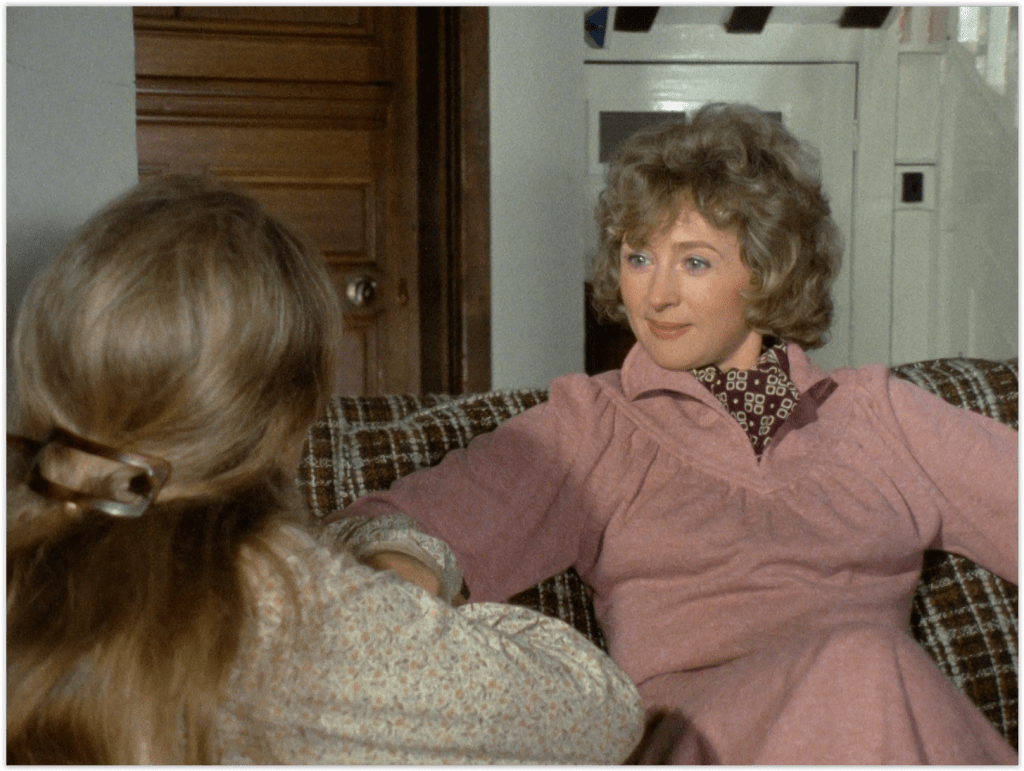
In point of fact, the boys are surprisingly sensitive about Ann Berry’s longstanding relationship with her girlfriend (“it must have been murder for a policewoman with those tendencies in the 50s”), which is not what you might have been expecting from this show’s first depiction of a lesbian relationship.
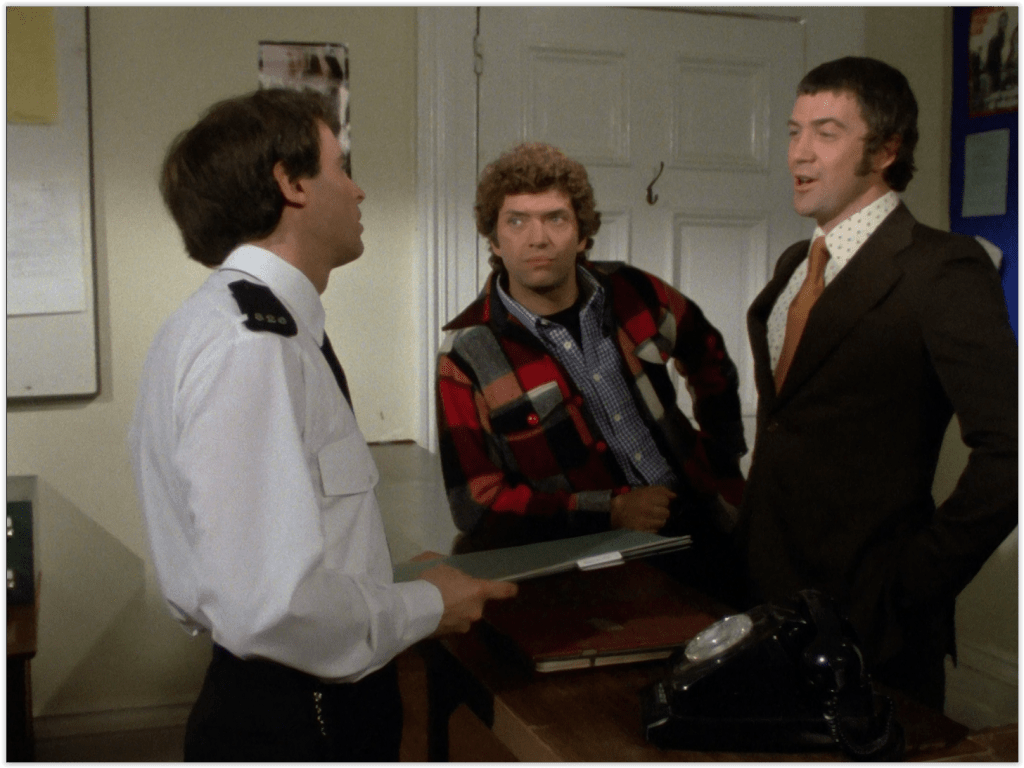
Everest Was Also Conquered is a pretty slight, straightforward tale by the standards of this show, with a very clear central plot that it doesn’t deviate from. It does have some pretty good action, which I suspect was necessary to fill out the running time, but I’m not complaining. Probably for the same reason, there’s a lot of dialogue scenes, but they work well at fleshing out the characters, dwelling on subjects like Doyle’s hatred of filing, Cowley’s passion for “pure malt” whisky (“there’s no ‘particularly good’ one – they’re all good!”), and Bodie’s irritation with the upper class.
The boys get to demonstrate some real detective skills in this one, but it has to be said that the final revelation of the “third man” isn’t much of a surprise. It does allow Gordon Jackson maximum deployment of his trademark, stern “I’m very disappointed in you” look, at least.
 Simon’s Incoherent Blog