
“You used to be food, you know. Humanity. Your lives were short. Then your brains grew. You built tools and used them to conquer nature. Built impossible machines. Went to space. You stopped being food. Or, I should say, you told yourself you weren’t food anymore.”
(SPOILER WARNING!)
It was inevitable, really. Once Disney got its hands on the Alien franchise, it was only a matter of time before we got a TV show from it. That’s how Disney work with successful film franchises – they milk them to death by overproducing content, both film and TV until nobody wants to watch them anymore. They’ve done it with Star Wars, they’ve done it with Marvel – is this the first step to doing it with Alien?
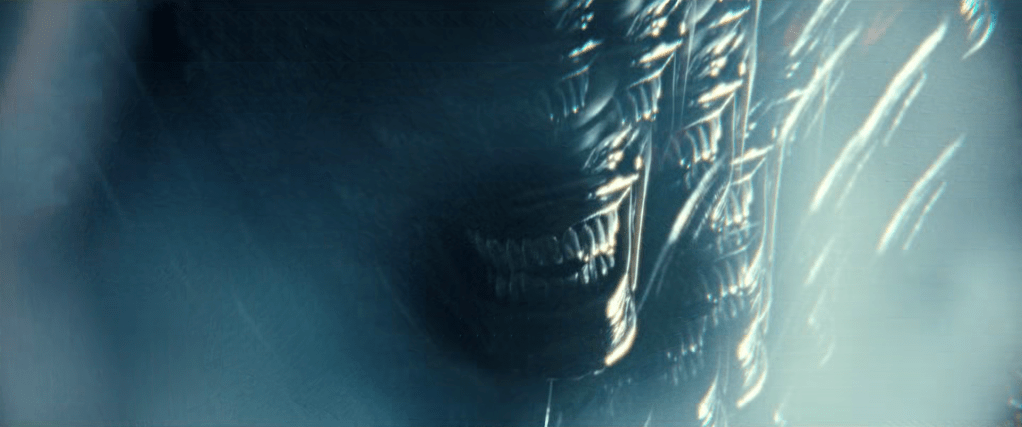
Well, to be fair, the franchise’s last few films haven’t been that great anyway. After the imaginative mess that was Alien Resurrection, it was off the screen for more than a decade before we got the beautifully filmed but pretentious and incoherent prequel Prometheus. That was followed up with its own tonally different sequel Covenant, which seemed to junk everything from its predecessor, and strip away even more of the mystery that made the saga so compelling. Last year’s Alien Romulus was a bit of a return to form, but really, it was little more than a competently assembled collection of ‘greatest hits’ moments from the much-loved original two movies.
So I wasn’t exactly filled with hope for this new TV version, which is yet another prequel to the original 1979 Alien. But what did intrigue me was that it was being written by Noah Hawley, the showrunner behind the excellent film-to-TV crime thriller Fargo. I was hugely impressed with Fargo, which I binge watched all five seasons of earlier this year, so Hawley’s name was a big draw for me.
And, based on these first two episodes which were aired the same night, it’s not too bad. So far at least, it seems thankfully to be ignoring the events of Prometheus and Covenant, and going back to basics with its own take on the Alien lore.
There’s a certain formulaic set of elements you always have in an Alien story. There’s the Xenomorph creature itself, of course, present and correct here in its original form before the range was expanded with things like the egg-laying Queen. There’s the real villains of the piece, the ultra-capitalist corporations bent on securing the beasties for profit. And there’s the ‘synthetic humanoids’ (“I prefer the term ‘artificial people’”) who do the companies’ dirty work.

Given the time constraints of a theatrical film, these elements have, for the most part, not been deeply explored. But an eight episode TV show gives the opportunity to do that, and already, in these first two episodes, we’ve got a lot more depth given to both the nightmare capitalist future of Earth, and the existential questions posed by artificially intelligent androids.
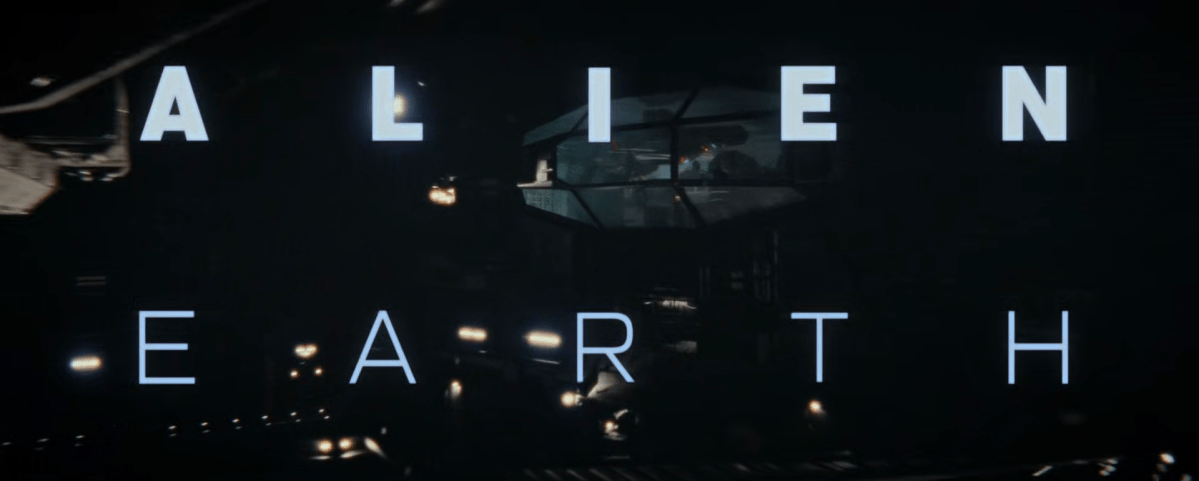
Indeed, it’s the latter that are given the initial focus, with text captions lovingly recreating the original font of the Nostromo’s MTHR computer explaining that there are, in fact, three variants of these. There’s the out-and-out android synthetics, like Ash from the first film and Bishop from the second. Then there’s cyborgs, which we haven’t seen before – basically humans augmented with cybernetic body parts. And newest of all, there’s ‘hybrids’ – synthetics with a genuine human consciousness transferred to them. Effectively, immortal people.

It’s these who appear to form the core of the story, which as a result is thematically as much a spiritual sequel to Blade Runner as it is to Alien. Certainly Timothy Olyphant, as synthetic scientist Kirsh, seems to intentionally echo Blade Runner’s Roy Batty, with his athletic physique, contempt for humanity, and platinum blond hair.
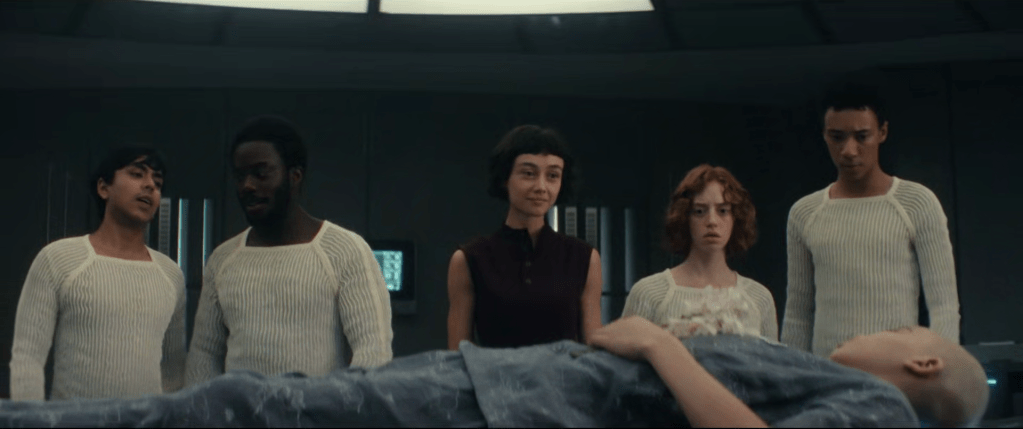
Even more interesting is that, so far, the only human consciousnesses able to be transferred to immortal, super strong synthetic bodies are those of children. But because synths can’t age, the children’s minds are implanted into the ‘bodies’ of young adults, giving the weird disconnect of characters who look like adults but act like ten-year-olds. And because their synthetic bodies don’t produce the brain chemicals that are the stimulus for human emotion, these have to be simulated.
All that would be meaty enough for an interesting science fiction story even without the Aliens. But this is first and foremost an Alien story, and they make their appearance promptly enough as a Weyland Yutani research spacecraft, infested with them already, crashlands on Earth into an apartment complex owned by rival corporation Prodigy – the developers of the synth/child hybrids.

Noah Hawley has reverentially recreated the sets of the Nostromo from the original movie for the interior of the crashed USCSS Maginot, even down to its cathode ray tube monitors. This might look like retro-futurism, but here they’re seen to also be touchscreens (though they still have big, clunky 1979-style keyboards), and even the handheld tablets people carry have curved CRT-style screens. It’s a nice way to integrate the look of the future tech of 1979 with the capabilities of the tech we can imagine now.
In fact, the first five minutes of the first episode use these sets to intentionally recreate the opening of the first movie, with the crew emerging from hypersleep in their familiar pods, then going straight to the mess for a meal. They even wear the same style of clothes (though not identical) as the crew of the Nostromo, notably cyborg security officer Morrow, who’s dressed very similarly to android science officer Ash.

It’s a good thing Hawley put so much attention to detail into those sets, as it looks like they’re where about half the story takes place. Eager to capture whatever corporate secrets Weyland Yutani’s crashed ship has on board, and since it’s in his company’s territory, Zuckerberg-esque Prodigy CEO ‘Boy’ Kavalier (a barefoot Samuel Blenkin, hamming it up enjoyably), sends in troops from his own corporate army, ostensibly as a search and rescue for the crew and the unfortunate inhabitants of the apartment block.

Heightening the stakes, they’re joined by the recently created Hybrids, along with their disapproving tutor Kirsh. This is because the very first Hybrid, Wendy (Sydney Chandler), is worried about her still human brother Joe (Alex Lawther, as intense as ever), who happens to be the troops’ field medic. Cue much creeping around crumbling, darkened spacecraft corridors lit by strobe lights. This may seem familiar.
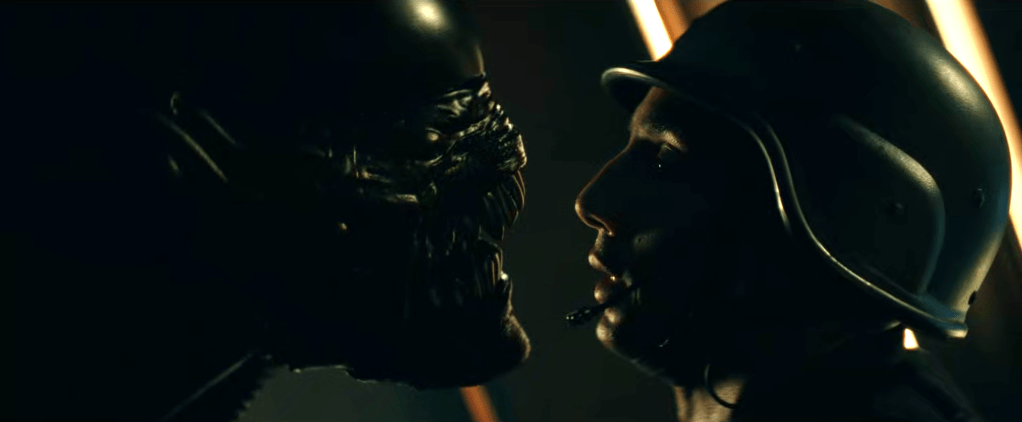
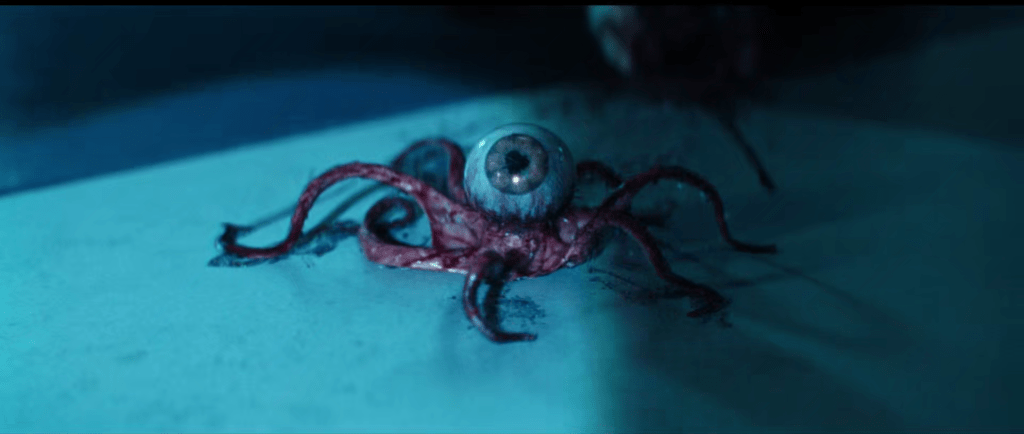
Just recreating the first movie, albeit on Earth, wouldn’t make for anything much new though, so Hawley has added extra menaces; the Maginot in fact has a veritable menagerie of WETA-created alien beasties, all grotesque and all absolutely lethal to humans (and indeed cats). As if the leechlike things capable of extracting all the blood from your body weren’t bad enough, there’s a scuttling eyeball on tentacles that inserts itself into its prey’s own eye socket and does… something not nice.
In several of the movies, the idea of the Aliens reaching Earth is the subject of much frantic planning to stop that happening – it would be an utter catastrophe. But in this prequel, set a few years before the first movie, that’s already happening. This is reasonable enough; the first movie established that Weyland Yutani already knew about the Xenomorphs, and had sent the unwitting Nostromo crew to get some samples. This explains why.
But it also means that, however good the series gets, it’s beset with ‘the curse of the prequel’ (“have the protocol droid’s memory wiped”). To maintain continuity, it has to end with the status quo as established at the outset of the first story. So I’m already conscious that this story has to end with the Aliens on Earth being contained, and with no knowledge of them escaping to the general public.

You have to sort of put that to the back of your mind to get any suspense, though in a story like this, the suspense is also about getting you emotionally involved with rounded characters who might live or die. This is something Noah Hawley excels at, and the characters here grab you from the start; innocent Hybrid Wendy, and her world weary older brother Joe, who thought she’d died as a child, are a great focus for the story.
But the side characters are interesting too. Grinning tech bro Boy Kavalier, icy synth Kersh, the naïve Hybrids and Adrian Edmondson, hanging round in a suit looking sinister for no clearly defined reason, are all worth watching.

To be honest, like the similarly enjoyable Alien Romulus, Alien: Earth isn’t (so far) doing anything particularly new with the franchise. But it’s expanding interestingly on the original ideas, and doing it with considerable style, both visually and in terms of writing. I’ll certainly be watching the rest of it, even if I know broadly how it has to end.
 Simon’s Incoherent Blog