“I’ve seen and fought prejudice of one kind or another all my life, and I intend to keep on fighting it.”
The one where…
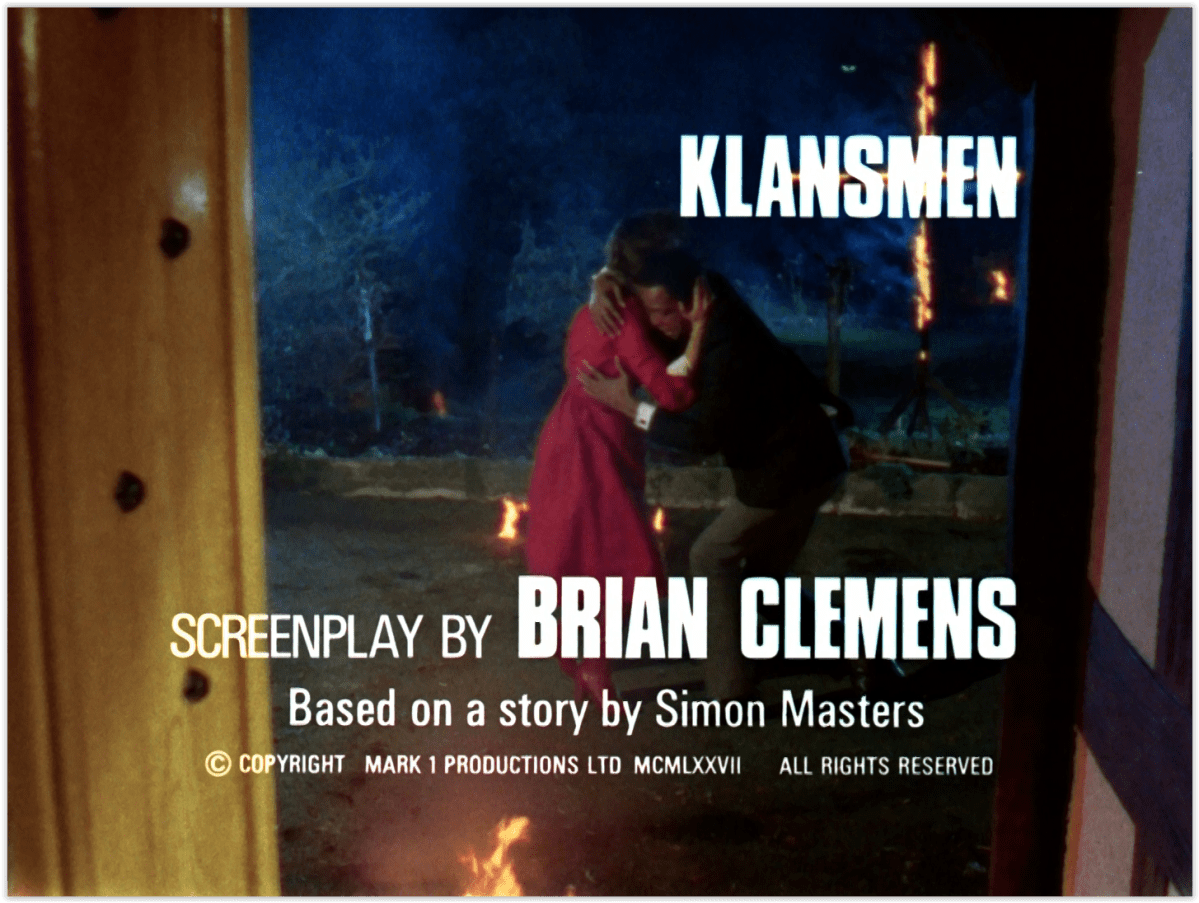
Doyle infiltrates a white supremacist group bringing the Ku Klux Klan’s brutal methods to Britain. But all is not what it seems…
Uh oh – it’s the racism one. Or the ‘racist’ one, depending on your point of view. In 1977, with race riots and the National Front very much on the rise, this was a very sensitive topic for an action-oriented thriller series to take on. Too sensitive, as it turned out, for ITV to feel comfortable showing the episode, which remained unbroadcast in the UK until satellite TV reruns of the show in the late 80s.
While it has all the subtlety of a sledgehammer, Klansmen is obviously well-intentioned, if ham-fisted, in its treatment of racism. But Brian Clemens’ script was based on a story by another writer, Simon Masters, whose work had to be thoroughly rewritten. Perhaps not thoroughly enough, though, because there’s a lot here that seems to muddy the waters of whatever message Clemens wanted to convey.
From a modern perspective, the frequent deployment of actual racist language is more than a little wince-making; the N-word is used sparingly, but the rather more dated “spade” is heard frequently (much to Cowley’s displeasure). To be fair, these were, unfortunately, in common use at the time by the sort of racists the show is trying to decry.
Which, it seems, include Bodie. This is a Doyle-centric episode, with Bodie put out of action by stabbing fairly early on; this was because Lewis Collins was mostly busy with the other unit shooting the previous Bodie-centred episode at the same time. But he’s already established himself as a racist early on, using the word “spade” unguardedly in Cowley’s office, which makes you wonder how the stereotypically liberal Doyle puts up with him. Even to the extent of visibly crying as he’s wheeled into hospital with his life in the balance.

But not even stabbing can put a stop to Bodie’s racism, as he deliriously tosses and turns in bed while crying out random racial slurs. We already know Bodie is a deeply flawed man; that was established in the previous ep with some penetrating scripting by the very same Brian Clemens. But this is just cartoonish and unconvincing.
It’s hardly plausible that Bodie, whose past as a soldier in Africa we have heard about ad nauseam, would still be a racist. Not impossible, I’ll grant you, but he would have been surrounded by Black people, and based on how ridiculously easy it is to ‘cure’ him of these tendencies here, that should have happened long ago.

Yes, it’s all very modern that one of your heroes is far from morally perfect, but this risks losing any viewer sympathy for him at all. That’s presumably why his dedicated treatment by a Black doctor and nurse in an NHS hospital is all it takes to get him over it, but since that’s so unconvincing, it makes you wonder what Clemens was thinking by going down this alley in the first place.
The ostensible villains of the piece, the ‘Empire Society’, are once again blatantly based on a real organisation. In this case, it’s the National Front, a far right, white supremacist group who at one point in the mid-70s, became the fourth most popular political party in the UK. Funny how history repeats itself. Or frightening, perhaps.

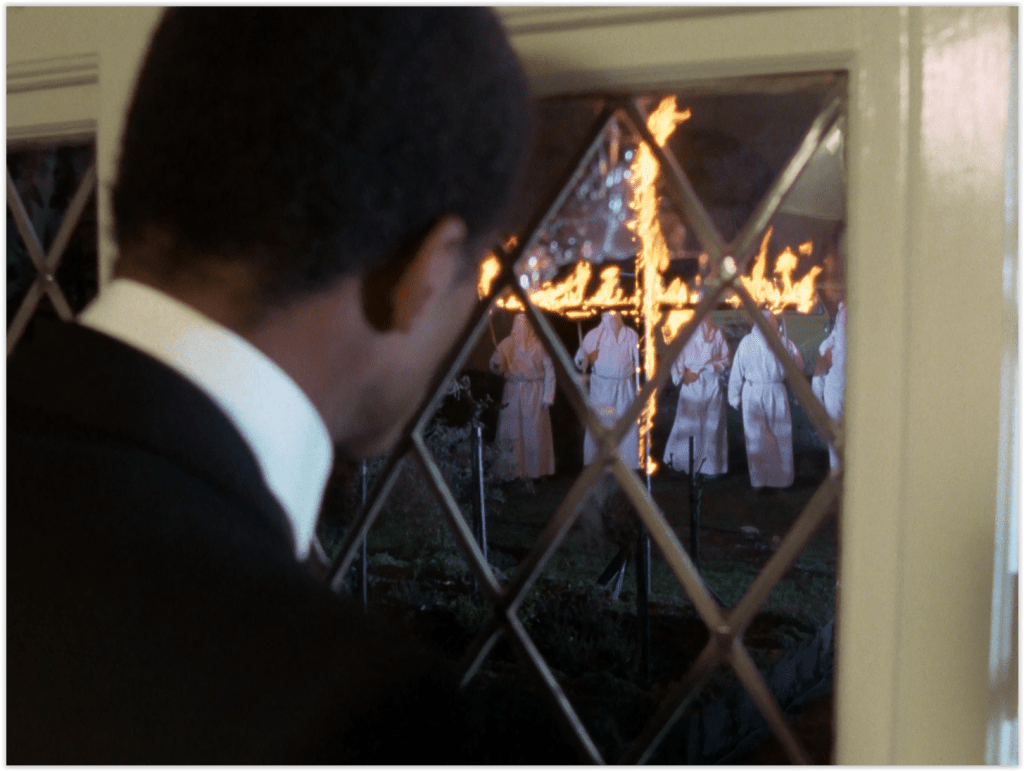
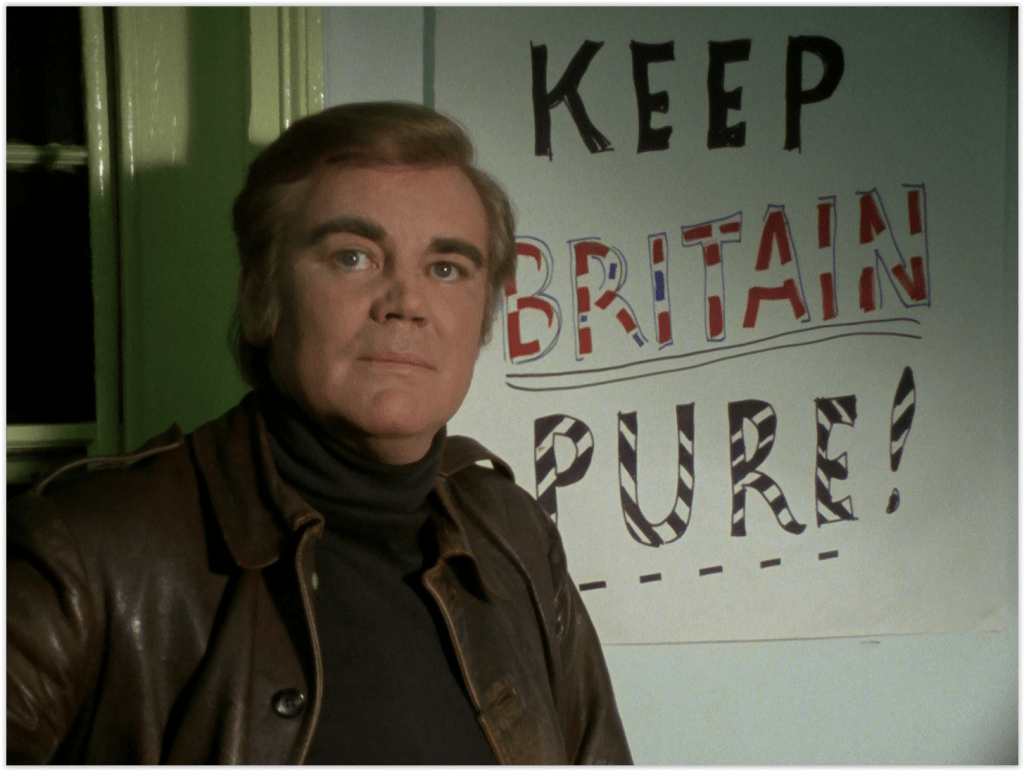
The Empire Society’s posters, related to “sending them back”, were certainly very familiar from the NF’s slogans, which were to be found scrawled on walls all over the UK in the 70s. Their adoption of the actual clothes and methodology of the American Ku Klux Klan, while chilling, wasn’t something the NF went as far as doing; British fascism had its own, equally unpleasant ways of doing things. Besides, the Klan didn’t lend itself so well to ill-treatment of, for example, Pakistani immigrants. And if there was one area where the NF really was equal opportunity, it was in hating all non-white ethnicities.
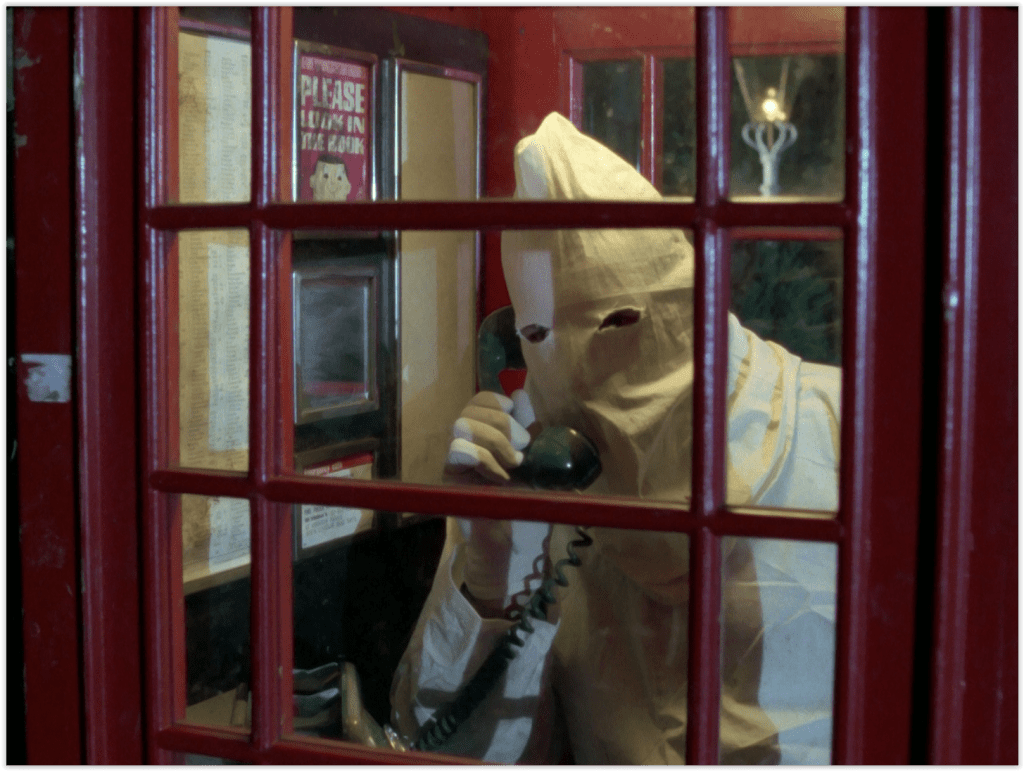
But still, while happy to burn crosses on people’s lawns and give them a bit of a kicking, the Empire Society is portrayed as more moderate than the real NF, trying to gain legitimacy as a political party. The real baddies turn out to be the Miller Trust, a group of shady real estate dealers trying to evict the (mostly Black) tenants of an old building whose land would be worth “more than a million” if it could be demolished and redeveloped. Handily for them, they can use the Empire Society’s methods to intimidate and murder while not appearing involved.
That’s where the anti-racism message gets very confused. Yes, capitalist ruthlessness could be seen as another form of racism in a society where, at the time, many Black people lived in poverty. But then to have the Miller Trust revealed as being owned by a Black businessman who employs actual racist thugs, realistic though it may be, undermines even the crude “racist organisations are bad” moral that Clemens is trying to get across.

CI5 get involved when the Empire Society target a well-heeled, crusading Black lawyer, Zadie, who’s trying to stand up for the beleaguered residents of the seedy apartment building. With Bodie unconscious and spewing racial slurs in hospital, it’s up to Doyle to pretend to be a racist and infiltrate the Society, which he pulls off for a about a minute until he stupidly lets them find him searching their files.

Having received a convincingly nasty beating, Doyle finds himself rescued by implausibly sweet-natured teenage petty thief Tommy, who turns out, handily, to be the key to the whole thing. Thanks to Tommy, Doyle is able to link the Empire Society with the Miller Trust, and get to Zadie in time to shoot the (Black) Klansmen that Miller has set on them.
For good measure, Cowley turns up to demonstrate to the racist thugs of the Trust that their boss, previously just a voice on the end of a phone, is actually a Black man himself. How Cowley actually knows who Miller is is not explained, but as an ‘ironic’ ending, it rather weakens the ep’s anti-racism message.
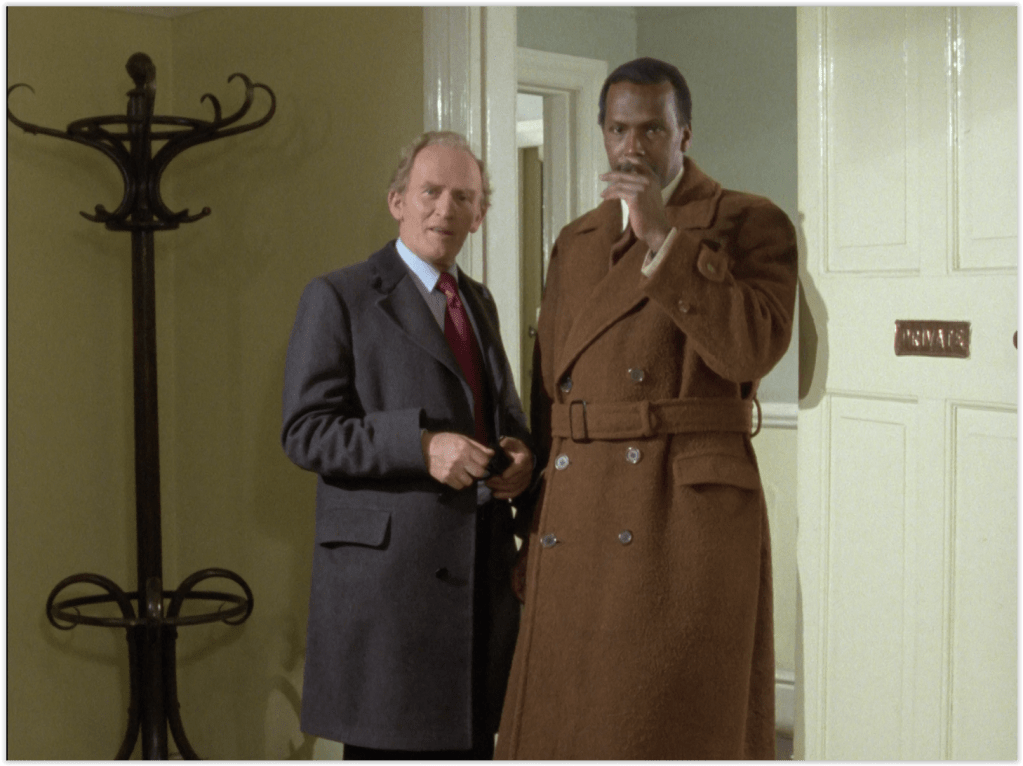
How dodgy is Cowley this week?
This time, Cowley is actually pretty heroic, acting way out of his authority in taking on what’s clearly a police case, due to his longstanding hatred of any kind of bigotry.

His drinking appears to be getting worse though; he forbids Doyle from having a second glass of whisky because he’ll have to stay sharp, before happily pouring himself another. I know it’s always different rules for the boss, but in his position, I’d have thought Cowley probably needs to stay sharp too.
The cars
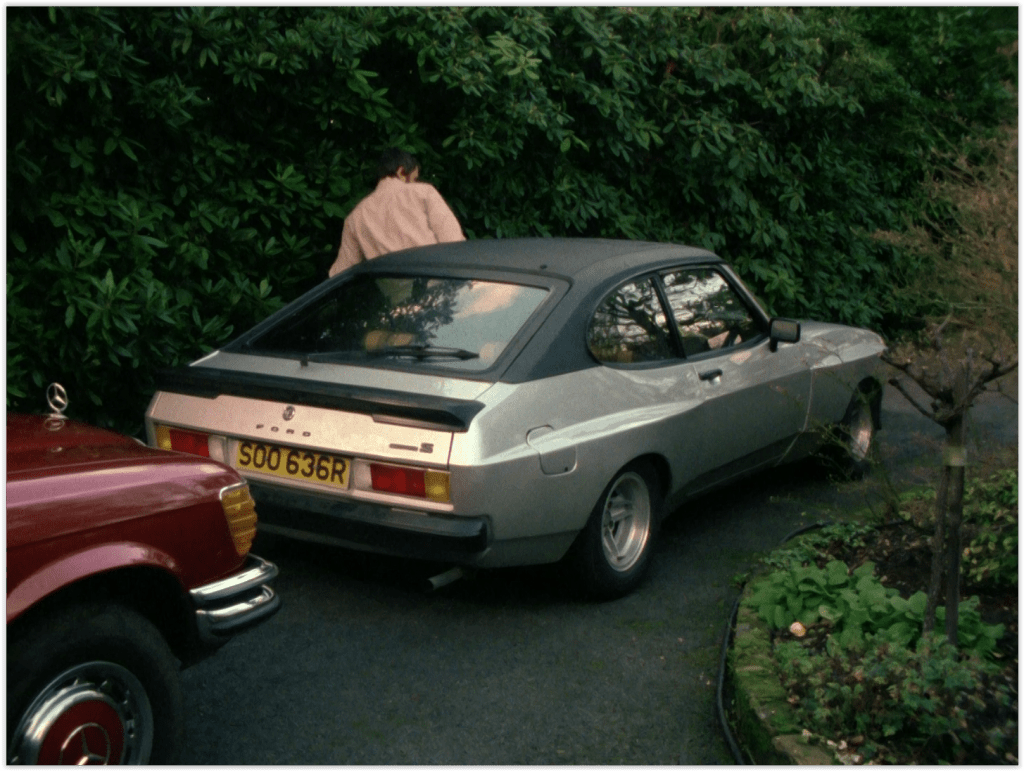
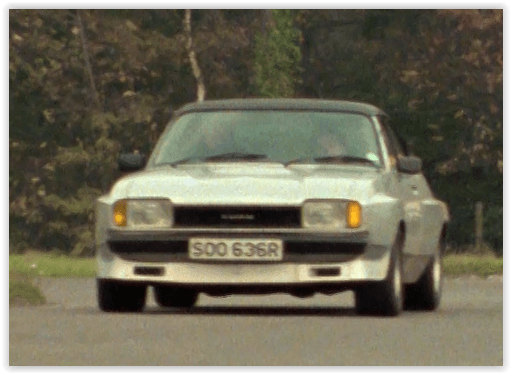
It’s a return appearance for the silver, modified Ford Capri MkII we briefly saw a couple of episodes ago, this time driven by Doyle. With its lowered suspension, huge flared wheel arches and wide wheels, it’s the very essence of the boy racer image the Capri got later in its life; it’s only a surprise that there’s no furry dice hanging from the rear view mirror.

Successful lawyers, even crusading, idealistic ones, tend to drive pretty expensive cars, and Zadie’s no exception with his bright red 1973 Mercedes 350SEL. The first iteration of what is now referred to as the S-Class, this is a mid range version of Mercedes’ flagship executive express, with a 3.5 litre V8 engine.
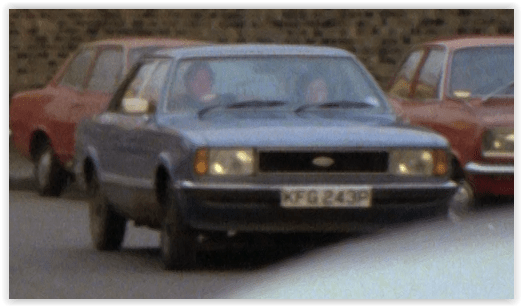

The villains are seen several times driving a blue Ford Cortina MkIV. Or maybe even two of them, as its licence plate seems to change between shots. One of these, PND542R, is definitely the same Cortina driven by Bodie and Doyle in Everest Was Also Conquered, suggesting that CI5 don’t look after their motor pool as well as they should.
1970s clothes
With Bodie mostly out of action, it’s down to Doyle to fly the flag for 70s fashion this week. We’ve already seen that he’s less of a fashionista than Bodie, so it’s all pretty low key. He’s mostly clad in one of his trademark plaid, Ben Sherman-esque shirts, but has a variety of jackets.

He spends the initial part of the ep in a classic B3 sheepskin flying jacket, of the type popularised by the US Army Air Force during the Second World War (RAF pilots wore Irvin jackets, basically the same design but with a yellower colour of fleece). Indeed, this one’s so authentically beat up it might actually have been from the Second World War.
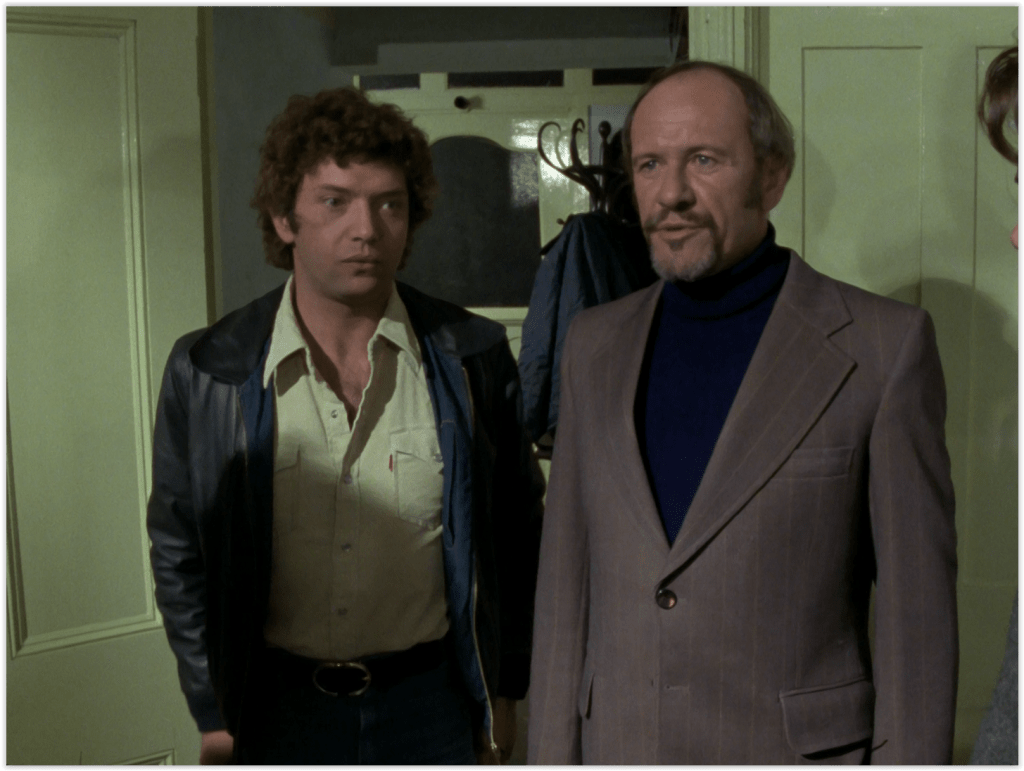

Later, he switches back to the frequently seen reversible leather/denim jacket, but also wears a green varsity jacket whose sole purpose is to be torn apart by the villains searching for his identity.
1970s references


The 1970s wasn’t all large collars, different shades of brown, and glam rock. It was, dispiritingly, also a hugely racist decade. All those Empire Society posters seem to bear slogans familiar from being scrawled on walls anywhere the National Front had any significant support. More depressingly, it also looks pretty familiar from the current slogans of Reform UK.

The graffiti of the N word being spray painted onto a garage door was also a depressingly familiar sight.
Hey, it’s that guy from that thing!

Chief among the guest stars here is Tony Booth, as ultra-racist estate agent and thug Dinny. Booth was already well-known to TV audiences as Alf Garnett’s “long-haired layabout” son-in-law Mike in Til Death Do Us Part, another anti-racism show whose message didn’t really work. Later, Booth would become famous in the rather more surprising capacity of being Tony Blair’s father-in-law.

Hulton, leader of the NF-inspired Empire Society, is played with urbane menace by Edward Judd. After a series of successes in the 50s as a science fiction leading man (notably in The Day the Earth Caught Fire), Judd was, by the 70s, mostly working in TV, and had already appeared in The Sweeney before this.
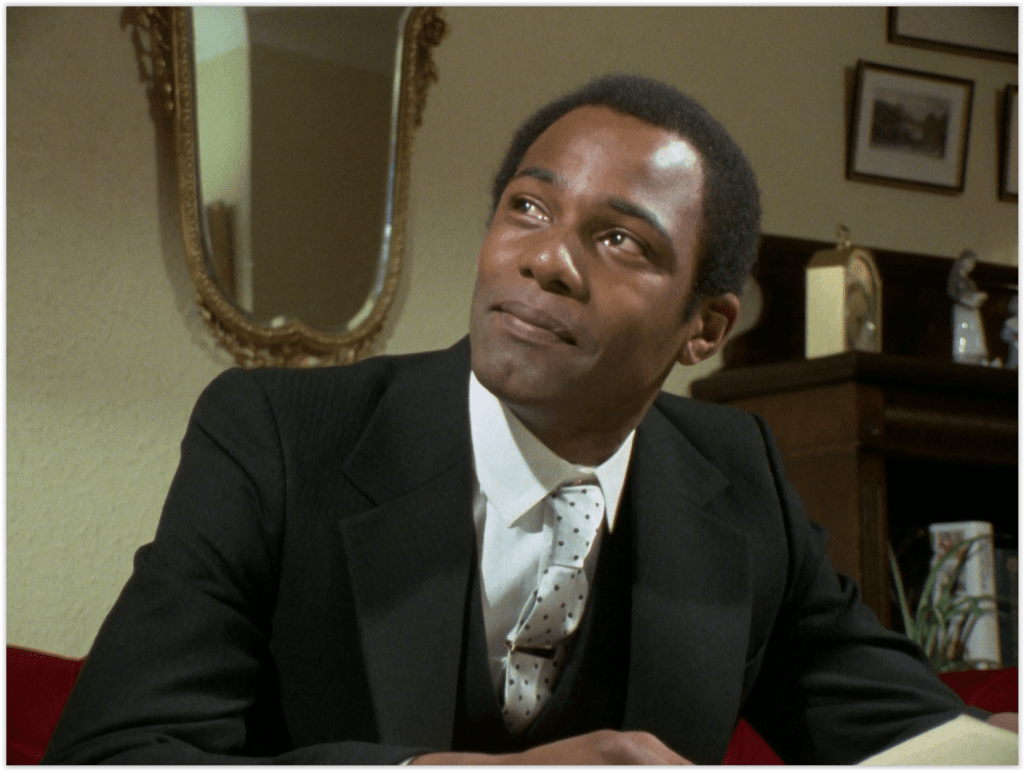
Trevor Thomas, playing crusading lawyer Zadie, was another of those hardworking character actors who never really got many major parts; you may remember him from the usual 70s suspects of The Sweeney, Minder and Space: 1999.
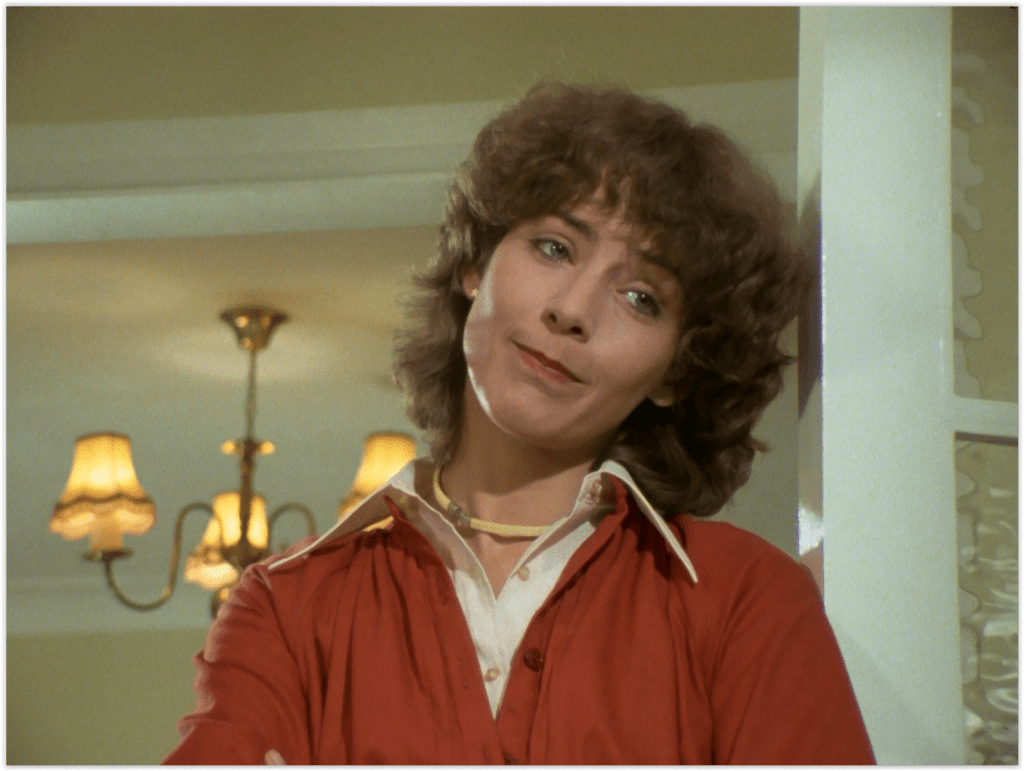
His wife Helen is played by the familiar figure of Sheila Ruskin, another character actor who did rather better at getting bigger roles. Already familiar as Vipsania in I Claudius, she’d go on to showy guest roles like Kassia in the 1981 Doctor Who story The Keeper of Traken.
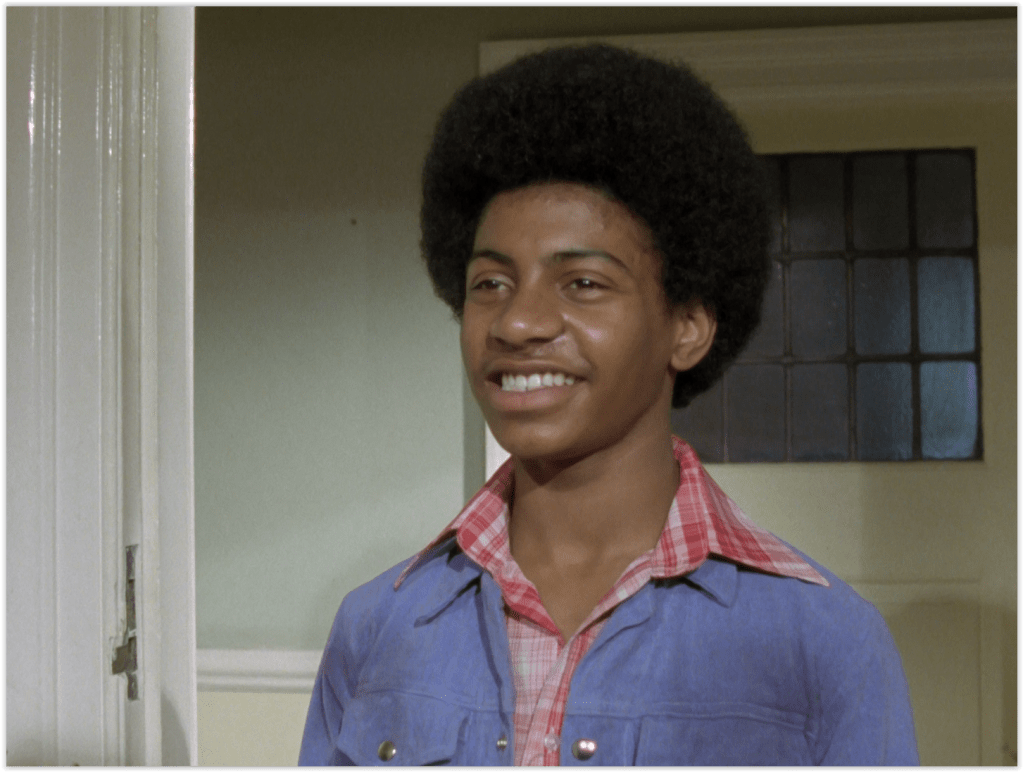
Lovable teenager Tommy is played by Lawrie Mark, who had already found a measure of fame in The Fosters, a 1976-1977 sitcom that starred Norman Beaton and Lenny Henry, and was the first to have an all-Black main cast. Sadly, Mark never really made the transition to adult roles, so once he stopped being a teenager, his career rather dried up.
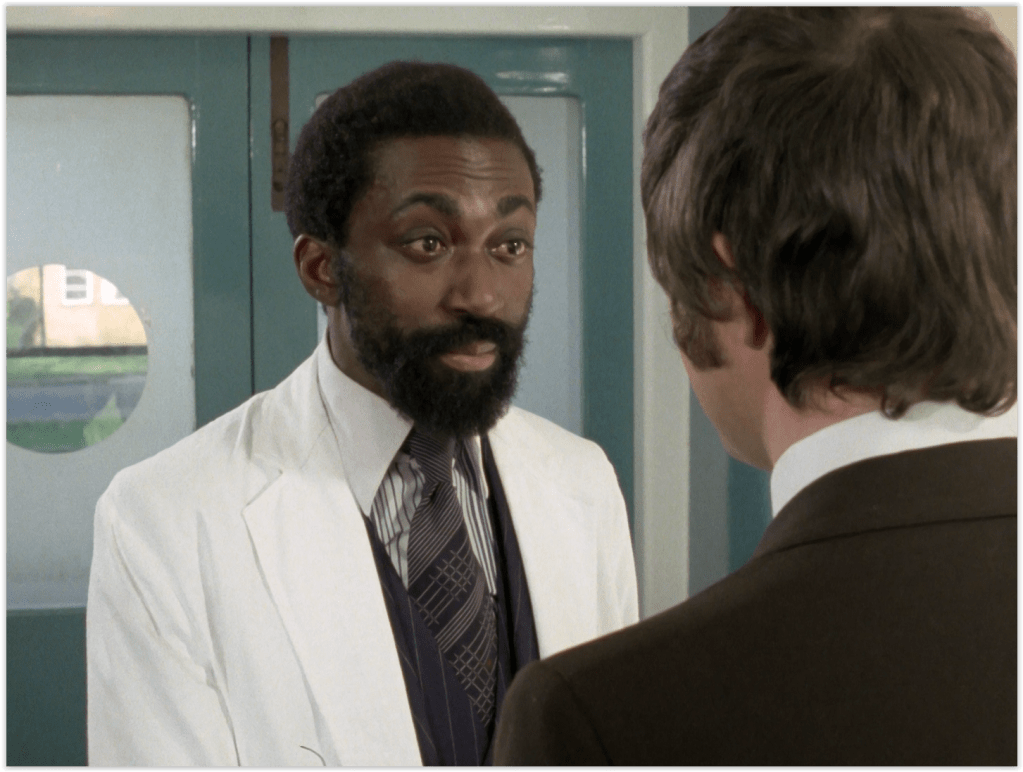
That’s the legendary Louis Mahoney as Bodie’s (unnamed) doctor. Gambian born Mahoney really did study medicine, then dropped out to switch to acting, becoming a well-known face on 70s TV, but he carried on working almost to the end of his life. Aside from parts in the inevitable The Bill and Casualty, he’s well-known to Doctor Who fans for being in the show three times, from 1973 to 2007. The last, the dying Detective Billy Shipton in Blink, is one of his finest performances.

In a minor role as Topaz, one of the dodgy criminals who stab Bodie, is Trinidadian actor Oscar James, who would later go on to find fame as Tony Carpenter, one of the original cast of EastEnders.
Nice bit of dialogue
Well, not so much “nice” this week; as befits such a serious subject, there’s a lot less joking around than usual.
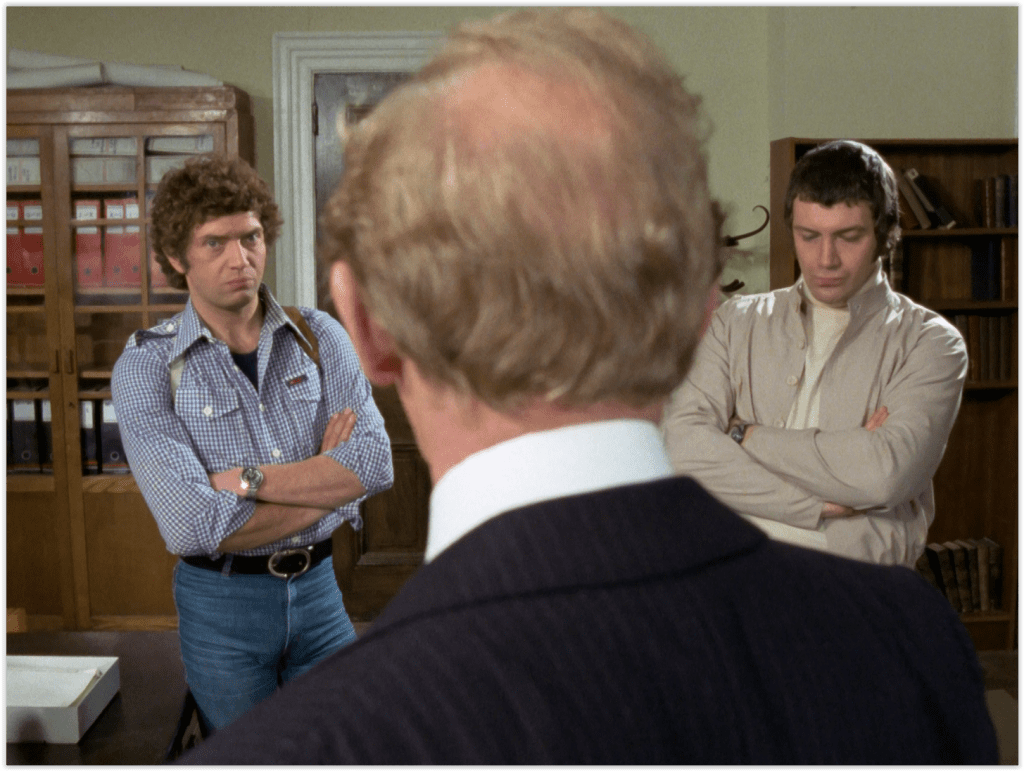
Cowley, demonstrating a zero tolerance for racism with Bodie for describing a victim as a “spade” – “Bodie. You’re taller than me. You’re bigger. But if you use that word again in this office, you’ll find out that you’re not tougher.”

Bodie: “You think this is a personal vendetta?”
Zadie: “Yes, because I believe in this country.”
[Later, at the end of the story]
Zadie: “Mr Doyle? I was wrong. I’ve lost faith in this country.”
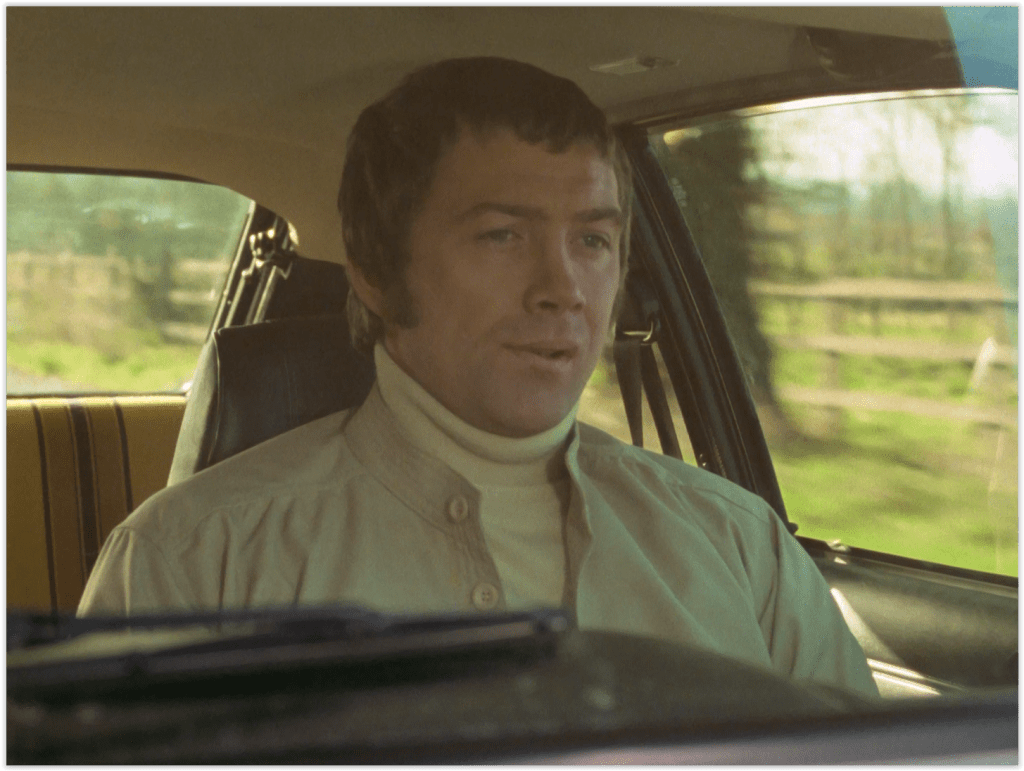
Doyle, taking Bodie to task for his already evident racism when interviewing Zadie: “Where are you Bodie? This is England, this is now. Don’t look behind you, because there’s no gunboat and Victoria’s long gone.”

Hulton, chillingly describing his ‘Empire Society’: It’s a growing organisation. If we’re caught, we can weather the assault charges. And every time we do, one right-thinking citizen says, ‘I see their point’. One citizen comes over to our side.”

Tommy, observing the effects of Doyle’s savage beating: “Wow, you’re going to have an eye blacker than my arse!”
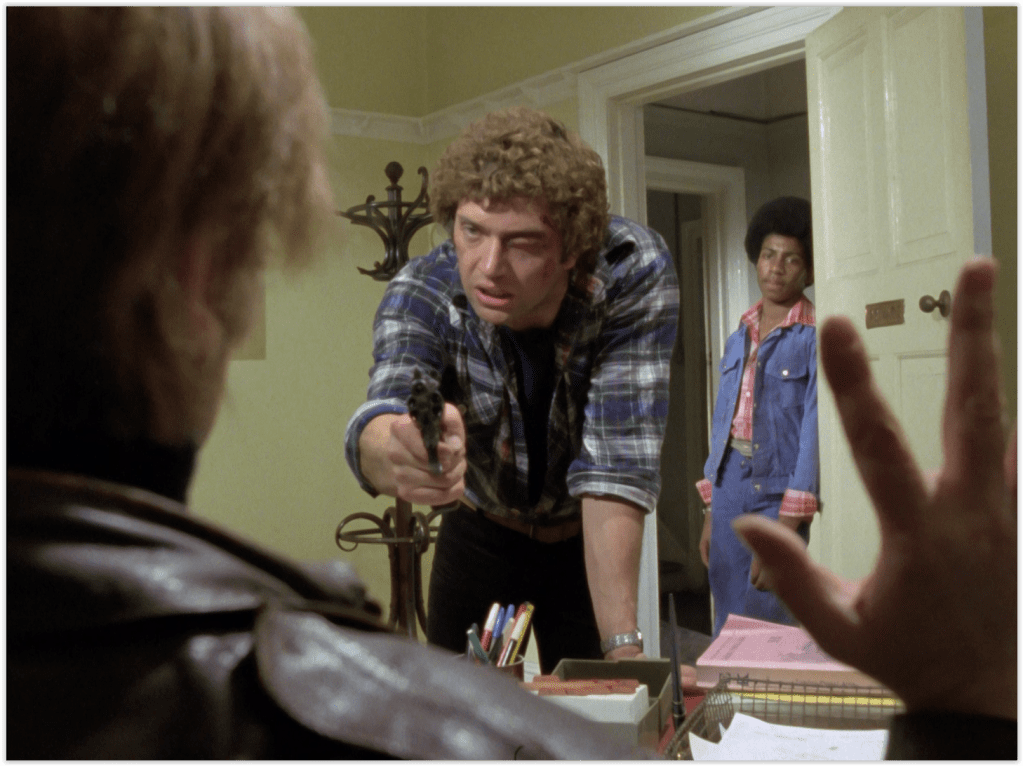
Doyle, full of righteous fury, as Dinny uses the Nuremberg defence to say he was only following orders: “You do what’s in your nature. Kill the Jews, run the Blacks out of town, kick the weak. Well, you kicked the wrong one when you kicked me.”

Tommy: “This Mr Cowley, is he white or black?”
Doyle, thinking for a moment: “I forgot to ask.”
Casual Sexism

The “road to Damascus” moment that ‘cures’ Bodie of his racism is his treatment by a very beautiful young Black nurse. So it’s hardly surprising that, by the end of the ep, he’s off on a date with her. What’s rather more surprising is that she would choose to go on a date with a man who’s spent most of the episode screaming racial slurs from his hospital bed, but maybe she likes a bit of rough.

Racism is still, unfortunately, a very sensitive topic even today (sadly, we haven’t made as much progress as we should have), so Klansmen comes across as a Very Special Episode with something to say. Unfortunately, it doesn’t quite succeed in being the big anti-racism statement Brian Clemens obviously wanted it to be, due, I suspect, to numerous script revisions diluting its message.
Yes, the appropriation of the American KKK imagery by the Empire Society is genuinely chilling; but then it’s somewhat undermined by Hulton’s insistence that they don’t do violence, which is definitely not true of the real Klan. To be fair, he does briefly remark that they don’t kill people “at this stage”, which implies they later will when they’re more established, but that brief qualifier is rather lost in the mix.
It’s further undermined by the revelation that the real baddies aren’t the racist political group, but some shady real estate dealers using them as a front for their land-grabbing plans. And that the real estate dealers are led by a Black man themselves, using Black henchmen under those white hoods to carry out his evil plan.

There’s also something of the cliched ‘white saviour’ narrative in that it’s Doyle and Cowley who swoop in and solve the Black community’s problems; but fair’s fair, it is their show. Worse though is Bodie’s cartoon racism, which is so conveniently ‘cured’ by the end of the ep, suggesting a naively simple solution to a very complex problem.
None of this is really bad enough to suggest that the episode should have been pulled from broadcast, but with the National Front gaining in popularity, it seems ITV considered this one just a little too close to the bone. It’s interesting to note that, even in the 2000s, it was kept from broadcast on their own ITV4 online channel, though that may have been more due to the blatantly racist language being far less acceptable (even from bad guys) than it used to be.
Still, with Nigel Farage’s less openly but still clearly racist Reform UK currently leading the polls in the UK, it’s worth remembering Bertolt Brecht’s chilling words in Arturo Ui, relating to the death of Hitler: “Do not rejoice in his defeat, you men. For though the world stood up and stopped the bastard, the bitch that bore him is in heat again.”
 Simon’s Incoherent Blog