
“You never married then?”
“You didn’t have to ask that, Annie. You know that as far as I’m concerned, you were always…”
The one where…
Bodie and Doyle are assigned to watch over a controversial evangelist/politician, only to discover that she’s an old flame of Cowley’s…

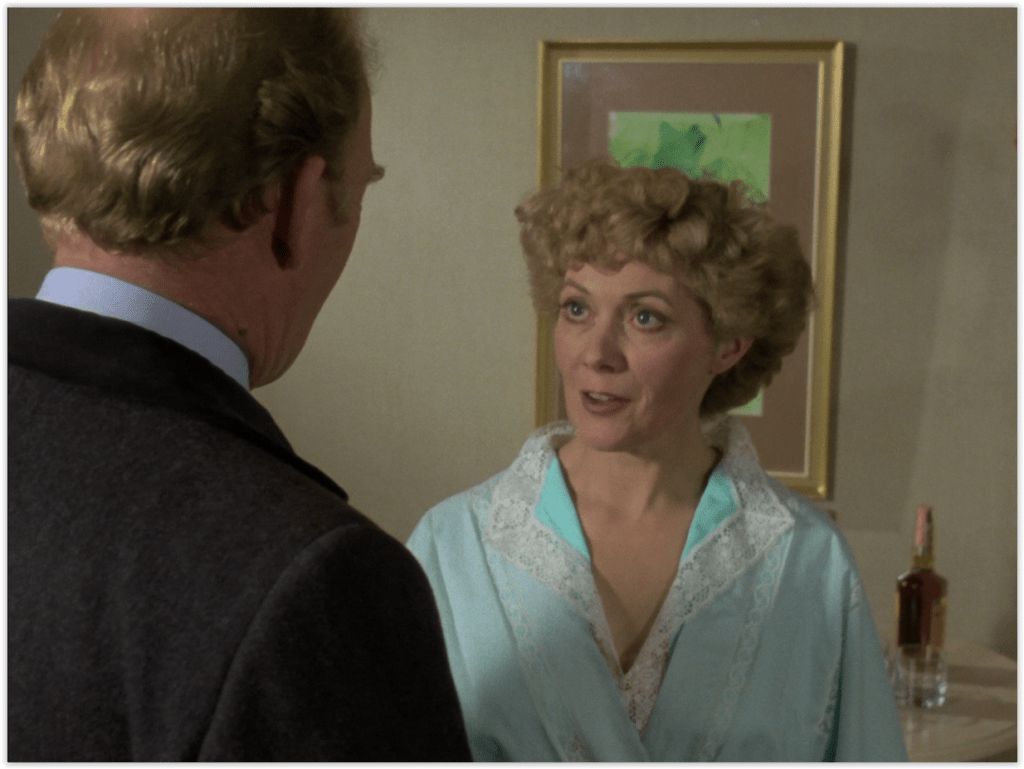
After two episodes focusing mostly on Bodie and Doyle, respectively, it’s now time for one that’s all about Cowley. As Bodie remarks at one point, besides being the standard firm-but-fair boss from all shows like this, we (and they) know very little about him. Look After Annie redresses that balance, delving into the dry, dour Scotsman’s past and giving Gordon Jackson a chance to be the standout cast member for once.
Many of the tidbits we learn (for it’s far from a full biography) relate to his time in the Army, where, we discover, he was a Major in 16th Commando regiment during (and just after) the war. We already knew that he fought in the Spanish Civil War, but British forces were never officially involved in that, so he must have been a volunteer. Given that the Second World War started fairly soon afterwards, though, he must either have already been a serving soldier, or risen to the rank of Major pretty quickly after joining.
What with all this fighting, he never had time for higher education, so as soon as peace was restored, he went to university, presumably as a mature student, where he met the love of his life, Annie Irvine. Their relationship didn’t last, but it must have had a profound effect on him, as he never married (we don’t find out if he had any other potential fiancées, mind).
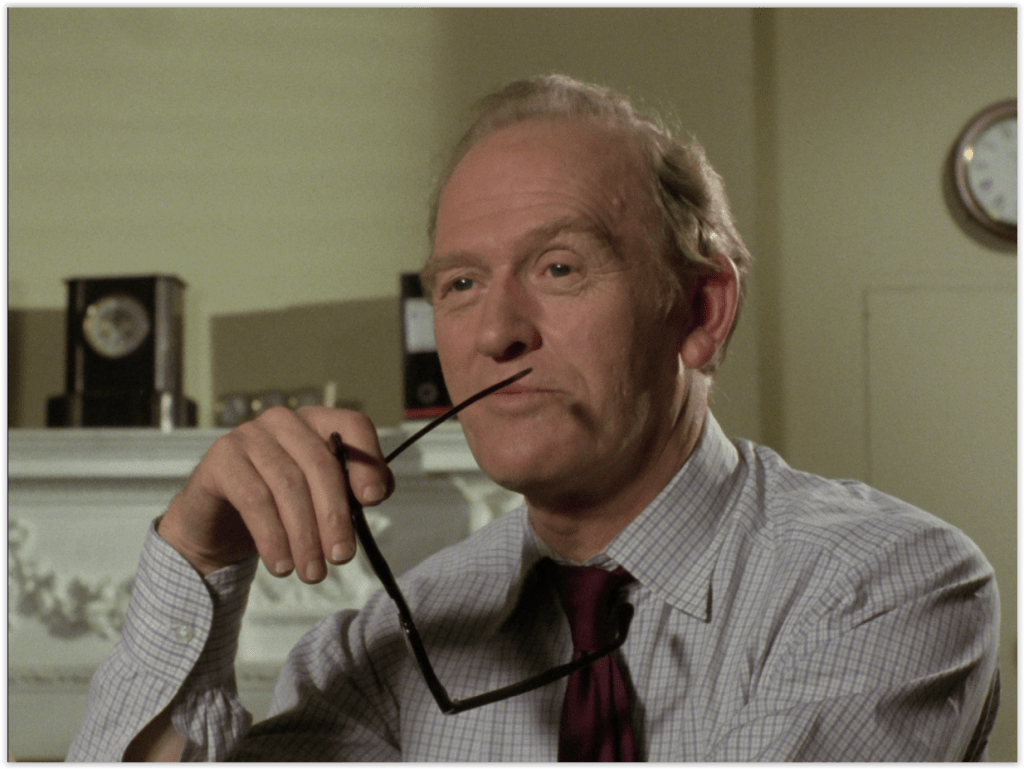
Gordon Jackson seizes brilliantly on all this melancholy regret, and gives a superb, understated performance, all his emotions just visible under the surface. The scene where he is basically guilt-tripped by Bodie and Doyle into going to visit Annie is excellent, as he looks to rekindle their old relationship with a pair of opera tickets, only to find that Annie has definitely moved on with a new husband – her business manager.
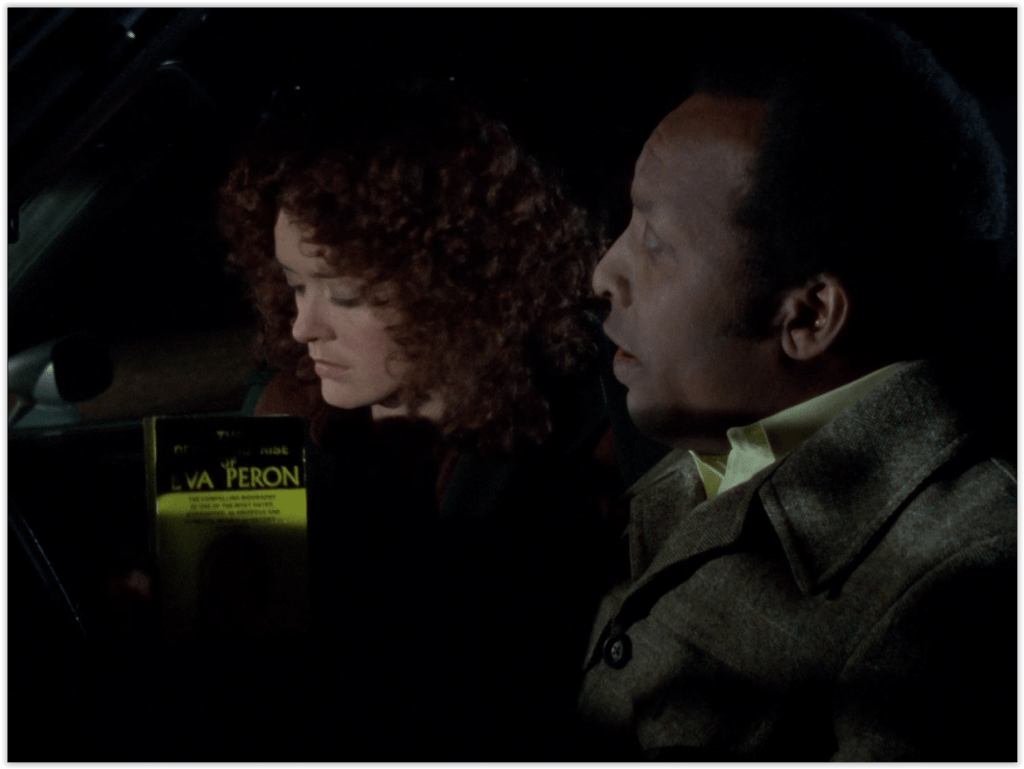
Who, of course, is trying to kill her. Well, this is The Professionals, not As Time Goes By. We learn this pretty quickly, along with the fact that he’s also having an affair with his glamorous assistant, marking him out as a wrong ‘un from the start. It’s unclear what he hopes to gain from having his boss assassinated, but he bangs on about JFK and waves around a book about Eva Peron, so it must be some kind of martyr thing.
Previous attempts having failed, he hires a British hitman, who in turn recruits a scary looking motorcycle gang to hang out in theatre dressing rooms until the opportunity arises to pop Annie off. And they’re not the only ones. It turns out that one of Cowley’s old army mates has gone all Oswald Mosley, and has a bunch of nattily dressed blackshirts ready to cause trouble too. It seems a little repetitive to have another fascist group after the one in the previous episode, but at least this lot are better dressed.

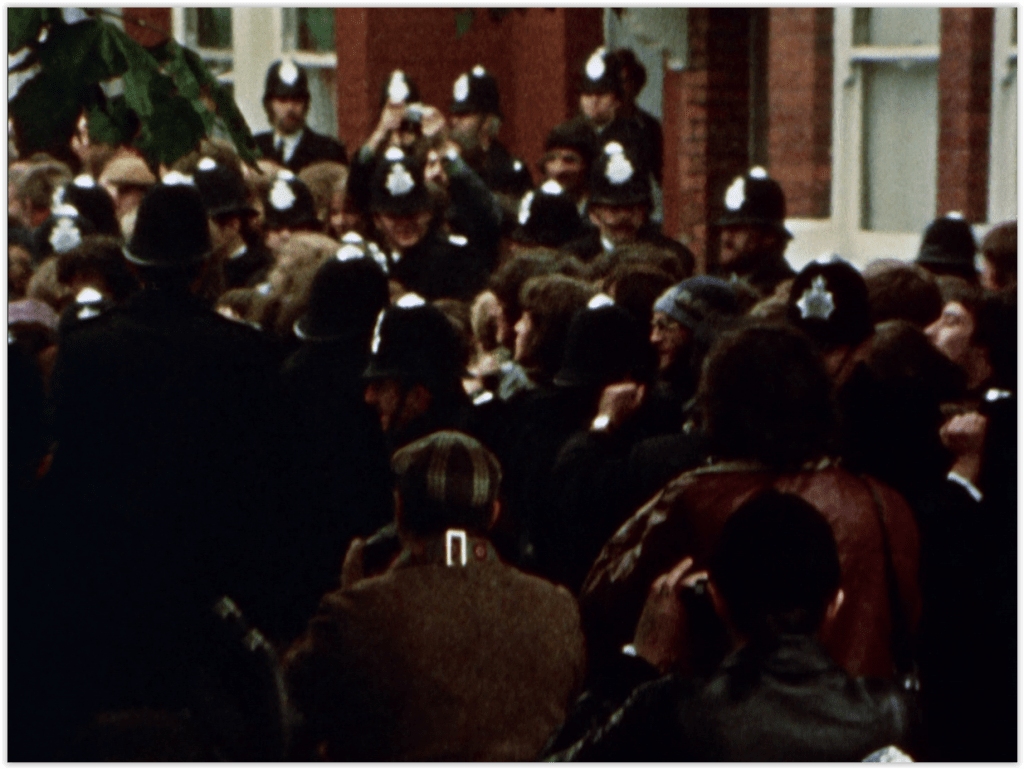
Faced with all these threats, Cowley does the sensible thing, and cancels Annie’s rally, much to her fury. But her eager supporters aren’t so easily put off, and the police cordon around the theatre results in a riot, which is represented by lots of stock footage of varying quality.
This is really where the episode falls down. Staging a riot was hugely ambitious and clearly beyond the show’s budget, but the stock footage is glaringly obvious. The only bits that are really staged for the show are a pretty limp affair, involving a few coppers and a few thugs. It might have been better to have rewritten the conclusion rather than reach for spectacle the show clearly couldn’t manage.
Amidst all this, one fight with a biker gang for Bodie and Doyle, and Cowley shooting his ex’s treacherous husband, ends the plot pretty perfunctorily. Still, the heart of the story isn’t the worn-thin thriller plot, but Cowley’s regrets for his past, and that has a bittersweet conclusion – after all, women don’t usually go back to ex-lovers who’ve just shot their husbands.

How dodgy is Cowley this week?
Well, it’s definitely a conflict of interest that he’s put in charge of security for his ex-girlfriend. But it’s very much a CI5 type of gig, and presumably the powers that be have faith in his professionalism not to be overcome by his emotions.
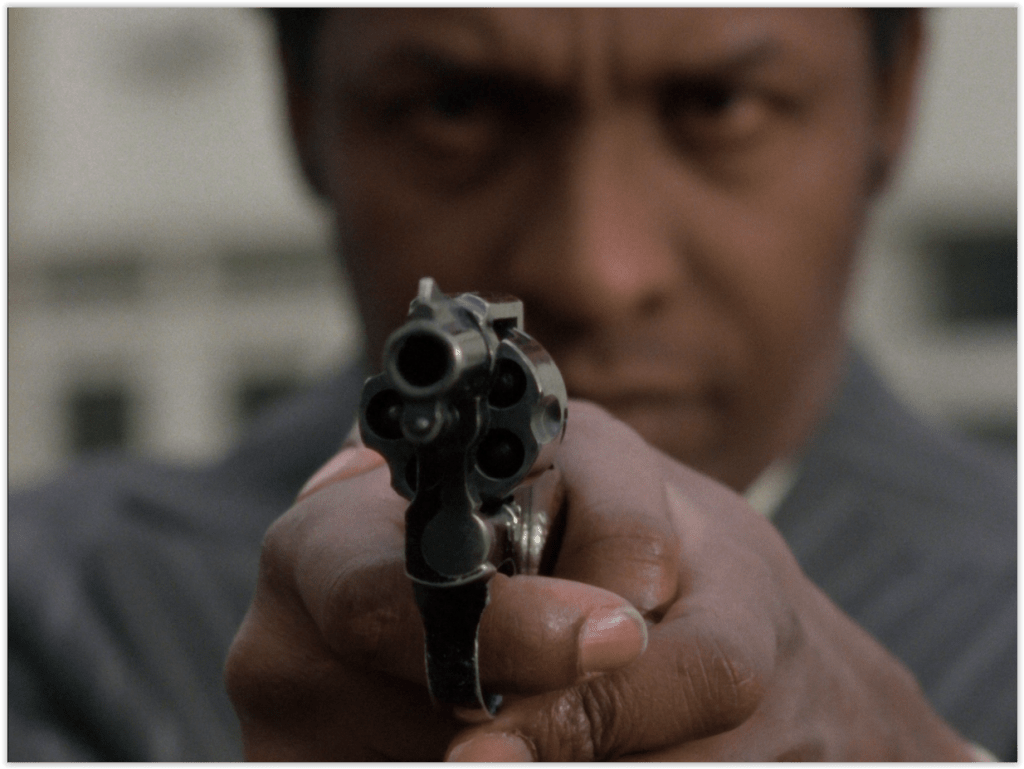
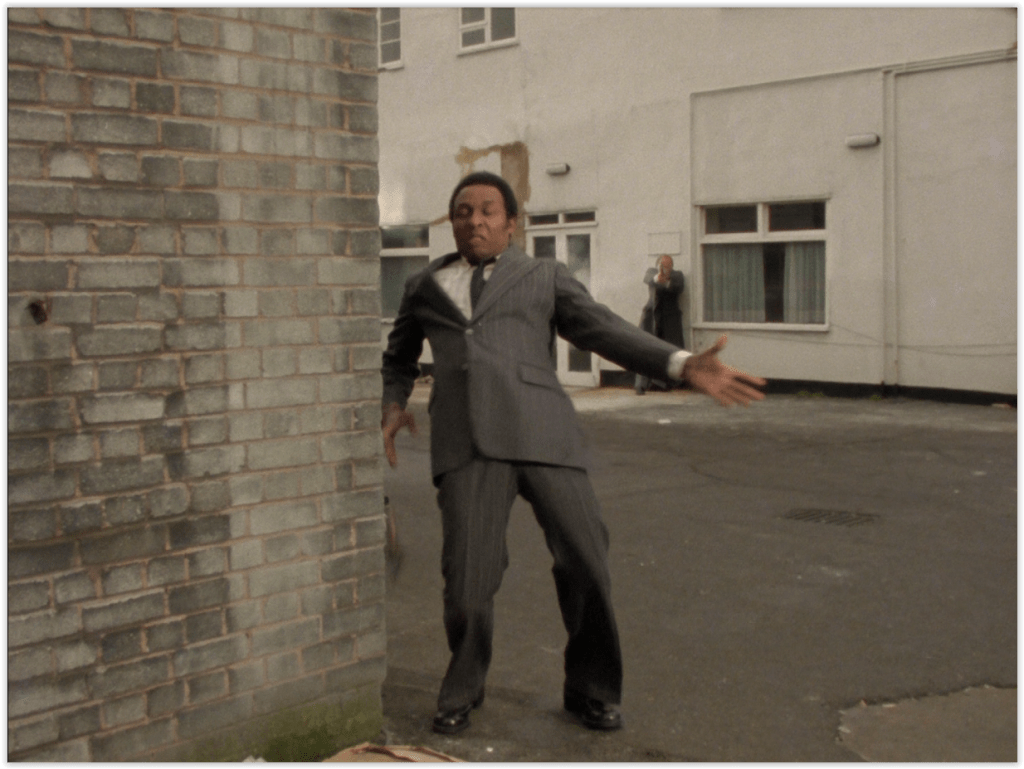
He does shoot his ex’s new husband, which must be the dream of many a spurned lover; but then the guy was trying to kill her, so that’s a fair excuse.
The cars
Not a very car-centric episode, this. Bodie and Doyle are in the usual Capri Ghia. Oddly, in an intercut long shot as the boys are driving, it magically turns into a yellow Ford Granada Mk2, and then back to a Capri again.
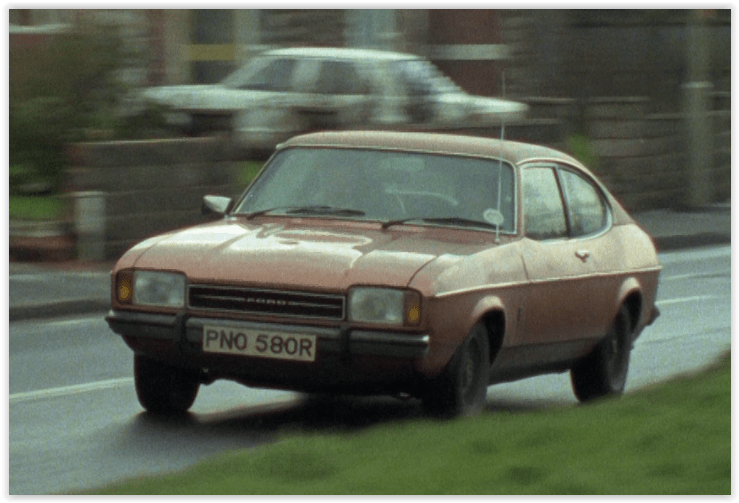
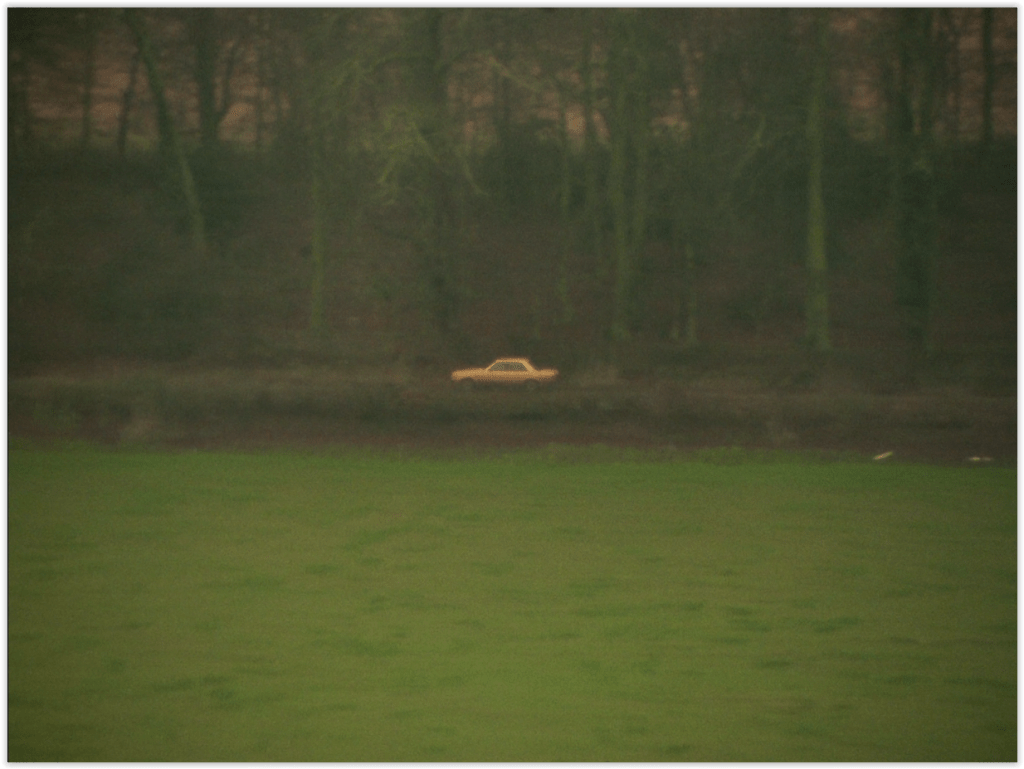
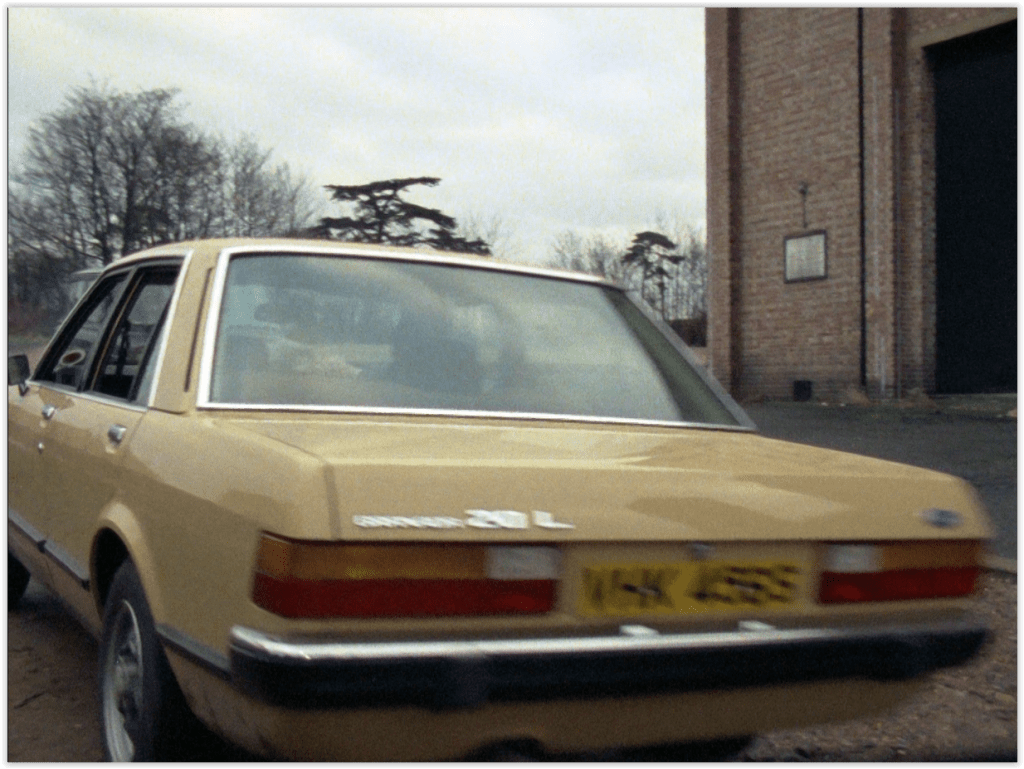
Cowley continues to drive that very same yellow Ford Granada Mk2, which surprisingly is a 2.0L, the lowest spec in the range.
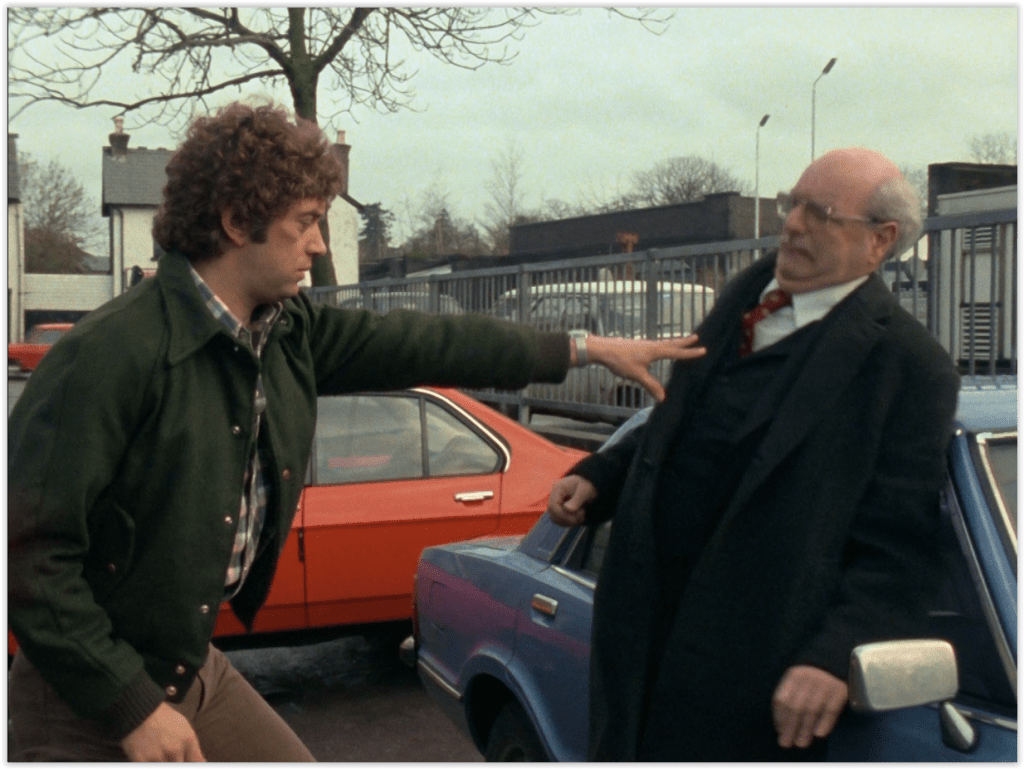
We catch another glimpse of the familiar blue Ford Cortina MkIV that gets used variously by both CI5 and the baddies, this time driven by Mosley wannabe John Howard. But we only see the side of it, so attentive, number-plate remembering viewers can’t be sure it’s the same one.
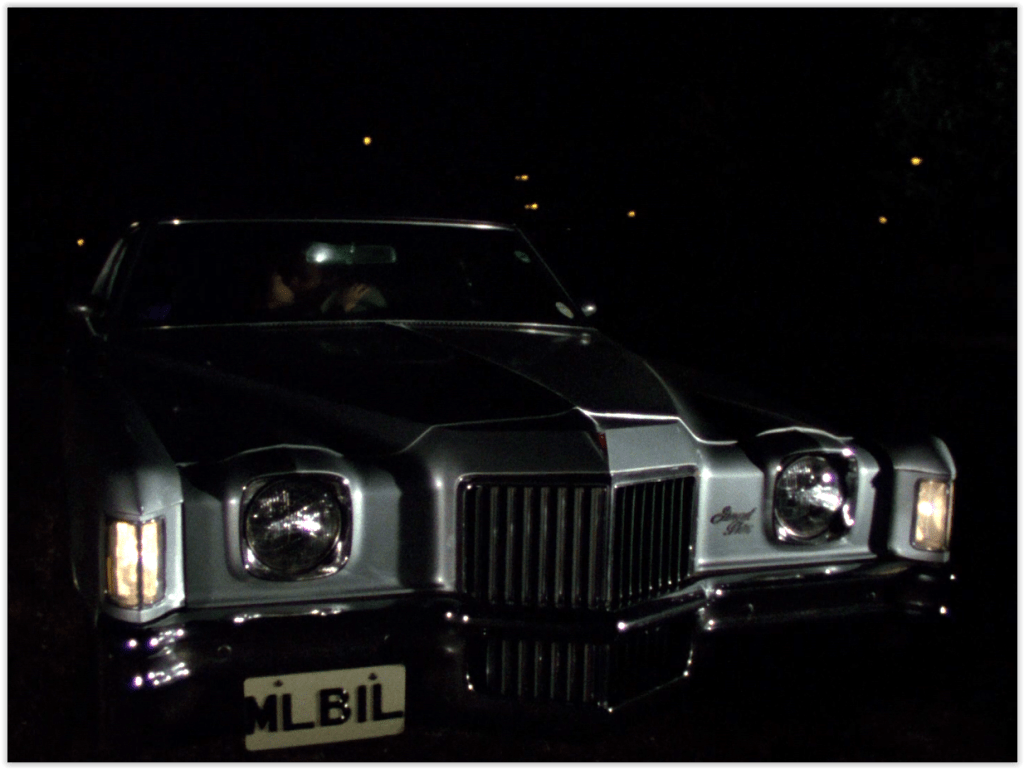
Briefly glimpsed is the big American car where Stanley and Isla meet to plot Annie’s death. It’s a third generation Pontiac Grand Prix, probably a 1971, a rather ostentatious car to be driving around England.
1970s clothes
Nothing too egregious his week. Bodie has his familiar brown blazer and tie combo, though he also dons a fairly restrained checked fleece.
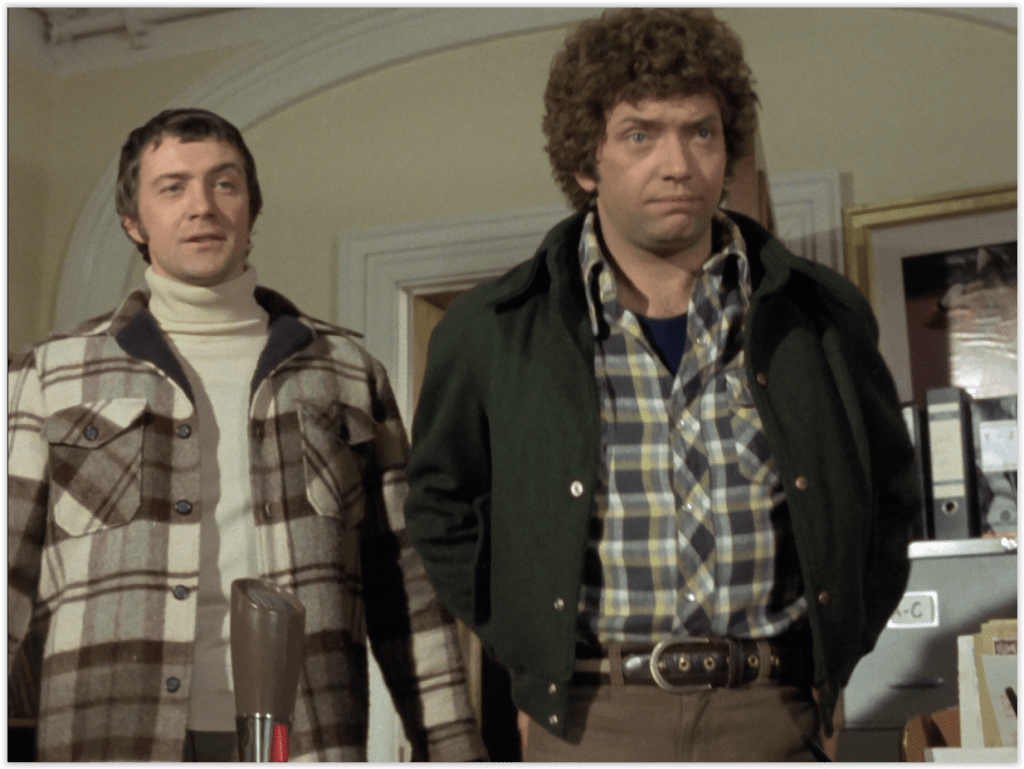
At one point, Doyle is back in the green fleece bomber jacket that was torn apart by the racist thugs in Klansmen – perhaps he liked it so much that he bought two of them.
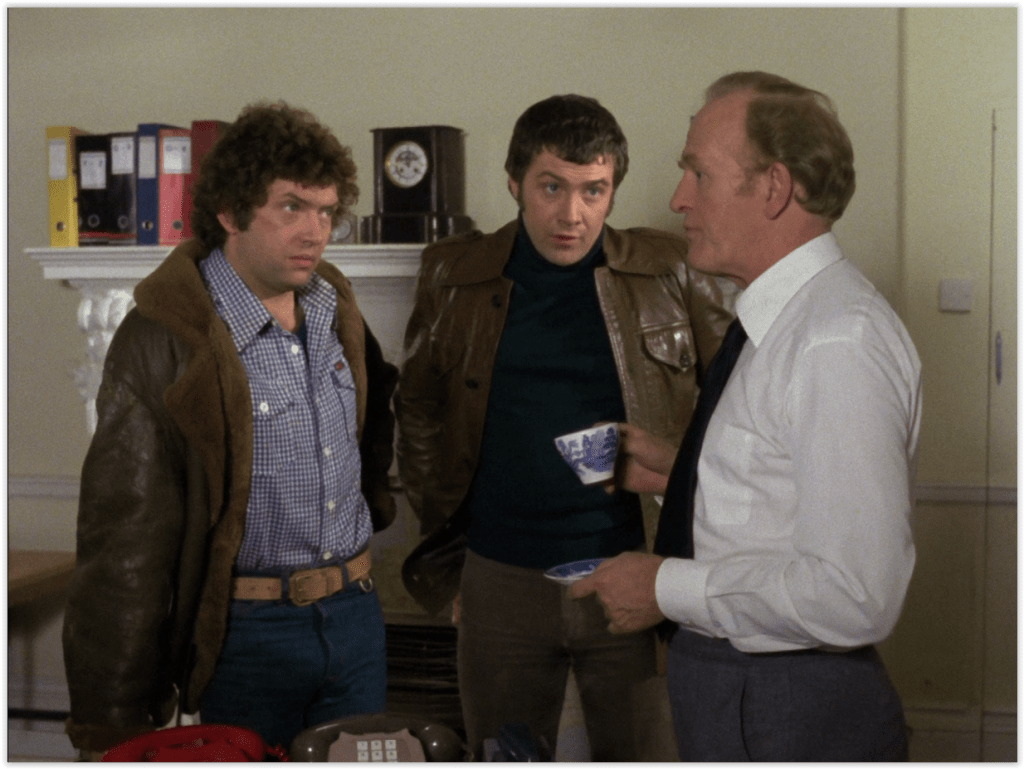
Not willing to keep to a mere two jackets an episode, they later get changed again, this time to Bodie’s brown leather safari jacket and Doyle’s Irvin flying jacket.
1970s references
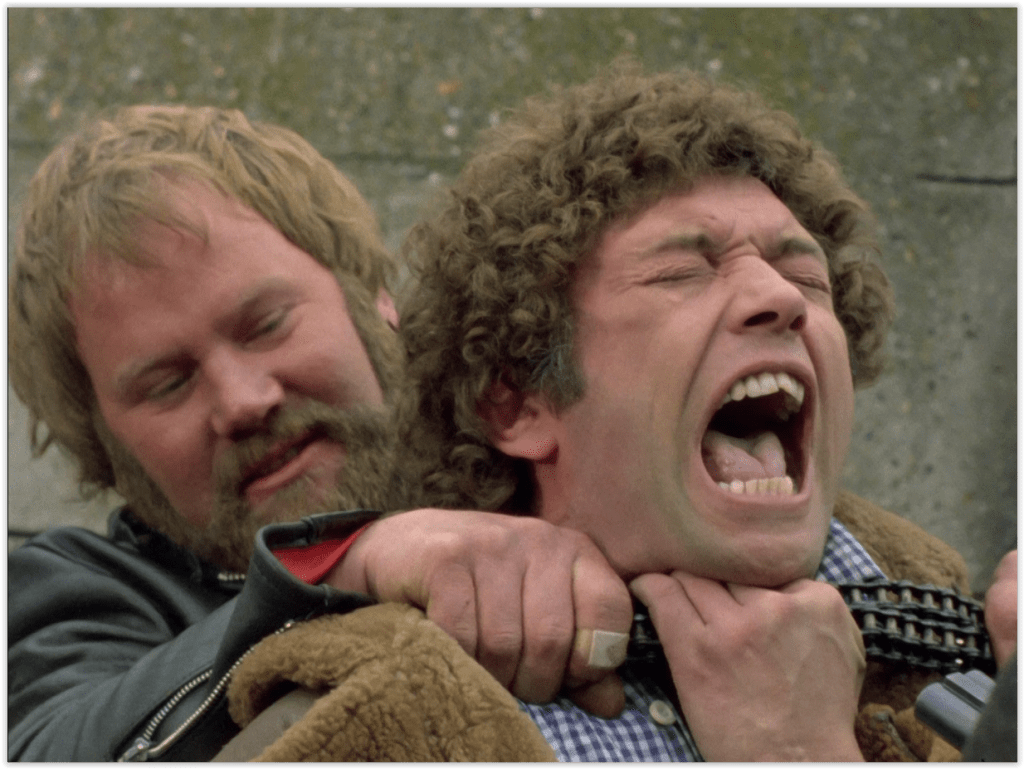
Hell’s Angel-style biker gangs were a widely publicised thing in the 70s, particularly their brutal gang-to-gang fights, which really did involve using bike chains as lethal weapons. As Doyle discovers to his discomfort, which was apparently genuine – it seems one of the stunt bikers swung his chain a little too enthusiastically.
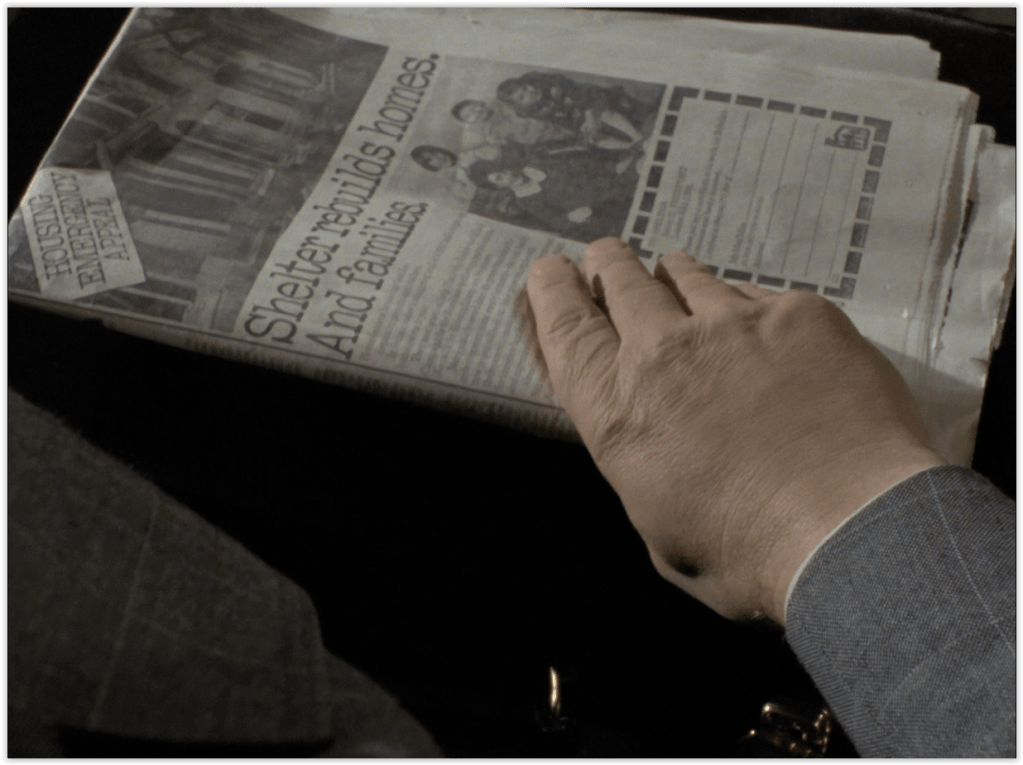
The newspaper being carried by the initial assassin in the cold open has a full page ad for British housing charity Shelter, which is rather odd given that the scene takes place in the US.
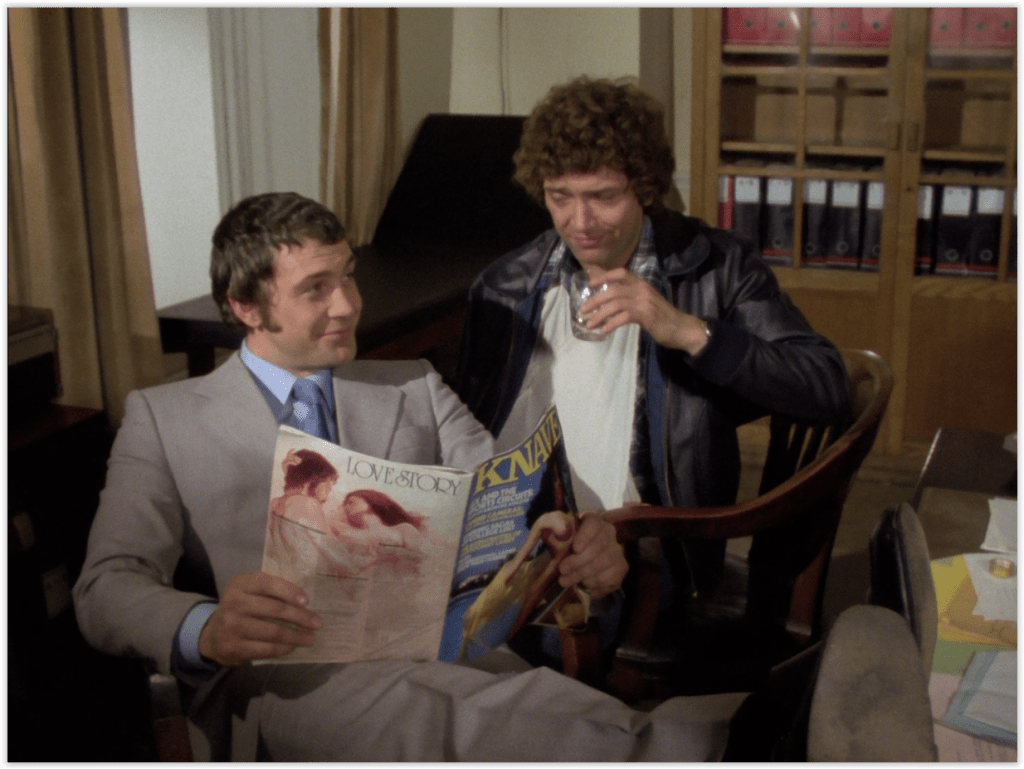
Somewhat surprisingly for a mainstream TV show in the 70s, Bodie (who else?) is seen flicking randomly through well-known porn mag Knave while having a cuppa. Presumably the nipples wouldn’t have been visible on a 70s television, but you can see them pretty clearly on the HD transfer!
Hey, it’s that guy from that thing!
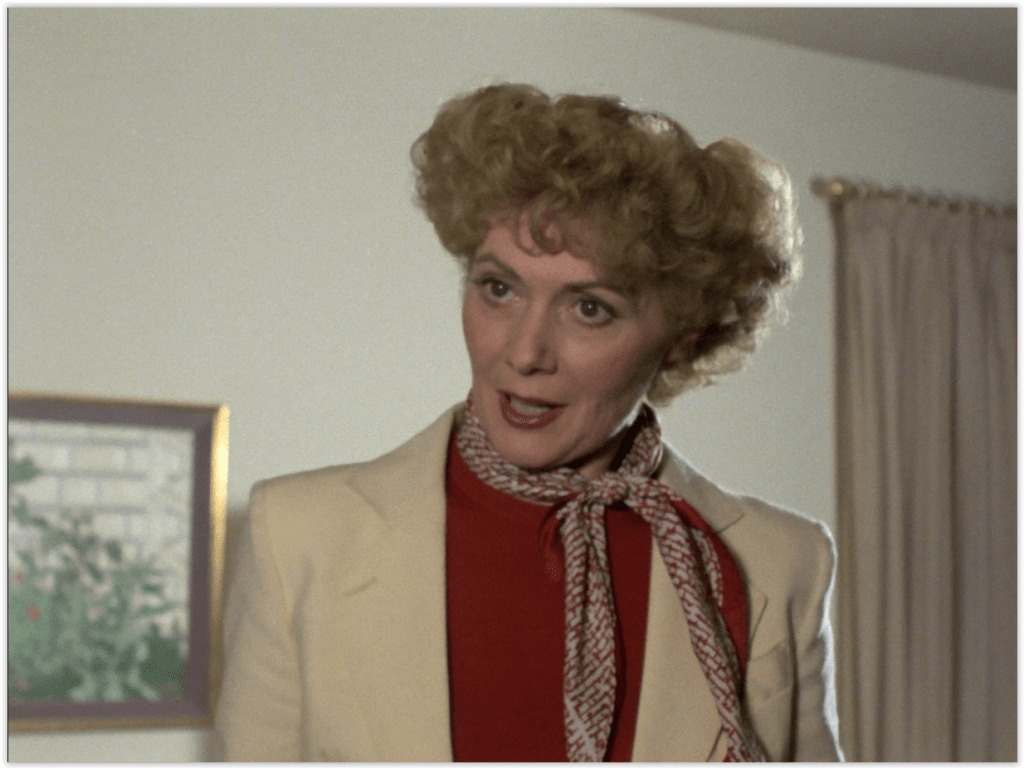
The titular Annie is played by Australian actress Diana Fairfax with a hairstyle reminiscent of Tommy’s mother in Rugrats. A hardworking character actor, Fairfax rarely had prominent roles like this, usually appearing in classic literature serials as minor aristocrats. According to Andrew Pixley’s Production Notes, director Charles Crichton wasn’t very happy about her casting – and indeed she gives a pretty bland performance, being acted off the screen by Gordon Jackson in all their scenes together.
Her treacherous lover and deputy Stanley is played by Jamaican-born Clifton Jones. Another prolific character actor of the time, Jones is probably best known for his role as Computer-obsessed Moonbase Alpha crewman David Kano in Space 1999.
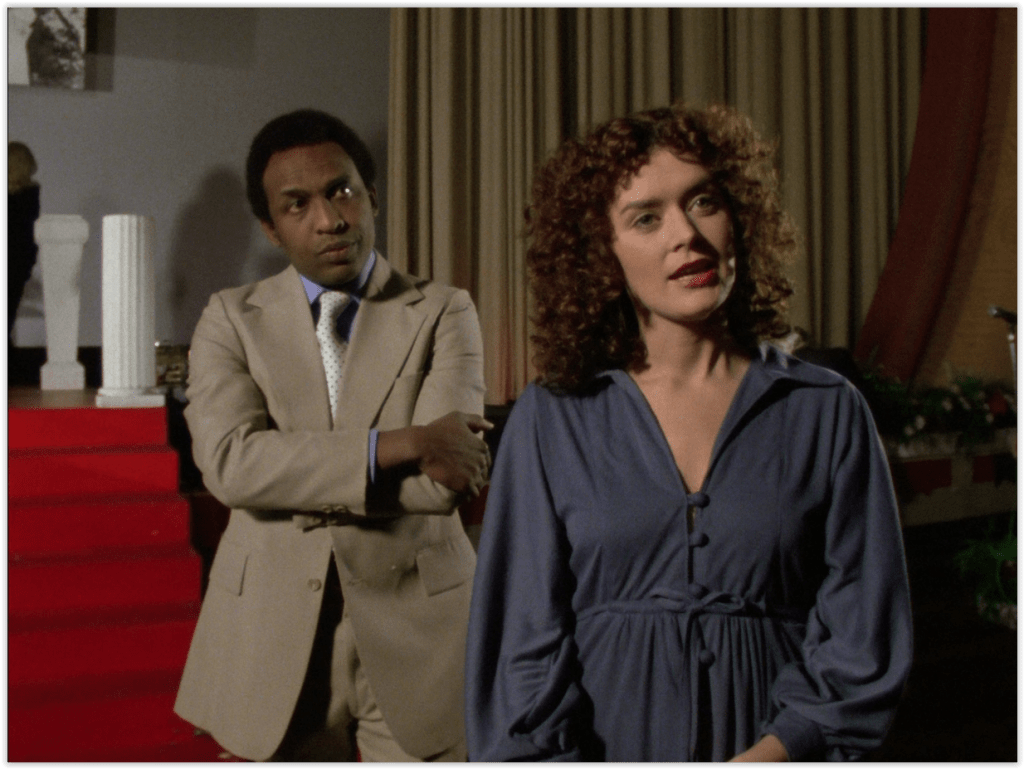
That’s the legendary Patricia Quinn as his other lover Isla. Quinn is well-known for any number of big parts on British TV shows like I Claudius and Doctor Who, but will forever be identified as Magenta in The Rocky Horror Show.
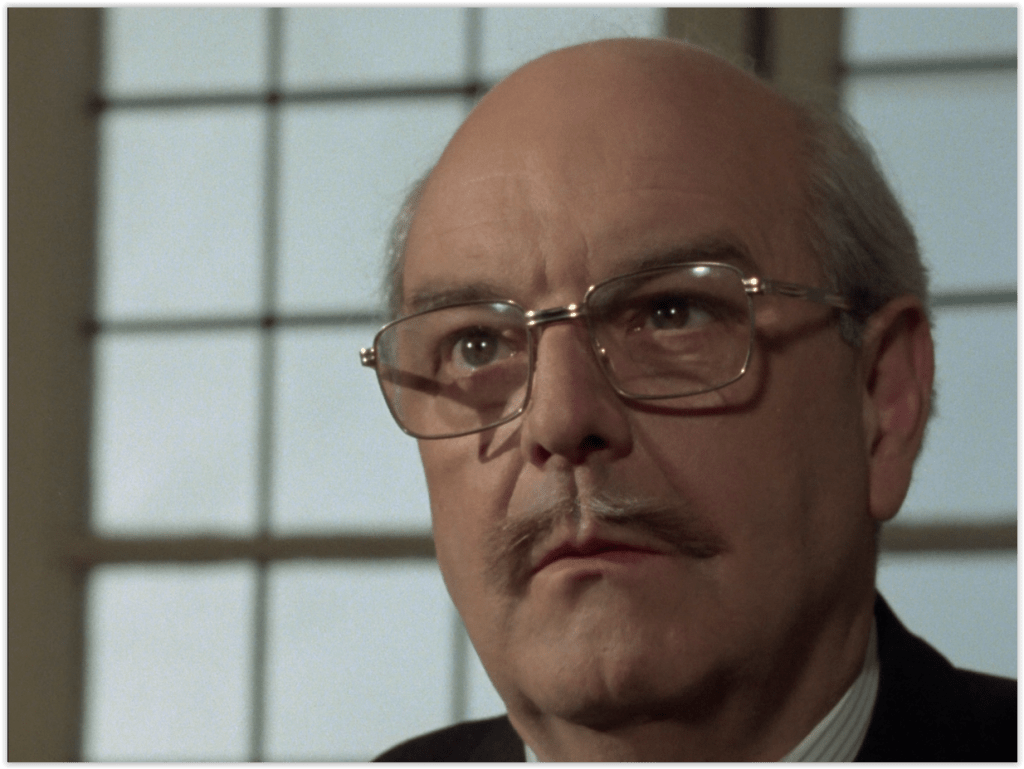
In an unusual non-comedy role as Cowley’s frenemy John Howard is actor Derek Francis. A regular in the Carry On films and familiar from many sitcoms, Francis is also well-known to Doctor Who fans for his comic turn as the Emperor Nero in the 1965 story The Romans.
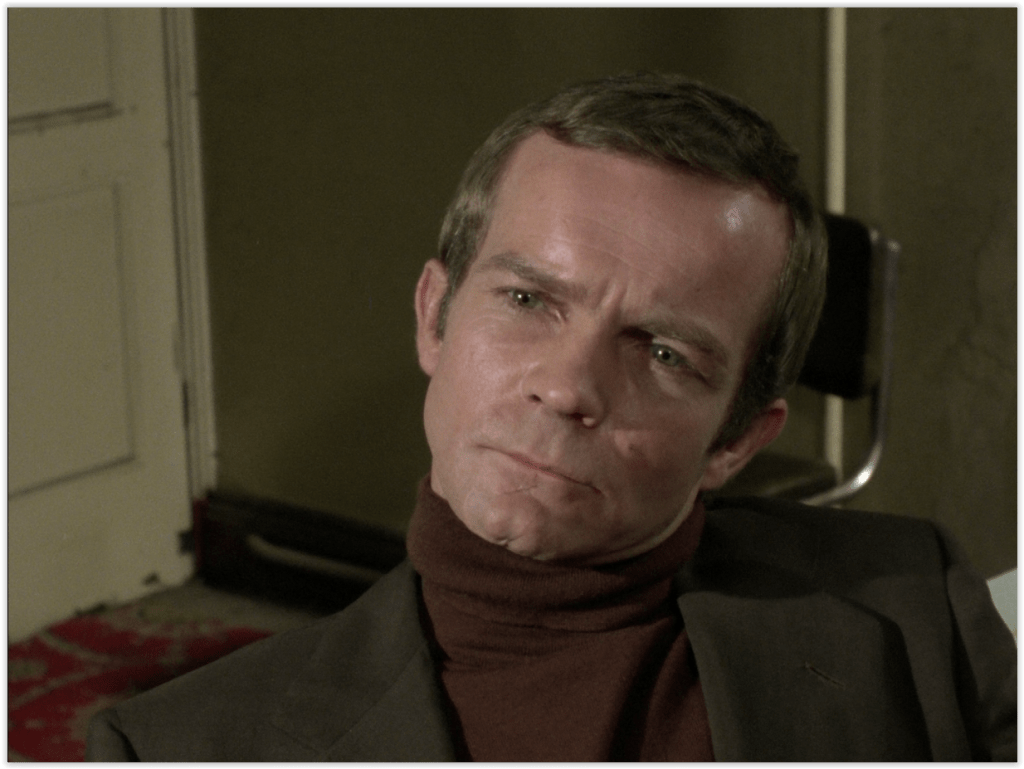
Clemens regular Keith Buckley plays the shady Hymer, who’s responsible for organising the hit on Annie. You may remember Buckley from, obviously, both The Avengers and The New Avengers, but he also appeared in any number of other crime shows like Randall and Hopkirk (Deceased) and Shoestring, usually basically playing this type of role. Interestingly, he played Catherine Earnshaw’s nephew Hareton twice in two different versions of Wuthering Heights – a 1967 TV series and a 1970 film.
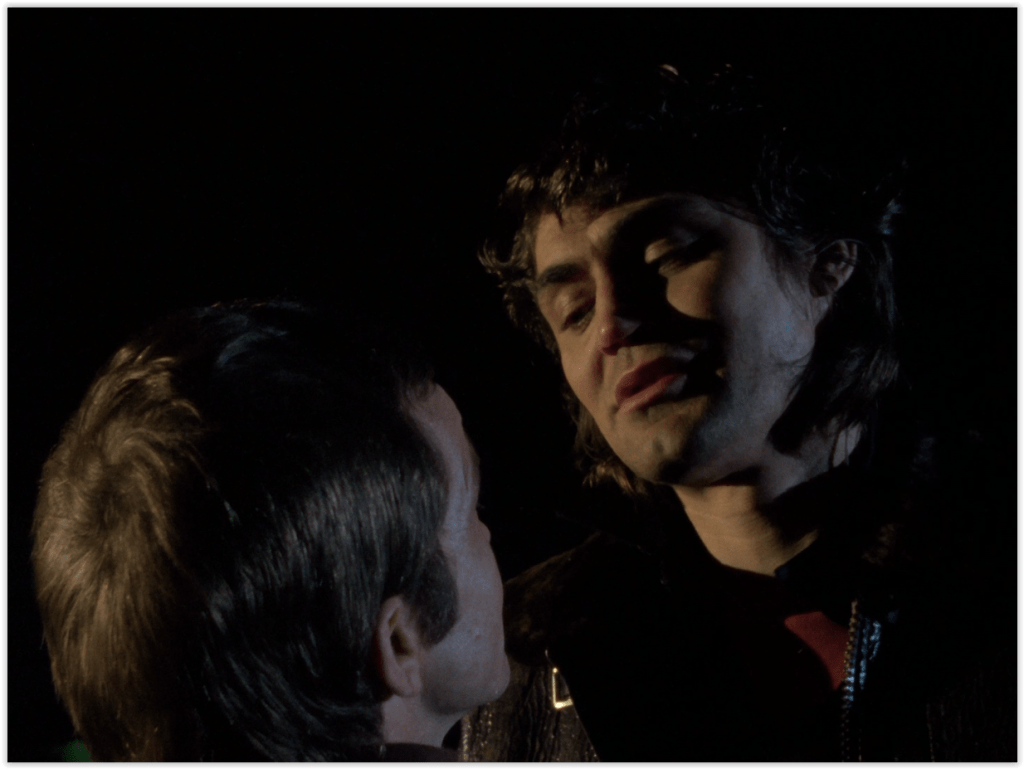
Appropriately cast as motorcycle thug Big Billy is the imposing figure of Nick Brimble, who was originally cast as Hymer. Director Charles Crichton decided that the 6ft 4 (193 cm) Brimble would work better as the very tall Billy. Familiar from any number of British TV shows from the 60s to the 90s (though he never appeared in Doctor Who), Brimble may be best remembered as Francis Urquhart’s shady minder Corder in the original House of Cards trilogy, and as Frankenstein’s Monster in Roger Corman’s Frankenstein Unbound.
Nice bit of dialogue
Bodie and Doyle are testing Annie’s security.
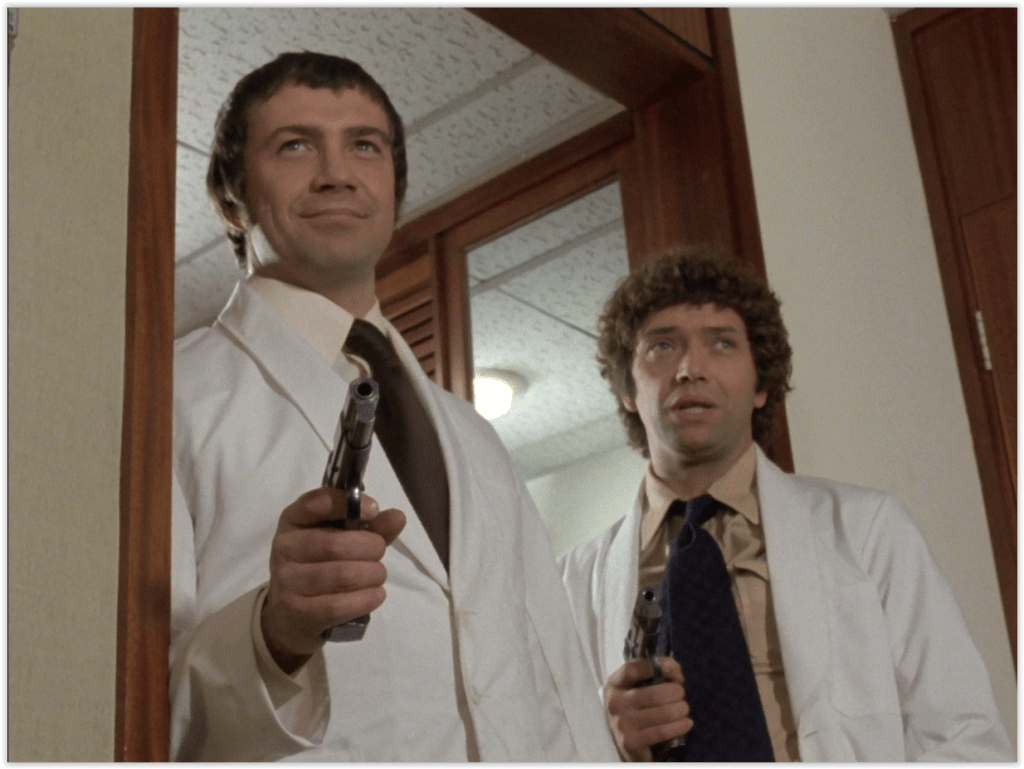
Bodie: “Lax.”
Doyle: “Lousy.”
Bodie: “Lousier than lousy. You are now all dead.”
Doyle: “What he means is, you would be dead if it wasn’t us.”
Bodie: “Loveable us.”
Bodie and Doyle are discussing the revelation that Cowley used to have a girlfriend in rather homoerotic terms.
Bodie: “Cowley and the opposite sex? You must be joking.”
Doyle: “Well, he must be an attractive man… I s’pose. I mean, he’s a bit aggressive, but… he would be attractive, wouldn’t he?”
Bodie, affecting a camp lisp: “I’ve not noticed.”
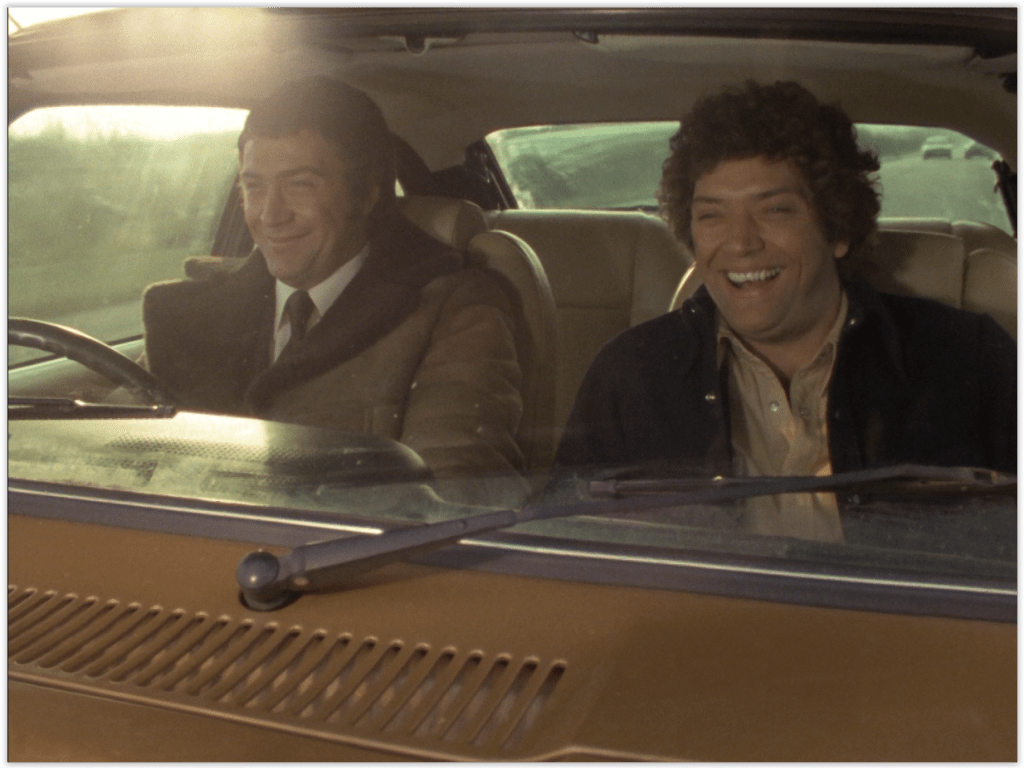
Later in the same conversation, they affectionately imagine what it would be like for their boss to have a… liaison.
Bodie, chuckling: “I was just thinking – Cowley and a woman!”
Doyle joins in on the chuckling: “Yeah. He’d kick the door down, throw her on the bed –“
Bodie: “And frisk her!”

Cowley to Annie, attempting to be romantic (and charmingly failing): Whenever I see you I wish I had sore eyes.”
Annie, baffled: “What?”
Cowley: “Well, you’d be a sight for them, wouldn’t you?”
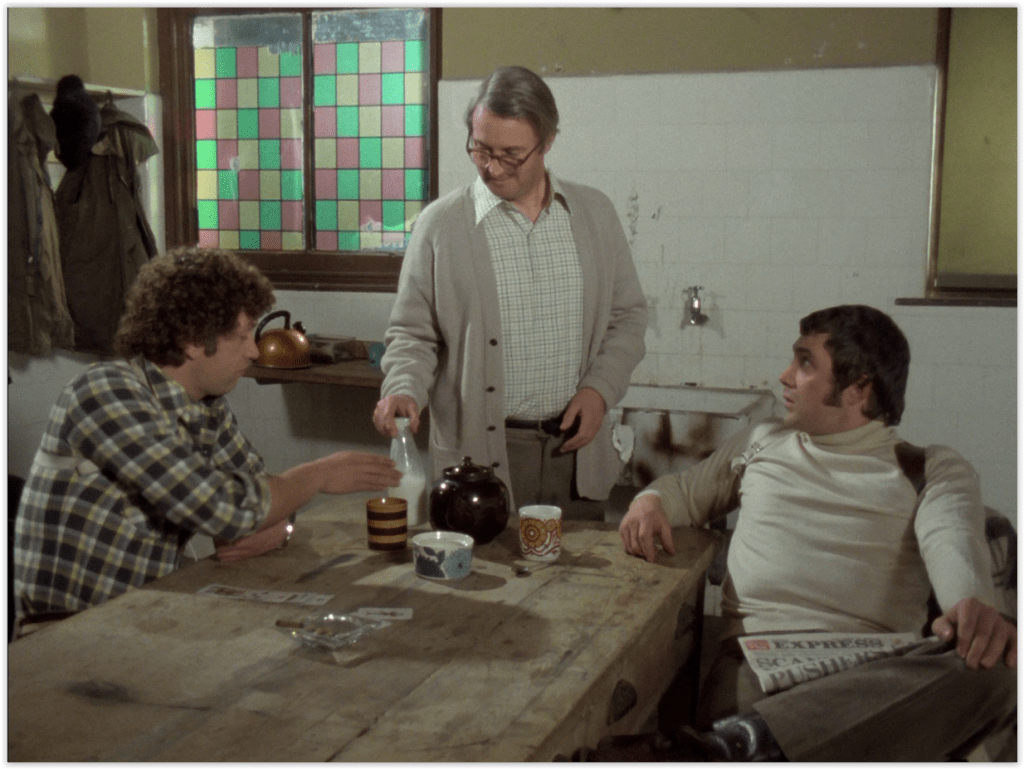
Charlie, another old army buddy of Cowley’s who happens to overhear Bodie and Doyle talking and rather indiscreetly gives them the whole story: “Funny, though. I once helped Cowley nearly a mile over open country with a broken leg, every step agony. But it was nothing compared with the hurt I saw when she left him.”
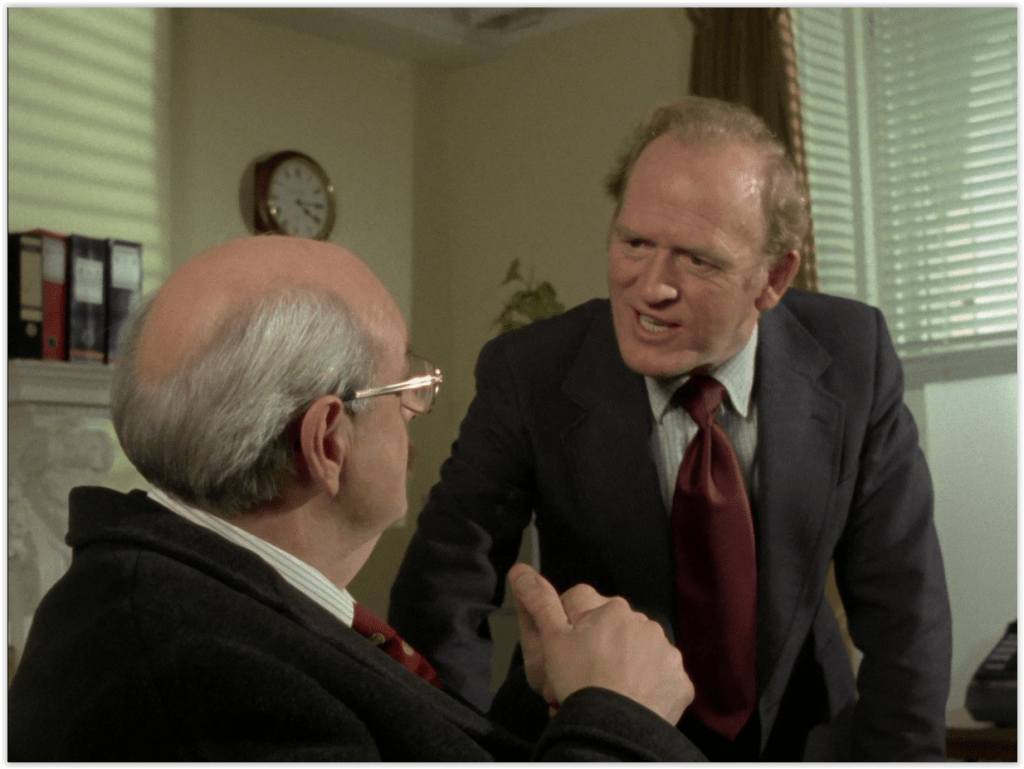
Cowley, being consistent with his hatred of fascism when invited by old comrade Howard to join the ‘cause’: “With your bigotry? No, John, you and I are diametrically opposed. I respect you as a soldier, but for everything else about you, your ethics, your politics, the emotions you engender, I have a loathing of such depth you could never measure it!”
Casual Sexism
As usual, it’s all from Bodie. Aside from his attentive reading of porn, there’s this dialogue exchange:

Cowley, showing the boys film of Annie: “Handsome woman, eh?”
Bodie: “Not bad for an old ‘un.”
Cowley: “Old? She’s no more than 45.”
Bodie: “That’s what I meant.”

Look After Annie is not one of the better episodes. It’s already seeming like we’ve seen this plot before, and it doesn’t help that large portions of the ep are constructed from very obvious stock footage of rioting, showing off the limitations in the show’s budget. On the other hand, it’s very welcome to have a story that throws the spotlight onto Cowley for a change, and Gordon Jackson makes the most of it with an affecting, understated performance channelling regret for a road not taken. It’s just a shame that the rest of it seems very by-the-numbers.
 Simon’s Incoherent Blog