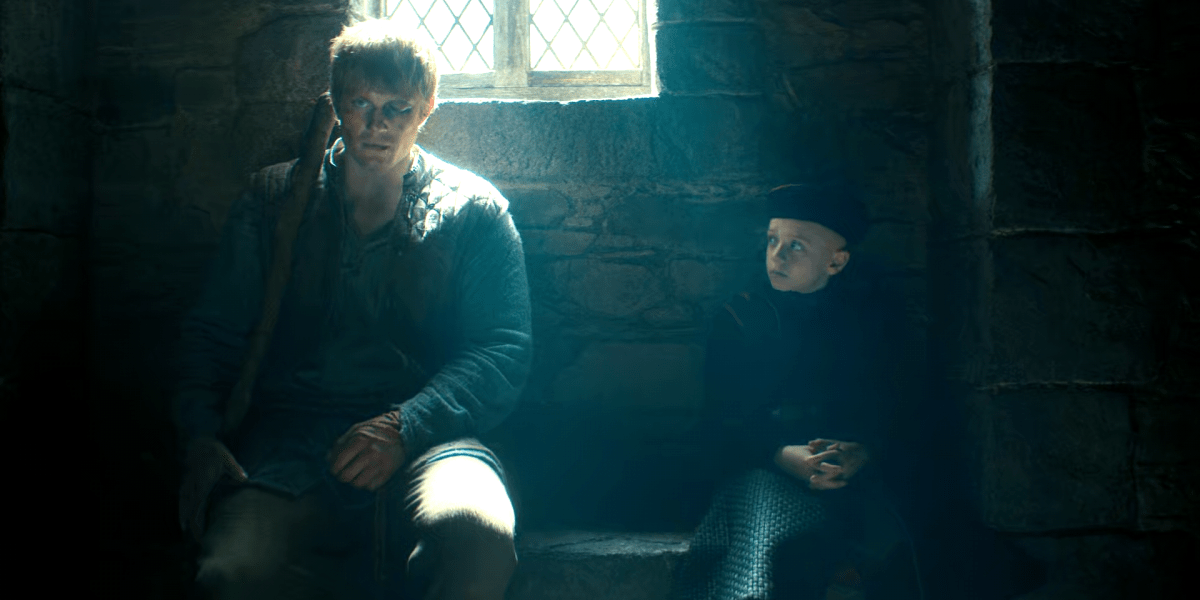
“Every day, at evenfall, Ser Arlan would say, ‘I wonder what the morrow will bring…”
(SPOILER WARNING!)
As expected, it was a reflective final ep of the first season of A Knight of the Seven (or is it Nine?) Kingdoms. Well, the day after the end of a big festival (which this medieval tournament was pretty much shown to be) is always a time for coming down from all the excitement and taking stock. The more so for this one, which has, after all, seen the death of the heir to the Iron Throne defending a lowly hedge knight.
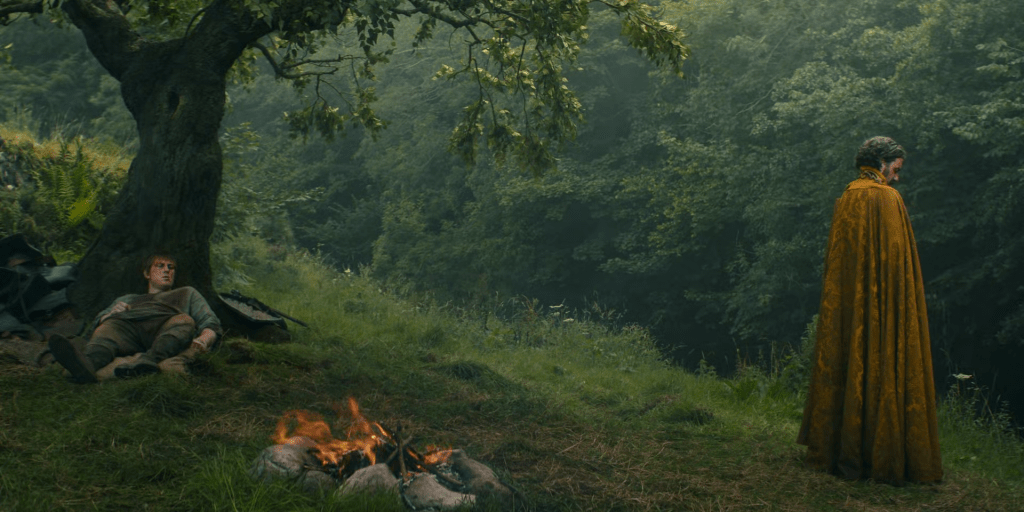
There’s much pondering on the aftermath of this rather seismic event, as characters pontificate on what it means for the realm. “A war is coming,” muses the ever-entertaining Lyonel Baratheon (when is it not?), “we can be a force, you and I”. It’s the first of several attempts to recruit the recuperating Dunk to more formal service, and the first (but not the last) he rejects. After all, we’ve established that he’s a maverick, with his still unwavering belief in the chivalry of the knightly code – why would he want to ally himself with any of the wily political schemers these people have shown themselves to be?
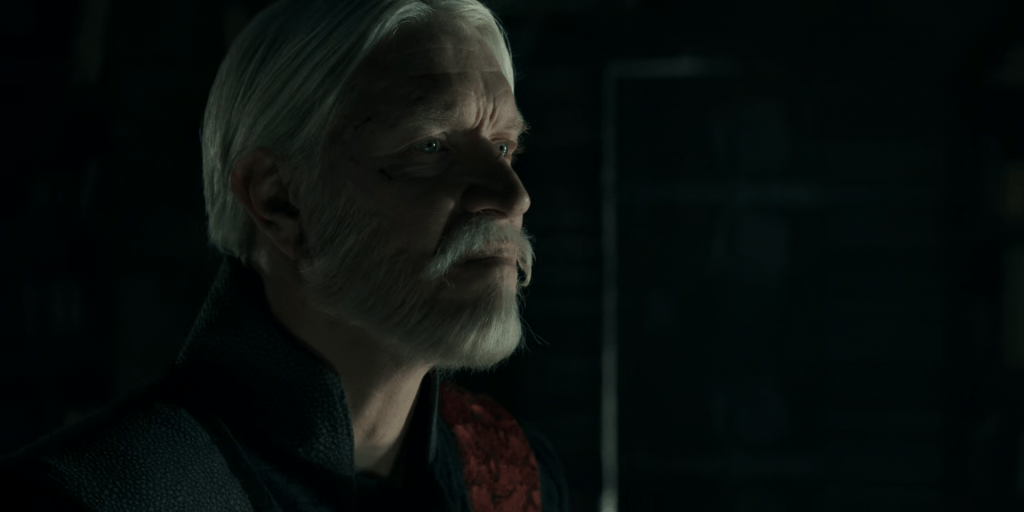
A similar offer is forthcoming from the bitter Prince Maekar, here given more character depth than the lurking, sullen figure we’ve seen in previous eps. Sam Spruell, frequently cast as thuggish bad guys, gives the previously unlikeable Prince a deal of sympathy as he reflects on the inevitable speculation that he intentionally killed his brother to move one step closer to the throne. And that Dunk himself will also inevitably be blamed for the death of a King never to be, who will always be held up as potentially better than any of his replacements.
Dunk himself is shown to be contrite and remorseful over the way things turned out throughout the ep, which fits with everything we know about him. He’s a decent man, perhaps even too humble; as he entreats the gods, why should they have allowed the honourable Baelor to die while sparing an insignificant nobody like himself? But perhaps, as Lyonel points out, the gods aren’t favouring him – they’re mocking him.
Well, gods are notoriously capricious, as has been noted before regarding the coin toss difference between making Targaryens good men or insane monsters. That too is reflected on with Maekar banishing the recalcitrant Aerion to the Free Cities – even he realises his vain, arrogant son is a monster. Which leaves him with drunken sot Daeron and, of course, young Egg. When we see Egg approaching the stricken Aerion’s bed, dagger in hand, the question arises again – will this likeable kid follow his brother’s path to murderous, sadistic evil?
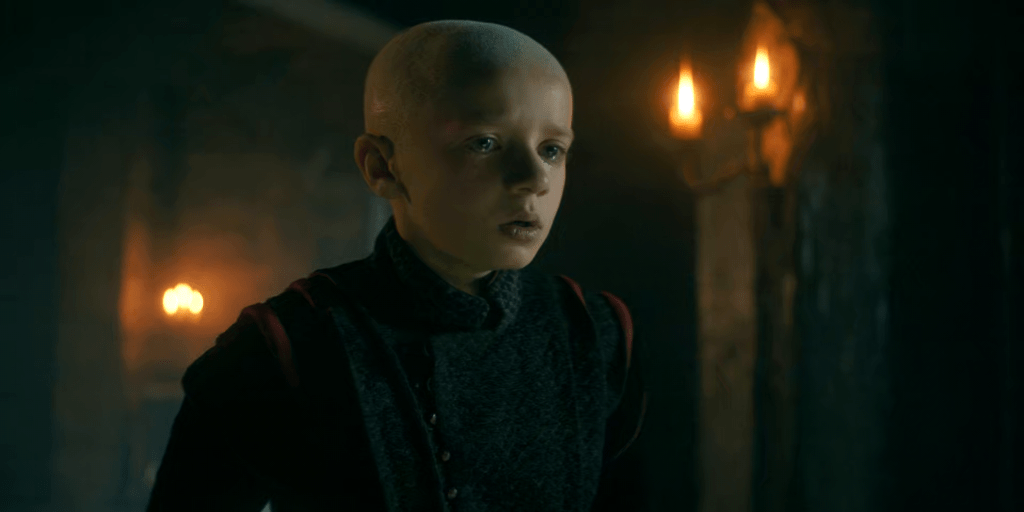
It’s a question put into Dunk’s mind by the philosophical (and drunk) Daeron, who tells him that as a child, Aerion was a nice kid who enjoyed fishing. The monster came later. Dunk points this out to Maekar, who’s refusing to accept that his youngest son should squire for a lowly hedge knight and live like a peasant. After all, the easy life of castles and plenty hadn’t done much to shape Maekar’s other two sons into decent men.
The matter of how Dunk and Egg could stay together is vital to this ep – after all, there’s at least another two novellas to adapt. We hear that Maekar wants his youngest son to squire for somebody, and the boy refuses to serve anyone other than Ser Dunk. In the books, Maekar grudgingly accepts this, and allows Egg to go off with Dunk at the end. Here, in the first significant change from the source material, we see Egg once again running off without his father’s knowledge. Will that lead to our heroes being pursued across the realm by the vengeful Maekar’s agents? That could be an interesting additional plot thread to later stories.
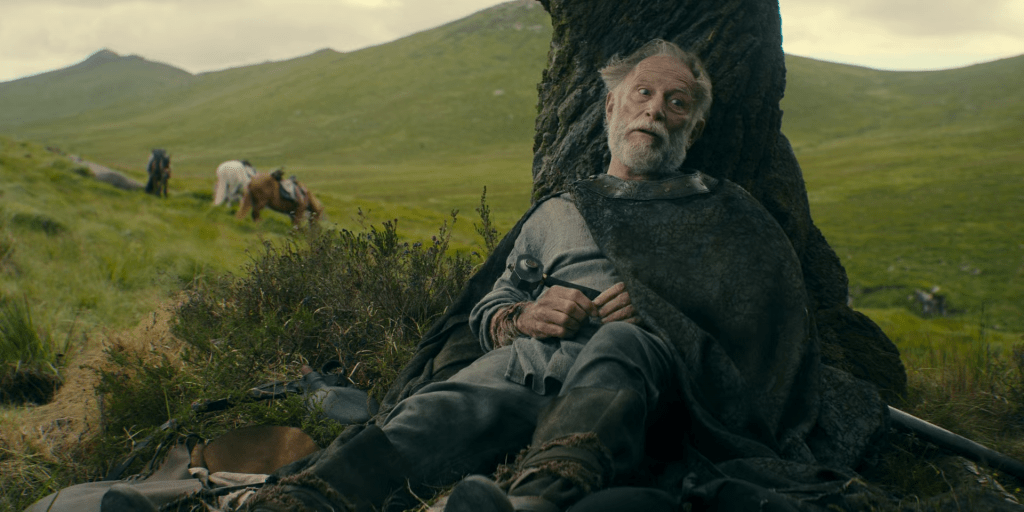
One of the strengths of the show is the way it’s enlarged upon its fairly slim source material. Great characters like Ser Lyonel barely feature in the original stories, but the show has given them deeper, enjoyable characterisation. The same has been true of Ser Arlan of Pennytree, Danny Webb showing up in flashback yet again in a nice scene to elaborate on why his hometown is called that.
Significantly though, the scene, obviously just before his death, leaves open the question of whether Ser Arlan really did knight Dunk before expiring. “Why did you never knight me ?” the mournful Dunk enquires of his master, thinking him dead – only for him to revive long enough to finish his story. Whether he then lived long enough to knight his eager squire is left unanswered – just as it is in the books. So the question remains – is Dunk, with all his idealistic faith in the chivalrous knightly code, really a knight at all?
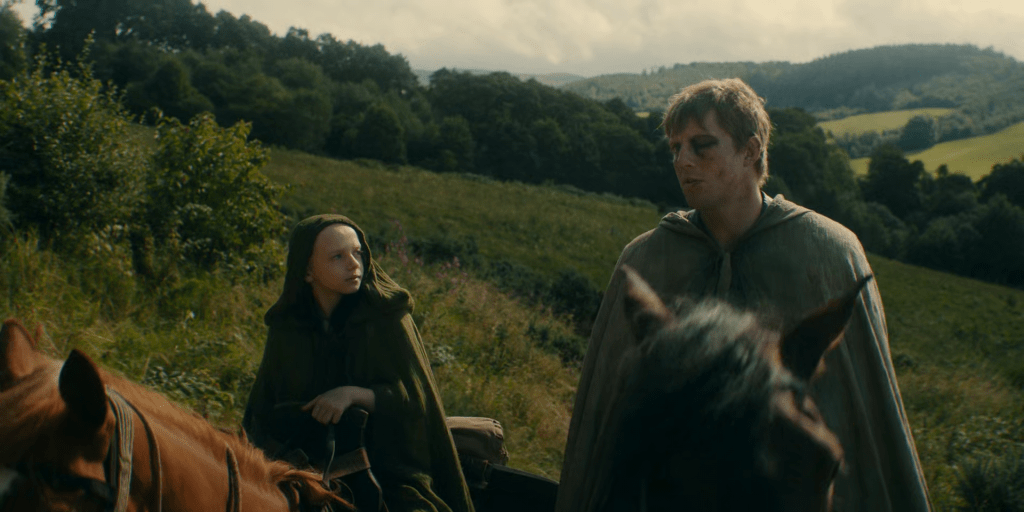
Of course it shouldn’t matter; and of course, in this world, it really does. I’m guessing it’s a question the show will return to in later seasons, which I’m glad to hear have been confirmed.
Though I usually hate the continuing attempts to milk franchises with more and more spinoffs, A Knight of the Seven Kingdoms has been hugely enjoyable. It’s nicely fleshed out its slender source material with richly scripted characters, and has foregrounded Game of Thrones’ frequent humour, which seems entirely absent from House of the Dragon. It’s got two great leading characters in mismatched buddies Peter Claffey and Dexter Sol Ansell, and if we are to have more adventures set in Westeros, its economical runtime and lack of dependency on the franchise’s convoluted dynastic politics are a breath of fresh air. Long may it continue.
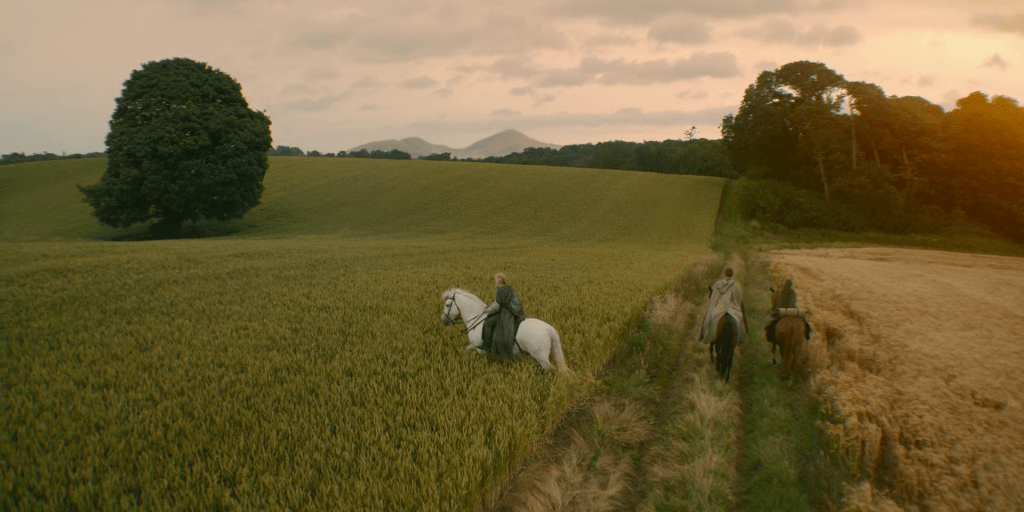
Oh, and those “nine kingdoms” mentioned by Egg, which rather change what we thought about Westeros – “Crownlands, Westlands, Stormlands, Riverlands, the Iron Islands, the North, the Reach, the Vale of Arryn, and Dorne”. That is indeed nine. Have the monarchy been miscounting all this time? 😊
 Simon’s Incoherent Blog