
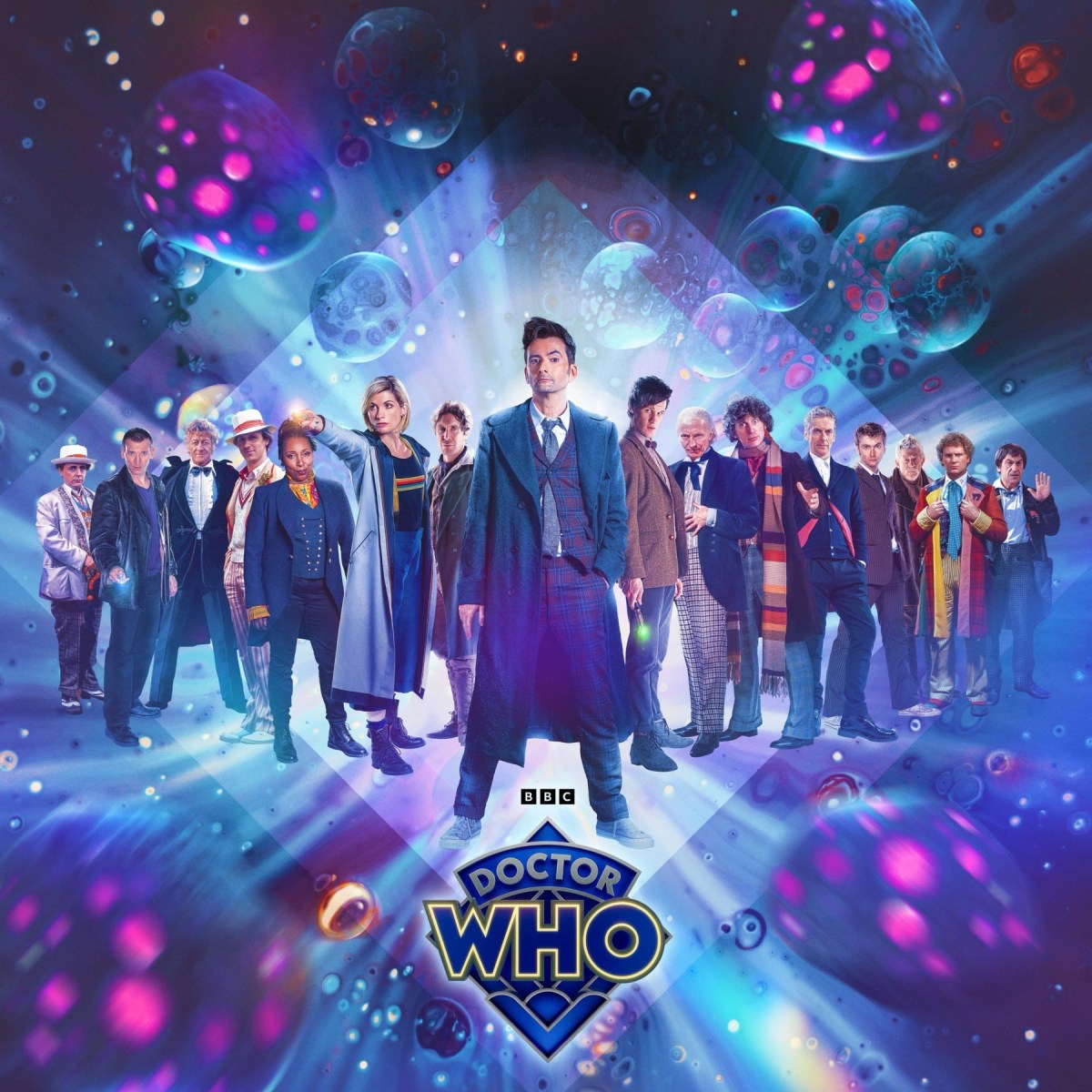
“Time is memory, and memory is time.”
When I was a kid, Doctor Who seemed like a really old show. It started before I was born, six whole years before in fact. And to a kid, six years is an eternity.
I first got into it very, very young. Literally the earliest memory I have is of my mother sitting the three-year-old me in front of the big, rented colour TV in our Durham suburban home, presumably in an attempt to get some time off from me, and my being enthralled by what I now know to be Planet of the Daleks episode 4 (it was the bit where Jon Pertwee and Bernard Horsfall shove a Dalek into a lake).

Yep, this bit.
After that, I watched it regularly, my little brother joining in a couple of years later when he was old enough to sit unaided and understand stories. I remember being particularly annoyed if we had to do something else on a Saturday teatime, meaning I would miss Doctor Who – if you missed it then, that was it, gone. Long before the advent of such high tech wonders as the video recorder. I kicked up such a fuss once when we had to visit one of our aunts that she was forced to put the TV on and endure The Nightmare of Eden part 3, while my brother and I watched enthralled.
So the show was a regular fixture for me; but that wasn’t unusual for a kid in the 70s, when Tom Baker’s run in the part propelled the show to such great success that anyone with a long scarf got to pretend to be the Doctor in the school playground. But I wouldn’t really have called myself a fan – in the nerdy, encyclopaedic knowledge sense of the word. That came later, when, poking around the school library to find something other than books about cute anthropomorphic animals with the power of speech (I still love Paddington), I stumbled over a well-thumbed paperback of Barry Letts’ Doctor Who and the Daemons.
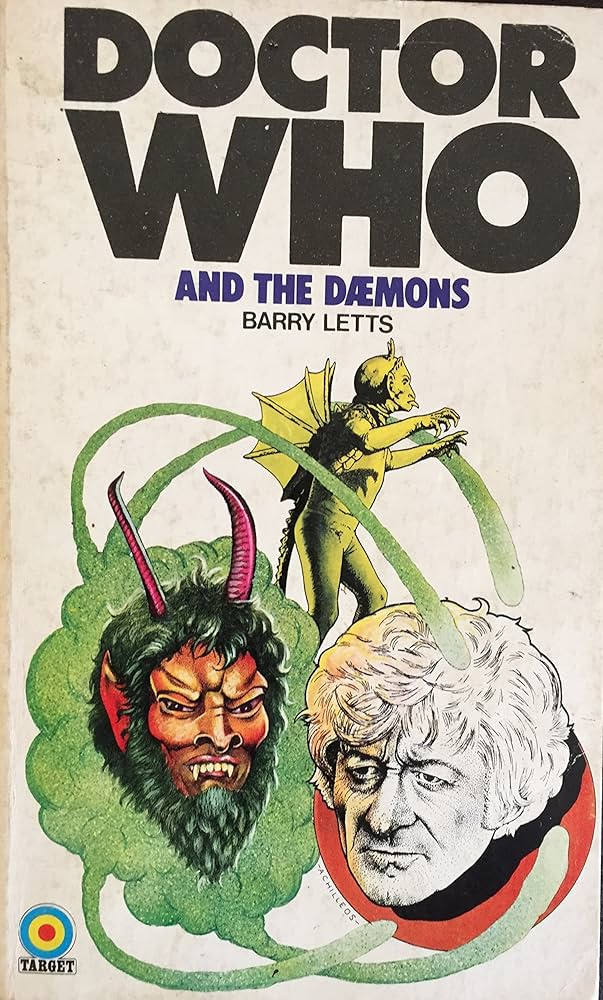
A few pages in, and I was gripped. Never mind Bill Badger – this was grown up reading, with adults, science, and spookiness. It even had the Devil on the cover! I sped through it – I had a pretty good reading level at the age of eight – and demanded more. Fortunately the school library had a few Target books, but it wasn’t long before I was pestering my mother to buy me my own. Soon I was the proud possessor of my first official item of Doctor Who merchandise (the Tom Baker underpants came later) – a shiny new copy of Doctor Who and the Cave Monsters, by Malcolm Hulke!
So it was the Target books, I guess, that really made me a fan. I got more and more, and read them and re-read them. I still remembered Jon Pertwee, but when I got a copy of factual spinoff The Making of Doctor Who, I discovered there had been other Doctors before him, and was fascinated by the one-paragraph summaries of stories from the past that I thought I’d never see. The Invasion in particular looked really cool, with that iconic photo of the Cybermen descending the steps of St Paul’s being one of the cache of black and white pictures in the middle of the book (which all fell out fairly quickly, leaving the spine so cracked that it always fell open at the middle).

Equipped with the arcane knowledge imparted by Terrance Dicks and Malcolm Hulke, by this point I really was a fan. And I wasn’t the only one. I met others at school, whose knowledge of the production code of The Face of Evil (it’s 4Q, fact fans) was every bit the equal of my own. What’s more, by then we had acquired (well, rented) a VHS recorder, courtesy of long-defunct company Radio Rentals. So when the BBC thoughtfully repeated a story from every Doctor in 1981’s The Five Faces of Doctor Who, I dutifully preserved (on VHS tapes that were at the time very expensive) every one of them, watching again and again.
Aristotle once said, “Give me a child until he is 7 and I will show you the man” – well, that’s what Doctor Who did for me. It shaped my life at a very malleable age, made me the person I am. I took the show’s lessons to heart – kindness, tolerance, diversity, humour in the face of adversity, and that intelligence is always better than brute force to solve a problem. Its succession of smart, literate writers (even Pip and Jane Baker) instilled in me a love of the English language that has shaped my future career, while my mixing with fellow fans at London’s Fitzroy Tavern led to my meeting my erstwhile long-term partner. He introduced me to the world of Who conventions, where I got to meet the stars and writers of the show I’d been watching since I was old enough to speak. Eight-year-old me would have been in raptures at the thought that this was what his future held.

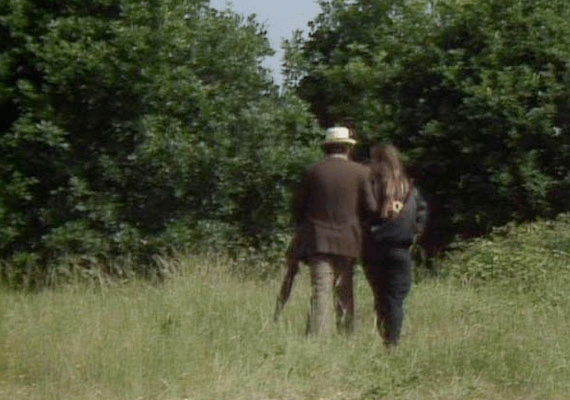
Doctor Who has been such an integral part of my life, for so long, it seems impossible to imagine a world without it. And yet, for a long time, it seemed like it had left the TV forever. Just when it was getting its mojo back too! After Sylvester McCoy and Sophie Aldred walked off into the sunset at the end of 1989’s Survival and never returned, it seemed like that really was that for the story that had been such an inspiration for me.
Sure, the fans were keeping it alive with original stories in Virgin Publishing’s Doctor Who New Adventures books, and we got the brief appearance of Paul McGann’s Eighth Doctor in that one-off 1996 TV movie, but with the show now off regular TV, it became, to everyone else, a thing of the past. If they remembered it at all – in the early 2000s, when I was in charge of HMV’s work experience programme at the Cambridge branch, I was dismayed to meet 15 year olds who’d never even heard the word ‘Dalek’. Doctor Who, it seemed, was fading into obscurity, only to be remembered by hardcore nerds like me.
Fortunately, some of those nerds had now become rather important television writers, and it showed in their work. Russell T Davies in particular put his love of the show front and centre in his equally influential (to me) 1999 classic Queer as Folk, with one of the protagonists a hardcore fan just like me, and a major plot point being whether his then-boyfriend could name all eight Doctors, like his best mate could.
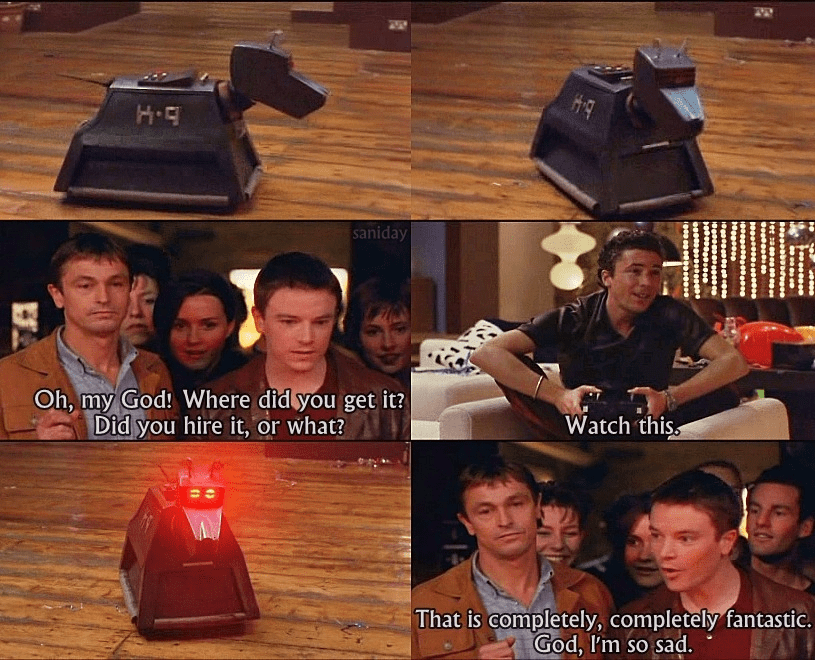
My life even mirrored one of that show’s sequences in my 20s, when, having pulled an attractive young guy at a bar, we went back to my place only for him to insist on watching a Who story rather than more… intimate practices. In Queer as Folk, Vince’s prospective one-night stand is distracted by the VHS of Pyramids of Mars; mine was similarly distracted by Day of the Daleks. While I love Jon Pertwee, I can honestly say that was a bit of a passion-killer.
So it was hardly surprising that it was Davies (henceforth to be known as ‘RTD’ in the style of John Nathan-Turner being ‘JNT’) was the one to pitch bringing Doctor Who back to the UK’s TV screens. I was sceptical – after all, the 1996 TV movie had led to nothing, and great though McGann was, it never felt like proper Doctor Who. But RTD, a seasoned dramatist and TV producer, knew exactly what he was doing, and when the show returned in 2005, it was just perfect (well, Slitheen aside).
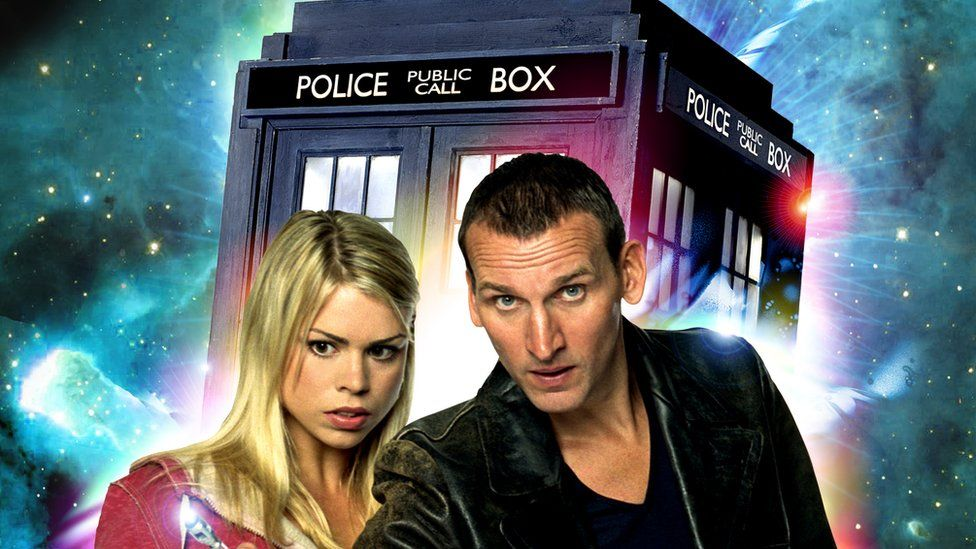
Gone were the ropey special effects, and yellow-fringed monsters superimposed onto harshly-lit videotape – this was a big-budget, prestige production, and it showed. It also worked – the show was, as it had been in the early 60s, an instant hit. Suddenly my intimate knowledge of very part of it wasn’t a mark of nerdy introversion any more, as non-fan friends would come up to me every week, earnestly asking my opinion of the latest episode.
It was such a massive hit that the BBC would have been mad not to renew it, even with the early departure of Christopher Eccleston’s excellent Ninth Doctor. So on came David Tennant, a lifelong fan himself, and the success went stratospheric. Doctor Who was back as a tentpole of British culture, and there can scarcely be any British kid now who doesn’t know the word ‘Dalek’, even if they’re not a fan.

The show’s had its ups and downs since then – more Doctors, more showrunners, more writers. Every era has had its fans and its detractors, but the joy of a format this flexible is that, even if you don’t like the show as it is now, it’ll be different in a couple of years when the next showrunner, or the next Doctor, takes over. It’s been 18 years since its 2005 revival – we’re as far from Rose now as Logopolis was from An Unearthly Child, and though nothing could be as seismic as the change from black and white to colour, Doctor Who continues to change, to evolve.
And now we’re in its 60th year. It hardly seems very long since the 50th, back in 2013. Meanwhile, that enthralled kid who watched Planet of the Daleks as it went out is now 54 years old, and suddenly a six year age gap doesn’t seem so big. I started this blog principally to write, in detail, about each episode of Doctor Who. The range of topics long since expanded to whatever I happened to be thinking about, but I’ve had less of an urge to write recently, with my last post being all the way back in March.
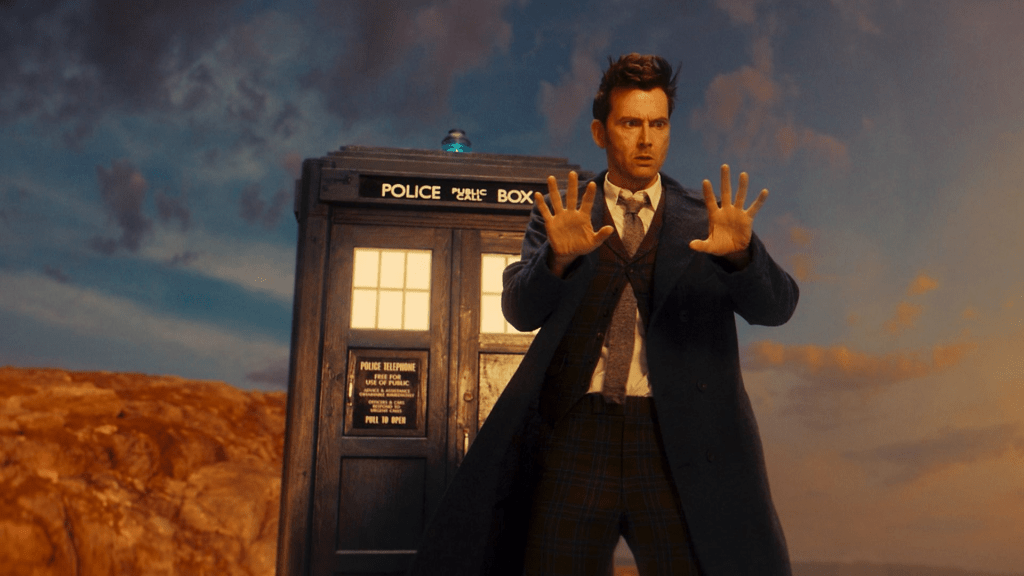
That’s all about to change, with the BBC airing tributes to 60 years of its longest-running show, and three specials, stewarded by the returning RTD and David Tennant, about to grace our screens. I’ll be writing soon about the various celebrations that have already aired (or been on iPlayer), and obviously looking at each of the three specials as they’re broadcast. When I can fit it in around my very busy work schedule, of course…
In the mean time, I’m glad to be writing again. And glad to say happy birthday to Doctor Who, the 60 year long story that made me the person I am today.

 Simon’s Incoherent Blog