
“Every sun is dead. The universe has come to a halt. And it is my fault.”
(SPOILER WARNING!)
Well, if it wasn’t obvious before, it certainly is now – Russell T Davies is definitely back. Empire of Death was everything we’d gotten used to from RTD season finales of old: a deadly threat to the entire universe; a ‘Davies ex machina’ McGuffin appearing out of nowhere to save the day; and a Big Reset Button that meant you could kill off whatever beloved character you like, because you could always bring them back. It was a rollicking rollercoaster ride of action and emotion that doesn’t really bear scrutiny if you stop to actually think about it too much. Just like all the season finales from 2005-2009, the last time Russell was in charge.

You might think, from reading that, that I didn’t enjoy this episode. But actually, I did. It didn’t feel like it lived up the buildup of last week (another classic RTD trait), but it was hugely entertaining on its own terms, with some epic drama, a truly diabolical villain, and some affecting emotional moments. Yes, it falls apart rather when you think about it later; but as an experience while you’re actually watching it, it’s a lot of fun. Kind of like a lot of classic Doctor Who, in fact.
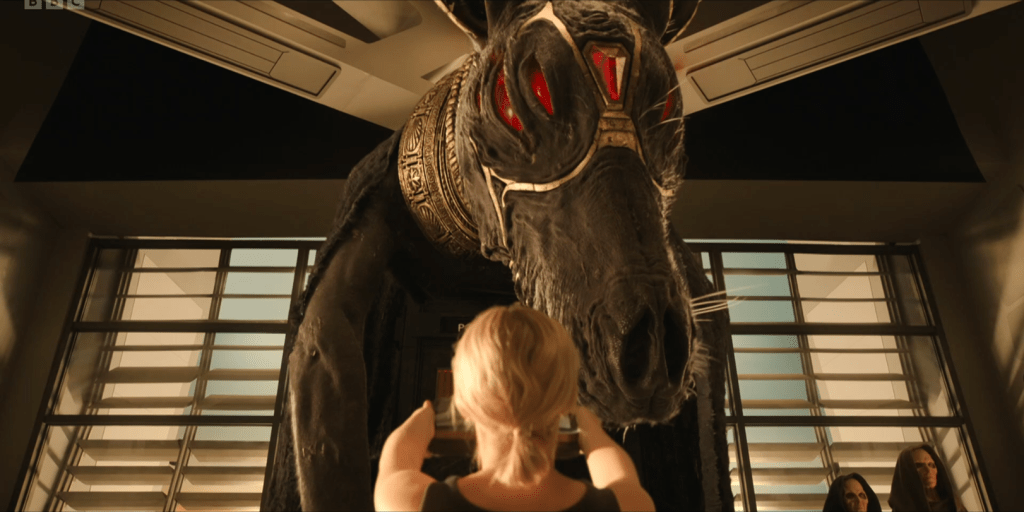
Empire of Death (even the title feels like a nod to classic Who, with that … of Death clause) certainly upped the stakes, in classic RTD style. We knew, from his previous appearance, that Sutekh’s grand ambition was to kill every living thing in the universe. But now, thanks to his bond with the TARDIS, he could do it multiple times over, launching his ‘Death Wave’ everywhere and everywhen, from every location in time and space the TARDIS had ever visited since he bonded with it. Which, to the Doctor’s horror, meant that it was (unwittingly) his fault all this was happening.
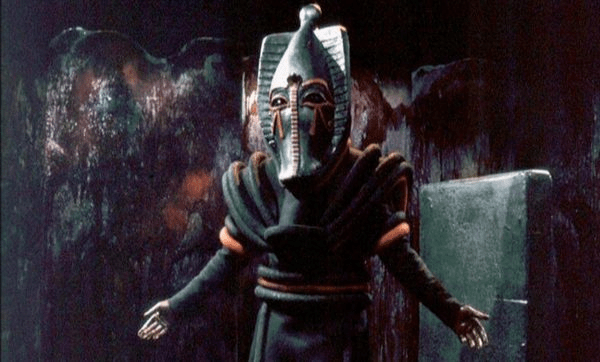
Just to remind everyone how (and to bring new viewers up to speed), we got another one of those Tales of the TARDIS the day before, this time with the current team inside the ‘Remembered TARDIS’ introducing us to a (slightly recut version of) Sutekh’s debut, Pyramids of Mars. The new edit, jettisoning some of the obvious padding necessary in the 1970s, gave the show a faster pace more amenable to a modern audience; but I also noticed the cutting of several lines that might have seemed insensitive these days, notably Scarman’s “superstitious savages!”, and the Doctor’s (actually still witty) “Egyptian, eh? Is this where he keeps his relatives?”.
In the show proper, asked by Ruby what the deal was with the Egyptian references, the Doctor replied, “cultural appropriation”, which might be trendy but gets it ass-backwards – in Pyramids, it’s stated that the Egyptians built their culture round the Osirans, not that the Osirans stole it from them.

That Tales from the TARDIS was also instrumental, though, in setting up an important plot element of the story proper, as the ‘Remembered TARDIS’ featured in it for the first time. That was perfectly justified, with last week’s statements from the Doctor about how memory, particularly Time Lord memory, can affect time itself. It may not be scientific (though it at least waves a hand to science), but it was a clever way of giving the Doctor, Ruby and Mel an escape hatch, and a means to resolve the story by continuing to travel while the real TARDIS was still in thrall to Sutekh.
If I want to be pedantic (who’d have thought it, of a Doctor Who fan?), I could point out that a number of the times and places stated to be affected by Sutekh were actually ones where the TARDIS went before it encountered him in Pyramids – 1066, Spiridon etc. But then, the idea of killing the universe multiple times over, which should be impossible, puts this story firmly in the ‘timey-wimey’ category; who’s to say that Sutekh couldn’t have extended his influence all the way back down the TARDIS’ existence? Yes, it’s nonsensical, but so, if you stop to think about it, is the whole premise of a paradox where it’s possible to kill the entire universe once, then do it again and again in later times. If you accept one, really you have to accept the other.

The team crammed into that tiny TARDIS certainly had a bleak old time of it, with the Doctor roaring in rage and (yet again) crying as he watched whole star systems engulfed in Sutekh’s ‘dust of death’. It was reminiscent of the ‘year of hell’ in 2007’s Last of the Time Lords as Martha roamed an Earth devastated by the Master and the Toclafane. But like that story, the sheer scale of the destruction meant that you knew it would all be reset by the end of the story. In fact, the moment I saw Kate Lethbridge-Stewart dissolve into dust, I knew there’d be a Big Reset Button; Russell wouldn’t just kill off such an important character in such a peremptory way.
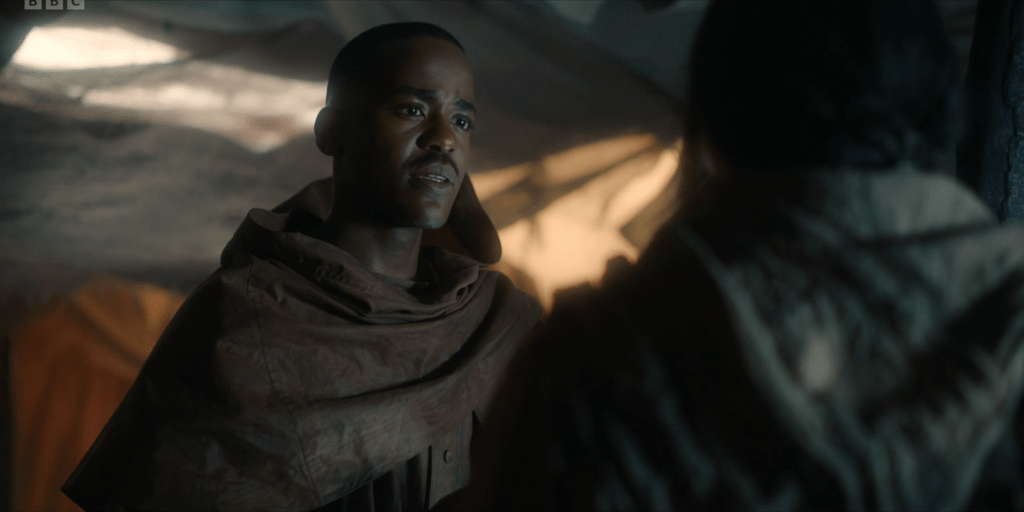
Still, while the rest of the story rendered it somewhat moot, that later-nullified timeline gave us that one beautiful scene of the Doctor encountering a lone survivor (Sian Clifford) in the few minutes before she, too, disintegrated into dust. It was a melancholy but lovely scene full of hope and anger, beautifully played by Clifford and Ncuti Gatwa. In the grand scheme of the story, it didn’t amount to much, and could easily have been omitted – the Doctor could have easily found a spoon just lying around, or indeed, not needed one at all. But I’m glad the scene was there. Not only was it beautiful, it served very much as a statement of who this Doctor really is.
And of course the spoon led us, by way of Ruby’s personal TV channel, to 2046, and an answer to an unresolved plot point from a previous episode. In the absence of Ruby’s actions in the alternate timeline of 73 Yards, it was indeed the Doctor who’d been responsible for the overthrow of “most dangerous Prime Minister” Roger ap Gwillim. But not before the Welsh tyrant had forced the entire UK population onto a DNA database, which was crucial to the resolution of the plot as a whole.
Because it turned out that the only real reason Sutekh hadn’t killed the Doctor or Ruby is that he can’t abide an unsolved puzzle, and he too was just as intrigued as the viewers as to the identity of Ruby’s mother. Some people have found this a trifle unbelievable, but given what we learned about the Osirans and their love of riddles in their first appearance, it actually makes sense.
And it wouldn’t be the first time a Who baddie was defeated by their own frustration at being unable to find the answer to a question – think of Fenric, or Light in Ghost Light, or even Azal the Daemon, self-destructing in his confusion over Jo Grant’s illogical self-sacrifice. No, it’s perfectly in keeping with the character; if I had to carp at all, though, I do wonder why there weren’t any other unresolved mysteries bothering him in the scale of all of time and space.
I gather a lot of fans have found the ultimate answer to that question rather unpalatable – that in fact, Ruby’s mother was just a perfectly ordinary person, and so was Ruby herself. But actually that’s fine with me, and it’s a running theme of Russell’s work on the show, that ordinary people, in the right circumstances, can do extraordinary things, and be just as important as huge cosmic events. Think of Rose Tyler becoming the Bad Wolf, or the Tenth Doctor sacrificing himself, after all the drama of The End of Time, just to save one ‘ordinary’ man.
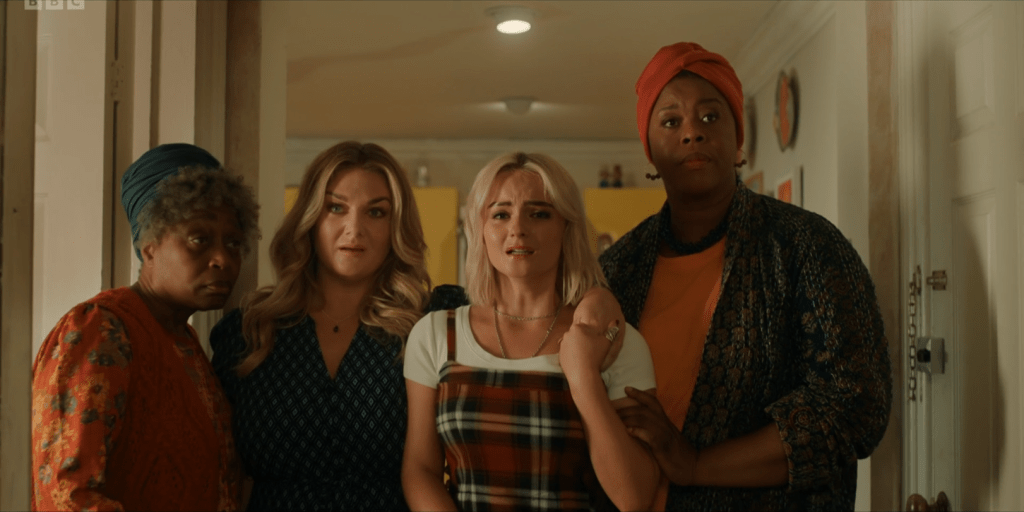
So it’s not only justified but inspirational, which I like; I was getting a little tired of companions having to be unsolved mysteries rather than just, y’know, characters. Still, it does lead to a few still unanswered questions. I know it’s just a bit of visual misdirection, but why would a despairing teenage mother, about to unwillingly abandon her baby, dress like a medieval monk or a Satan worshipper in that huge, melodramatic cloak? Why the big dramatic point at the sign to name Ruby? Who did she think was watching? Surely not the social workers who ultimately gave her that name anyway, as we established last week that the CCTV tape was too corrupted for that detail to originally be seen. And finally, after eight weeks of it, what was with the snow that appeared whenever Ruby or the Doctor talked about that night?
That last seems to have annoyed viewers more than any other point, including, initially, me. Why make such a big deal of a plot point if you’re not going to resolve it? But actually, having now rewatched it, I think the answer to that one is still to come. The coda for the ep, and indeed the season, showed us the now unabashedly evil Mrs Flood standing on the roof, smiling sweetly as she talked of the Doctor ending in “absolute terror”. While, notably, it was snowing all around her.

So just who is Mrs Flood? While she may have been wearing what appeared to be a castoff Romana costume from The Ribos Operation, the overall effect of saccharine, witty evil – with an umbrella – was reminiscent of nobody so much as Missy. So is this another female incarnation of the Master? I actually hope not, as to go there again so soon would be a rather transparent carbon copy of Steven Moffat’s version of the character. And I don’t think RTD would do that. No, I suspect the resemblance was a bit of intentional misdirection. I’ve heard some people speculate that perhaps she’s the much-missed Rani, and that seems a far more likely possibility. Again, though, perhaps a bit too obvious…
At least we know she wasn’t working for Sutekh, since she got as dusty a death as anyone before the Big Reset Button was hit. That reset, though, was where we got another of RTD’s season finale tropes – the previously unmentioned magical deus ex machina that can cut you out of any number of tangled, seemingly insoluble plot threads. This time, it was that ever-so-handy ‘intelligent rope’ that just happened to be lying around in the remembered TARDIS, which enabled the Doctor to drag the furious Osiran into the Vortex to his doom (after also showing us that he had an ever-so-handy whistle that could have overridden Sutekh’s control of the TARDIS all along).

Your mileage may vary as to how satisfied you are with these magical solutions to plot problems, but let’s face it, Russell has form here. Bearing in mind that I’d never really objected to him pulling this kind of stunt in previous season finales, it didn’t really spoil my enjoyment of this one.
I did think the ending dragged a bit, and the saga of Ruby and her family could have been better mixed in with the universe-shattering plot of Sutekh, but I must admit I can’t see how that could have been done. The overall effect, though, was a bit like the ending of Lord of the Rings: Return of the King, seeming to go on for ages after the plot proper had finished. I expect that, in Russell’s mind, the ‘smaller’ story of the ordinary people involved was just as important as the ‘bigger’ one of universal destruction, but I suspect most people won’t have seen it like that. It made for a somewhat unbalanced episode, with a coda that took up about a third of the runtime.
As the season finale, though, it does necessarily give us the chance to reflect on how well we think the new guy has done as the Doctor. And if I’m brutally honest, I have to say that it seems too soon to tell. Only properly appearing in six of this eight episode run, Ncuti Gatwa has shown some excellent work, but to me hasn’t yet been given the range of material necessary to show the versatility of his predecessors.
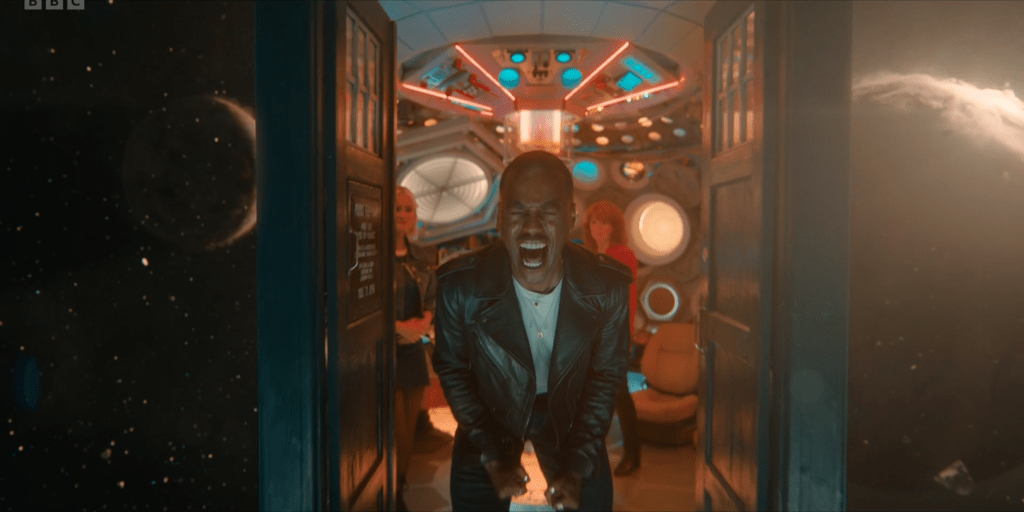
He’s hugely charismatic, and certainly fits the bill of being the more emotional Doctor Russell T Davies was after. Plenty of episodes, including this one, have given him the opportunity to showcase his passion and joie de vivre, though I do rather wish that he wouldn’t keep crying at the drop of a hat. I’m all for the character being more emotionally open, particularly after Jodie Whittaker’s (intentionally) rather closed off Doctor, but I think the tears should perhaps be dispensed more judiciously, lest they become cheapened as the character’s reaction to any misfortune, no matter how trivial.
However, he hasn’t yet been given the chance to flex his acting muscles in the aspect of the character being an ancient, godlike being, in the same way as Tennant, Smith and Capaldi often were. I’m sure he’s up to it; but as yet this seems, paradoxically, a ‘younger’ Doctor than those characters, despite being actually the oldest. Time will tell, I suppose; aboard the TARDIS, it always does.
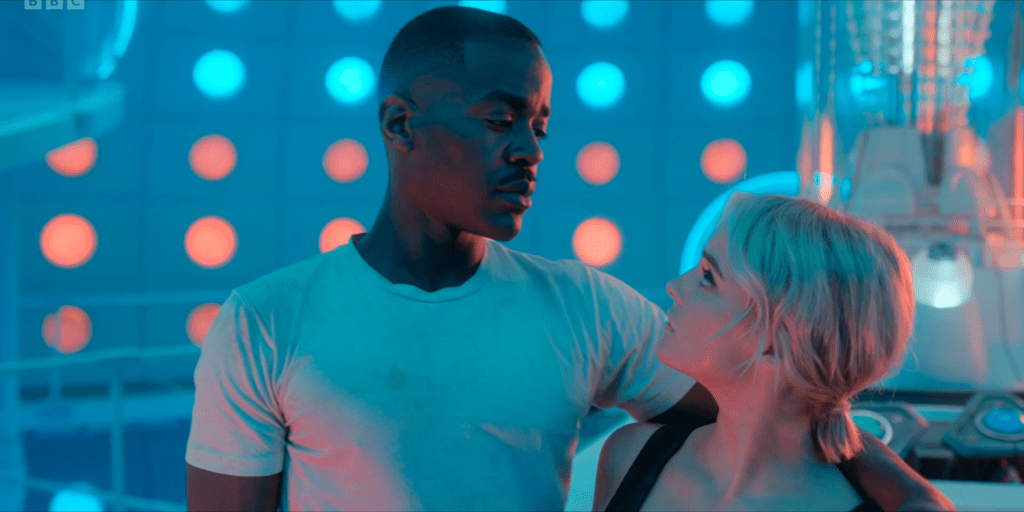
Overall, I thought Empire of Death was an enjoyable season finale without being a great one. Like RTD finales of the past, it had his usual flaws – not living up to the promise of the first part, no real jeopardy because of the inevitable reset, and a resolution that depended on something previously never hinted at.
And, even taking into account future possibilities, I think there really are unresolved plot threads that are unlikely to be addressed – eg, if all the Susan Triads now continue to exist as normal people, what about the ‘Harbingers’ (that Harriet seemed quite nice originally)? What exactly was Sutekh’s connection to the Toymaker and the Maestro, and has his demise secured reality from them? Is ‘mavity’ still a thing, and does that mean that, technically, the whole show is taking place in an alternate timeline (which would explain the anachronistic racial diversity of the 1813 we see in Rogue)?
But these are pretty much baked in features of a Russell T Davies season finale – he’s never been all that great at writing endings when he’s (as usual) written himself into a corner. I still enjoyed the ride, just as much as I did with the similarly flawed Parting of the Ways and Last of the Time Lords. I think whether you enjoyed it depends on how forgivable you think those flaws are; but I still feel it’s miles better than any of the season finales from his predecessor, and despite some misgivings, I’m happy to have him back.
 Simon’s Incoherent Blog