“The Starseed will bloom and the flesh will rise!”
(SPOILER WARNING!)
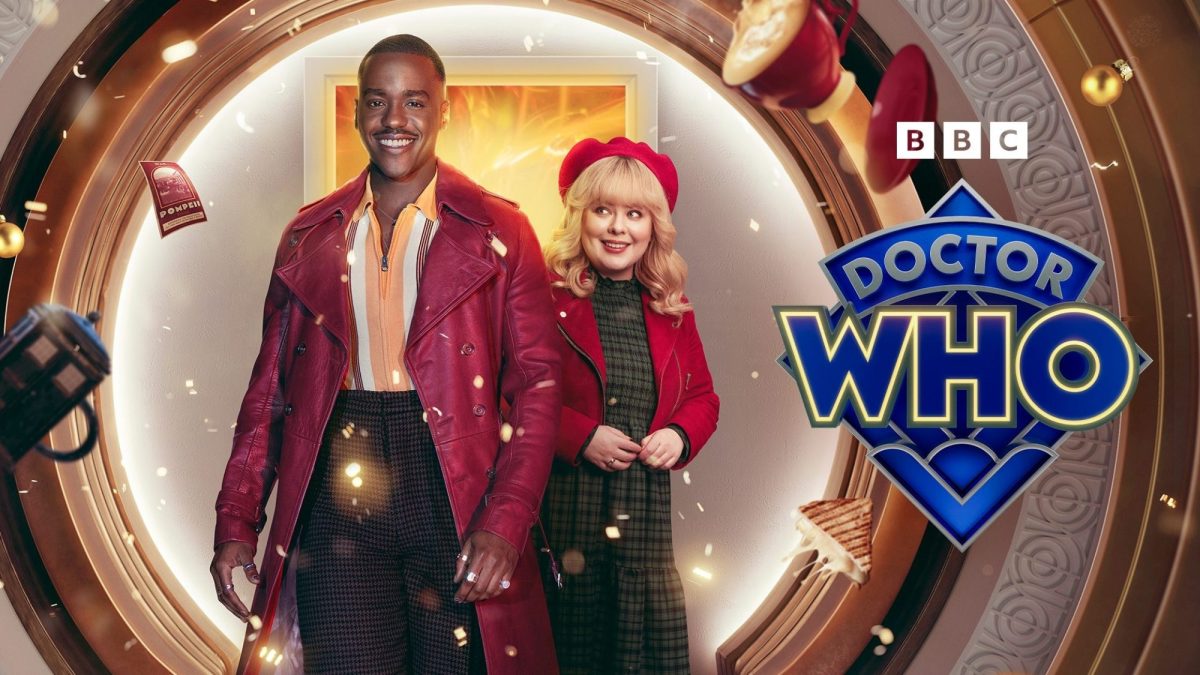
Loves his catchphrases, does Steven Moffat. Yes, former showrunner and now occasional writer Moffat was back on scripting duties for this year’s Doctor Who Christmas Special – now thankfully back on Christmas Day. After giving us a simple, high-concept episode of the previous season, he was back to his twisty, turny, timey-wimey form, with an ep that took advantage of the show’s premise of time travel, while attempting to tell a heartwarming Christmas story full of spectacle, humour and thrills.
Did it work? Well, at least partially. As ever with Moffat’s puzzlebox plots, it seems to work in the moment, but when you stop and think about it afterwards, some of it… well, doesn’t really make sense.
To be fair, this is meant to be a light and fluffy Christmas show, not high concept SF subject to rigorous analysis. And the ep itself even acknowledged that several times, particularly with the bootstrap paradox of the Doctor only learning the briefcase security code because he remembered his future self telling him about it. I’m only surprised that the Blinovitch Limitation Effect wasn’t mentioned.
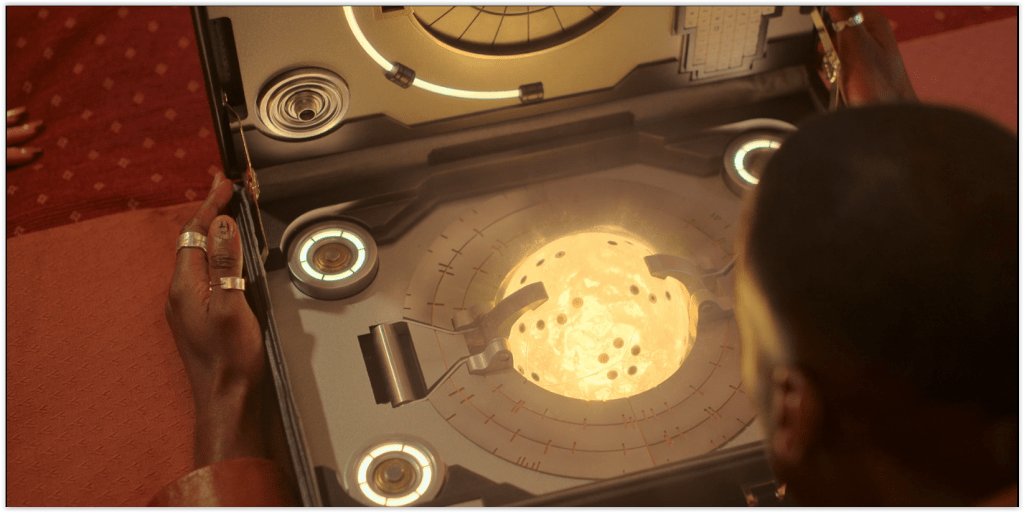
I don’t know whether younger viewers would have appreciated the complex central threat though – that weapons company Villengard wanted to generate their own star, and needed a time portal to at least 65 million years ago so as not to have to wait. But if you didn’t get that, there was at least the more tangible menace of the predatory briefcase itself, its wrist cuff snapping hungrily when deprived of a carrier. It was a nice, simple idea.
If I’m honest though, the resolution is one of those bits that, when you think about it later, doesn’t really work. I mean yes, by sacrificing herself and taking the Starseed far away from Earth, Joy does save the world; but then destroying the world wasn’t Villengard’s plan, they simply didn’t care about it. Either way, they got their star, all ready for them to use for whatever nefarious purpose the galaxy’s largest weapons conglomerate needed. The bad guys won.
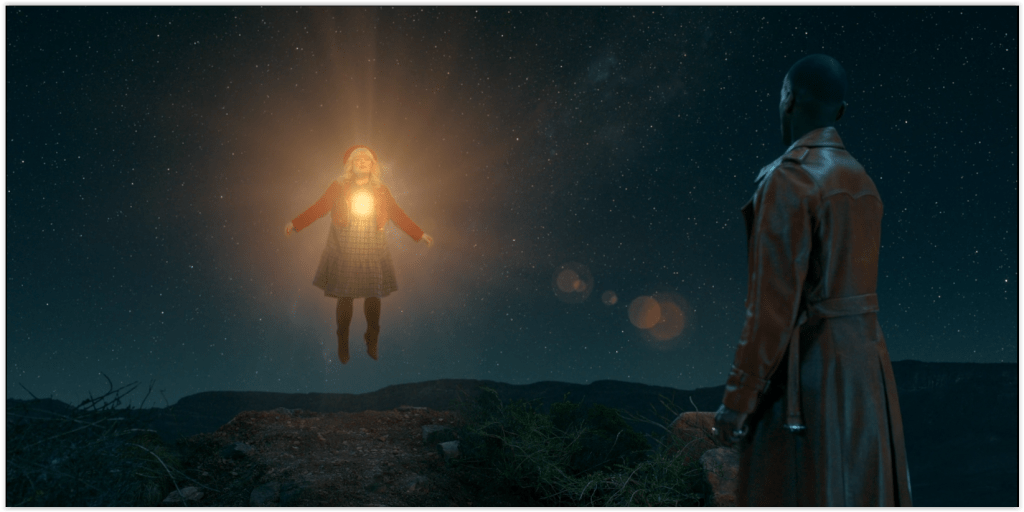
And yes, no matter what Nicola Coughlan’s beatific smile and Murray Gold’s soaring strings tried to tell you, Joy died. Along with all the other briefcase carriers, and of course, her mum. OK, so their consciousnesses would live on (in some form) in the star, but they are, y’know, dead.
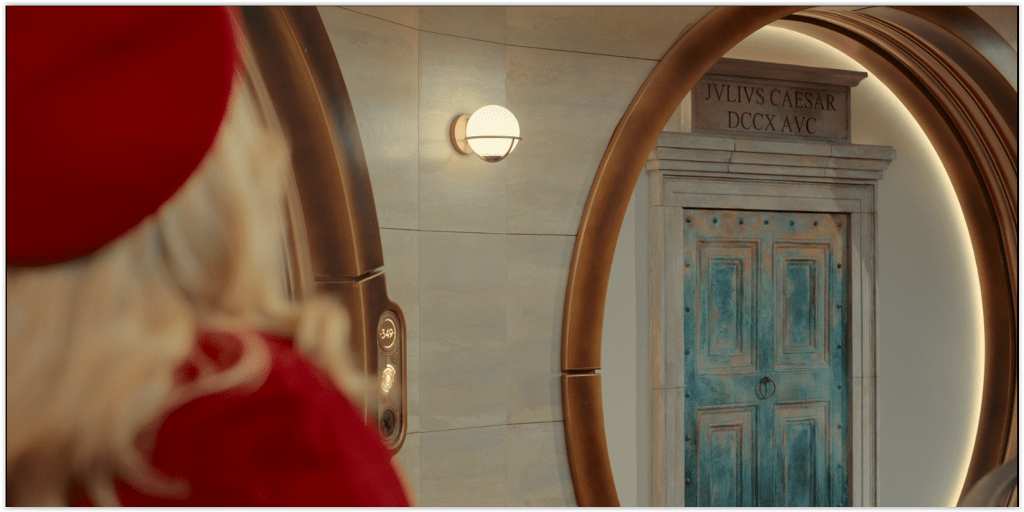
Also, the Time Hotel – lovely idea, but surely a potential Butterfly Effect disaster-in-waiting, and the sort of thing the Doctor’s always having to shut down? Plus, it seemed incredibly dubious that our hero would think it was so cool being able to visit “your favourite assassination”. Not Doctorish at all.
Looked at like that (and it’s hard not to, when you actually think about it), it’s not quite the joyous Christmas story you would expect. But I realise I’m being a curmudgeon, and you’re not meant to think about it all in those terms. There was plenty to like and enjoy here too, in the fun set pieces, the dialogue (a Moffat specialty), and particularly the characters.
Principal among which, obviously (well, her name is in in the title), was Joy – her family name, Almondo, was mentioned in the credits but not in the script, and literally translates to “… to the world”. It’s a bit on the nose, but I can forgive that from a show whose previous Christmas specials have included a guest appearance from the actual Santa Claus. She’s not the first Christmas special ‘pseudo-companion’ to die either – that would be Kylie Minogue’s Astrid, in 2007’s Voyage of the Damned, who also only “sort of” died.
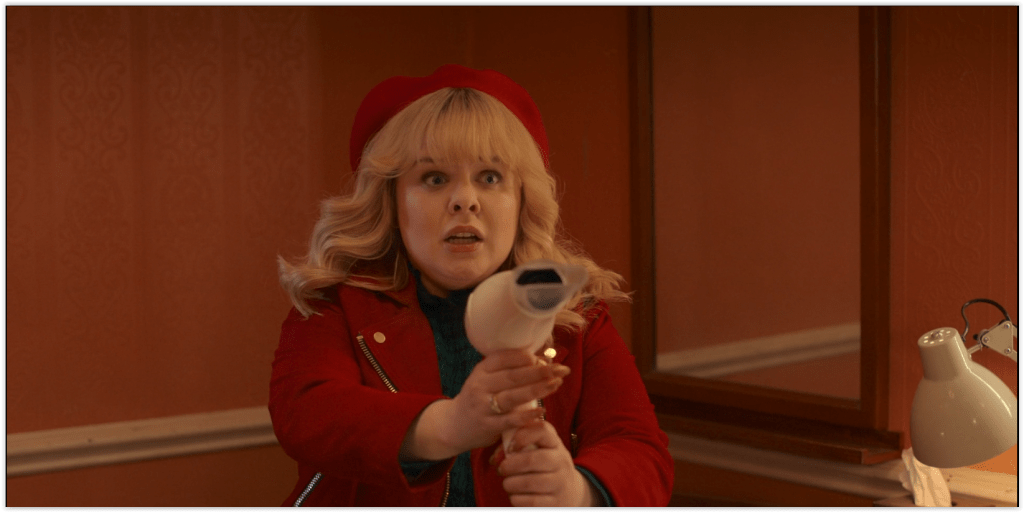
Nicola Coughlan is quite the rising star at the moment, thanks to her roles in Derry Girls, which I’ve never seen, and Bridgerton, which I’m not interested in. So for me, this was the first time I’d seen her in anything. She actually fitted the Who companion template perfectly, breathing life into Moffat’s typically economical but effective characterisation; a girl who, on the surface, is bright and cheery, but underneath has a core of sadness and anger that she hides under a too-bright smile. It’s a lot to pull off with comparatively little screen time, but Coughlan manages it. She’s a naturally charismatic and funny screen presence, who can effortlessly switch to heavy drama when required.
And boy, was it required. Her backstory was genuinely heartbreaking – a girl who always lived by the rules, and as a result, during the lockdown, had her mother die alone on Christmas Day 2020. Which is why she always wants to be alone at Christmas; she’s punishing herself for something she sees as her fault.
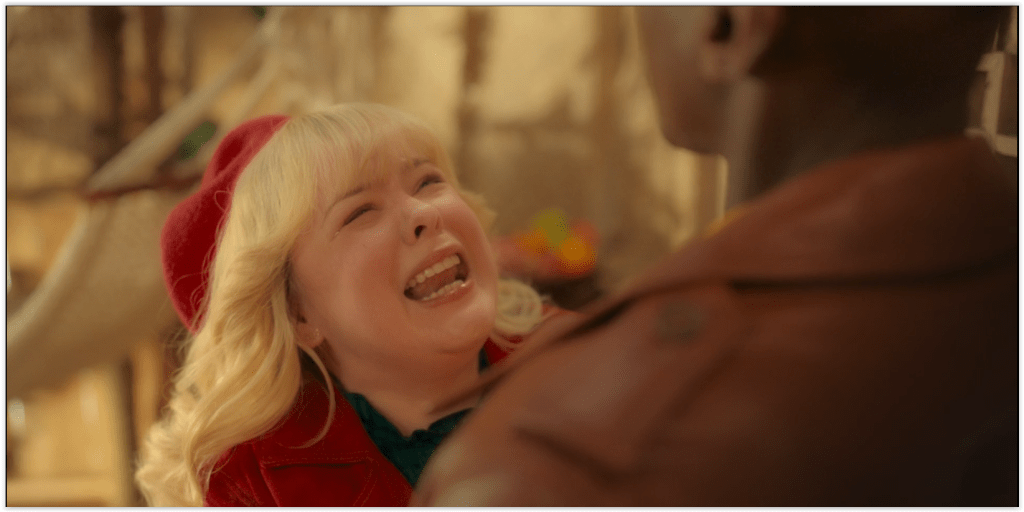
I think this is the first time the show has ever addressed the global Covid crisis – it went unremarked on at the time, which made sense as none of us wanted to be reminded of it. But it was undoubtedly one of the biggest historical events of our lifetimes, and as such, a show dealing with history was always going to have to mention it at some point. I was surprised (and glad) that Moffat’s script included a rage-filled dig at those who made the rules “with their wine fridges and their partying”. I may not have missed my mother’s death, but I had to attend her funeral via webcam due to the rules, and there were only three people there to commemorate her 81 years of life. That rage was something I still feel today.
Despite Coughlan’s heavily advertised presence though, she wasn’t the only ‘pseudo-companion’ in the show. The other was Steph de Whalley as Anita, the manager of London’s Sandringham Hotel, and the Doctor’s only company through the year he had to wait going “the long way round” back to the Time Hotel. For me, this quieter part of the narrative was actually the most effective. It may not have had aliens, dinosaurs or thrilling stunts, but it was a truly affecting sequence worthy of an episode in its own right.
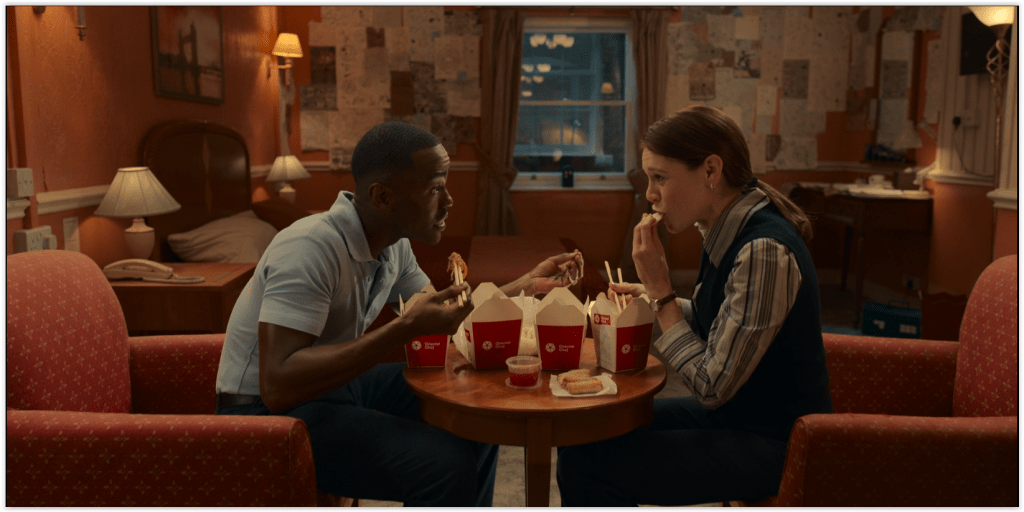
The Doctor has tried “ordinary life” before of course, notably in The Lodger and the Power of Three, and it’s always fun seeing how this eccentric alien clashes with settings that for us are totally mundane. The comedy of his Time Lord-style solutions to hotel service was balanced nicely with genuine pathos as he and Anita grew closer as friends, with their weekly “chair night”. Their eventual but inevitable parting may not have been as showy as Joy’s farewell, but it’s the one that made me tear up more.
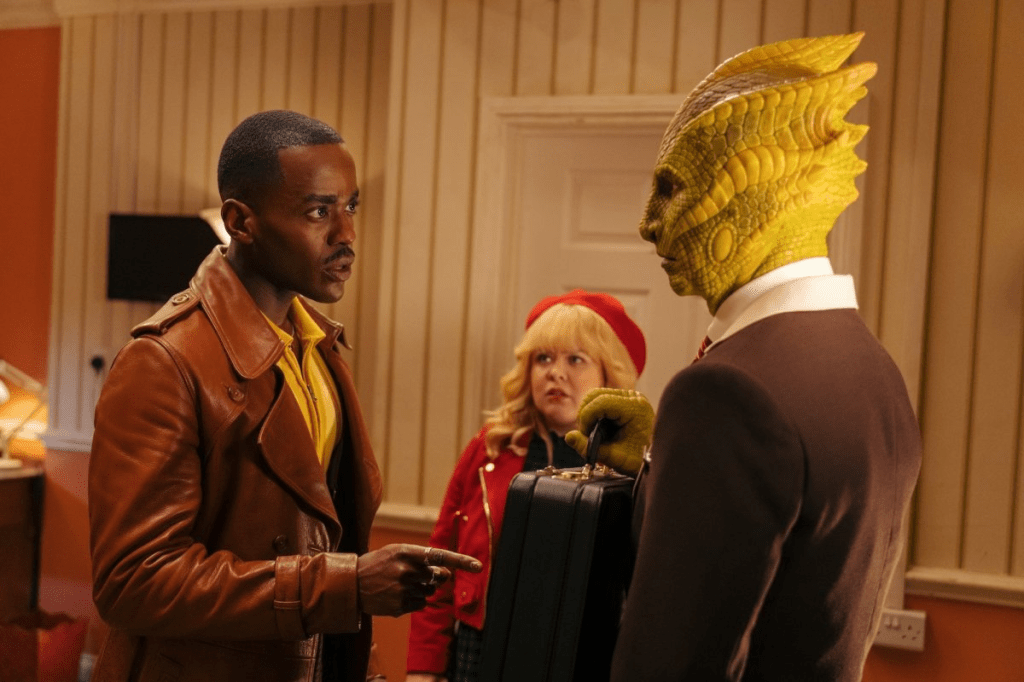
Anita was every bit as effective a character as Joy, but in this case it was all down to de Whalley’s excellent performance. Unusually for Moffat, he hadn’t given the character any backstory or history; she seemed to have no life outside of the hotel, and no friends or family. I was surprised at this lack of character depth, when even the minor characters like Joel Fry’s comic relief Trev and the nameless Silurian Time Hotel Manager got more history. That Anita’s story was so affecting is very much to Steph de Whalley’s credit.
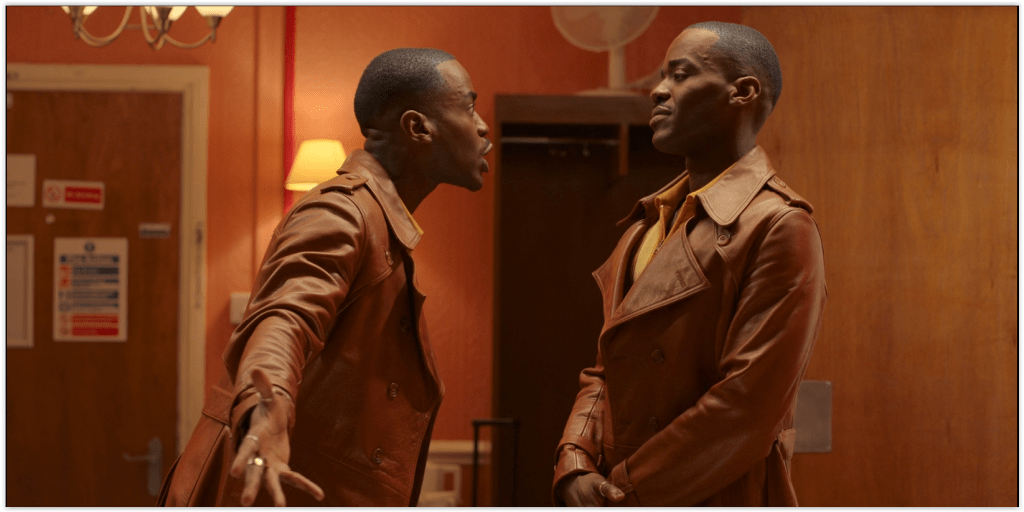
But the most important character here was the Doctor, and here Moffat excelled. I like Ncuti Gatwa in the part, but didn’t feel that he got enough opportunity in his eight episode first season (two episodes of which he was virtually absent for) to give the character much range. This more than made up for it in only one episode (in part because the episode contained so many different situations), giving us a Doctor who was at once wise, compassionate, flawed, and even self-hating.
He is of course still dealing with the hangover of Ruby’s departure (and her brief appearance signalled that her involvement with the show is far from over). That was nicely shown right from the start, as his perpetual joie de vivre was temporarily stalled at the realisation that he was getting two cups of coffee out of habit. And the brief sequence of him arguing with his past/future self, shown from both perspectives, was brilliantly revealing – “This is why no one likes you!”
Moffat’s painted the Doctor as low in self esteem before, and it’s no bad thing, as it makes him far more relatable than the godlike figure RTD often showed him as. Plus, he obviously agrees with me about the flashy new TARDIS’ spartan interior (“You’ve got no chairs! No wonder nobody comes round!”), and the whole “chair night” thing obviously sprang from that, as the newly wary Doctor gradually opened up to a new friend. Gatwa, as always, dominated the screen, but it was good to see his Doctor as flawed as previous ones.
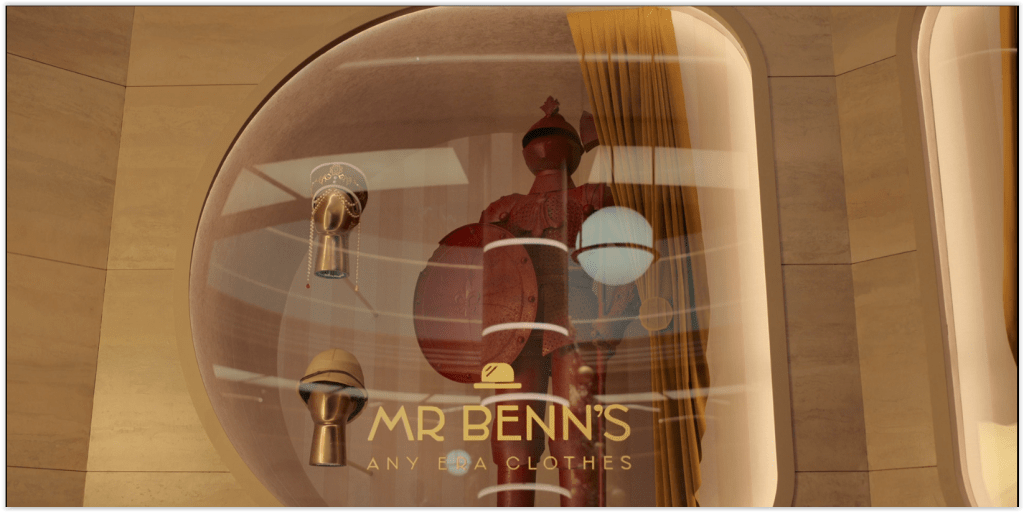
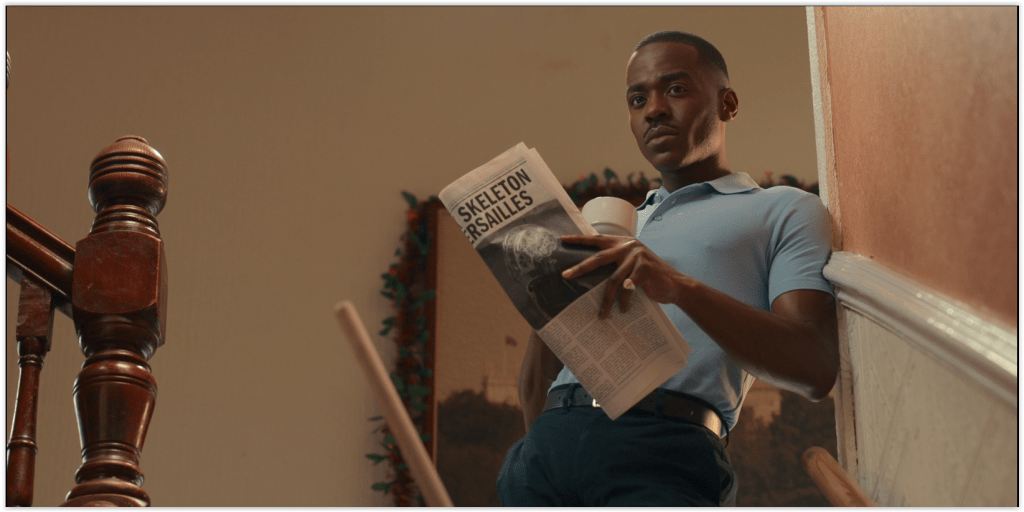
As often with the show these days, the ep was packed with little visual Easter eggs for the true nerds. Particularly nice was the reference to 70s kids’ show Mr Benn in the Time Hotel’s costume department, complete with the well-remembered “Red Knight” costume from that show. I was also intrigued by the half-seen newspaper headline about a skeleton being found at Versailles – was that a clockwork droid in the picture?
Aside from those, there was the Doctor’s little collection of TARDIS merch (“there’s lots of them on the internet for some reason”), and of course Villengard themselves. The rapacious arms company were of course the bad guys of last season’s Boom, but they go back further than that. All the way back, in fact, to 2005’s The Doctor Dances, when Christopher Eccleston’s Ninth Doctor made an offhand remark about having turned their weapons factory into a banana grove. Evidently they got better.
On balance then, while I enjoyed this, there was a lot about it that didn’t really add up. As I said at the start, Christmas specials aren’t really meant to be seriously analysed, but there was stuff here that not only didn’t make sense, but jarred with the show’s ethos as a whole. That said, there were some brilliant characterisations, some typically witty Moffat dialogue, and a much-needed depth given to Ncuti Gatwa’s Fifteenth Doctor. It wasn’t the best Christmas special the show’s ever done, but had some very good points to enjoy. I wasn’t expecting perfection, and I didn’t get it; but it did bring me Joy 😊

