
“Is this what you do? Are you some sort of time detective?”
(SPOILER WARNING!)
Wow, I have been very lazy with the writing of late – I haven’t posted anything here for nearly four months! Now, though, Doctor Who is back, to keep me disciplined on writing at least once a week. Well, for a while at least. The internet has been full of rumblings about the show’s apparent uncertain future, with Disney’s investment deal about to expire and Russell T Davies purportedly dropping ominous hints about some sort of “hiatus” in the near future.
I don’t know how accurate any of this speculation is (though the fact that it first appeared from an “unnamed source” in the Sun and the Daily Mail doesn’t exactly lend it credence). Nor do I know exactly what metrics Disney+ use to measure its success. Apparently viewing figures (insofar as they can be measured in the streaming world) are respectable enough, though a friend of mine who knows the business better than I suggests that the show hasn’t been effective enough for Disney at adding new subscribers.
If all this has some basis in fact, the new season has a lot of pressure on it to succeed. Thankfully after the rather… mixed response to last season’s opener, The Robot Revolution seems to have been more universally enjoyed. Well, except for a vocal minority of cat lovers outraged by the onscreen (fictional) death of a (fictional) feline, in a show that frequently features the (similarly fictional) deaths of actual people.
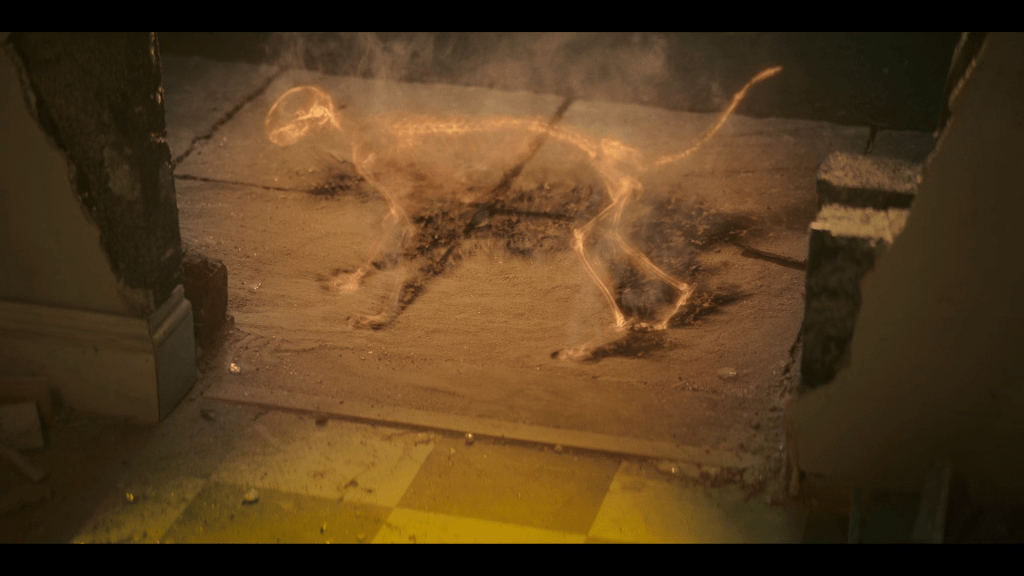
While I don’t get loving cats so much that the (not real) death of one in a drama is so upsetting, I do know the internet well enough to have predicted that backlash, and I’m slightly surprised that a canny writer like RTD would insert something so potentially controversial so casually. But while I wasn’t particularly traumatised by that, it did seem symptomatic of a story that didn’t quite know what it wanted to be.
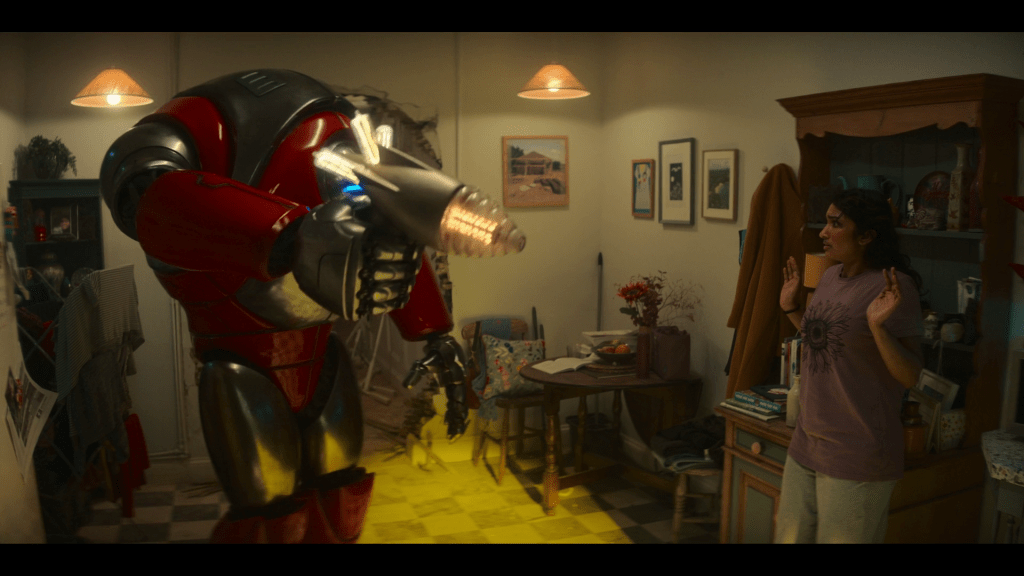
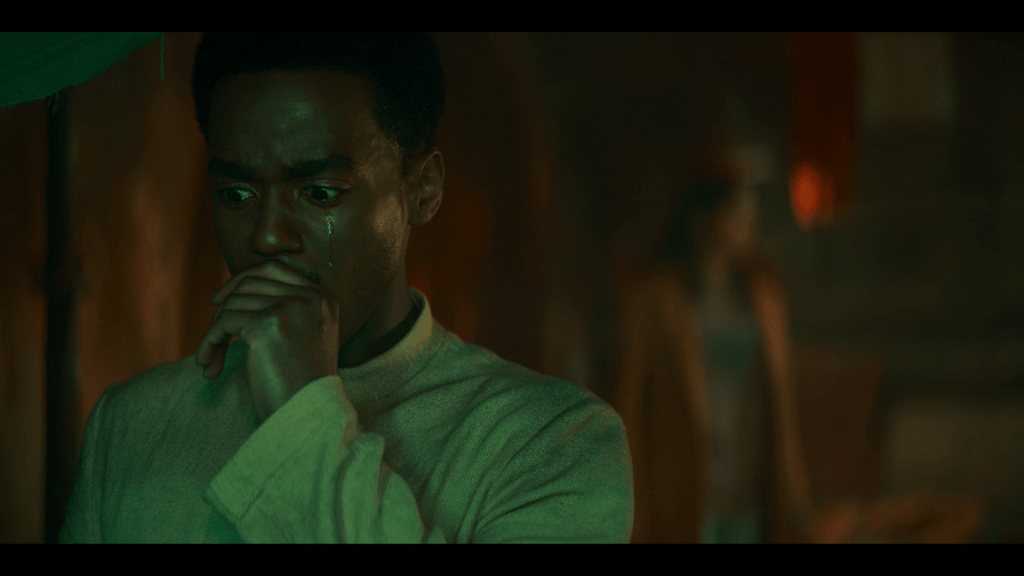
On the one hand, it seemed like bright, colourful and fluffy sci fi aimed particularly at children, with its cutesy (but impressive) retro-futuristic design; robots that looked like toys from the 1950s wielding guns that looked like they could have been acquired in the same toyshops. On the other hand, its central conceit was dependent on the very real and distressing issue of a controlling and abusive boyfriend, and it featured enough deaths of sympathetic characters to have the Doctor crying (again) as early as the 17th minute.
Still, it’s often been the way that seemingly light and fluffy sci fi can convey brutal messages, sometimes more effectively than if it was grimly realistic. There was a similarly subversive theme at the heart of the much-derided Space Babies, with digs at anti-abortionists and anti-immigrant prejudice buried in among the snot monsters for those paying attention.
So how well it worked is pretty subjective. I suspect young kids (the main target audience) will have enjoyed a straightforward pulp sci fi tale about humans rising up against their robot overlords, though they may have been confused by the story’s (still not entirely complete) “timey-wimey” resolution. And while pointed language like “coercive control” and “planet of the incels” might have gone over their heads, older family members watching along with them probably nodded their heads understandingly. Or got terribly angry, the internet being what it is.
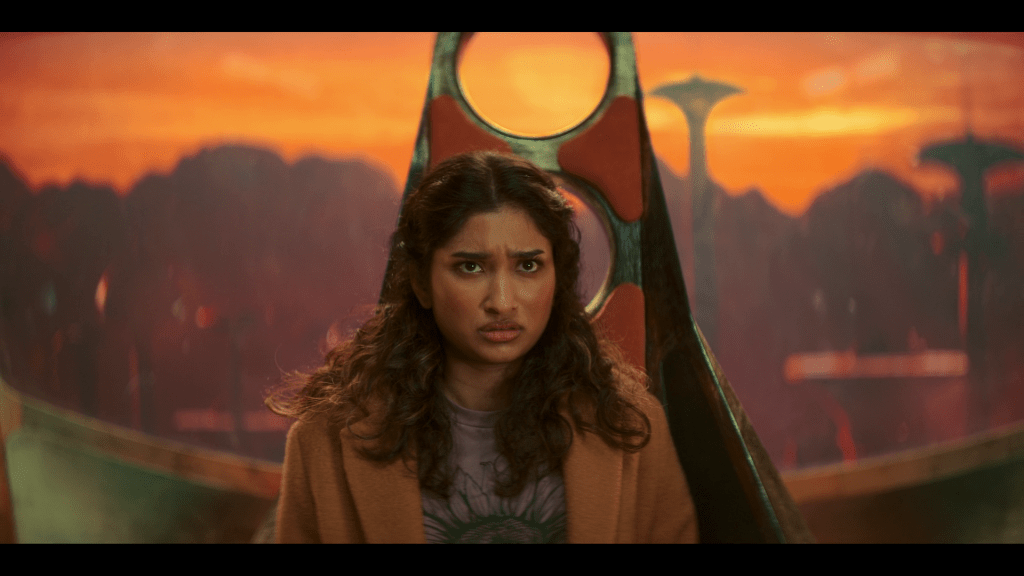
But the main talking point of the ep was of course the introduction of new companion Belinda Chandra. Varada Sethu, so impressive in last season’s Boom, was as good here as there, as a totally different (but connected) character. Belinda was established from the start as a selfless, competent nurse, which was nicely followed up on as she immediately took charge of the rebels’ underground infirmary. She plainly has a very strong conscience, being willing to sacrifice herself to save the planet that bore her name, but she’s also smart enough to follow the Doctor’s lead in defeating the “AI Generator” that turned out to be her abusive ex.
She’s also, refreshingly, not eager to join the Doctor on his travels. Yes, it’s not the first time we’ve seen that – think of Tegan Jovanka’s seemingly endless quest to return to Heathrow Airport in 1982, of which this seemed a little reminiscent. But in the last 20 years of the revived show, we’ve seen companion after companion awed, even addicted by the possibilities of travelling with the errant Time Lord. It’s a nice change to have a more grounded one who just wants to get back to work in time for her next shift.
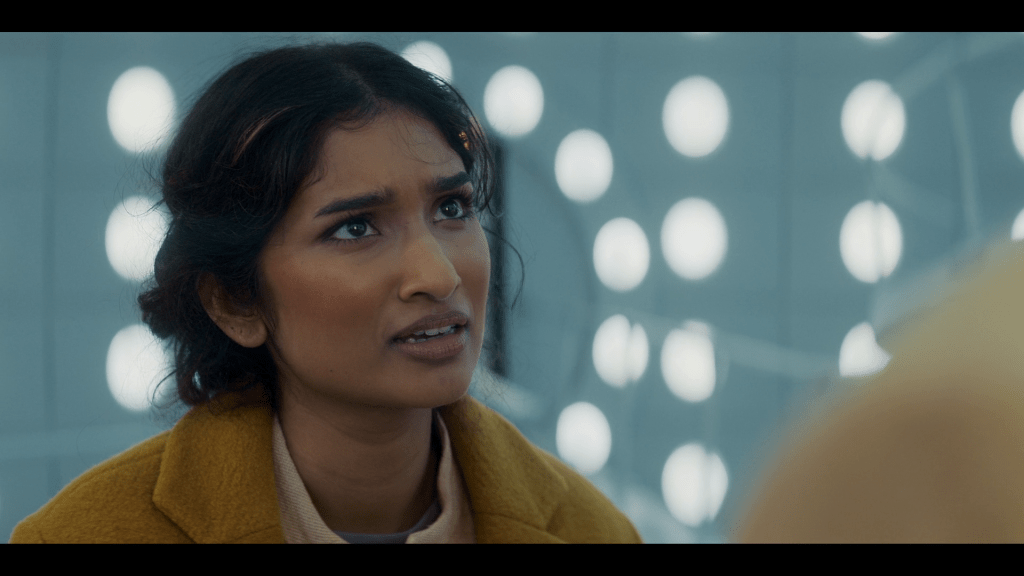
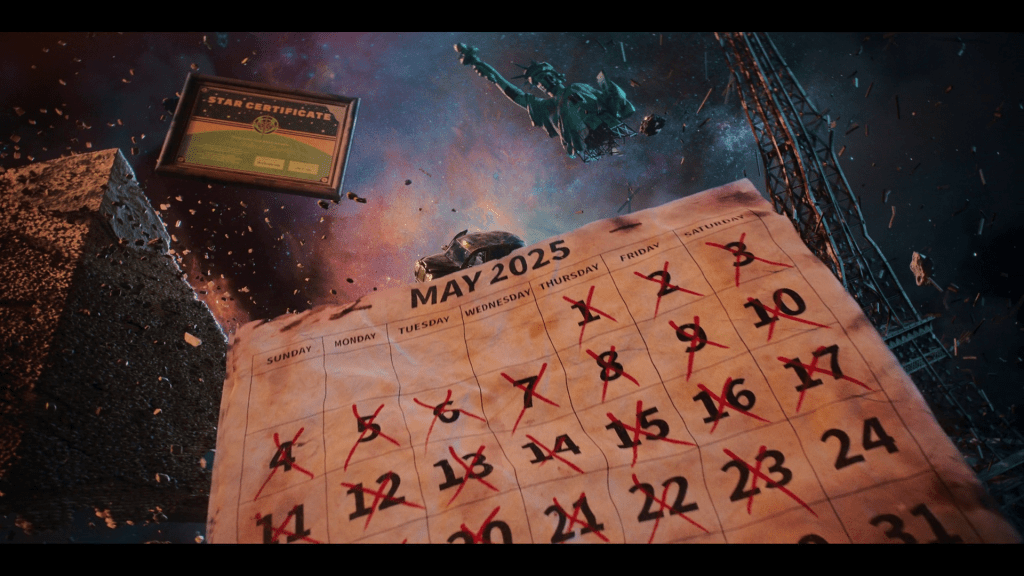
Of course, even though the chastened Doctor agrees, it’s obviously not going to be that easy. Well, there wouldn’t be much of a plot if it was. So, much like Tegan (and Ian and Barbara way back at the beginning), it looks like Belinda’s trip home will be “the long way round”, as something is preventing the Doctor from putting her back on the right day. Something so dangerous that we ended the ep with the ominous sight of some of contemporary Earth’s best known monuments (and a taxi) floating ruined in space. As ever, we don’t see any average houses or anonymous factories, but then you didn’t see them getting blown up in Independence Day either.
So it seems that Belinda is fated to be yet another of the companions who also has to function as a plot puzzle and an ongoing mystery. The similarly ominous calendar floating conveniently next to the ruined monuments gave the whole thing the air of a countdown, but also inadvertently showed that we’ve been here before – on the countdown to Amy Pond’s wedding day back in 2013. All fine, but I do miss the days when the Doctor’s companion was just an ordinary person, without a tortuous, convoluted mystery surrounding them.
But what of the Doctor himself? I felt Ncuti Gatwa was a bit short changed by his scheduling conflicts last season, unable to fully appear in two of the truncated season’s eight episodes. Hopefully he will be rather more full-time this season, because when he is onscreen, he’s great. Bounding around with seemingly limitless energy, he’s massively charismatic, and endows the Doctor with a real sense of joie de vivre that had become somewhat lacking in his immediate predecessors.
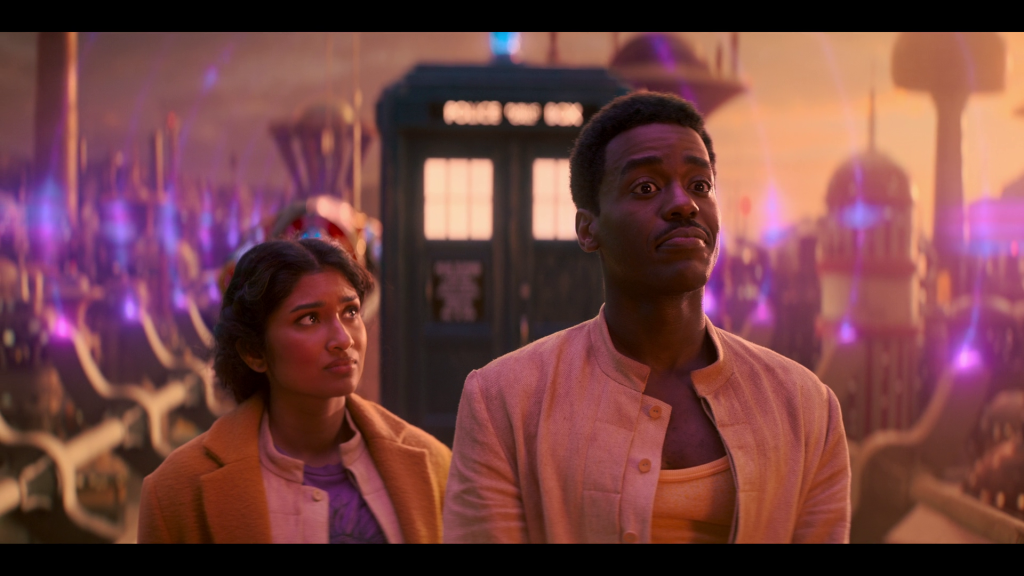
Some have criticised his Doctor’s ready tears; in fact I was one of them last season, worrying that his tendency to cry at the drop of a hat would lessen its dramatic impact. But the tears felt earned here, with the death of a potential companion in Evelyn Miller’s engagingly played Sasha 55, with whom Ncuti had real chemistry. That, though, showed a real disadvantage in the show’s extensive pre-publicity; we knew it was Belinda who was going to end up travelling in the TARDIS, so it wasn’t that much of a surprise that Sasha ended up vapourised.
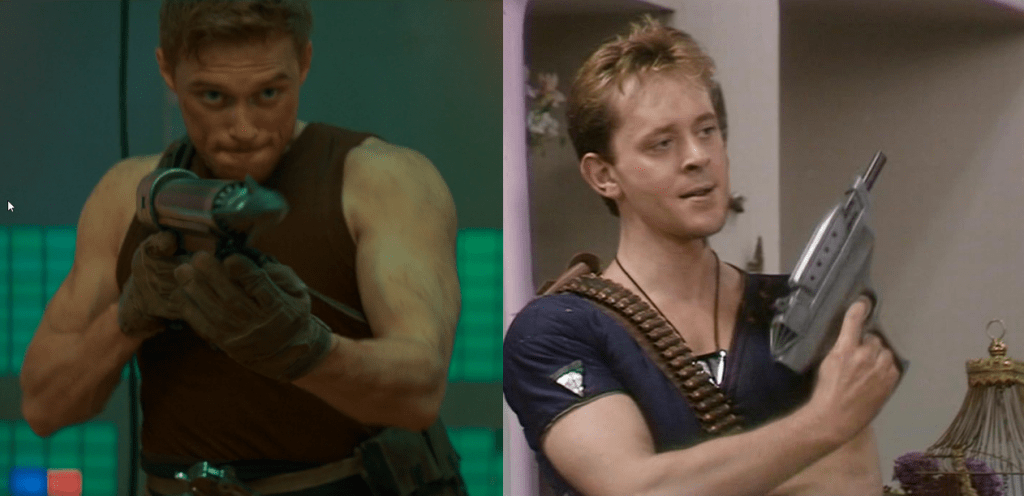
The rest of the cast were rather two-dimensional, with only Max Parker’s hunky Manny getting more than a couple of lines (and reminding me oddly of Pex from Paradise Towers).
The only other real, well-drawn character outside of Sasha and Belinda herself was Jonny Green’s simultaneously menacing and pathetic Alan Budd. It’s difficult to sensitively portray an abusive, controlling partner, but Green, with RTD’s script, mostly managed it. There were hints as to his controlling nature from the very start (when, presumably, he and Belinda were meant to be about 15 years old), when he admonished Belinda for not saving her gift’s wrapping paper for later use. His later insistence that, when married she shouldn’t “wear clothes outside any more” was more horrifying (though I suspect it would have drawn a lot of attention had Belinda complied).
And yet even he wasn’t portrayed as bereft of sympathy, when the nice gimmick of his every ninth, un-machine-controlled, word revealed him to be actually saying, “Help me. Save me. Pain.” Was it a misstep for RTD to create a disturbingly believable monster in a sci fi setting, then give him our sympathy? Maybe, but I’d argue that he was trying to show us that even men like Alan aren’t just evil, or even irredeemable.
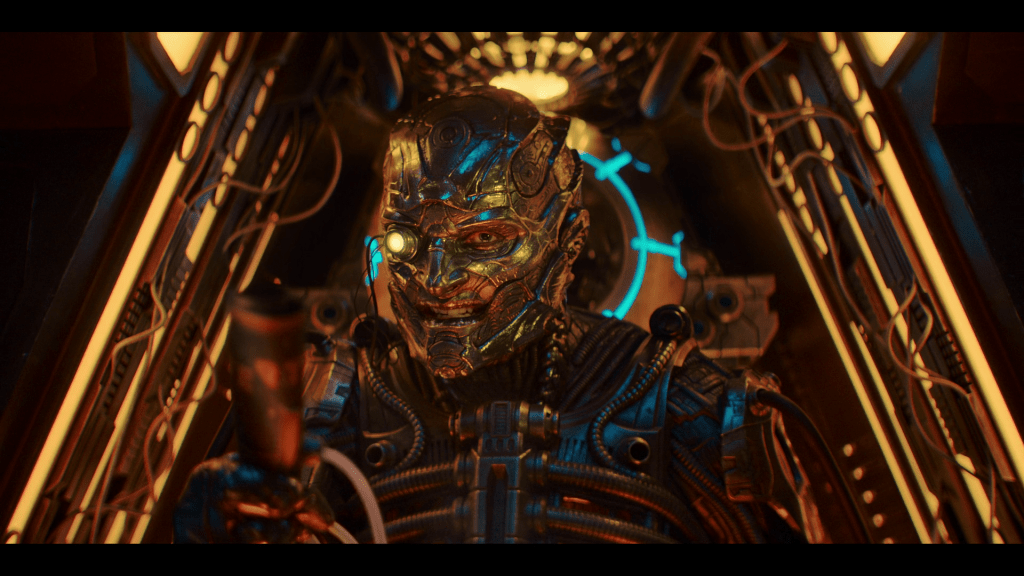
Your mileage may vary on that, but it was an interestingly subtle approach in an otherwise pretty broadbrush story. Which made it all the more shocking that he was then reduced to “a sperm in an egg” and peremptorily cleaned up by the cutesy polishing robot. Which effectively killed him, while previous Doctors (think of Boom Town) might have given him the opportunity of a fresh start.
Of course, most viewers probably weren’t analysing the story in that much detail, and Alan’s comeuppance was certainly satisfying. His presence as the “AI Generator” seemed like another (typically unsubtle) RTD dig at another contemporary issue – AI generation is inherently bad. But the ultimate reveal that the legend on the machine wasn’t “AI” but “AL” seemed questionable when the robots who presumably built the thing had been referring to it as “AI Generator” consistently up to that point!
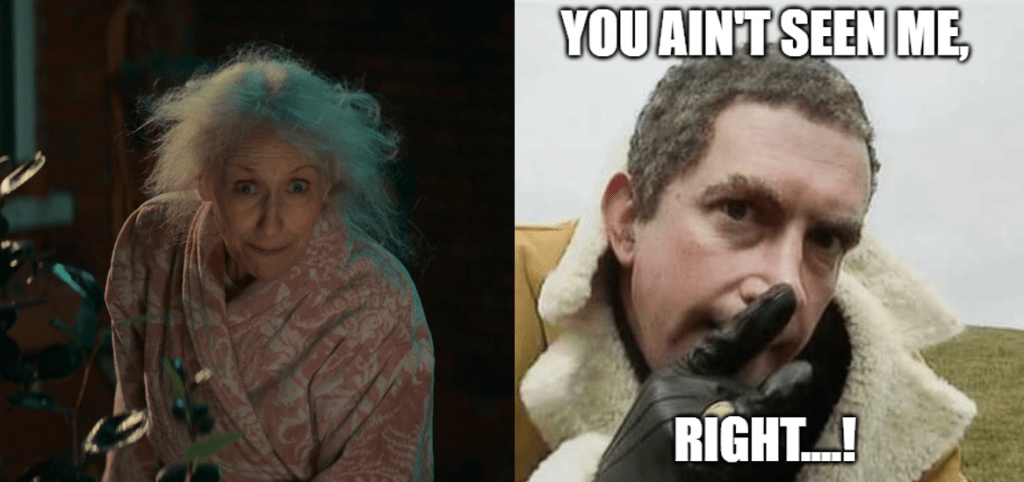
On the surface then, The Robot Revolution was yet another lightweight, cartoony sci fi story. But it carried its deeper meanings rather more effectively than last year’s mostly disliked Space Babies, and worked more effectively as a result. Varada Sethu was an immediate hit as Belinda, and the ep intentionally introduced what are presumably going to be this season’s overarching plot threads. What has happened to the Earth, and how is it tied in to Belinda and her next day at work? Who was it who told the Doctor about Belinda in the first place? Presumably not Mrs Flood, as the returning Anita Dobson scurried away before the Doctor could see her, warning the audience (a la The Fast Show), “you ain’t seen me, right?”
I doubt The Robot Revolution is ever going to be looked at as one of the show’s enduring classics. But as an introduction for a new companion, and a new set of plot threads for what may be a crucial year for Doctor Who, it was effective, entertaining, and more serious than it first appeared. It had its flaws sure, but it seems people mostly enjoyed it. Well, unless they really like cats.
 Simon’s Incoherent Blog