
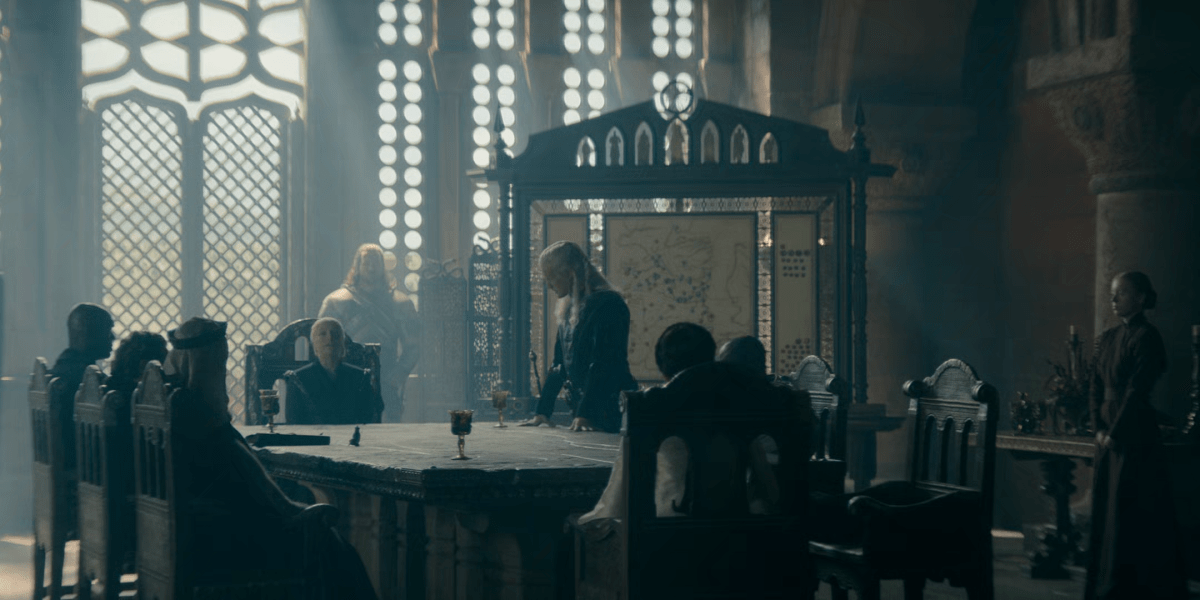
“He means to show the realm that I cannot even govern in my own seat. The great house watch while he humiliates me. Where is my army?”
(SPOILER WARNING!)
Rhaenyra and the Blacks may have taken King’s Landing, but the civil war continues apace in this week’s House of the Dragon. Well, I say “apace”, but it’s not exactly a fast pace; however, despite a lot of talky scenes, there is a surprising amount happening this week. We get a battle, an unsuccessful assassination attempt, and a successful kidnapping of one of the war’s most important players. And yet somehow, it still seems rather static.
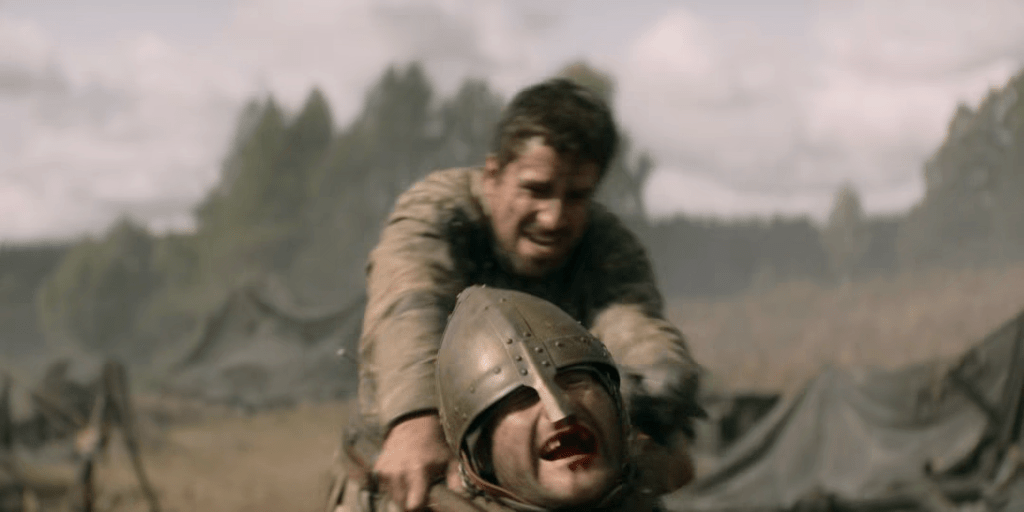
Perhaps as a sop to those who were frustrated by last week’s mostly character-driven ep, this one actually opens with a battle. It’s no Blackwater, Hardhome or Battle of the Bastards, but if you want lots of close quarters hacking and slashing, you can probably go away satisfied with this.
It’s also the final stand of the ever-gloomy Ser Criston Cole, finally getting that death in battle he’s been hoping for. I must admit, Criston’s forces have seemed like something of a sideshow this season, being gradually picked off by the larger forces of the wily Lord Twink of Tully, while their leader mopes gloomily around counting down the hours towards his glorious death.
Poor old Criston, though; his death, in the end, isn’t all that glorious. Having successfully hacked and slashed through a Tully trap of seemingly dead men, and girding his sword hilt with Alicent’s favour in anticipation of a good fight, in the end he’s picked off by three arrows fired from a distance before the fight has even begun.
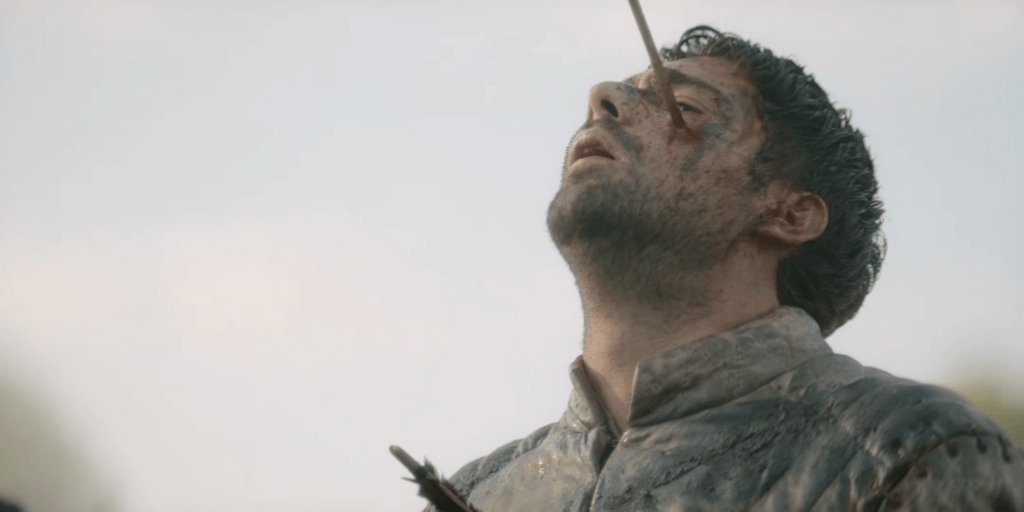
I must admit, I will miss looking at the rather sexy Fabien Frankel as Ser Criston, who seems to have aged about three years in the twenty that have elapsed in the plot. Even so, his insignificant death does feel like another plot dead end after we’ve been following him for two and a half seasons. You can take it as an example of the arbitrary cruelty of war, I suppose.
Still, at least it frees up his perma-concerned deputy Gwayne Hightower to finally have a plot of his own. Gwayne, played by the similarly pretty Freddie Fox, has been a bit of a spare part since his introduction; now, having sensibly abandoned Ser Criston to his fate, he turns up at Tumbleton to annoy his cousin Ormund by being dirty and smelly.
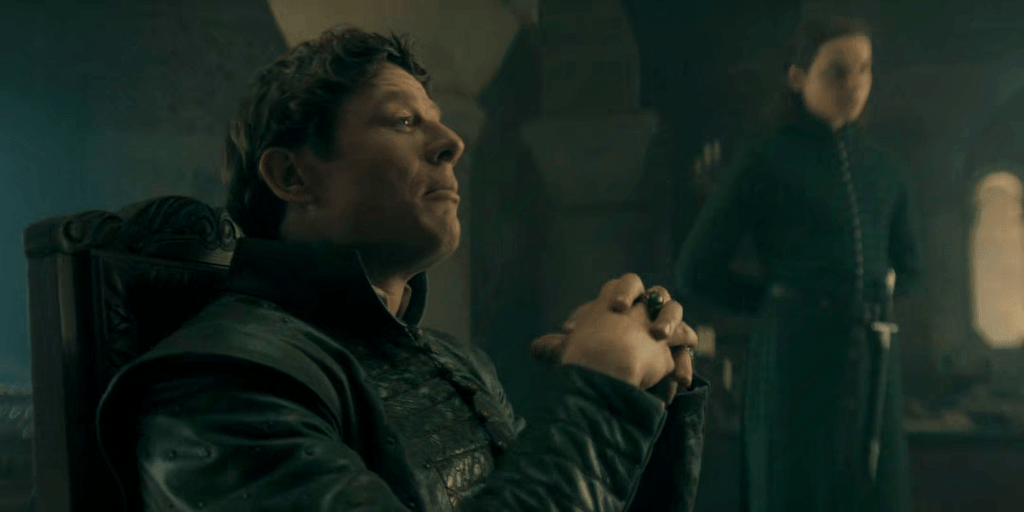
That’s kind of understandable given what he’s been through, but it gives the writers a chance to further explore the rather prissy Ormund’s OCD-style fixation with hygiene. Indeed, Ormund has a pretty bad time in that regard this week, later having to cope with a band of unwashed Baratheon soldiers who turn out to be assassins bent on knocking off Daeron as a legitimate Targaryen heir.
It’s another cool sequence of bloody hacking and slashing as Gwayne, obviously the more skilled soldier, cuts them to pieces when he realises. Having held up his own experience in the field as superior to Ormund’s, it’s a satisfying moment when, halfway through swearing revenge, Ormund can’t contain his disgust with dirtiness of it all and breaks off to vomit everywhere.
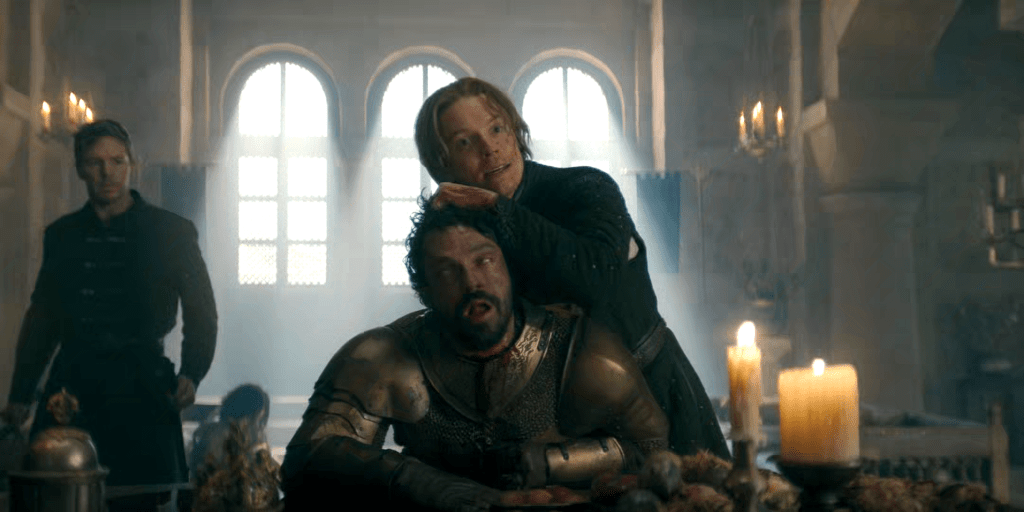
The interesting thing about these scenes is the apparent establishment that Gwayne, a skilled and competent soldier, is gay – and subject to all the ridicule (“backs to the wall…”) that we still get in the 21st century. I hadn’t noticed any hints in this direction previously, but it’s seemingly confirmed when Gwayne himself acidly points out that the real Ser Borros Baratheon is “more comely” than the assassin whose throat he’s just slit.
The franchise has rather a patchy history when it comes to gay characters. There was a lot of outrage at the deaths of gay characters Renly Baratheon and Loras Tyrell in the original Game of Thrones – though to be fair, I didn’t have a problem with it. Westeros, as an analogue of medieval Europe, has the same religious-inspired prejudice against homosexuality as the real world.
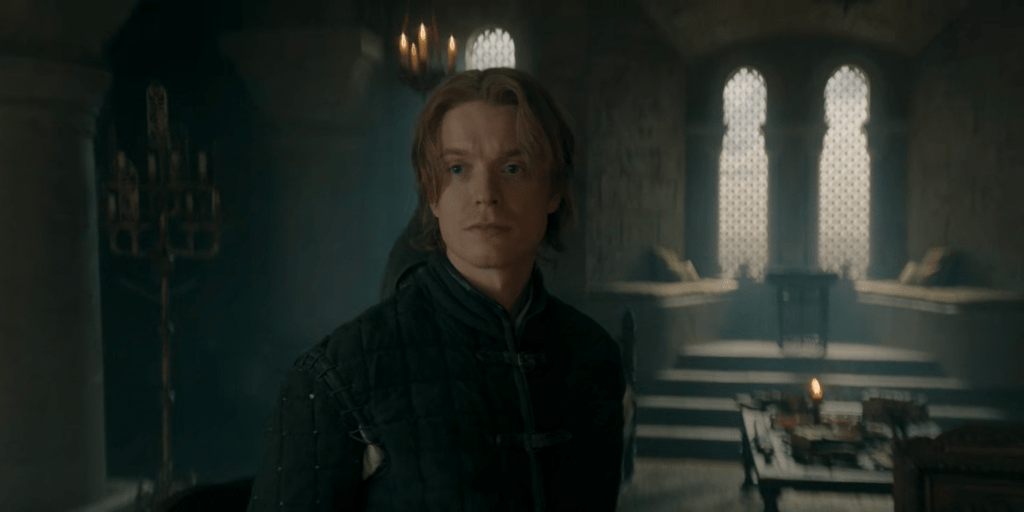
That furore reared its head again with Rhaenyra’s first husband Laenor Velaryon, and the savage beating to death of his boyfriend Joffrey way back in House of the Dragon’s first season. Perhaps Gwayne will fare better, though I won’t be all that bothered if he doesn’t. After all, if you find the show’s treatment of its gay characters problematic, heaven knows what you think of how it treats women.
You can’t have it both ways – if you’re going to do a parallel with medieval Europe, women and homosexuals had a pretty awful time. Yes, you could say that this isn’t the real medieval Europe, and make its fantasy setting less horrible as a consequence. But sanitising it so they’re treated with respect would rob the story of its savage setting. Westeros is not a tolerant place, and making it one just wouldn’t work, particularly in a story whose entire premise is a civil war based on the unacceptability of a female monarch.
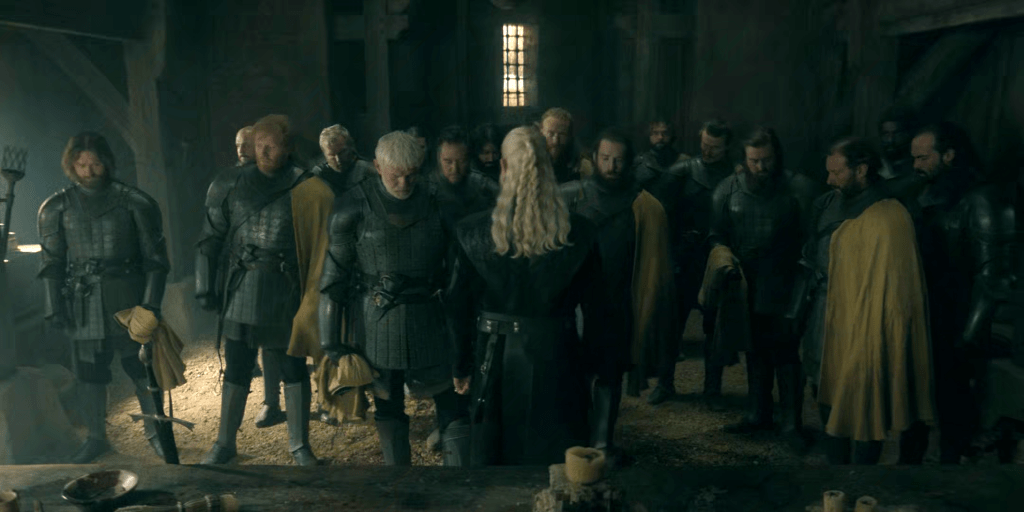
Elsewhere, in King’s Landing, things are still going pretty badly for Rhaenyra and Daemon. No amount of stirring speeches from Daemon can keep the City Watch on board this week; they’re being slaughtered en masse, and not even being paid for the privilege. Thus it is that after a mass resignation, the City Watch finds itself consisting entirely of Daemon himself, who rather implausibly succeeds where the rest of them failed by finding a senior member of the resistance just walking down the street.
Ok, I’ll buy that (just), because it does lead to a portentous bit of dialogue that the resistance are everywhere, and even knocking off their leaders won’t make a blind bit of difference. Historically, that’s very true – and I think even Daemon knows it.
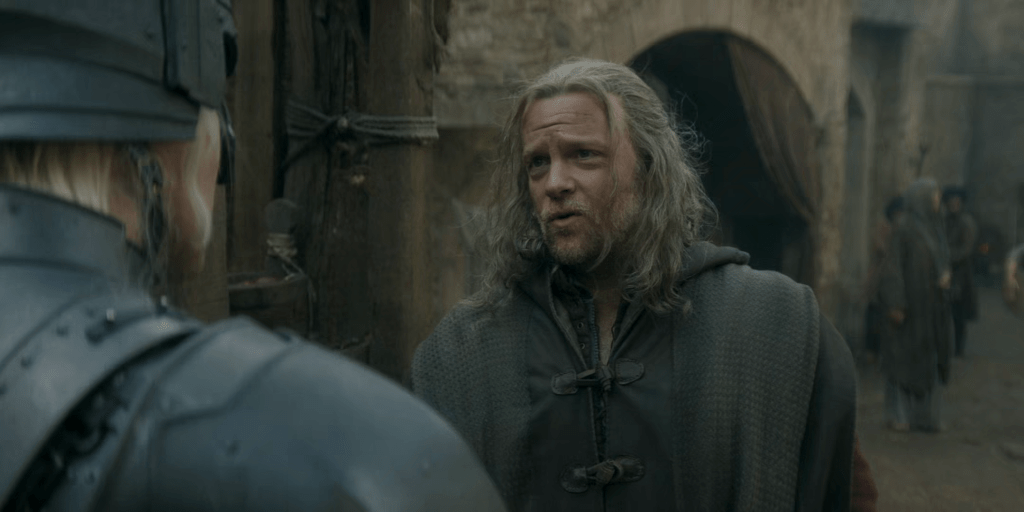
He also gets a chance, in his newfound guise as sole guardian of the city, to chastise the surly Ulf, off on another sneaky visit to his mates in the pub. But perhaps it’s a sign of things to come that Ulf isn’t all that cowed by Daemon’s mere presence, and gives him quite a bit of backchat. Ulf’s been pretty pissed off for a couple of weeks that he can’t boast about his new status to his bar buddies, and this isn’t making him any happier. That one really bears watching.
As does his former commoner confederate Hugh Hammer, for different reasons. Hugh, a fundamentally decent man, can’t resist sneaking into Tumbleton to try and get his wife out, a situation about which she is decidedly not happy. Yes, Hugh is, ham-fistedly, trying to do the right thing. But in doing so, he’s running a real risk of losing himself, and therefore his dragon, to the opposition.
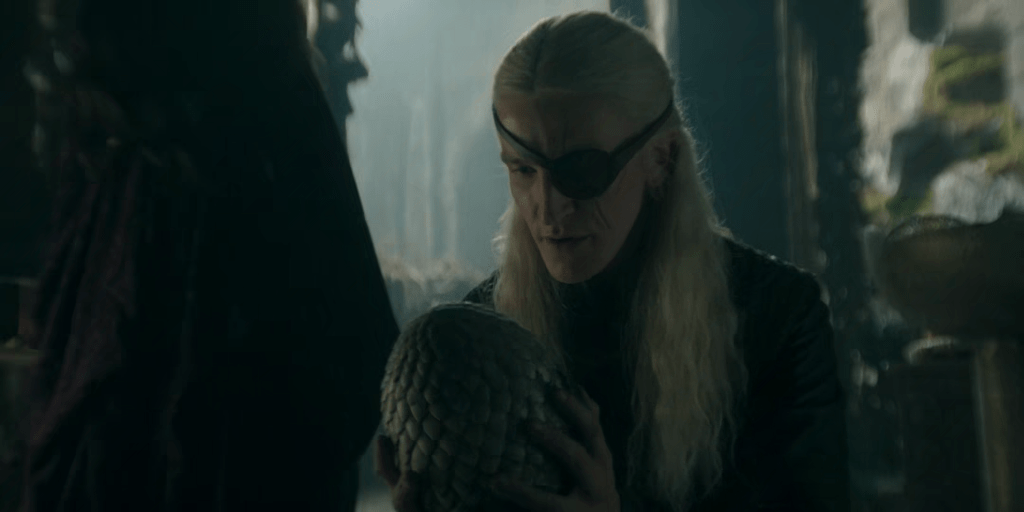
And that opposition may not be lacking in dragons for too long, as Alys presents the restless Aemond with a clutch of dragon eggs handily left in a Harrenhal trunk. Ok, we know that it takes years for a dragon to grow to its full potential; still, this is kind of like finding out your enemy is starting to have some success with their nuclear pile.
So, plenty going on this week. But it’s still a rather slow-paced ep, with oodles of exposition and dialogue between the significant events. As I’ve said before, I enjoy the show’s focus on character motivation, but I totally understand the objections of others that it spends so much time on that at the expense of advancing the plot. It doesn’t help that, although these are richly drawn characters, they’re all pretty horrible, so unlike in Game of Thrones, you don’t really have anyone to root for. With only two more eps left of the season, and likely two years until the next, final one, let’s hope the show starts ramping up its pace a bit.

